Tag Archives: Vin Scully

It’s In My Blood!

I was raised with baseball. When I was a little boy, actually a toddler, my grandfather would take me to see the Los Angeles Angels at Wrigley Field and the Hollywood Stars at Gilmore Field. This was in the early 50s. We would always get there early for batting practice. One of my earliest memories is of shagging a foul ball off of first base and being asked by Chuck Connors to give it back, which I did. I havenโ€™t lost any sleep over it, but I have kind of regretted that move. Things were a little bit different back then.

My grandfather, who lived with us, had been a catcher in the Chicago Cubs minor league system, and he spent a great deal of time teaching me how to pitch. I was a pitcher in Little League and a pretty good one as I recall. I used to spend hours in the backyard pitching against a chalk drawn strike zone on our brick wall. When the Dodgers moved from Brooklyn to Los Angeles in 1958, I attended many a game at the Coliseum, mostly with my grandfather, sometimes with my dad.

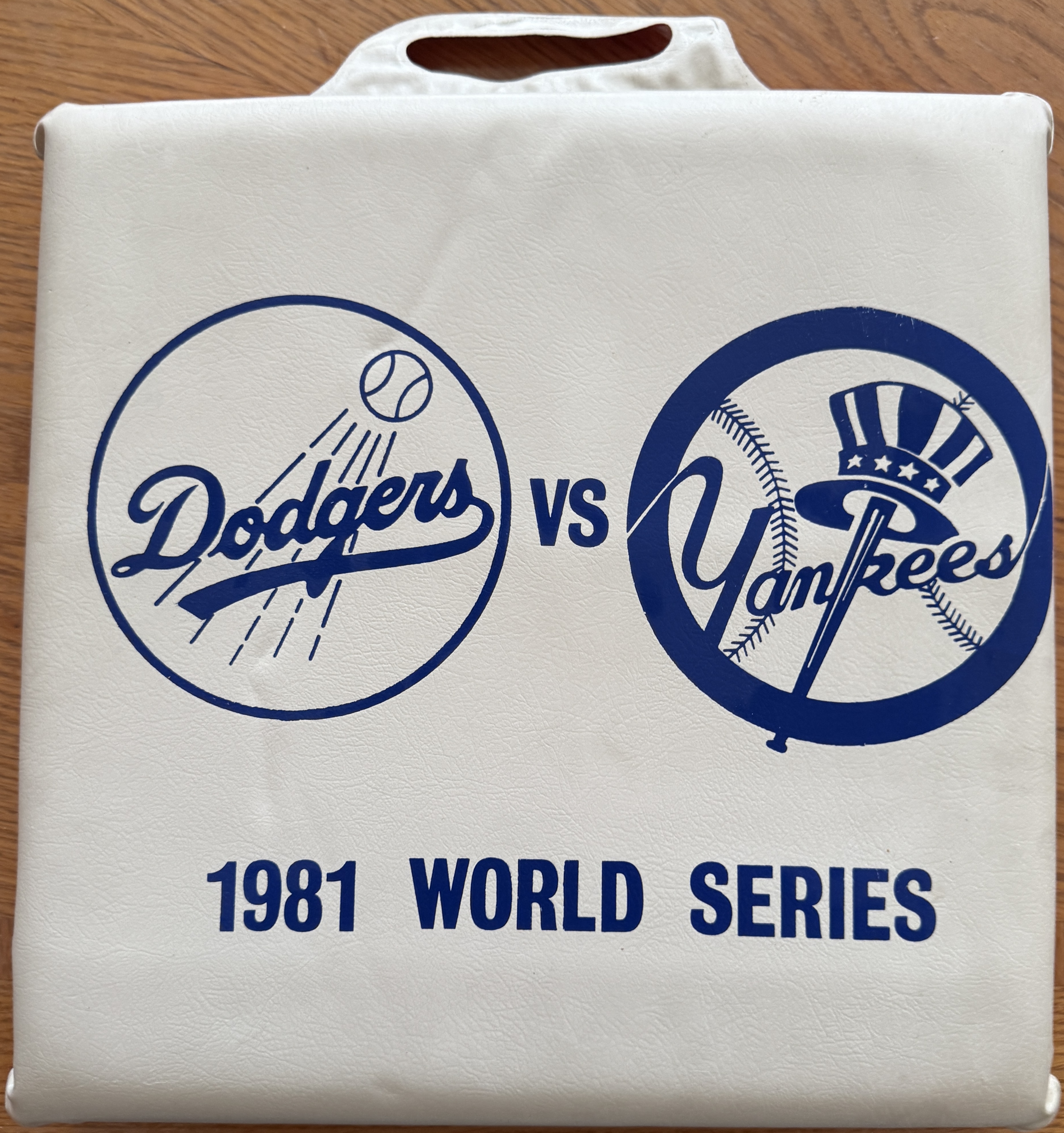
In 1984, which was a big sports year for me, I was able to purchase 20 pairs of season tickets from a friend who wasnโ€™t able to use them. The seats were in the loge section right by third base. We knew one of the people who worked at the hot dog concession and we would get his attention when we arrived and hold up fingers indicating how many Dodger dogs we wanted and he would hold up fingers indicating how long before theyโ€™d be ready. We could then go right up to the front of the line and grab what would always be double dogs as well. That was the year another friend of mine had a client who couldnโ€™t use his tickets to the Lakerโ€™s games and I bought 20 pair of tickets on the floor at the North basket, right behind Jim Hill. I think they were $12.50 each, and parking was $1.00. My brother and I were also able to attend the opening ceremony of the Olympics at the Coliseum, and in January of the following year, I was able attend Superbowl XIX at Stanford Stadium. My girlfriendโ€™s father was the Director of Photography for the Washington Redskins and he got us VIP tickets and all the amenities. I still have seat cushions from that Superbowl and, as Iโ€™ve share here, the 1981 World Series between the Dodgers and the Yankees.
I remained a loyal Dodger fan for the next 36 years until, in 1994, after a late season playerโ€™s strike, MLB cancelled the World Series for the first time since 1904. It was the only time it was cancelled over a labor dispute. I was livid, believing both the owners and the players were deeply disrespecting the fans, and I vowed never to give MLB another penny of my money. I kept that vow (with the exception of maybe two games I was invited to by friends) for the next 32 years. I stopped watching games on TV, though I would sometimes watch playoff and World Series games.

Baseball was still in my blood and playoff games, especially World Series games, were invariably exciting and produced some of the best action one could expect from the premier professional teams. I didnโ€™t watch every year, but I did watch fairly frequently at the end of the season. In 2003, I was able to accomplish something a friend and I had attempted the year the pandemic hit and cancelled our plans. We went to Arizona and attended a couple of spring training games, something I had never been able to do before.

Then something changed in late October of 2025. Linda and I had been going, with another couple, to a friendโ€™s house every Monday to have dinner and watch a movie. We decided to watch the game. Maybe it was the 18 innings. Maybe it was Shohei Ohtaniโ€™s incredible performance. Maybe it was Freddie Freemanโ€™s walk-off solo homer in the bottom of the 18th, but I decided it might be time to cancel my grudge and get back to enjoying baseball for the wonderful sport it is.

I didnโ€™t think about it much, as it was the end of the season (not that particular game, but after the Dodgers clinched). However, I recently downloaded the MLB app on my phone and have been listening to the games like I did when I was a kid and Vin Sculley was on the radio.

I bring all this up because many of my FB friends are Dodger fans and they have seldom heard a peep from me over the years. A few of them were not even born when I stopped watching or attending baseball games. As I get back into it and get up-to-speed on all the rules changes, as well as the players, virtually none of whom Iโ€™ve heard of before, I donโ€™t want anyone to think Iโ€™m some Johnny-come-lately to the game, or to the Dodgers. Iโ€™m not a wild-eyed fan, but I do have some history, and I love me some baseball.

Cross posted to Facebook

Manzanar & Toyo Miyatake

In the Spring of 2018, my wife’s niece arranged for a few members of the family to take some portrait photos. She chose the studio of Toyo Miyatake, a photographer who was imprisoned in the Manzanar concentration camp, during World War II. My wife is Sansei (3rd generation Japanese-American) and grew up on Monterey Park, CA, where most of her family continues to reside. The studio is currently being run by his son, Archie, who took some wonderful pictures of my wife, our daughters, and her mother, sister, and niece.

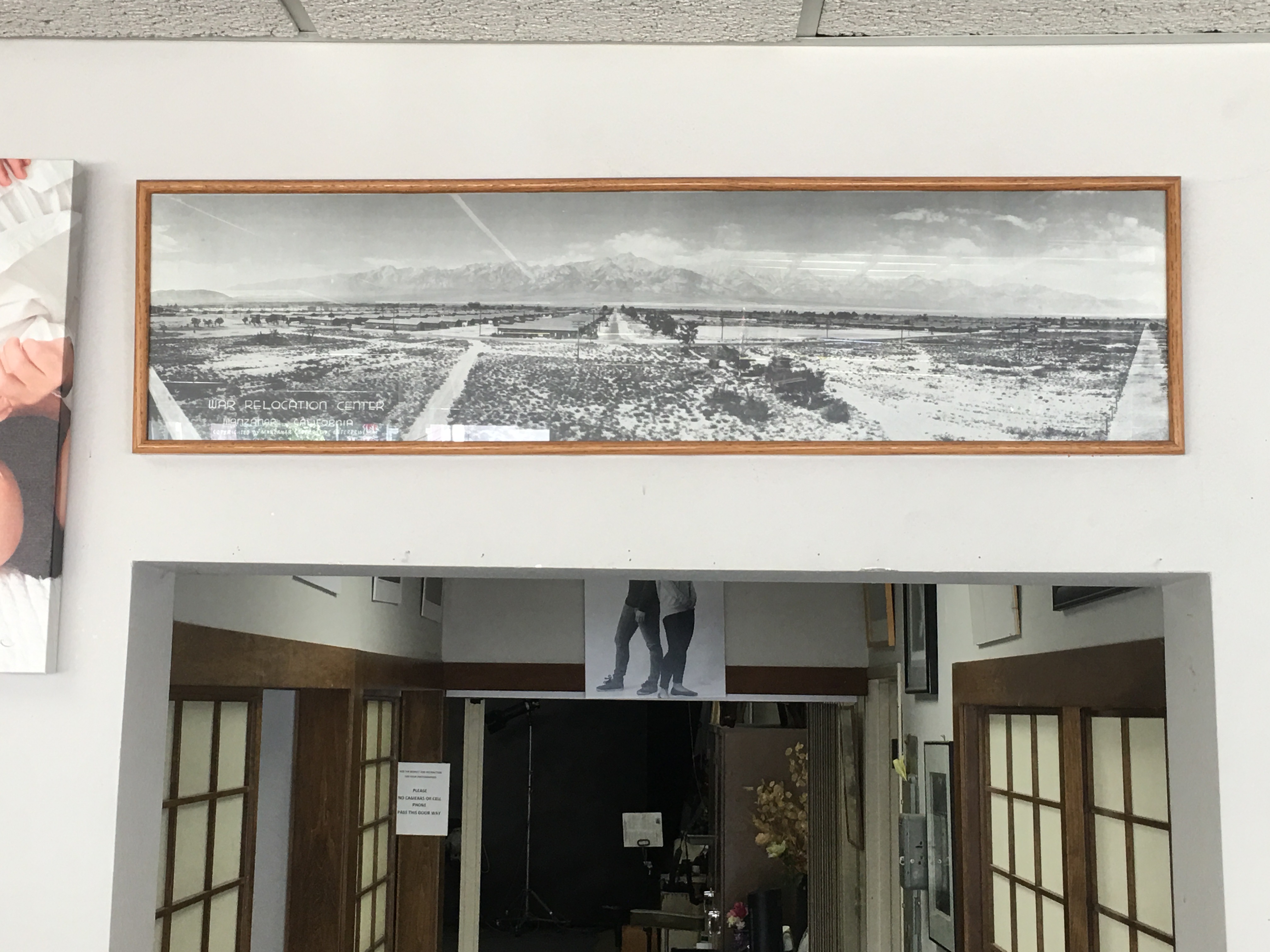
Caption on photo reads “War Relocation Center – Manzanar, California”

The studio is in San Gabriel and it’s filled with lots of photos taken by Toyo and Archie and I snapped some pics with my phone to share. I didn’t get around to doing anything until now, for reasons I’m incapable of reciting. Nevertheless, here they are. In looking for information on Toyo and Manzanar, I came across the Densho Encyclopedia, which has this to say about their work:

From the Densho Encyclopedia’s website:

The Densho Encyclopedia is a free and publicly accessible website that provides concise, accurate, and balanced information on many aspects of the Japanese American story during World War II. It is designed and written for a non-specialist audience that includes high school and college students and instructors, multiple generations of Nikkei community members, confinement sites preservation groups, amateur and professional historians, librarians, journalists, documentarians, and the general public.

The Encyclopedia is thoroughly cross indexed and articles are linked to relevant primary and secondary materials from the Densho archive and from other websites that include still and moving images, documents, databases, and oral history interview excerpts as well as standard bibliographical sources.

https://encyclopedia.densho.org/about/
Caption on left reads, “Manzanar Spring 1944”

The history of America’s treatment of Japanese-American citizens during WWII is a stain on everything this country is “supposed” to stand for, yet rarely seems to be able to provide. It was the result of racism and chauvinism, of nationalism and white supremacy. It set the Japanese-American community back years, if not decades, especially for those families whose property was stolen by white citizens who remained behind. Some were able to reclaim their homes and farms, but many didn’t. Toyo Miyatake was imprisoned here in California, at Manzanar. Here is what the Densho Encyclopedia has to say about his time there.

From the Densho Encyclopedia’s website:

The exclusion order forced Miyatake, his wife and four children, to the concentration camp at Manzanar. He was able to store his photographic equipment but managed to smuggle a camera lens and film plate holder into the camp against government orders. Miyatake told his son Archie that he felt it was his duty to document camp life. An Issei carpenter in camp constructed a box to house the lens, and Miyatake was able to get film into camp by way of a hardware salesman and former client. The photographer eventually asked camp director Ralph Merritt if he could set up a photo studio, and Merritt, who learned about Miyatake from Edward Weston, consented with the provision that Miyatake only load and set the camera, and a Caucasian assistant snap the shutter. Eventually, that restriction was lifted, and Miyatake was designated official camp photographer, and granted the freedom to take photos of everyday life at Manzanar. While there, Miyatake met and began a longtime collaboration with Ansel Adams, who wanted to capture candid photos of people there; the two men later published their work together in the book Two Views of Manzanar. Miyatake’s groundbreaking Manzanar photographs have also been featured in a 2012 exhibition at the Eastern California Museum called “Personal Responsibility: The Camp Photos of Toyo Miyatake.”

https://encyclopedia.densho.org/Toyo_Miyatake/

The collage I’m sharing, below, is of Archie recreating one of his father’s more iconic photos. He was able to find the now grown men who were originally pictured in Manzanar and bring them to the site for the shoot. I think the photos are pretty self explanatory, but the second row has the money shots, IMO.

Manzanar then and now!

I’ll share three more photos I took while we were there. The photo on the left is of a portion of the front of the studio, where much of Archie’s work is displayed. It was there I saw large photos of people like Condoleezza Rice and Vin Scully, in addition to many others. The center photo is of Archie shooting photos of my family, which consisted of my wife, my MIL and SIL, along with My SIL’s daughter (our niece), her grand daughter by her other daughter (deceased) and our two daughters. The photo on the right is a collage of photos Archie took at the wedding of “Uncle” George Takei and Brad Altman. Click on any of the pics to see a larger version.

Aaaand . . . since I’ve mentioned George and Brad, I have one more photo to share, below these three. On September 19, 2019, Linda and I attended a talk at The Ricardo Montalbรกn Theatre, in Hollywood, where George was discussing his newest book, “They Called Us Enemy.” We purchased a copy and, while waiting in line to get it autographed, Brad walked through the line greeting everybody. We got a nice photo with him. Here’s how George’s book has been described:

George Takei has captured hearts and minds worldwide with his captivating stage presence and outspoken commitment to equal rights. But long before he braved new frontiers in Star Trek, he woke up as a four-year-old boy to find his own birth country at war with his father’s-and their entire family forced from their home into an uncertain future. In a stunning graphic memoir, Takei revisits his haunting childhood in American concentration camps, as one of over 100,000 Japanese Americans imprisoned by the U.S. government during World War II. Experience the forces that shaped an American icon-and America itself-in this gripping tale of courage, country, loyalty, and love.

https://www.hoopladigital.com/title/12579768

Linda, Brad, & Moi