Category Archives: Systems Thinking

Universal Innovation

Sometimes, it seems like innovation is all anyone talks about. It’s been a really hot topic for the last five or six years; probably more. In the last two years before I left Rocketdyne — let’s see, that would have been from 2008 to 2010 — I participated in several innovation classes/exercises and, in fact, I setup the SharePoint collaborative spaces that were used by the teams in one of these exercises that were exploring different avenues for the company to invest in. I was also part of a team looking at one of the many technologies we were investigating at the time, and we even brought in a Professor from the USC Marshall School of Business to help us “learn” innovation.

I’m not going to get into my thoughts about what it takes to be innovative, or creative, but I just want to throw out this observation I’ve been mulling over for some time and see what others think about it. One of the things I think I’ve noticed is that almost everyone approaches innovation primarily as a way to come up with new products or services to sell. There seems to be what I think of as a blind spot when it comes to how we got things done, to our processes and procedures that are the backbone of our day-to-day activities. I’m also not confining the daily activities we might look at to businesses or governmental agencies and institutions either. I’m also thinking about things like mass public transportation and local traffic patterns and uses, our use of public facilities like parks and schools, the ways we approach (or choose to ignore) recycling, the value of our food and how we produce, distribute, and consume it – and on and on.

So here’s my big question for now. What if we started looking at enabling – empowering, if you will – everyone who was interested, to be involved in social and cultural innovation; in our continuous social and economic evolution . . . as citizens of our local municipalities, our neighborhoods, our nations, and even as inhabitants of the planet Earth, i.e. as a species? What if we came up with ways to encourage, communicate, evaluate, and pursue ideas that would improve – dramatically or otherwise – the lives of many people, perhaps everyone? Very public ways. What would that look like? How would we do it? What would be the biggest challenges? What infrastructure and social constructs are already in place to support such a thing?


A Dichotomy of Tears

After my retirement, I determined to make this blog one in which I could write about both professional topics and personal topics, which meant I would share my thoughts about the many things I find of interest. It also meant I planned on writing about my feelings and experiences over the years. It hasn’t been easy, as I’m quite certain some of my thinking is not mainstream and — in some cases — is certainly frowned upon by some sizeable chunk of the population. Nevertheless, I keep plodding along and, in that spirit, I share here something I posted on Facebook recently.

Two things brought me to tears the other day. The first was the ending of the current episode of Cosmos: A Spacetime Odyssey. Just knowing what has been accomplished by my fellow human beings; the incredible discoveries and wondrous inventions that have accompanied our ever-growing knowledge of the workings of the universe takes my breath away at times. The other evening was one of those times. They were tears of ineffable joy.

Japanese Umbrella

A Miniature Wagasa (Umbrella) made of Camel Cigarette Packs, Toothpicks, and thread by my Mother-in-Law, Taka Shitara

The second was being reminded of the terrible injustice wrought on the Japanese people who were living in the U.S. when Pearl Harbor was attacked. My mother-in-law and sister-in-law, as well as many of my wife’s extended family, were “relocated” in internment camps. Many lost everything they had worked so hard to accomplish, much of it never to be regained. They were not the enemy . . . and they did not deserve the treatment they received, nor did those who stole their property deserve what they gained. These were tears of inconsolable anger and shame.


What Is Decision Intelligence?

World Modeler Logo

World Modeler adds a Systems approach to Project Management

In my last post I took a stab at defining, and explaining, the concept of Decision Intelligence. I’m willing to bet you’re going to be hearing a lot about it in the not-too-distant future. So you don’t have to click back and forth, I’ll copy over what I wrote about it in that post:

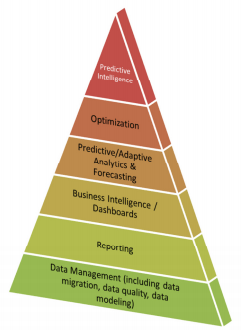
This is the term Quantellia now uses to describe what it is we do. NB – The term is not “Decision Analytics”; there’s a reason for this. Perhaps it is best understood when one looks at a part of how decision modeling is accomplished. Part of the raw material available today for making decisions is what we call “big data”. There’s an awful lot of attention being paid to the field of predictive analytics, which uses big data as its raw material. We at Quantellia prefer the term predictive intelligence. This is because predictive analytics uses past performance (data) to project trends into the future. We like to think we take the concept a bit further.

While we believe analytics are useful and important, they lack the dimensions of human knowledge and understanding that can more completely predict how the past will play out in the future. A subtle distinction? Perhaps, but I find it a valuable one. Unless we’re talking about the future activity of a machine designed to perform a very limited set of instructions or actions, our activities involve human understanding, emotion, and interpretation. There are times when these attributes can dramatically change the course of an organizational effort, rendering previous decisions moot or, at best, only partially useful or correct.

By providing a method whereby human understanding, intuition, and wisdom can be incorporated into the decision model itself, we believe we can more intelligently predict the future. We are well aware there is no such thing as infallibility. However, we also know the more useful and actionable information and knowledge we have available to understand what has happened − and is likely to happen − the better our decisions will be.

Now, having had some time to think about it – it’s been over a month since that post -and having discussed it a bit with Quentellia’s Chief Scientist, Dr. Lorien Pratt (@LorienPratt), I’d like to add a little something to both the definition and the description of what World Modeler has to offer. Keep in mind, as with many things, perhaps even more so with something truly emergent and reasonably new to my experience, both my understanding and my ability to explain are evolving; developing structure and nuance as I learn more theory and encounter more examples of real-world situations.

I consider systems thinking, or the ability to see systems — and systems of systems — as the most effective way to understand what is happening within any one or more of those systems, as well as have a chance at affecting the outcomes of the ones designed to produce value and realize valuable results or consequences of their workings. The more elements of a system that can be modeled, the more likely you will be able to understand downstream effects of your decisions, and the more likely you are to see the unintended consequences of actions before you take them.

Here’s where Quantellia’s World Modeler™ excels as a decision modeling — and making — tool and enabler. Consider Predictive Analytics, the practice of extracting information from existing data sets in order to determine patterns and predict future outcomes and trends. PA usually returns fairly simple, pairwise relationships, e.g. these customers in this demographic, with this amount of revenue, etc. are likely/not likely to churn or devoting a certain amount of energy to customer retention is likely to affect/not affect customer churn.

World Modeler, on the other hand, allows you to create a highly complex systems model. This means you can look at numerous elements and their interrelationships to see how they work together, e.g. customer characteristics, customer retention efforts, likelihood to churn, total customers, revenues, and even business rules that might have to be taken into consideration if certain levels of activity are reached. Furthermore, when you don’t have data for one or more of these elements, you can use human expertise, the tacit knowledge of your employees or the group to fill in the gaps. When you have real data, if you later are able to gather it, you can then plug it into the model and continue going.

One more thing. World Model is a highly flexible, iterative navigation mechanism. It allows you to predict without complete or perfect knowledge, then pivot and change the model as new and/or different knowledge, information, and data are gathered or encountered. You can do this repeatedly over the course of months or years, whatever’s necessary to help you make the best decisions for achieving your desired outcomes. So success doesn’t depend on long-term predictions. Rather, it depends on navigation and alignment between the organizations systems, processes, and the humans that employ them.

Now . . . having learned all that, aren’t you interested in seeing how this tool works? You can get a free evaluation copy and all you’re giving up is a little contact information. There’s no obligation. Click on this the link to download a fully-functional two-week evaluation copy of World Modeler. Give her a Whirl(d)!


What Did I Say I Did?

Biz Card

You Read it on the Internet, so it Must be True!

Anyone who knows me, knows I am quite the stickler for clarity and correctness in communication. I have proudly held myself out as a Senior Inspector in the U.S. Grammar Police, as evidenced by this card I created only halfway in jest. Actually, the card’s creation (I shared the process publicly) led to a couple of paid editing gigs. I’ve also been called a Grammar Nazi, which has caused me to momentarily flash a slightly sheepish smile, accompanied by a sparklingly demure blush.

Recently, I began a new engagement with a company I’ve wanted to work with for some time, Quantellia, LLC. As of the beginning of the year, I am what they call a referral partner. As such, I am contracted to Quantellia to sell their product, World Modeler™, and their services, which include training, workshops, etc. designed to help organizations make better decisions. In learning about my new venture, I have come across a few phrases that are similar, yet different enough to cause me to dig a little deeper in search of clarity as to their meaning. I want to very briefly share my understanding of the meaning of four separate phrases, each of which begins with the word “decision”.

At first, I thought one of the terms was kind of a catch-all; an umbrella term that encompassed the others. However, I no longer believe that to be the case, at least not fully. Keep in mind, all four of these phrases are relevant to what it is Quantellia and I are doing. At the same time, my understanding is quite likely imperfect and incomplete. As I gain a foothold in the discipline, and become more proficient, I have no doubt my definitions and my understanding will need refinement. 

Decision Science – at first I thought this term was one into which the others neatly folded. However, having done a bit of research, I can no longer say that’s the case. As I currently understand it, Decision Science concerns itself not so much with the process of making business decisions, but with the psychology of making any kind of decision. In other words, why do people make the decisions they do; what are the factors they take into consideration; how do they weigh them; how emotional are people in reaching decisions, etc.

Originally constituted in late 1968 as the American Institute for Decision Sciences, and later named the Decision Sciences Institute, this organization had its first annual meeting on October 30 – 31, 1969 in New Orleans. If interested, here’s a history of the organization written in July of 1989 by the then President, Bernard W. Taylor III. According to Wikipedia, the Institute is a “professional association of university professors, graduate students, and practitioners whose interest lies in the application of quantitative and qualitative research to the decision problems of individuals, organizations, and society. Many of the members of this academic organization are faculty members in business schools.”

It seems that Decision Science is a relatively new discipline. This conclusion is backed up by the history of its presence in some of the Universities and Colleges in the United States. For instance, Carnegie Mellon University’s Department of Social and Decision Sciences finds its roots in 1976, as part of what is now the Marianna Brown Dietrich College of Humanities and Social Sciences.” The Harvard Decision Science Laboratory opened its doors much more recently. According to their website, they’ve only been around since January of 2009. I couldn’t find the date George Washington University’s Business School’s Department of Decision Sciences opened its doors, but my hunch is it was sometime in the last decade, at most. The Columbia Business School’s Center for Decision Sciences, formerly part of the Institute for Social and Economic Research and Policy, appears to be fairly young as a separate discipline as well.

Decision Modeling – Although at best an inexact science, decision modeling can be a highly effective tool in helping an organization better predict the outcomes of its decisions. This is made more likely if the model is comprehensive, based on not merely data and analytics but also the knowledge of the people involved in the organization for which the decision is being made, and if the model is iterative and capable of incorporating newly discovered information and relationships. Furthermore, the structure of the model becomes more and more effective as it accurately models the complex relationships it seeks to help understand. World Modeler™ is capable, despite it’s seemingly simple interface, of modeling highly complex relationships. I’ll post more in the future about its capabilities, including embedding some excellent videos showing what it can do.

Decision Engineering – This is a term I don’t believe we are using any longer to explain what Quantellia does. Frankly, as someone who spent over two decades working with aerospace engineers and rocket scientists (quite literally, on the Space Shuttle Main Engine, Delta, and Atlas engine programs), I’m kind of partial to engineering. I can, however, understand how it may sound a bit intimidating or dweeby to people without my background, so I won’t dwell on it here.

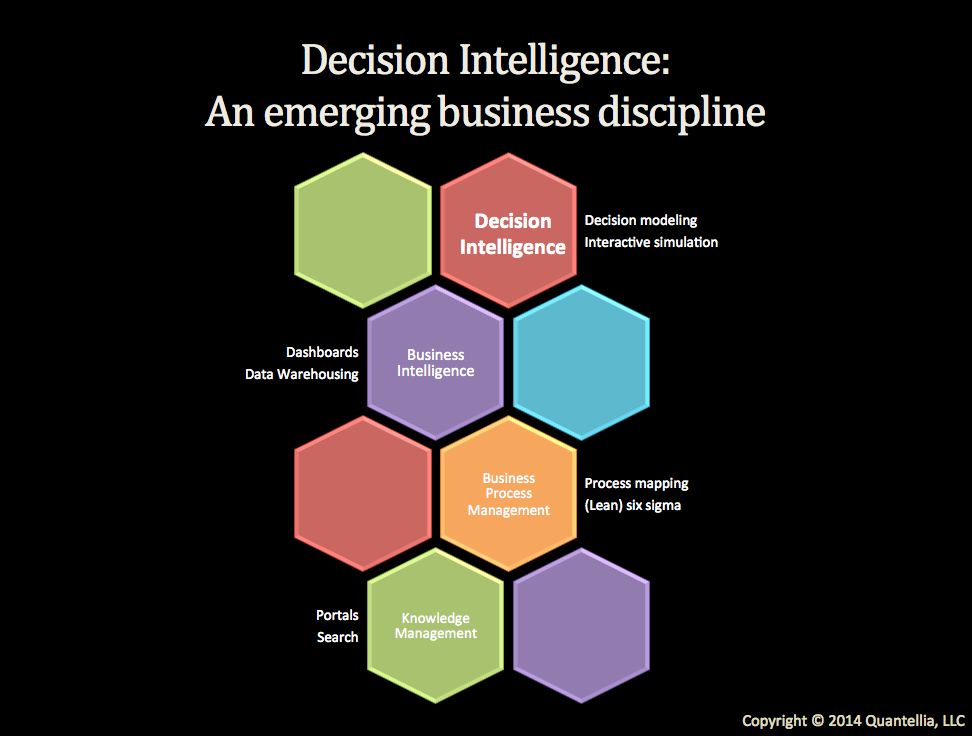
Decision IntelligenceDecision Intelligence – This is the term Quantellia now uses to describe what it is we do. NB – The term is not “Decision Analytics”; there’s a reason for this. Perhaps it is best understood when one looks at a part of how decision modeling is accomplished. Part of the raw material available today for making decisions is what we call “big data”. There’s an awful lot of attention being paid to the field of predictive analytics, which uses big data as its raw material. We at Quantellia prefer the term predictive intelligence. This is because predictive analytics uses past performance (data) to project trends into the future. We like to think we take the concept a bit further.

While we believe analytics are useful and important, they lack the dimensions of human knowledge and understanding that can more completely predict how the past will play out in the future. A subtle distinction? Perhaps, but I find it a valuable one. Unless we’re talking about the future activity of a machine designed to perform a very limited set of instructions or actions, our activities involve human understanding, emotion, and interpretation. There are times when these attributes can dramatically change the course of an organizational effort, rendering previous decisions moot or, at best, only partially useful or correct.

By providing a method whereby human understanding, intuition, and wisdom can be incorporated into the decision model itself, we believe we can more intelligently predict the future. We are well aware there is no such thing as infallibility. However, we also know the more useful and actionable information and knowledge we have available to understand what has happened − and is likely to happen − the better our decisions will be.


Mild Disclaimer – I hope I didn’t rattle anyone’s cages too much with these definitions/explanations. They represent my current thinking and, being somewhat of a newbie to the science/craft of decision making as a discipline, my understanding is necessarily incomplete and in a state of flux. Nonetheless, this is a first attempt at explaining some of the concepts that are informing my work with Quantellia and World Modeler™. Consider it an ongoing process.

At the same time, I would like to make it clear that Quantellia has been doing this for approximately eight years and has a track record of helping organizations both large and small to make decisions and manage programs successfully. Dr. Lorien Pratt, co-founder and Chief Scientist, as well as her team, know their stuff and are the biggest part of my team. We are looking for people who have “wicked problems” they need to solve; people who are facing highly complex decisions involving lots of time and money, and for whom the wrong decision could be very costly. If you fit that description, or know of someone who does, you could do a lot worse than contact us for an initial discussion of your needs. We begin with the end in mind and believe we can help. Only by understanding what it is you face can we determine whether or not that’s possible.


Changing My Game

While I have written a little bit about one of the new endeavors I have set out to pursue (here and here), I haven’t really done much to explain what it is I’m doing with decision modeling and my work with Quantellia LLC. I am in the process of writing a post about some of the concepts I’ve been looking into and learning about, but it won’t be ready for a while, as I have more studying and research to do.

I do, however, have the ability to share some of the material I’m learning from, as Quantellia has produced a significant number of videos and recorded webinars. This one is the one I usually send to prospects. While it is the oldest, it’s also one of the shortest and still conveys the essence of what Quantellia, and it’s product World Modeler, can do for a business or organization facing complex decision-making.

So . . . I’m not sure if I actually announced it here on my blog, but as of the beginning of this year I have become a referral partner for Quantellia. In my opinion they have not only a superior product, but a superior mindset regarding how decisions are made. As a systems thinker I am keenly aware of the value in a long-range, strategic, informed approach to deciding how to proceed and to keeping track of what’s happening, always being prepared to take a different path if circumstances warrant it. I believe the people of Quantellia do exactly that and that World Modeler is a tool that makes it much easier to accomplish.

If you have an important, complex decision to make you need to understand how decision modeling works. As Dr. Pratt says on the video, you can model many decisions using paper and pencil, but you can’t do a good job of it without understanding how to “engineer” the decision using more than just analytics and predictions based on them. You need to use “Decision Intelligence”. Quantellia can help, which means so can I. Please let me know if you’re interested in discussing your specific needs. I’d be happy to set up a teleconference to see if we can help. Thanks.

PS – I’m going to share more of these videos here, but you can see them all for  yourself at Quantellia’s YouTube channel, located here.


Do We Fully Understand Diversity?

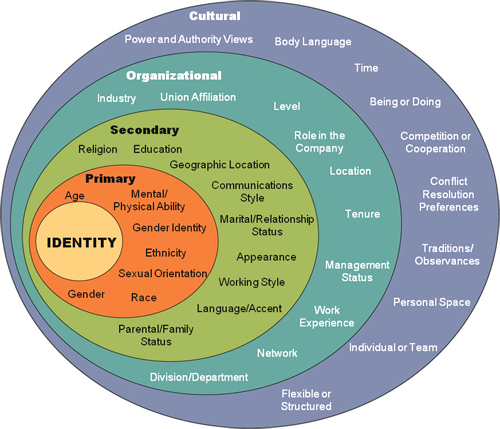
Dimensions of Diversity

This graphic does a decent job of showing the different dimensions in which we find diversity

What do we mean when we talk about diversity? Merriam-Webster online’s first definition is “the quality or state of having many different forms, types, ideas, etc.” Not bad. Not bad at all. How about the second definition? It’s presented as “the state of having people who are different races or who have different cultures in a group or organization.”

I find this second definition somewhat troublesome and simplistic, in large part because I think a large percentage, if not an overwhelming majority, of people think of diversity in a very limited form. In my experience, within organizations — i.e. enterprise-size businesses — race, ethnicity, physical ability, and gender are about the only classifications in which “diversity” is interpreted to matter. This in spite of definitions that suggest far more inclusiveness, like this one from the University of Oregon’s website:

The concept of diversity encompasses acceptance and respect. It means understanding that each individual is unique, and recognizing our individual differences. These can be along the dimensions of race, ethnicity, gender, sexual orientation, socio-economic status, age, physical abilities, religious beliefs, political beliefs, or other ideologies. It is the exploration of these differences in a safe, positive, and nurturing environment. It is about understanding each other and moving beyond simple tolerance to embracing and celebrating the rich dimensions of diversity contained within each individual.

Getting back to M-W’s first definition. Although it only mentions different forms, types, and ideas, it does manage to throw in an “etc.”, thereby inviting us to expand on the inclusiveness of its meaning. Here’s where I’d like to see a little more creative (and empathetic) thinking about diversity.

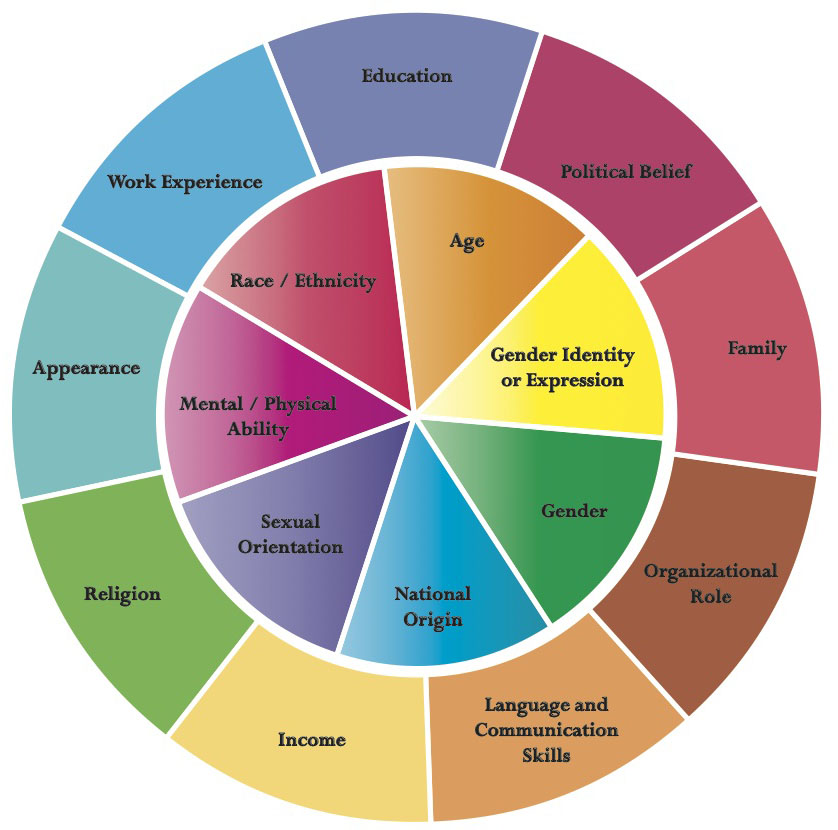
Diversity Wheel

This graphic shows similar information regarding diversity, but only breaks it out into two dimensions

For instance, a few simple areas in which we find diversity that aren’t usually thought of as important are: handedness, learning style, personal style, interests and hobbies, hair length and type, gregariousness, public speaking ability, etc. Without belaboring the subject, I’m sure I could come up with dozens of other ways in which we find “diversity”. As the University of Oregon’s definition states, “. . . each individual is unique . . .”.

Isn’t it time we started treating people in terms of the larger context of their lives and experiences, rather than categorizing them — somewhat restrictively — in just a few, largely useless boxes? I’m not suggesting the categories we’ve been using are completely useless, merely that they’re terribly restrictive and overly broad. What’s your opinion? There should be quite a few out there. 😉


World Modeler Has Me Rethinking Trade Studies

Although I am not trained as a scientist or an engineer, I did spend over 20 years working with engineers and (yes, Virginia) rocket scientists. I also may not be a professional scientist, but I’m a pretty good amateur one, and I like to think that being around all that knowledge and brain power bestowed on me at least a patina of engineer/scientist. I do know I am loathe to make decisions without a great deal of information and as much knowledge as I can locate about the consequences of my decisions.

One of the methods we used to make engineering design decisions is called a trade study, which is  short for trade-off study. It’s essentially a very simple concept, whereby you develop the desired outcomes, e.g. features and capabilities of a system,  schedules and cost structures, break them down into measurable parts, and compare various ways to achieve those outcomes. The process itself is reasonably simple, but the details can become staggeringly complex and frequently overwhelming.

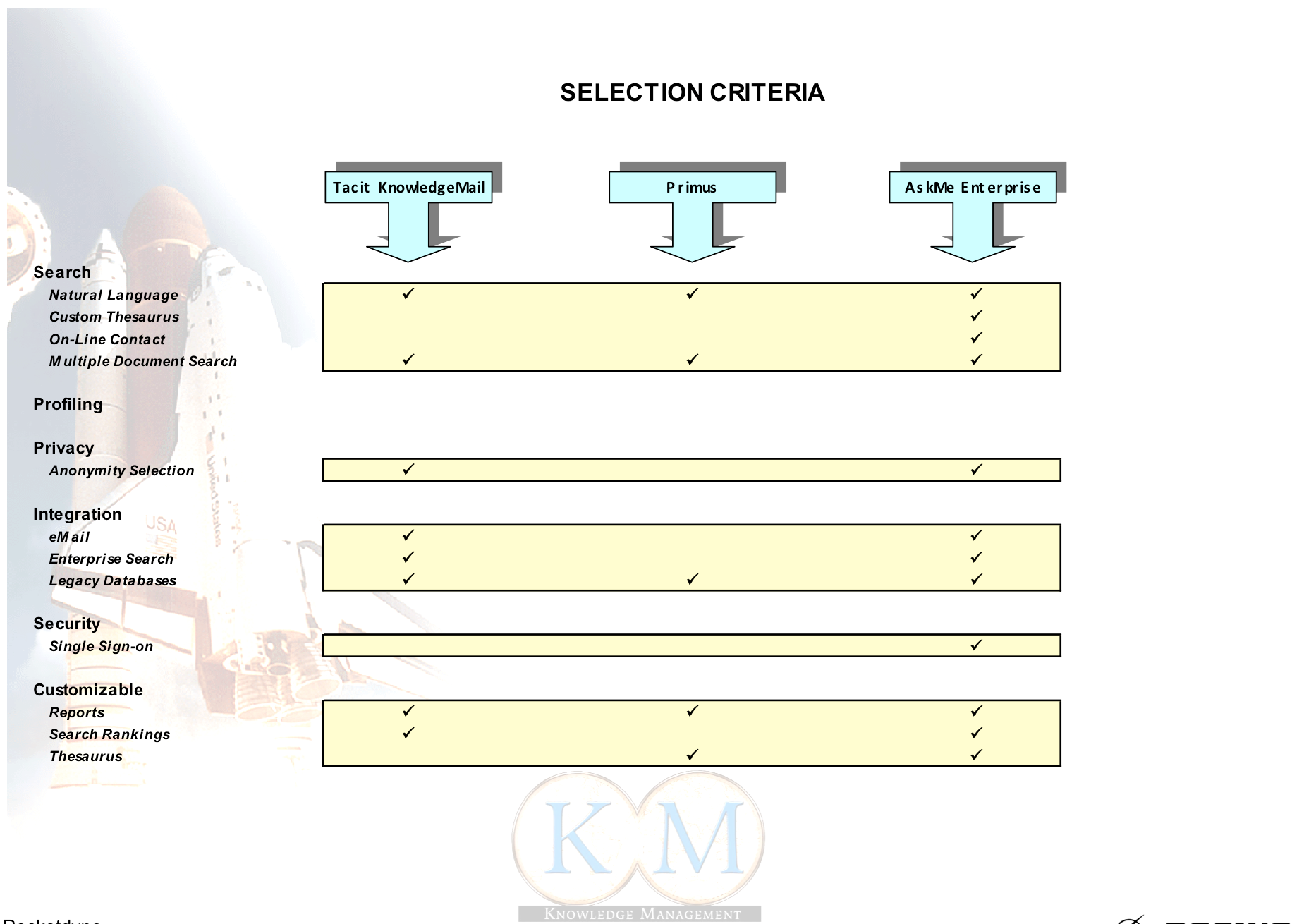
Selection Criteria

Expertise System Trade Study Selection Criteria

As I learn more and more about Decision Science and its derivatives, I look for examples and analogies from previous experience that I can revisit with newfound knowledge and capability and, perhaps, understand a little more clearly or completely than I did back then. I am convinced Decision Science, which embraces the concepts of Decision Engineering and Decision Intelligence, as well as the use of Decision Modeling to pull it all together, is a powerful tool that too few people know about.

One of the things that occurs to me, and I want to throw this out for your consideration, has to do with the remarkable software tool Quantellia has created, called World Modeler. It seems to  me it is to trade studies what AutoCAD is to hand-drawn blueprints. It is so rich in modeling functionality, it just makes every other tool I’ve worked with seem flat, unimaginative, and terribly cumbersome in terms of what we know we’re facing and how we see problems in today’s environment.

Just after the turn of the century (that would be 2001) I conducted a trade study for a software tool, some of the requirements of which were that it would run on our intranet and  was designed to both locate expertise and facilitate the exchange, use, and capture of knowledge in a form that would remain useable for some time to come. In short, one kind of knowledge management system that was being sought after back then.

The trade study I conducted looked at three products and rated them over about a dozen criteria we were interested in. There was no formal weighting and it was a fairly simple, straight-forward comparison of capabilities. A simple effort based on what we knew at the time and the very palty list of vendors who were providing the kind of service we wanted. In fact, as you can see in the accompanying graphic, there were only three . . . and one of them (Primus) was actually — if memory serves — an internal service of Boeing’s developed specifically for airplane mechanics to share information on their service and repair activities worldwide.

With World Modeler, we would have been able to model so much more than just these paltry selection criteria. We could have included in our decision the aggregate likely impact of things we assumed would happen, thereby surfacing possible misconceptions that some had. We could have included connections to IT, HR, and Communications, thereby giving us a clearer picture of the likely impact on the enterprise of implementing the system.

Frankly, in retrospect — and based on the fact that its use steadily declined after my retirement — I’m still not certain it was a good decision, though I had lots of reasons to believe so back then. So, getting back to my point, I think World Modeler is an incredibly powerful tool for an organization to measure the value of many of its decisions before making them. It’s also useful, in my opinion, in a wide array of situations and scenarios. I intend on addressing many of them as time goes by and I become more versed in its capabilities and more comfortable with my understanding of its value to various organizations and situations. You should check it out.


Serendipity Runs Circles Around Causality

Funny how some things seem — given enough time — to come full circle. Although I have always seen patterns and complexity, as well as the intricacies of their interplay, I wasn’t introduced to the concept of Systems Thinking until I worked on the Space Shuttle Main Engine program at (what was then) Rockwell International’s Rocketdyne division. That introduction included being exposed to the thinking of Dr. Russell Ackoff, a recognized authority in the field. I was fortunate enough to spend some time with him, twice in Philadelphia, prior to his death in October of 2009.

Shortly after retiring from Rocketdyne in 2010, I was introduced to Dr. Lorien Pratt of Quantellia, LLC, who showed me a tool her organization had developed called World Modeler. I was excited at what I saw and hopeful I could somehow become involved with Dr. Pratt and her team. However, that was not to be at the time. I was provided the opportunity to more thoroughly investigate the tool, but I had made a conscious choice to refamiliarize myself with Apple products (after over two decades of living in the PC, DOS, and Windows environment) and World Modeler was not written to be run on a Mac. Furthermore, the PC laptop I had wasn’t powerful enough to do the math and drive the graphics required for running models in real time. I was hosed.

Decision Intelligence Technologies

Decision Intelligence Technologies

Finally, about six months ago I was contacted by Dr. Pratt, who asked me if I wanted to assist in writing a paper that described an effort in which they were involved with the Carter Center. I enthusiastically said “Yes!” I’ve done a couple of other things with Quantellia since then but, beginning a few weeks ago, I took on an entirely new and (for me) exciting role as a referral partner.

Right now I’m spending a fair amount of time learning Decision Science in general, and the process and tools Quantellia uses to help organizations understand complex interrelationships and make better decisions based on that understanding. As I’m doing this I watch videos, read blogs and articles, look for original research, and work on presentations that will help me educate others in this important approach to business and organizational operations.

So . . . here’s the full circle part. As I’m looking for definitions, or explanations, of Decision Science and its origins, I Google the term. The first two hits I get are to The Decision Sciences Institute and to Carnegie Mellon University’s Department of Social and Decision Sciences. The third link is to a Wikipedia article on that same Department. In that article, there’s a link to Decision Science, specifically. However, it redirects to an article on Operations Research, which is where Systems Thinking originated. At the bottom of the page is a list of researchers under the heading “See Also”. One of the researchers, unsurprisingly, is Russell L. Ackoff. To me, that’s a combination of serendipity and years of working on better understanding how an understanding of systems can work to the benefit of any organization; actually, anyone.

I’ll be writing a lot more about Decision Science, including my understanding of some of its constituent parts, Decision Intelligence, Decision Engineering, Decision Modeling, and the power and value of our tools, World Modeler and DEEPM (Decision Engineering for Enterprise Project Management). I hope I will be able to clearly explain what it is we have to offer and, more importantly, what everyone has to gain by understanding it. The value exists independently of me or even Quantellia. We’ve just been at it for a while and can apply and employ the discipline both efficiently and effectively. Stay tuned.


Quit the Bragging, California!

it’s marvelous – and ominous – at the same time. While much of the United States has been enduring extreme cold temperatures and hard Winter weather, those of us on much of the West Coast (certainly here in Southern California) have been enjoying unseasonably warm weather. I think it’s been in the mid-seventies to mid-eighties for at least a month and we’re now approaching the “dead” of Winter with no end in sight.

A Week's Weather

Another week of unseasonably warm Winter weather

If this continues, it does not bode well for those of us who live in this neck of the woods. The reason. Drought. According to the California Department of Water Resources, we are now into what may be the third year of drier than normal conditions. They point out it’s a bit too early to conclude this year will be as dry as the previous two, as half of the previous years that started out this dry ended by catching up to normal at the end of the season. They also point out, even if there’s plenty of seasonal rain, it still won’t compensate for low soil moisture and depleted water storage.

So . . . while we’re enjoying the weather here, especially when contrasted to what the Polar Vortex has wrought to our East, it’s important to keep in mind what it means in the long run. It doesn’t matter if you believe in climate change, anthropogenic or not. We are now into our third year of drought in the West, and this wonderful weather may come at a far higher price than I care to contemplate. There’s no reason to brag about it.


An Eerie Realization

So . . . I’ve just got to share this. In my mind, the feeling/realization described in this animated gif file is somewhat related to a post I did a while back on whether we would have any way of realizing we’re dead and, in so doing, somehow miss the life we had so recently departed from. What they’re calling a realization I think of as a feeling. I have often marveled at the tenuous yet, in some ways, deep connection I have with random people in random vehicles heading in random directions other than my own. My mind momentarily expands, seeking the trajectories of their lives and the countless people they interact (or not) with. This picture seems to convey the feeling rather well. It’s also evocative of a paper I once wrote for a Labor Law class, where I likened society to a living being and analogized commerce to the human circulatory system.