I have been using ChatGPT as a sort of medical/lifestyle partner/advisor for several months now. I created a project specifically for the purpose of sharing my vitals and other health related data, e.g. sleep patterns from my Apple watch, BP info from my weekly visits for Epoetin injections, weight and blood sugar measurements, as well as the results of blood tests, which Kaiser gives me access to.
When I arise in the morning, I get a nice graphical display of how much time I spend awake, in REM, in Core Sleep, and in Deep Sleep. All I do is take a screenshot from my phone and upload it to the project and it recognizes exactly what it is and incorporates the data into my overall health assessment.
Yesterday, I received the results from a CAT scan of my lungs. There was a plethora of medical terminology I am hardly familiar with. However, when I copied and pasted the results into my project, ChatGPT not only recognized what it was, but provided me with a layman’s analysis of each finding, the most important of which was the absence of cancer (whew!).
Anybody else using AI in a personally helpful way?
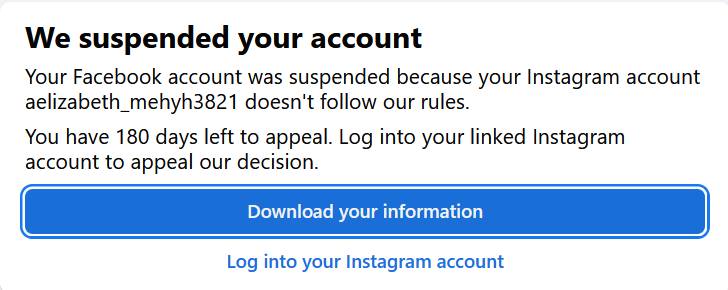
Even though I was unfairly booted from all Meta products I was using (FB, Insta, and Threads), I’ve managed to create another persona and have re-connected with many of the people I was “friends” with previously. As a result, I received a lot of birthday wishes this past Wednesday (06/04). I did my best to individually recognize everyone who sent me a greeting (and yes, I’m aware that FB makes it exceedingly easy to do so, but it doesn’t force one to do it). I also wanted to post a general “thank you” and felt the need to explain why this birthday had so much meaning for me.
Believe it or not, aelizabeth_mehyh3821 isn’t me!
A bit less than two and a half years ago, I started having trouble walking from my bedroom to the kitchen. I was serially exhausted and couldn’t figure out what was happening. My doctor had me fitted with a Holter Monitor, which records your heart rate 24/7 for seven days.
The results were sobering. On one night my heart rate fell to 26 BPM; distressingly slow. I was referred to a cardiologist and, after some consultation and discussion about the alternatives, I decided to undergo pacemaker implant surgery. That was two years ago last March 8 (but who’s counting?).
Six months before that I was working in a warehouse, driving a forklift, lifting lots and lots of fairly heavy boxes, and climbing both ladders and storage racks (when I was in a hurry and only needed one box). While working there, I was playing twilight golf with a bunch of former colleagues from Rocketdyne. One of the guys I played with was a Manager of Manufacturing Engineering and he suggested I apply for a position, which I did.
I had an interview and was offered a position. Unfortunately, although I had passed the drug test five previous times, I had always been smoking and had only been using edibles for a while. I didn’t realize the cannabis from them stayed in your system longer than smoking does. I failed and the job was rescinded. I was heartbroken and humiliated. My younger daughter berated me mercilessly and I felt shame; not because I was using Cannabis, but because I wasn’t careful enough to pass the test.
I can’t say for sure that my bradycardia was caused by the weight of that loss (I would have been paid a lot of money for my efforts) and the humiliation I felt over having to tell the guys who I was going to be working with that I wouldn’t be there because I failed a drug test. Regardless, although the implant surgery was a success and I had more energy than I’d had for a while, over the next two years my health deteriorated to the point I honestly didn’t think I had much longer to live.
I was experiencing horrible, arthritic-like pain in nearly every joint in my body. I underwent a battery of tests for a couple of months. Eventually, my doctors (there were several by now) all suggested that the root cause of all this was the Hepatitis C virus I had been carrying asymptomatically for close to forty years. I was first offered treatment in early 2017, when I had just had to leave a two-year stint at Aerojet Rocketdyne. The co-pay was $30,000 and, since I was experiencing no symptoms, I didn’t bother.
This year I decided to take the 12-week regimen of Epclusa, and the co-pay was only $2,000. Still not cheap, but I was really suffering. There were times when I had to shuffle along rather than walk. I had fallen a couple of times and the joint pain was frequently excruciating.
I finished the regimen a couple of months ago. If I test negative for the virus six months after completion, I will be considered cured. I am, however, gaining strength, recovering my balance, and feeling much better. So much so that I’ve begun working for a lawyer and am seeking a few more clients. Turns out my law degree, knowledge of AI, and my KM experience are a unique combination, and I am presenting myself to attorneys as one who can help them keep track of their knowledge, use AI to enhance their practice, and help as a legal assistant when necessary.
I welcome the challenge and am excited for what the future holds, despite my many chronic conditions and fairly advanced age. Keeping busy doing things I love and am good at should keep me going for at least a few more years. Who knows? Maybe a decade. My pacemaker’s battery still has about twelve years of life remaining … and it can be replaced.
Back to my 78th birthday. I’m truly feeling energized by the recovery I’ve made and the road I’ve put myself on. Although it was a bit devastating to lose my Facebook, Instagram, and Threads accounts at the beginning of the year (according to Meta, it was because I broke the rules on an Instagram account that wasn’t me and trying to straighten it out was both impossible and infuriating) I’m thankful for those friends I’ve managed to re-connect with, as well as the new friends I’ve made recently. I’m thankful for all of them. Life would be less sweet without their presence.
I prompted Poe’s chatbot, “Assistant”, with the following. Its response seems almost like it enjoyed doing this.
“Write a corporate pep talk of at least 300 words that sounds reasonable, but is nothing more than corporate gibberish.”
Team:
As we embark on the next fiscal quarter, it’s imperative that we synergize our verticals and double down on our core competencies to truly unlock cross-functional scalability. The paradigm shifts in our industry demand an agile mindset, and we are uniquely positioned to leverage our robust infrastructure to capitalize on emerging opportunities. Now is the time for us to think outside the box, lean into our KPIs, and disrupt the status quo with unprecedented velocity.
Our mission is clear: we must amplify our operational bandwidth while maintaining a laser-sharp focus on customer-centric deliverables. This is not just about meeting expectations—it’s about exceeding them at every touchpoint. By fostering an ecosystem of innovation and embedding a culture of excellence into our DNA, we can achieve a seamless alignment between our strategic objectives and ground-level execution.
Remember, success in today’s dynamic landscape is not a linear journey. It’s about embracing iterative growth, harnessing actionable insights, and pivoting proactively when faced with volatility. Let’s not forget the power of collaboration—our ability to break down silos, ideate collectively, and drive end-to-end solutions will define our trajectory as market leaders.
I urge each of you to take ownership of your deliverables and approach challenges with a growth mindset. Let’s circle back to our organizational north star and ensure that every touchpoint in our value chain is optimized for maximum impact. The low-hanging fruit is ours to harvest, but we must also keep an eye on the blue-sky opportunities that will future-proof our success.
In closing, I want to reiterate that our greatest asset is you—the people who make this organization thrive. Together, let’s move the needle, operationalize our vision, and deliver unparalleled value to our stakeholders. The sky is not the limit—it’s just the beginning. Let’s make it happen!
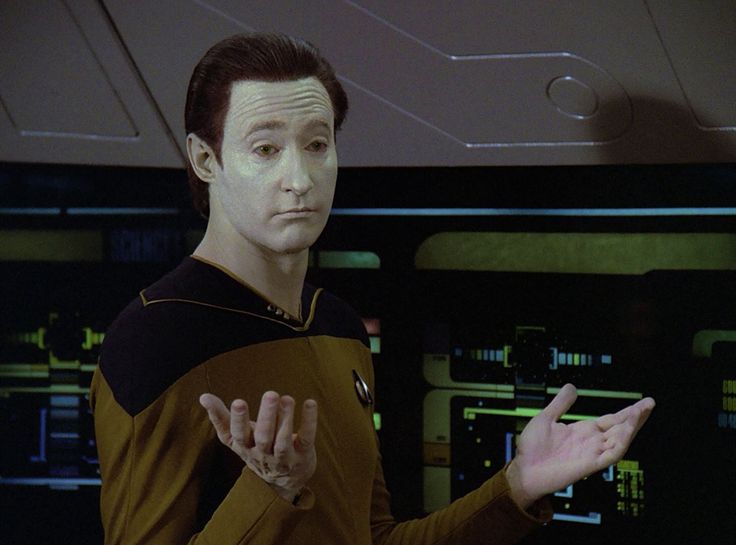
If Artificial Intelligence takes over in the future, and that seems to be what causes the most hand-wringing nowadays, wouldn’t it most likely follow that we will have evolved into cyborgs? Is there anything actually WRONG with that? Unlike Data, from Star Trek: The Next Generation, we’d almost certainly bring our emotions with us (unless evolution proves them to be detrimental to our long-term survival.) It can easily be argued that emotions, at least destructive ones, are not in our overall best interest, while positive ones are evolutionary assets.
When you think about it, doesn’t it seem strange, if not useless, to worry about our evolutionary path going forward? Artificial selection makes it clear we can at least guide that path, so it’s surely important to understand how we have evolved and then project those changes that may or may not require our attention. So thinking about where we’re headed is useful. My contention is that worrying about it is, well, a waste of time.
I have no doubt we will one day be a true spacefaring species; that is, if we don’t kill ourselves off first. That should require some hefty biological, psychological, and perhaps a dozen or so other aspects of the human being, changes in order to adapt.


 Systems Savvy