Category Archives: News & Politics

MAGA Are Delusional Fools

The world according to Donald Trump is a kind of bargain-bin epic, but the real masterpiece is the fan club that keeps insisting it is hard-hitting non-fiction. At this stage, his separation from reality is less a “difference of opinion” and more a hard launch into an alternate dimension, yet his supporters gaze upon this rift in the fabric of truth and declare, “Yes, finally, someone who tells it like it isn’t.”

They are handed claims that collapse under the slightest contact with evidence—record-breaking crowds that weren’t, landslide victories that didn’t happen, conspiracies so vast they apparently include anyone who has ever read a document—and the reaction is not embarrassment, but enthusiasm. Each debunked story is treated not as a warning sign, but as a plot twist in their favorite show. Courts, investigations, and basic arithmetic all line up to say, “This is nonsense,” and the response is essentially, “Exactly what the villains would say.”

In this saga, Trump is both the almighty genius and the world’s most persecuted man, a flawless winner who somehow keeps being robbed, a champion of law and order who is, coincidentally, never supposed to be subject to it. His supporters nod along as if these contradictions are profound rather than incoherent. The more impossible the story, the more eagerly they embrace it. It is magical realism, minus the realism.

By now, nobody can reasonably claim they “just don’t know what’s true.” The pattern has been flashing in neon for years: lies dressed up as revelations, vindictiveness posing as strength, and constant attacks on any institution that dares to say, “That’s not how reality works.” To stick with him at this point is not an act of confusion; it is a lifestyle choice. It is the decision to treat facts as optional accessories and outrage as a core identity.

So the indictment is almost generous: Trump spins the fantasy, but his supporters keep the franchise alive. They supply the demand for delusion, renew the subscription to unreality, and call it patriotism while doing it. Whatever they tell themselves, they are not being “bold” or “independent thinkers.” They are simply choosing the comfort of a flattering fairy tale over the discomfort of the real world—and insisting the rest of society live inside that fairy tale with them.


Never, Ever, Ever!

I have NOT forgotten about the Epstein files.

I will NEVER forget about the Epstein files.

I will also NEVER forget that Trump is a pedophile and a rapist of children.


Just a Thought

Do you really think we can deal with this insane, delusional administration non-violently? I’m not convinced.


The U.S. is Not 1930s Germany

Claiming that America today is equivalent to 1930s Germany is both historically shallow and strategically counterproductive. Nearly a century has passed since Adolf Hitler rose to power amid the wreckage of World War I, a global depression, and the collapse of the Weimar Republic. Germany in the 1930s was a humiliated, war-torn, economically devastated nation with no democratic tradition, no cultural resistance to totalitarianism, and no institutional muscle memory to prevent the consolidation of absolute power. The U.S., by contrast, has nearly 250 years of democratic infrastructure, a robust culture of dissent, a decentralized federal system, and a Constitution designed precisely to resist authoritarian overreach.

Moreover, the social, technological, and informational ecosystems are radically different. The 1930s lacked the internet, social media, whistleblower protections, or investigative journalism at scale. Today, every abuse of power can be documented, disseminated, and debated within minutes. We are not helpless—we are connected and aware in ways that were unimaginable in interwar Europe.

That said, dismissing authoritarian threats altogether would be just as naïve. We face unique 21st-century dangers: digital disinformation, polarization, and demagogues exploiting modern platforms. But invoking Hitler or the Nazi regime too loosely dilutes the specificity of that horror and numbs people to its actual warning. Let’s confront today’s threats on their own terms, with courage rooted in history, not hysteria.


The Quiet Face of Tyranny: How Emil Bove Threatens the Rule of Law

There are monsters among us. They don’t crawl from caves or erupt in public tantrums. No, the most dangerous among them walk calmly through courtrooms and government buildings, armed not with violence but with credentials and legalese. Emil Bove is one such figure—a reminder that authoritarianism often arrives not with a bang, but with a briefcase.

Bove, a former federal prosecutor and now a prominent defender of Donald Trump, argued before the Supreme Court in Trump v. United States that a president could order the assassination of a political rival and be immune from prosecution unless Congress had first impeached and convicted him. Let that sink in. According to Bove, unless Congress acts, a president could unleash the machinery of the state to eliminate his enemies, and the courts would be powerless to intervene.

It is hard to imagine a more grotesque betrayal of the American principle that no one is above the law. Yet Bove didn’t stop there.

In a separate legal context, Bove shockingly instructed that individuals could ignore a federal court order—specifically, a ruling that prohibited the government from rendering hundreds of asylum-seeking men to a prison camp in El Salvador. These were men fleeing violence and persecution, invoking the protections of due process guaranteed under U.S. and international law. But Bove’s message was clear: the courts can be disregarded when inconvenient.

This isn’t legal strategy. This is lawlessness dressed in Armani.

Imagine the consequences if this logic took hold. The courts—our last institutional line of defense against executive overreach—would become ornamental. Their rulings optional. The law itself would be subject to political whim and brute force. And the vulnerable, the voiceless, the targets of state-sanctioned abuse? They would have no recourse. No rights. No hope.

Bove’s contempt for the rule of law reveals the true danger: a legal elite willing to hollow out democracy from the inside, all while claiming to defend it. This is not merely a technical debate among lawyers. This is about whether the United States will remain a constitutional republic, or whether we will slip—quietly, insidiously—into autocracy under the guise of “executive immunity” and “national security.”

In any other era, a lawyer who advised ignoring a court order would be disciplined, sanctioned, maybe disbarred. But in the post-Trump era, such defiance is applauded in certain circles. Bove’s arguments aren’t fringe anymore—they are being mainstreamed in front of the highest court in the land. And the justices, disturbingly, entertained them with far less outrage than the moment demands.

History shows us where this road leads. In Nazi Germany, apartheid South Africa, Jim Crow America—the law was contorted to protect the powerful and persecute the powerless. It always begins with legal justifications for unconscionable acts. Always. Men like Emil Bove provide those justifications. They sanitize the machinery of repression. They make it sound reasonable, even principled.

And they count on us not to notice.

But we must notice. We must resist the temptation to normalize the radical, to accept the obscene as simply another legal argument. We must remember that beneath the surface of constitutional language, Bove is advocating for tyranny: a presidency unbound by law, and a government that ignores the judiciary when it suits its purposes.

There is a reason why we revere the principle of “Equal Justice Under Law.” It is the safeguard of civilization. Without it, we are left with power unchecked, and cruelty unchallenged.

To look at Bove is to see not a villain in the Hollywood sense, but something far more dangerous—a man who knows exactly how the system works and is willing to dismantle it piece by piece. Calmly. Methodically. Legally.

That is why we must be ever-vigilant.

Because when monsters wear suits, when they speak in measured tones and cite precedent as they strip away our liberties, the danger is greater—not lesser. They know how to mask authoritarianism as patriotism, cruelty as strength, and impunity as “executive authority.”

We cannot be passive. We must name the danger. Confront it. Reject it in the courts, in the media, in the halls of Congress, and in the court of public opinion. Emil Bove may be just one man, but he represents a movement of cold, calculated disregard for democratic norms.

It is up to us to remember: when a lawyer tells you the president can murder without consequence, or that you may ignore the courts, they are not defending the Constitution. They are laying dynamite at its foundation.

And if we don’t stop them, history will not be kind to those who looked away.


Americans are Ignorami

Reclaiming the Hammer and Sickle: Symbolism, Struggle, and Systemic Illiteracy

In large part because of my activities in the antiwar and peace and justice movements shortly after I celebrated my 20th birthday, I began reading Marx, Engels, Lenin, Mao, Castro, and Guevara, as well as Black authors and activists like Eldridge Cleaver, Malcolm X, and George Jackson, among others. I was especially fond of reading Lenin’s explanations and defense of the theories of Karl Marx and, to a lesser extent, Friedrich Engels. My interest wasn’t only in their political and economic theories, but also in their general philosophy, which is Dialectical Materialism. I’ve touched on this philosophy somewhat tangentially in some of my previous writings.

I’ve long been both dismayed and somewhat fascinated by the sheer ignorance of my fellow Americans when it comes to understanding what some very important terms and concepts actually represent. I am here referring to socialism, communism, capitalism, and dialectical materialism—perhaps a few other economic, political, and philosophical terms as well.

The hammer and sickle is one of the most enduring symbols of communism and socialist movements, representing the unity and solidarity of industrial workers (symbolized by the hammer) and agricultural laborers (symbolized by the sickle). While it gained prominence in the 20th century as an emblem of the Soviet Union, its roots and symbolism tie back to the broader communist ideas as envisioned by Karl Marx and Friedrich Engels.

Theoretical Foundation: Marx and Engels

Marx and Engels, in works like The Communist Manifesto (1848), envisioned a society where the working class (proletariat) would overthrow the capitalist class (bourgeoisie) to establish a classless, stateless society. Central to this vision was the unification of all laborers—regardless of their specific trades or industries—against the exploitative structures of capitalism. The hammer and sickle perfectly encapsulate this ideal by bringing together two key groups of workers who were often divided in pre-industrial and industrial societies:

  • Industrial Workers (Hammer): Factory workers, craftsmen, and laborers—urban dwellers essential to the mechanized production processes of capitalist economies.
  • Agricultural Workers (Sickle): Peasants and farmers who toiled in rural areas, producing food and raw materials. Often marginalized and exploited under feudal and capitalist systems.

By combining these two tools, the hammer and sickle symbolized the unity of these distinct groups in their shared struggle for liberation and equality.

Historical Context of the Symbol

Although Marx and Engels themselves did not create or use the hammer and sickle as a symbol, their ideas inspired later revolutionary movements that adopted it. The symbol gained prominence with the Bolshevik Revolution in Russia (1917), when the Bolsheviks sought to unite industrial workers and peasants under the banner of communism. The hammer and sickle were officially adopted as part of the Soviet Union’s flag in 1923.

Significance to the Communist Movement

The hammer and sickle became a powerful visual representation of several core ideas in Marxist-inspired movements:

  • Worker Solidarity: It emphasized unity among all exploited classes to overthrow the capitalist system.
  • Class Struggle: It depicted the tools of labor, highlighting the centrality of workers and their productive power in shaping society.
  • Revolutionary Change: It called workers and peasants to action—to seize the means of production and build a socialist society.

Criticism and Evolution

In practice, the unity symbolized by the hammer and sickle was not always realized. Tensions between urban industrial workers and rural agricultural communities persisted in the Soviet Union and other communist nations. Moreover, the symbol became associated with authoritarian regimes, giving it a controversial legacy in modern times.

Still, the hammer and sickle remain potent emblems of worker solidarity and the Marxist vision of a classless society—despite how much interpretations of communism have evolved over time.

The American Context: Weaponized Ignorance

This, however, is where things get more complicated—and more infuriating.

In the American political lexicon, socialism has become a slur hurled without understanding, a catch-all bogeyman meant to stoke fear, not provoke thought. The hammer and sickle, meanwhile, has been reduced in the public imagination to little more than a sinister relic—stripped of context, stripped of nuance, and weaponized in the culture war by people whose understanding of history could fit neatly on the back of a fast-food receipt.

The fact is, most Americans have never seriously studied Marx or Engels—let alone Lenin or Mao—and wouldn’t recognize dialectical materialism if it organized their kitchen pantry and handed them a checklist. We are a people sold the myth that capitalism is not just the best economic system, but the only one consistent with freedom, democracy, and morality. Anything that questions this orthodoxy is treated as heresy, regardless of its intellectual rigor or empirical grounding.

Dialectical Materialism: Not a Manifesto, But a Method

Let’s be clear: dialectical materialism is not a manifesto—it is a method. A way of understanding the world not as a series of isolated events, but as a dynamic, interconnected whole; a recognition that history moves through contradiction, and that the driving force behind historical change is the conflict between classes, between ideas, between material conditions themselves. It is not “communism” as caricatured by reactionaries—it is a framework for grasping the engines of change that shape human societies.

The Real Threat to the Status Quo

And therein lies the real threat to the American status quo: not the hammer and sickle itself, but the idea that working people—whether factory machinists, field hands, or Uber drivers—might recognize their common interests. That they might see through the illusion that their suffering is individual, rather than systemic. That they might stop blaming immigrants, or the unemployed, or “welfare cheats,” and instead aim their righteous anger at the extractive systems that keep them exhausted, precarious, and obedient.

The Struggle Continues

We are long past the time for empty patriotism and red-scare hysteria. We need deep, structural critique rooted in historical knowledge and philosophical clarity. Not to idolize past revolutions, but to learn from them—critically, courageously, dialectically.

The hammer and sickle endures not because it’s fashionable, and certainly not because it’s flawless, but because the struggle it symbolizes has never truly ended. The tools have changed. The fields have changed. But the workers are still here. And the fight—for dignity, for justice, for liberation—remains.


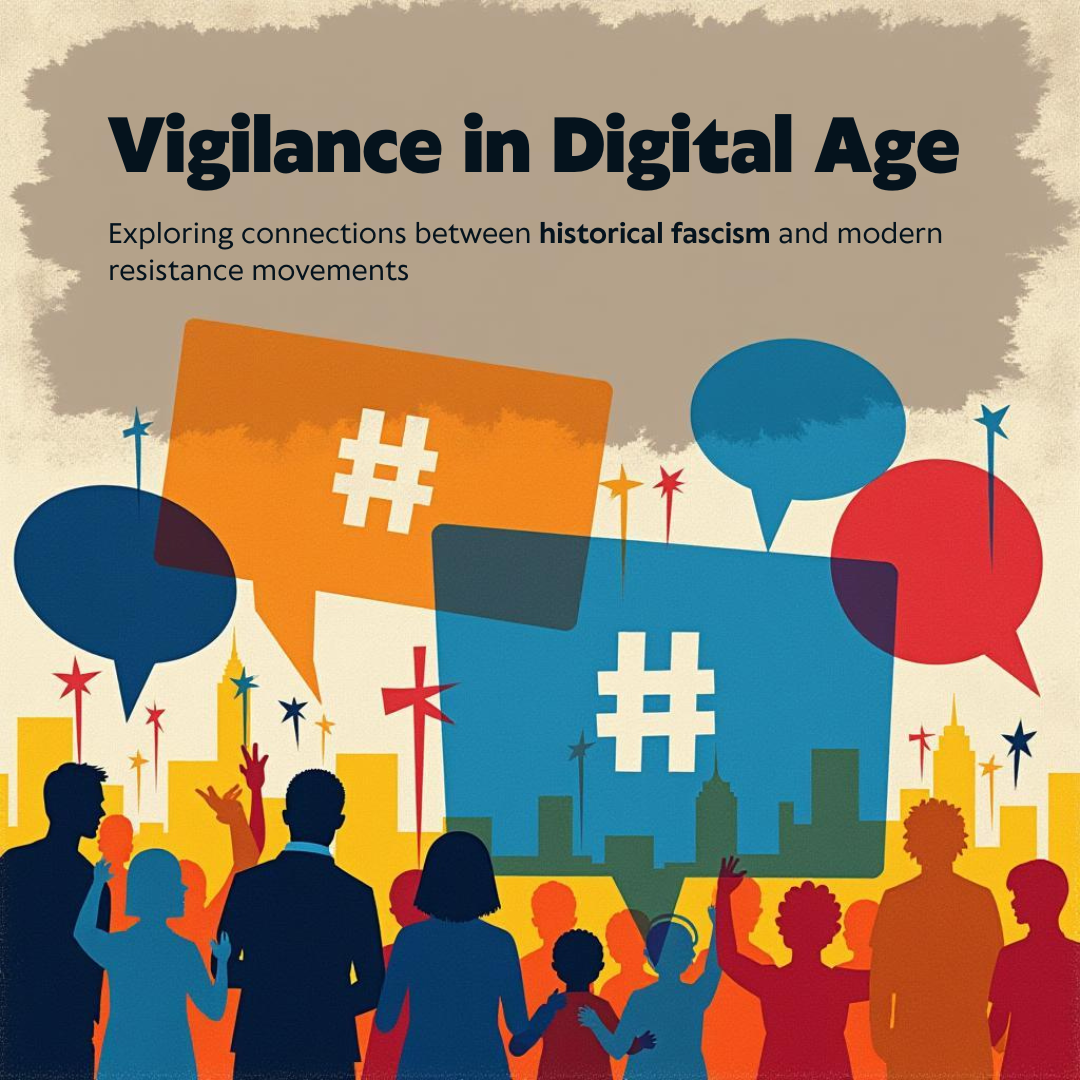
The Trump Vacuum and the Opportunity of Idealized Design


There’s a strange sort of energy in the air these days. You can almost feel it—the wheels coming off the rickety jalopy that is Trumpism. The man himself, once a master of chaos and distraction, is looking more and more like a washed-up carnival barker whose tricks have lost their shine. The legal walls are closing in, the rallies are less electric, and the “movement” has become less about a future and more about clinging to a bitter, grievance-soaked past.

But let’s not kid ourselves: while Trump has been busy turning the federal government into a shell of its former self—gutting agencies, stacking departments with yes-men, and driving out career professionals—he’s also unwittingly created a rare opportunity. Nature, as they say, abhors a vacuum. And what we’ve got, right now, is a vacuum the size of Pennsylvania Avenue.

If you’ve ever read Dr. Russell Ackoff—and if you haven’t, now would be a good time—he talks about something called “idealized design.” The gist? When the system you’ve got is broken, don’t just patch the leaks and slap on another coat of paint. Instead, ask yourself: If the current system disappeared overnight, what would you create to take its place? Not what’s possible within the old constraints, but what’s ideal given what we now know.

Well, look around. Thanks to the Trump wrecking ball, a lot of the old constraints are gone—obliterated, really. Agencies like the EPA, Education, even the Post Office, have been hollowed out to the point of absurdity. The courts are in crisis, the CDC is a shell, and the State Department looks like a ghost town. There’s nothing left to “fix.” So, what if we stopped trying to resuscitate the corpse and started imagining a new body politic altogether?

Here’s the opportunity: We get to ask, “What do we want government to look like, now?” Ackoff would tell us to ignore the nostalgic call for a return to the “good old days.” Instead, let’s design forward. A government that’s transparent, accountable, and explicitly built to serve all its people, not just the one percent or the loudest megaphones. What would a Department of Justice look like if it truly prioritized justice? What about immigration—not as a problem to be “solved,” but as a vibrant source of national renewal?

The Trump era, for all its destruction, has left us with a blank page. The lesson is not to cower in fear or yearn for the status quo ante. It’s to seize the moment, roll up our sleeves, and start sketching out the kind of institutions we wish we’d always had. It’s the ultimate act of resistance: refusing to settle for less than the ideal, and demanding a government worthy of the people it serves.

Let’s not waste the vacuum. Let’s fill it—creatively, bravely, and with the best of what we can imagine.


Due Process? Don’t Make Me Laugh.

There’s a reason we supposedly revere the Constitution in this country—at least, that’s what every flag-waving “patriot” keeps screaming about at school board meetings and on Twitter (sorry, “X”). But I’d like to know: When was the last time any of these self-anointed constitutional scholars actually read the damn thing? Or, for that matter, when was the last time anyone in the Trump administration—especially over at the DOJ—acted like the rule of law applied to them?

Let’s talk about due process—that bedrock idea that the government can’t just do whatever it wants to whomever it wants, whenever it wants. We’ve got the Fifth and Fourteenth Amendments, both pretty clear on the whole “life, liberty, or property” thing not being taken away without, you know, a fair shake. But apparently, “due process” is now just a quaint little phrase, like “all men are created equal” or “no taxation without representation”—nice for speeches, but utterly disposable when it gets in the way of locking up immigrants or crushing dissent.

The Trump Playbook: Due Process, Schmue Process

Remember the family separations at the border? Remember “zero tolerance”? Turns out, due process is just another speed bump for the machinery of cruelty. We watched as people, most of whom don’t speak English and know nothing of our legal system, were herded through sham hearings—sometimes via video conference, sometimes with no lawyer at all. Some never saw a judge. Kids, for crying out loud, defending themselves in court. This is what passes for justice in MAGA-land.

And let’s not forget the DOJ, which, under Trump, became less “Department of Justice” and more “Department of Just Us (If You’re White and Rich).” Look at how they handled peaceful protests—send in the troops, gas the crowds, call anyone with a sign an “antifa terrorist” and pretend the First Amendment is just an optional suggestion. The chilling effect on dissent? That’s not “law and order.” That’s authoritarianism with a Fox News chyron.

Ignorance by Design

It’s not just ignorance; it’s willful, performative ignorance. The Trump crowd knows exactly what they’re doing. They count on people not knowing or caring about “due process” until it’s their own ass in the crosshairs. The cruelty is the point. It’s a feature, not a bug.

And let’s be real: this didn’t start with Trump. But under his administration, the gloves came off and the mask slipped. Suddenly, it was okay to say the quiet part out loud: “We don’t want these people here. We don’t want these people protesting. We don’t want these people voting.” Due process? Only if you’re the right kind of person, with the right kind of bank account, skin tone, or political loyalty.

Why It Matters (And Why We Can’t Give Up)

Look, I’m a 77-year-old white guy who’s been lucky enough to scrape by in this system. But the rule of law isn’t just some abstract principle to hang on a classroom wall. It’s the only thing standing between us and the abyss. When we let due process slide—whether for immigrants, protesters, or anyone else—we’re all in danger.

History has a funny way of repeating itself. I’ve seen what happens when people obey in advance, shrug their shoulders, and say, “Not my problem.” That’s how you lose a democracy—one ignored constitutional right at a time. If you think they won’t come for you, eventually, you’re not paying attention.

We need to demand better—from our courts, from our government, from each other. And we need to remember: due process is not a privilege. It’s a right, for everyone. If we let them take it away from the most vulnerable, it’s only a matter of time before it’s gone for all of us.

So, to the DOJ, to the administration, and to every would-be strongman with a flag pin and a Twitter account: Read the damn Constitution. And maybe, just once, try following it.


American Descent

Something new. Bluesky is my goto social media site and I just now discovered I can paste in posts and, in this case, my response to this particular post by Robert Reich. Thought I would give it a test spin. This may become a staple of my blog moving forward. I tend to do a lot more writing there than I’ve been doing here. This way I can blend in the two.

Remember: Almost all of us are the descendants of immigrants who fled persecution, or were brought to America under duress, or sought better lives for themselves and their descendants.Politicians who stoke fear and hatred over immigration want you to forget this.Do not.

Robert Reich (@rbreich.bsky.social) 2025-03-20T18:45:06.973088Z

I'm a descendant of Ukrainian Jews who fled the pogroms of the late 19th and earlier 20th century. I'm appalled at the country I once thought of as the benevolent savior of my family becoming the hateful, fearful bastion of racism and bigotry it now appears to be.

Rick Ladd (@retreado.bsky.social) 2025-03-20T19:59:50.873Z