In 1973, while preparing to travel to Cuba with the Venceremos Brigade, I underwent extensive political education on race, class, imperialism, and American society. Among the most memorable lessons came from members of the Black Panther Party. They distinguished personal prejudice and bigotry from something broader and more deeply rooted: racism as a system—something embedded in institutions, laws, customs, economic arrangements, and accepted ways of doing things.
That distinction has stayed with me for more than half a century because it explains something that our ordinary public vocabulary often conceals. Americans commonly use the word racist to describe an openly prejudiced person: someone who uses racial slurs, expresses hatred, refuses to associate with people of another race, or consciously believes one race is superior to another. Those behaviors are certainly manifestations of racism. But when racism is reduced to such behavior, the larger system disappears from view.
The lesson I heard in 1973 belonged to a broader Black Power analysis already articulated by Stokely Carmichael, later known as Kwame Ture, and political scientist Charles V. Hamilton. In their 1967 book Black Power, they distinguished “individual racism” from “institutional racism.” Individual racism, they wrote, is generally visible and attributable to particular people. Institutional racism is more subtle, arising through the operation of established and respected institutions. As they observed, people who would never personally bomb a church or attack a Black family could nevertheless support institutions and officials that perpetuated racial inequality.[1]
For purposes of clarity, I use prejudice to mean a preconceived judgment about a group; bigotry to mean a stubborn and often hostile attachment to such judgments; and discrimination to mean unequal treatment. I use racism more broadly to describe the network of attitudes, practices, institutions, and distributions of power through which racial hierarchy is created or reproduced.
These categories overlap. Psychological definitions often describe racism as a form of racial prejudice, while also recognizing institutionalized racism in schools, health care, employment, law enforcement, and other systems. Sociologists tend to place greater emphasis on racism’s systemic character—on the way interconnected institutions produce unequal access to resources and unequal life chances.[2]
The point, therefore, is not that personal racism does not exist. It plainly does. The point is that personal bigotry is only one level at which racism operates.
When someone says, “I’m not a racist,” the statement usually means something like this: I do not hate Black people. I do not use racial slurs. I would not deliberately mistreat someone because of race.
That may be entirely sincere. It is also an answer to the least demanding question.
The larger question is not merely whether I consciously hate anyone. It is whether the institutions I inhabit, support, benefit from, or leave unexamined continue to distribute wealth, security, education, health, opportunity, and punishment along racial lines.
A person can be free of conscious racial hostility and still participate in a racially unequal system. A loan officer may treat every applicant politely while applying standards shaped by decades of discriminatory lending. A real estate agent may never utter a racial slur while steering clients toward different neighborhoods. A school official may care about every child while administering district boundaries created by residential segregation. A physician may sincerely believe in equal treatment while relying on a medical algorithm that underestimates the needs of Black patients.
That is why innocence of intention cannot be the sole measure of racism. Intent matters, but systems also have histories, incentives, routines, and consequences.
Redlining is one of the clearest examples of racism becoming structural.
During the 1930s, federal agencies and local real estate professionals classified neighborhoods according to their supposed mortgage risk. Neighborhoods containing Black residents, immigrants, or other groups regarded as undesirable were frequently given the lowest ratings. Redlining did not merely deny particular individuals a mortgage. It denied credit and investment to entire communities. The federal government’s own housing materials acknowledge that the 1938 Federal Housing Administration underwriting manual incorporated racially discriminatory policies.[3]
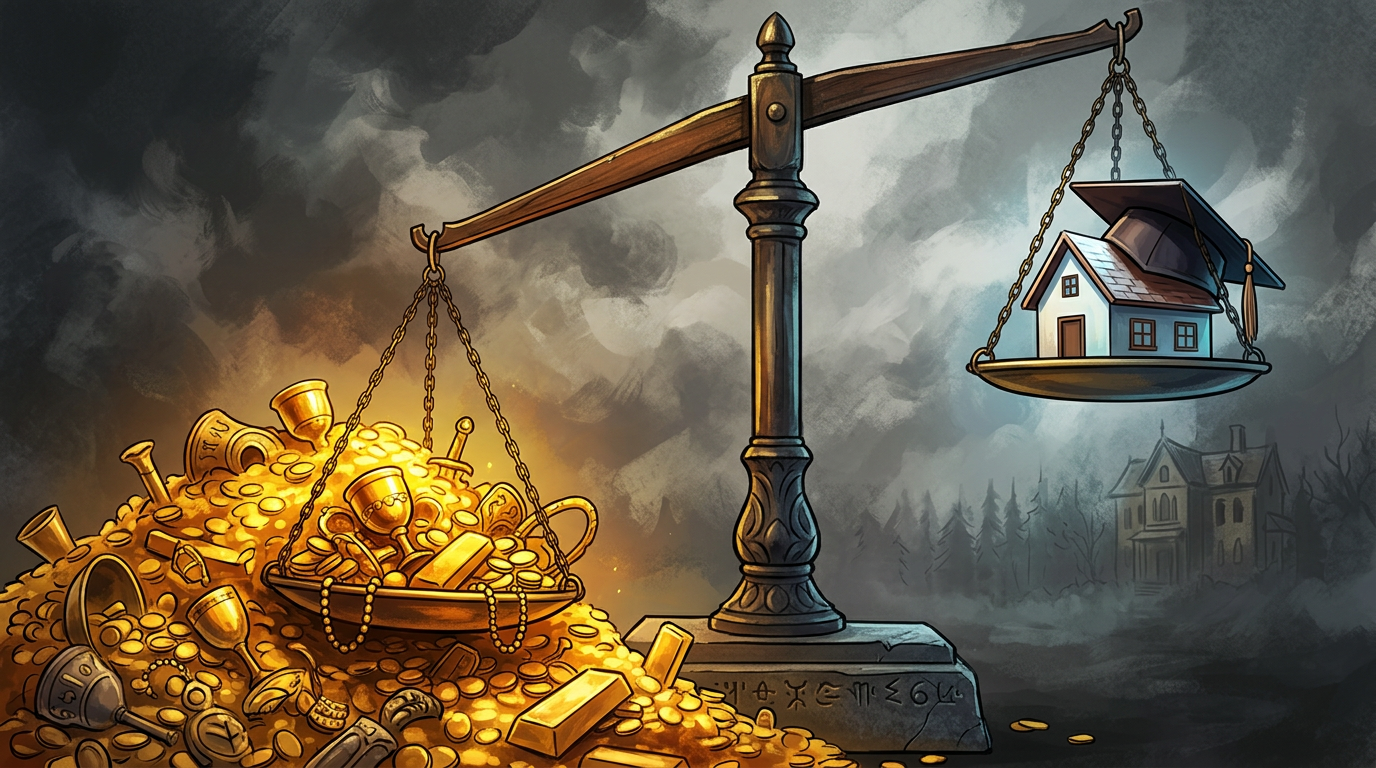
The consequences extended far beyond the original mortgage decision. Families denied affordable mortgages were less able to purchase homes, accumulate equity, borrow against that equity, finance education, start businesses, or pass property to their children. Neighborhoods denied investment experienced deteriorating housing, weaker commercial development and, in many cases, reduced public and private services.
Meanwhile, families admitted to federally supported suburban housing markets accumulated appreciating assets. Those assets could be inherited. Their neighborhoods acquired stronger tax bases, better-financed services, and reputations that attracted further investment.
No contemporary homeowner needs to have participated personally in redlining for its effects to influence the value of a home, the quality of a school district, the availability of credit, or the inheritance a family receives. The original prejudice has been converted into property, geography, and accumulated advantage.
The Federal Reserve reported that in 2022 the median wealth gap between White families and Black families exceeded $220,000. Redlining alone does not explain the entire gap, and it would be simplistic to pretend that it does. But it demonstrates how discriminatory policy can shape wealth for generations after the openly discriminatory rule has been repealed.[4]
Sundown towns provide another example. These were communities that excluded Black people—and sometimes other racial, ethnic, or religious groups—through ordinances, police enforcement, threats, restrictive covenants, intimidation, or widely understood local custom.
They were not exclusively Southern. The National Park Service notes that sundown towns were more common in the North and West than many Americans realize. For Black travelers, an ordinary road trip could become a calculation about where it was safe to buy gasoline, eat, sleep, or remain after dark. The Negro Motorist Green Book existed in part because the supposedly open American highway was not equally open to everyone.[5]
The disappearance of a threatening sign did not automatically undo the community the sign helped create. Decades of exclusion affected who owned property, who attended local schools, who developed business and political networks, and whose families benefited from rising land values. Later generations could inherit the resulting advantages without personally approving of the original exclusion.
Again, this is the difference between an event and a structure. The event may be over; the structure created by the event may remain.
Systemic racism is not confined to dramatic episodes of history. It can appear in routine decisions that seem individual and unconnected until they are measured collectively.
Consider employment. In a widely cited field experiment, researchers sent employers fictitious résumés with equivalent qualifications but different names. Résumés bearing conventionally White-sounding names received approximately 50 percent more callbacks than those bearing conventionally African American-sounding names. The disparity appeared across industries and occupations, including among employers describing themselves as equal-opportunity employers.[6]
Consider housing. In a national paired-testing study, equally qualified White and minority homeseekers approached housing providers about advertised properties. Blatant refusals had declined, but minority applicants were still told about and shown fewer homes and apartments. A subsequent HUD review found that paired-audit studies consistently detected statistically significant discrimination against historically disadvantaged groups.[7]
Consider appraisals. A 2024 Federal Housing Finance Agency study found that, after controlling for numerous property and appraisal factors, appraisals below the contract price were at least 23 percent more likely in majority-Black neighborhoods than in otherwise similar neighborhoods with no Black residents. The researchers also found evidence that appraisers’ familiarity with a neighborhood could reduce the effect, suggesting that institutional information practices—not necessarily overt personal animosity alone—helped produce the disparity.[8]
The pattern is difficult to dismiss:
The same qualifications, but a different name.
The same financial readiness, but fewer homes offered.
A comparable transaction, but a different valuation risk.
No racial slur is required. No one involved has to announce a doctrine of racial superiority. Yet the burden repeatedly falls in the same direction.
Housing segregation does not remain a housing issue. It becomes an education issue because American public schools are organized largely by residential location and are financed in part through local property revenues.
The Government Accountability Office has noted that discriminatory history, residential wealth disparities, school district boundaries, and local property-tax financing remain intertwined. Poor, Black, and Hispanic students generally attend schools with fewer resources and worse outcomes. GAO also found that when communities separated from existing school districts to form new districts, the new districts tended to be substantially Whiter and wealthier than those left behind.[9]
A family may say, “We moved here for the schools,” without harboring conscious racial hostility. But that apparently private choice occurs within a housing and school system whose geography was not created innocently. The issue is not that every family making such a decision is personally bigoted. The issue is that millions of individually understandable choices can reinforce a structure created through exclusion, unequal investment, and inherited property advantage.
Racial inequality also appears where institutions give decision-makers broad discretion.
Researchers examining nearly 100 million traffic stops found that Black drivers were less likely to be stopped after sunset, when darkness made a driver’s race harder to perceive. They also found that police applied a lower evidentiary threshold when deciding to search Black and Hispanic drivers than when deciding to search White drivers.[10]
This does not prove that every police officer is consciously bigoted. Nor does every disparity, by itself, prove discrimination. But when similarly situated people encounter different thresholds of suspicion—and when the pattern persists across a vast number of decisions—the matter can no longer be reduced to a few identifiable “bad apples.” Training, discretionary standards, supervision, institutional incentives, deployment patterns, and accountability systems all become relevant.
The Justice Department’s investigation of Ferguson, Missouri, illustrated this institutional dimension. It found that the city’s emphasis on generating revenue had shaped police and municipal court practices, systematically violated constitutional rights, and both reflected and exacerbated racial bias. The problem was not simply what individual officers believed privately; it was what the institution rewarded and required publicly.[11]
Perhaps the clearest modern example comes from health care.
Researchers examined a widely used commercial algorithm intended to identify patients who needed additional medical attention. The algorithm used prior health-care spending as a proxy for illness. But because less money had historically been spent on Black patients with comparable medical needs, the algorithm interpreted lower spending as evidence that those patients were healthier. Black patients assigned the same risk score as White patients were actually sicker, and the bias reduced by more than half the number of Black patients identified for extra care.[12]
The algorithm did not need to express hatred. Its bias arose from treating an unequal historical outcome—medical spending—as though it were a neutral measure of medical need.
That is what “baked in” means. Yesterday’s inequality becomes today’s data. Today’s data become tomorrow’s decision. A system can reproduce racial inequality while presenting itself as objective, colorblind, and mathematical.
A serious argument about systemic racism should not claim that every difference between racial groups is automatically caused by racism. Such a claim would be intellectually careless.
Evidence matters. We should compare similarly situated people, examine institutional history, identify the operative rules, test alternative explanations, measure outcomes, and look for mechanisms connecting policy to consequence.
But we must be equally careful not to impose an impossible burden of proof—one that recognizes racism only when a person explicitly confesses racial hatred. Systems do not possess private emotions. They reveal themselves through their design, incentives, practices, and patterned outcomes.
The relevant question is not simply, “Can we find a bigot?” It is also, “What does this institution repeatedly do, to whom, and why?”
Understanding systemic racism does not require believing that every White person is malicious, that all members of any racial group have identical experiences, or that class, gender, geography, and other forces do not matter. Nor is it a demand for inherited personal guilt.
It is a demand for responsibility.
Guilt asks, “Am I personally a bad person?”
Responsibility asks, “What have I inherited, what do I participate in, what consequences does it produce, and what am I prepared to change?”
“I’m not a racist” can become a form of evasion when it ends the conversation rather than beginning it. It allows a person to treat the absence of conscious hatred as evidence that no further examination is necessary. It turns racism into a question of personal manners and moral self-image while leaving housing, employment, education, policing, health care, and inherited wealth safely outside the frame.
A better response would be: I may not consciously wish to discriminate, but I live within institutions shaped by racial history. I have an obligation to understand how they operate, to listen to those who experience their burdens, to examine evidence rather than defend my innocence, and to support changes when apparently neutral systems produce unjust results.
The distinction I learned in 1973 remains essential. Bigotry is often loud, personal, and recognizable. Systemic racism can be quiet, respectable, procedural, and self-perpetuating. Bigotry may announce itself with an insult. Racism may arrive as a zoning ordinance, an appraisal, an algorithm, a school boundary, a résumé callback, or a discretionary search.
The opposite of bigotry is not expressing hatred. But the opposite of systemic racism requires more than private tolerance. It requires public justice.
Innocence is not the same as justice—and “I’m not a racist” is not the same as confronting racism.
[1] Kwame Ture (Stokely Carmichael) and Charles V. Hamilton, “Black Power,” excerpted from Black Power: The Politics of Liberation (1967), Teaching American History.
[2] American Psychological Association, “Racism, Bias, and Discrimination.”
[3] Robert K. Nelson et al., “Mapping Inequality: Redlining in New Deal America,” Digital Scholarship Lab, University of Richmond.
[4] Aditya Aladangady, Andrew C. Chang, and Jacob Krimmel, “Greater Wealth, Greater Uncertainty: Changes in Racial Inequality in the Survey of Consumer Finances,” FEDS Notes, Board of Governors of the Federal Reserve System, October 18, 2023.
[5] National Park Service, “The Green Book: An Historic Context.”
[6] Marianne Bertrand and Sendhil Mullainathan, “Are Emily and Greg More Employable than Lakisha and Jamal? A Field Experiment on Labor Market Discrimination,” NBER Working Paper 9873, July 2003.
[7] Margery Austin Turner et al., “Housing Discrimination Against Racial and Ethnic Minorities 2012,” U.S. Department of Housing and Urban Development, June 2013.
[8] Daniel Grodzicki, Sean Cannon, Christopher W. Davis, and Ken Lam, “Home Purchase Appraisals in Minority Neighborhoods,” Federal Housing Finance Agency Working Paper 24-06, November 4, 2024.
[9] U.S. Government Accountability Office, “K–12 Education: Student Population Has Significantly Diversified, but Many Schools Remain Divided Along Racial, Ethnic, and Economic Lines,” GAO-22-104737, June 16, 2022.
[10] Emma Pierson et al., “A Large-Scale Analysis of Racial Disparities in Police Stops Across the United States,” Nature Human Behaviour 4 (2020): 736–745.
[11] U.S. Department of Justice, Civil Rights Division, “Investigation of the Ferguson Police Department,” March 4, 2015; see also the DOJ’s United States v. City of Ferguson case page.
[12] Ziad Obermeyer et al., “Dissecting Racial Bias in an Algorithm Used to Manage the Health of Populations,” Center for Healthcare Marketplace Innovation, October 25, 2019; underlying study: “Dissecting Racial Bias in an Algorithm Used to Manage the Health of Populations,” Science 366, no. 6464 (2019): 447–453.