Tag Archives: Economics

Rethinking America’s Economic Design for True Democracy

The United States does not merely suffer from bad policy. It suffers from a failed political-economic design.

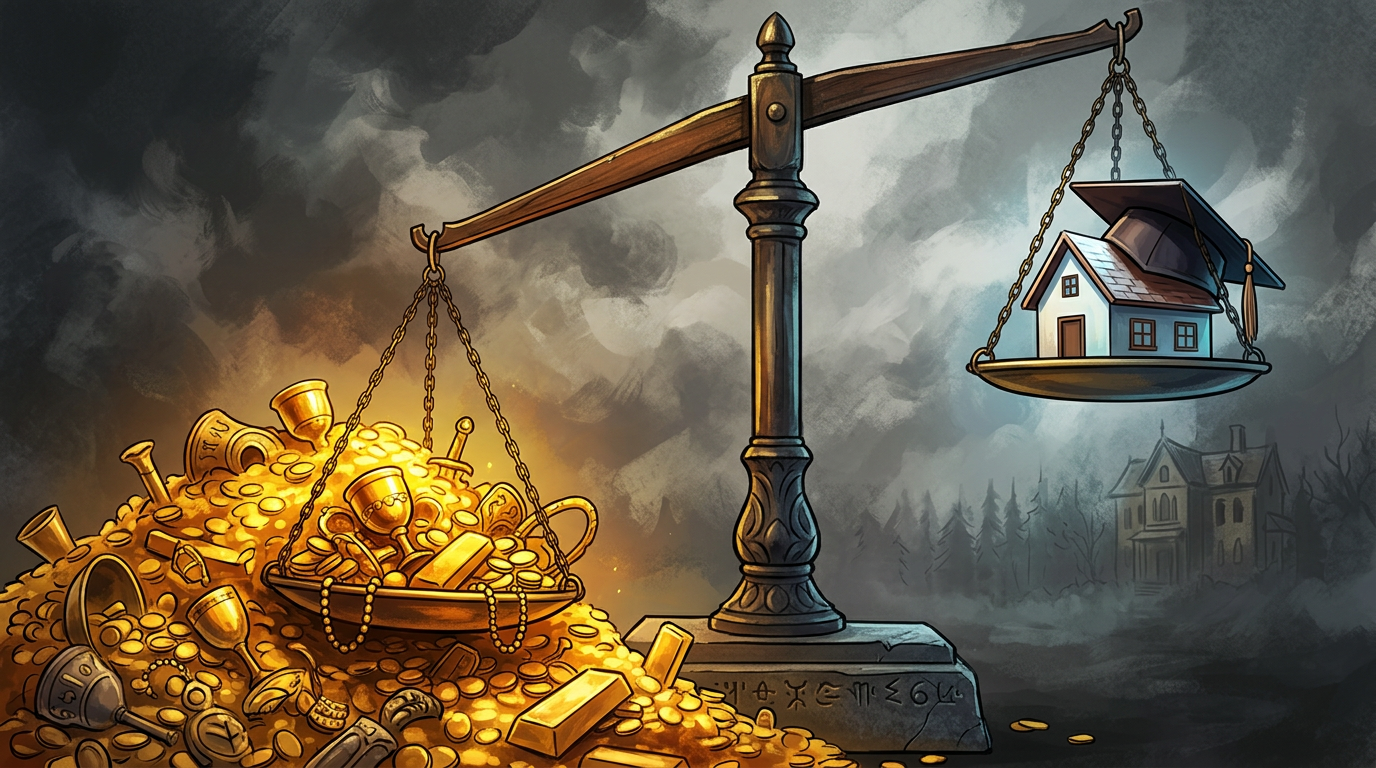
For decades, Americans have been told that the economy rewards merit, innovation, risk, and hard work. That story has become increasingly difficult to defend. Workers produce the goods, deliver the services, build the platforms, staff the hospitals, move the freight, teach the children, care for the elderly, process the data, maintain the infrastructure, and generate the daily activity that becomes Gross Domestic Product. Yet the gains from that collective labor flow disproportionately to owners, executives, financiers, and founders whose legal claims on capital allow them to appropriate wealth far beyond any plausible measure of personal contribution.

This is not an accident. It is not the weather. It is not the invisible hand. It is design.

The American economy is structured by law. Corporations exist because law creates them. Limited liability exists because law grants it. Intellectual property exists because law protects it. Stock markets, mergers, executive compensation, bankruptcy priorities, taxation, labor rights, and campaign finance are all products of public decision. The economy is not separate from government; it is one of government’s largest creations.

That means we are entitled to redesign it.

The central defect in the current system is that it treats labor as an expense and capital as the sovereign. Workers are described as “human resources,” while shareholders are treated as the rightful claimants of the surplus. This reverses moral reality. Labor is not a cost to be minimized. Labor is one of the principal sources of value. A society that depends on workers for production but denies them meaningful power over the distribution and governance of that production is not a democracy in any serious economic sense.

The fortunes of men like Elon Musk, Mark Zuckerberg, and Jeff Bezos are often described as the reward for brilliance. No doubt they are intelligent, ambitious, and consequential. But their wealth was made possible by far more than personal genius. It depended on public roads, public courts, public education, public research, public communications infrastructure, public subsidies, public enforcement of contracts, publicly created corporate privileges, and the labor of hundreds of thousands of people. Their wealth is therefore not purely private achievement. It is socially enabled accumulation.

The question is not whether successful people should be rewarded. The question is whether any democratic society should permit individuals to accumulate economic power so vast that they can shape labor markets, communications systems, elections, public policy, technological development, and even geopolitical outcomes without meaningful democratic accountability.

That is not capitalism as freedom. That is private government.

Reform is no longer enough. A higher minimum wage, better enforcement of labor law, a more progressive tax code, and stronger antitrust policy are all desirable. But they do not reach the root of the matter. They leave untouched the basic architecture: capital commands, labor obeys; owners govern, workers request; profits are privatized, while the social costs of instability, pollution, poverty, ill health, and community decline are pushed onto everyone else.

The United States needs an economic transformation grounded in the principle of economic democracy.

That transformation should begin with a simple proposition: those who create the wealth of the nation must have a real voice in how that wealth is governed and distributed. Workers should have representation on corporate boards. Large firms should be required to share profits with employees. Public investment should generate public equity, so that when taxpayers help create value, the public receives a return. Essential sectors should be governed by public-interest obligations, not merely shareholder return. Monopolies and dominant platforms should be broken up, regulated as public utilities, or converted into stakeholder-governed institutions. Employee ownership, cooperatives, and community wealth-building institutions should become central rather than marginal features of the economy.

We should also create a national social wealth fund: a democratically governed public investment vehicle that holds diversified assets on behalf of the people and pays social dividends or funds universal public goods. If capital ownership is the route through which wealth compounds, then the public must own capital too.

The goal is not to punish success. The goal is to end economic monarchy.

Nor should this argument be trapped in the stale language of “socialism versus capitalism.” That vocabulary is designed to stop thought, not encourage it. It drags every serious discussion of economic democracy back into Cold War reflexes, as though the only choices available to us are unregulated corporate domination or Soviet-style state control. That is a false and impoverished choice.

The better question is this: the economy is already planned. The real issue is who does the planning, for whose benefit, and under what form of accountability.

The existing economy is not “free” in any serious sense. It is governed every day by corporate charters, tax rules, courts, central banks, intellectual-property regimes, labor law, procurement policy, subsidies, bankruptcy rules, financial regulation, and campaign finance structures. These are not acts of nature. They are political choices. They are forms of planning. The tragedy is that they now plan primarily for capital accumulation, shareholder return, executive enrichment, and the preservation of concentrated private power.

A transformed economy would use those same governing tools for different ends: democratic legitimacy, shared prosperity, ecological responsibility, community stability, and the dignity of work. It would recognize that workers are not guests in the economy. They are its builders. It would recognize that public investment should produce public benefit. It would recognize that no republic can remain politically democratic while its economic life is organized around private concentrations of power that rival, capture, and often dominate the state itself.

A democratic republic cannot survive indefinitely with a feudal economy. Political democracy is hollow when economic life is governed by concentrated private power. The ballot gives citizens a voice in government once every few years; the workplace governs their lives every day. If democracy is good enough for the polling place, it is good enough for the economy.

The American question is no longer whether the existing system can be patched. It is whether we have the courage to admit that the system is working exactly as designed — and that the design itself is the problem. We do not need mere reform. We need transformation.

Steve Bannon is no Leninist

“Lenin wanted to destroy the state and that’s my goal too,” replied Bannon. “I want to bring everything crashing down and destroy all of today’s establishment.”

~ Steve Bannon

Bannon is an idiot. Lenin was a Marxist. He believed that economies and societies evolved and that capitalism created the preconditions for socialism, which would create the preconditions for communism, which would then evolve into anarchy. Not bomb-throwing anarchy, but the “withering away of the state”.

Lenin didn’t want to”destroy the state”. Rather, he believed—as did Marx, and as do I—that humans and our economic relationships will evolve (perhaps over centuries) to the point where the coercive institutions of the state, e.g. police, prisons, perhaps even government as we’re used to, would no longer be necessary.

Karl Marx and Friedrich Engels adhered to the philosophy of dialectical materialism. They knew human economies were fluid over time and predicting the march of history was a fool’s errand. After the October Revolution the Russians made a major mistake by trying to move from a feudalistic economy to a socialistic one when the necessary preconditions didn’t exist.

Unfortunately, their (and Lenin’s) blunder still haunts us.

To reiterate – Steve Bannon, like far too many in his orbit, is an idiot.


Power to the Workers!

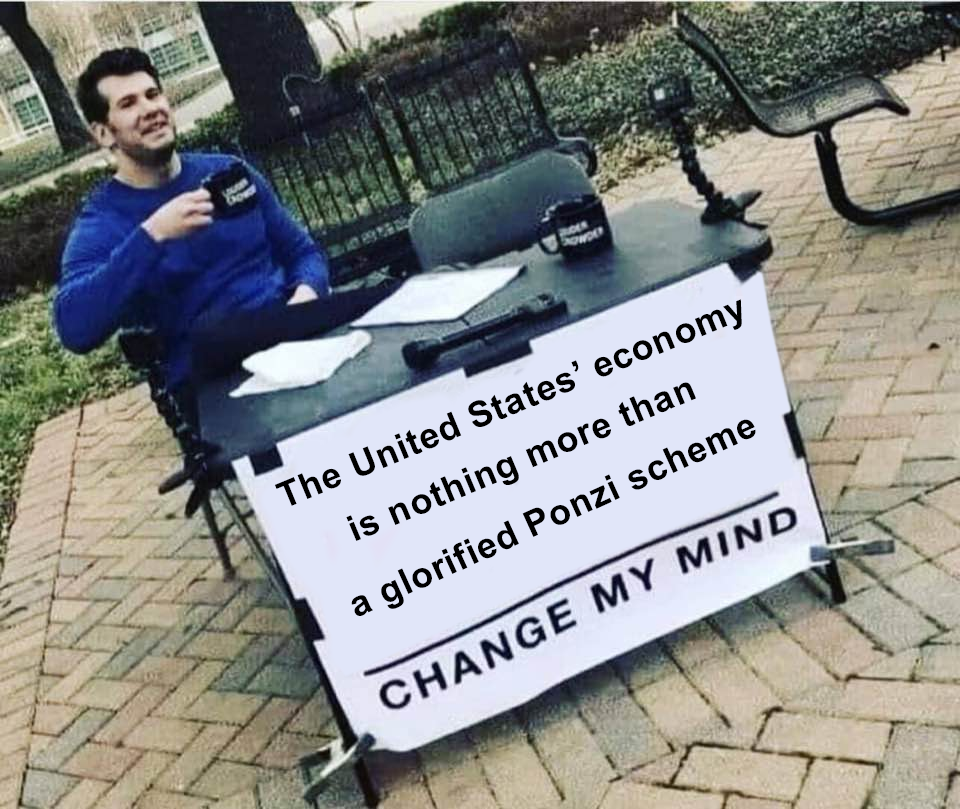
Capitalism served its purpose bringing us out of feudalism. Now it’s become nothing more than a generalized Ponzi scheme and an industrialized version/analogy of legacy admissions. It’s high time we socialized the value we, the workers create. #SupportWorkers


It’s A Mystery!

I really enjoy Jim Wright’s rants, especially when he gets riled up. He reminds me of a famous sports writer for the Los Angeles Times, Jim Murray who, sadly, passed away nearly a quarter century ago (kinda shows you how old I am). Jim Murray had a way of making and remaking a point without the reader getting tired of the exercise. Jim Wright has that same quality in the political world, IMO. I came across this post today and shared it with my friends and anyone else who might stumble across it – my posts are all public – and I thought I would share it here as well. I also added a few thoughts of my own that sprung out of Jim’s post and some of the resulting comments, most notably those suggesting the work of protecting against fascism is hardly over because of this one election. In fact, I vividly remember the “America. Love it or leave it” crowd that attacked those of us who were protesting the war in Vietnam back in the sixties and seventies, as well as the majority of Republicans since who want to restrict our freedoms and tell us what to think, who to love, and how to relate to the universe. My comments follow this Facebook embed.

The concerning part is there’s still a disturbingly large swath of the electorate who embrace fascism and authoritarianism and likely an equally large group of people who haven’t a clue what’s actually happening and merely respond to the right-wing propaganda that permeates our culture and vote reflexively, not thoughtfully.

My time on this planet is coming to a close, even if I live to be 100, but I still care deeply about the kind of society, economy, and environment we’ll be leaving those who come after me. While I have two daughters who are 19 and 21, and whose future matters a great deal to me, I would feel this way even if I was childless.

The forces of darkness are not soon going away; they’ll most likely never go away – at least not for generations to come. Therefore, we must be eternally vigilant as well as discerning in our choice of those we allow to have the power to make decisions affecting our lives and the lives of our fellow humans. This means paying close attention to elections at every level and for every office, as they’re currently the most impactful activities that determine how we live.

I honestly believe we need a socialist revolution, but I don’t see it happening soon, nor do I see it happening in the manner others have gone down. We’re not early 20th century Russia or mid 20th century China. Neither are we similar to Cuba or any other country I can think of that had a revolution and attempted to become a communist economy.

My knowledge of Marxism, which is admittedly incomplete, tells me that Marx and Engels did not believe a country could go from an agrarian or feudal economy directly to socialism. If you’re not familiar with their theories, they believed that human economic systems evolved and there was a progression from tribalism (primitive communism) to slavery, to feudalism, to capitalism, to socialism, to communism, to anarchy (which didn’t mean crazy-ass bomb throwing, but the absence of the coercive organs of the state, i.e. the “withering away of the state.”) Neither were these transitions/evolutions necessarily smooth or linear, but they were overall inexorable.

Materialistic Dialectics also requires us to understand the situation in which we find ourselves and our society in its historical context, not as some abstract notion of how things “ought” to be, but as they truly are; a seemingly Herculean task given the complexity of today’s world.

I don’t have all the answers; I’m not even sure I have any answers. However, of this I’m reasonably certain – believing that capitalism is the zenith of human economic activity is foolish and counter productive. As well, we have a long way to go just to honor the principles on which the United States was ostensibly founded. Liberty and justice for all is still a goal; an apparently distant one at that.

Semper Vigilantes!


It’s Not Inflation-It’s Greed

I’m old enough to remember paying $0.25/gal back in 1968. Adjusted for inflation that would be $2.10/gal today. Clearly, the petroleum companies are screwing us royally.

PS – This was a first for me (>$100) and it was at Costco, where had can be up to $0.50 cheaper than most anywhere else.


Capitalism vs. Humanism

I’m beginning to think nobody (at least not progressives) should use the word “socialism” any longer. We should replace it with the word “humanism.” This way it’s easier to point to the most important distinction between the two. Capitalism is concerned with capital, i.e. profit/money/wealth/things. Humanism is concerned with humans. Capitalism exalts things over everything else unless there’s a huge regulatory environment seeking to ensure capitalists don’t overreach. Humanism exalts humans over things, and seeks to ensure everyone has the basic things (shelter, food, clothing, healthcare, education) to become a fully realized, contributing member of society.

I know humanism is used differently, but socialism has been saddled with this connotation of authoritarianism, and too many people don’t see the difference between economic systems and systems of governance. Using the word humanism puts emphasis on who we want to benefit from our economic activity … the pipples.

Fight me!


Power To The People

Corporations, conglomerates, and industrial organizations aren’t the enemy, ipso facto. In fact, they make socialism not only possible, but necessary, IMO.

What is the enemy is unbridled greed, rampant cronyism, nepotism and, especially, the codification of deep income inequality. It is not good for a society when individuals can amass fortunes they can’t possibly spend. That they then turn some of that fortune into philanthropy and charitable organizations doesn’t change the fact that it should be criminal for one individual to take that much surplus value from the workforce that made their fortune possible. It’s estimated Jeff Bezos makes (not earns) around $2,500/second. Dafuque does he do, other than own Amazon stock?

I’m not saying inventors, creators, entrepreneurs, etc. aren’t entitled to profit from their efforts, but they shouldn’t be able to continue siphoning profit off an organization that has reached a point where it could easily survive without them. By the same token, intellectual property law has expanded patent and copyright protections way beyond their original intent, creating other avenues of indecent profit-making.

And getting back to what I said about making socialism possible and necessary, without large profitable organizations, we’d all be living off mom & pop’s and craft-making. Many of the products we enjoy, and that provide the grease that skids civilization as we know it, would not be possible without large factories, laboratories, and other institutions. By their very nature, though, they transcend the control and direction of any one individual, and I believe our pay/profit structure needs to take that much more into consideration, providing a larger share to the workers who have helped make the org successful.


A Death Cult

Quite some time ago, I finally came to the conclusion the Republican Party has no business being in government. The job of a public servant, which is what a member of Congress is (both Representatives and Senators,) is to protect their constituents, the oft-referred to “American people.” Yet, it’s quite clear the Republican Party doesn’t care about the American people, which they have amply demonstrated by their obstruction of any program that might have alleviated much of the pain suffered by millions due to the Corona virus and the near collapse of our economy. It’s also clear to me their definition of economic growth, and their criteria for success, skew heavily in favor of capital and the inexorable forces of consolidation and monopoly.


Image by herotimes from Pixabay

If the shenanigans of the Republicans during this last election hasn’t shown you who they are, I submit you’re either not paying close enough attention or you’re a closet Republican. How does one explain the constant drone of allegations of election fraud, which are made more ridiculous by the reality not one Secretary of State—Democrat or Republican—has come forth with any evidence of fraud?

In fact, what little fraud has been uncovered was a couple of instances of people illegally voting for Donald Trump . . . and what are we to make of the revelation by the Republican Secretary of State of Georgia that Lindsey Graham suggested he find a way to dump legitimate Democratic ballots?

Now we find ourselves in the unenviable position of having a lame duck POTUS for the next 64 days. Unbeknownst to the majority of us, the transition period between administrations has always been a time of heightened vulnerability and, thanks to the narcissistic sociopathy of the outgoing president, this time may be the most dangerous in our nation’s history.

Trump has always been the show pony, the elephant at the circus, designed to keep our attention while the guys under the bleachers steal our wallets and photograph our daughters’ underwear. The grift should be ending on January 20, but you can bet your house the Republicans will be jockeying for position to mingle under the bleachers.

We need to stop this cycle. Think of how much cleanup there was after the GWB administration; an eight-year period that made Dick Cheney a far richer man than he had been, while coming close to bankrupting the entire country. Seems like every time we have a Republican president, at least through the last three to five, we’ve had to claw our way back to solvency. Did I mention the thousands, maybe tens or even hundreds of thousands of deaths resulting from our knee-jerk reactions (and over-reactions) to 9-11 and the ongoing, so-called “war on terrorism?”

I’m not letting the Democrats off the hook entirely, either. The majority of the Party are enthusiastic supporters of capitalism, an economic system that has, in my opinion, outlived its efficacy and needs to be adapted and adjusted to meet the exigencies of the times we’re in.

This pandemic has made it clear we need to take better care of our people. We need universal healthcare. One’s health, and the health of one’s family, should not depend on where you work or how long you’ve been there. Healthcare should be seen as a right, not a privilege.

We also need to institute a much fairer way to distribute the wealth of our nation. We produce so much of value, yet the majority of that value is captured by a very small percentage of the population, hence the constant referral to the 1%. It’s a bit more nuanced than that, since there’s a lot of wealth that goes to the top 10%, but there should be little doubt the value produced by the labor of the 90% is not inuring to the benefit of those who create it.

Although I voted for Joe Biden, and I will support his presidency for the most part, he was not my first choice. In fact, nobody in the Democratic Party actually represents or advocates for the direction I’d like to see the country go in, which is socialism as the predominant form of economy. I’ll have much more to say about this in the weeks, months, and years to come.

I have long said I would be a Democrat, but they’re too conservative for me, but I was not only a member of the Simi Valley Democratic Club, but served as an officer (Corresponding Secretary) for the years 2018 – 2019. I only left that post because my youngest daughter was threatening to drop out of school. Since she was a sophomore in High School at the time, I had to work hard to show her what a bad idea that was.

As of today, she’s not only thriving in this online schooling methodology, she’s actually improved her grades dramatically and is doing very well. I still have to help her, but I refuse to do her work for her. She’s gaining confidence as she’s learning her subjects. Now I have to go and take her to the orthodontist. Hopefully, they’ll be removing her braces soon. She’s really tired of them.


Power to the People

Corporations, conglomerates, and industrial organizations aren’t the enemy, ipso facto. In fact, they make socialism not only possible, but necessary, IMO.

What is the enemy is unbridled greed, rampant cronyism, nepotism and, especially, the codification of deep income inequality. It is not good for a society when individuals can amass fortunes they can’t possibly spend. That they then turn some of that fortune into philanthropy and charitable organizations doesn’t change the fact that it should be criminal for one individual to take that much surplus value from the workforce that made their fortune possible. It’s estimated Jeff Bezos makes (not earns) around $2,500/second. Dafuque does he do, other than own Amazon stock?

I’m not saying inventors, creators, entrepreneurs, etc. aren’t entitled to profit from their efforts, but they shouldn’t be able to continue siphoning profit off an organization that has reached a point where it could easily survive without them. By the same token, intellectual property law has expanded patent and copyright protections way beyond their original intent, creating other avenues of indecent profit-making.

And getting back to what I said about making socialism possible and necessary, without large profitable organizations, we’d all be living off mom & pop’s and craft-making. Many of the products we enjoy, and that provide the grease that skids civilization as we know it, would not be possible without large factories, laboratories, and other institutions. By their very nature, though, they transcend the control and direction of any one individual, and I believe our pay/profit structure needs to take that much more into consideration, providing a larger share to the workers who have helped make the org successful.


Time to be Thinking Hard About Our Future

I wrote and posted the following on my Facebook Timeline and shared it with several groups to which I belong:

The feedback has been positive, with the exception of a few Trump supporters in a local community group known for the number of people on it who are averse to anything negative about their “dear leader.” I posted it there on purpose, just to stir the pot a bit.

As the corona virus pandemic continues to spread across the U.S., and people come to grips with how it’s going to affect them, I’m seeing more and more posts from folks outlining just how hard the most vulnerable among us (economically) are going to be hit, even if they don’t get sick at all.

If ever there was an argument for universal healthcare and a strong, resilient social safety net, if not UBI or a socialist economy, I think this might be it. Our fear of socialism is actually a fear of authoritarianism, but the two are not inextricably intertwined. Also, we’re already living under an authoritarian regime and it’s only going to get worse as long as Republicans have anything to say about it.

Donald John Trump, and every one of his brain dead sycophants, represent a clear and present danger to the health and well-being of the people of the United States. Everything he does, every choice he makes, is predicated on assuaging his fragile ego and is aligned with his re-election campaign and his economic interests. Even when he appears to be looking out for the nation’s economy, it is only inasmuch as it affects, and reinforces, his own financial interests. He needs to be gone immediately but, thanks to the greed and avarice of the Republican party, we will have to wait until near the end of next January to remove his worthless ass.

As John Pavlovitz posted on Twitter recently:

This President didn’t create this virus, but he ignored it, denied it, joked about it, weaponized it, politicized it, and exacerbated it. He is culpable for the chaos and the unnecessary illness, and yes, the preventable deaths because of it—and his supporters are too. This is the human cost of the MAGA cult delusion, and we’re all paying for it now equally.

https://twitter.com/johnpavlovitz/status/1238127737031864321?s=20

I have one disagreement with John, however. We’re NOT paying for it equally. The most marginalized of us will suffer far more than those of us higher up on the economic food chain. Since I’m semi-retired and, when I do work, I can work from home, if school is cancelled my youngest, who’s still in high school, will have someone at home to care for her and my oldest, who works with 4th graders through our local Boys and Girls Club, will also have a comfortable home and whatever she needs until school resumes. They will not go hungry, unless we’re forced to stay inside for longer than a couple of weeks.

There are millions of children who depend upon school breakfasts and lunches to get a good, reasonably nutritious meal (sometimes the best meal of the day) and there are lots of parents who cannot afford to miss work should they be required to stay home for a week or two. I have no doubt many on the right see this as a matter of survival of the fittest, but I can’t go along with such a callous view of how we are to function as a society.

We are social animals and we thrive when we take care of each other, recognizing that we are all dependent on our collective strengths to overcome our individual weaknesses. It’s time we recognize this basic reality of our humanity . . . and pay homage to it by lifting all boats, not just those of the wealthy and powerful.

The word ‘equality’ shows up too much in our founding documents for anyone to pretend it’s not the American way.

Martha Plimpton