
This is a mashup of something from the news and a suggestion from someone on Twitter.
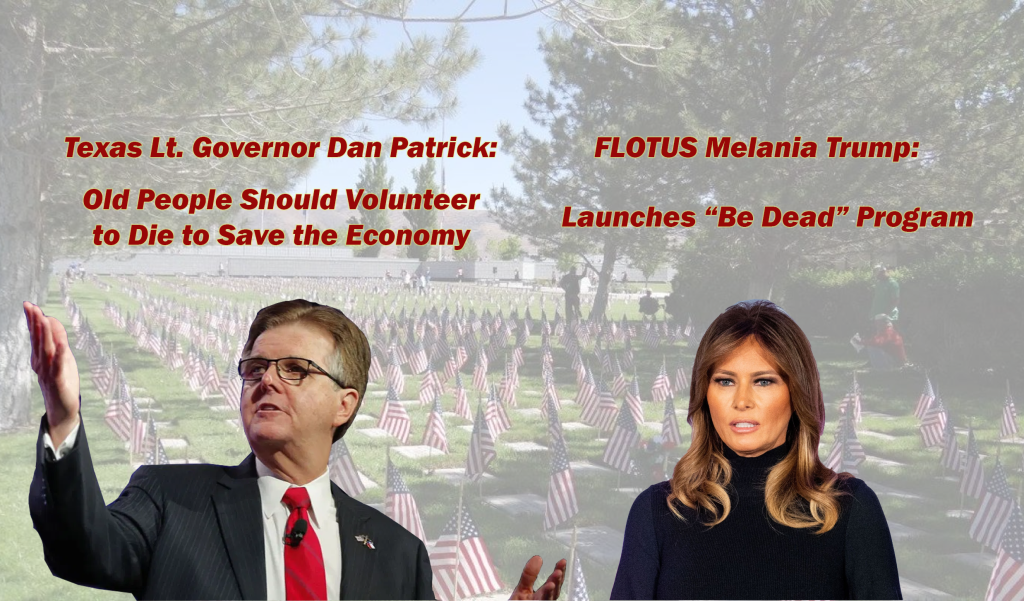
I don’t believe it necessary to say anything more. Do you?
This is a mashup of something from the news and a suggestion from someone on Twitter.
I don’t believe it necessary to say anything more. Do you?
I wrote and posted the following on my Facebook Timeline and shared it with several groups to which I belong:

The feedback has been positive, with the exception of a few Trump supporters in a local community group known for the number of people on it who are averse to anything negative about their “dear leader.” I posted it there on purpose, just to stir the pot a bit.
As the corona virus pandemic continues to spread across the U.S., and people come to grips with how it’s going to affect them, I’m seeing more and more posts from folks outlining just how hard the most vulnerable among us (economically) are going to be hit, even if they don’t get sick at all.
If ever there was an argument for universal healthcare and a strong, resilient social safety net, if not UBI or a socialist economy, I think this might be it. Our fear of socialism is actually a fear of authoritarianism, but the two are not inextricably intertwined. Also, we’re already living under an authoritarian regime and it’s only going to get worse as long as Republicans have anything to say about it.
Donald John Trump, and every one of his brain dead sycophants, represent a clear and present danger to the health and well-being of the people of the United States. Everything he does, every choice he makes, is predicated on assuaging his fragile ego and is aligned with his re-election campaign and his economic interests. Even when he appears to be looking out for the nation’s economy, it is only inasmuch as it affects, and reinforces, his own financial interests. He needs to be gone immediately but, thanks to the greed and avarice of the Republican party, we will have to wait until near the end of next January to remove his worthless ass.
As John Pavlovitz posted on Twitter recently:
This President didn’t create this virus, but he ignored it, denied it, joked about it, weaponized it, politicized it, and exacerbated it. He is culpable for the chaos and the unnecessary illness, and yes, the preventable deaths because of it—and his supporters are too. This is the human cost of the MAGA cult delusion, and we’re all paying for it now equally.
https://twitter.com/johnpavlovitz/status/1238127737031864321?s=20
I have one disagreement with John, however. We’re NOT paying for it equally. The most marginalized of us will suffer far more than those of us higher up on the economic food chain. Since I’m semi-retired and, when I do work, I can work from home, if school is cancelled my youngest, who’s still in high school, will have someone at home to care for her and my oldest, who works with 4th graders through our local Boys and Girls Club, will also have a comfortable home and whatever she needs until school resumes. They will not go hungry, unless we’re forced to stay inside for longer than a couple of weeks.
There are millions of children who depend upon school breakfasts and lunches to get a good, reasonably nutritious meal (sometimes the best meal of the day) and there are lots of parents who cannot afford to miss work should they be required to stay home for a week or two. I have no doubt many on the right see this as a matter of survival of the fittest, but I can’t go along with such a callous view of how we are to function as a society.
We are social animals and we thrive when we take care of each other, recognizing that we are all dependent on our collective strengths to overcome our individual weaknesses. It’s time we recognize this basic reality of our humanity . . . and pay homage to it by lifting all boats, not just those of the wealthy and powerful.
The word ‘equality’ shows up too much in our founding documents for anyone to pretend it’s not the American way.
Martha Plimpton
I think I’ve mentioned before I am experimenting with, and getting better and better at, using Photoshop . . . mostly for creating political commentary, though with other applications in mind as well. I did a fair amount of work 12 – 15 years ago with Fireworks, a product of Macromedia (since acquired by Adobe, creators of PS) related to Dreamweaver and Flash.
Fireworks was quite similar to PS, so much of what I learned back then was applicable when I started using PS. However, the latter is far more feature-packed and useful, IMO.
Here is my latest, quite simple creation, inspired by a tweet, which I will also share. First, the tweet.
Here’s the graphic. I first posted this on Twitter and Facebook with the face from a photo and without a filter. After I looked at it later on, when some had commented on my posts, I realized it would likely look a bit better if I used an artistic filter, so I applied one with brush strokes. I do think it blends a bit better this way. What do you think?


Can we please stop using the phrase “Rule of Law?” The law has been used in this country for some of the most racist, vicious, and nefarious acts committed anywhere and it’s not, IMO, a useful phrase. Better that we use “Equal Justice Under the Law.” Here are a just a few examples of laws that have been passed or rulings that have been handed down that make the point:
Chinese Exclusion Act of 1882 – At the time it was passed, Chinese were only .002% of the population, but white people were worried about maintaining “racial purity.” Like today’s fears of immigrants, it was claimed they were taking jobs from white Americans.
People v. Hall – 1854. In this case, the California Supreme Court ruled that Chinese people had no rights to testify in court, adding them to the language of the laws at the time that stated “No black or mulatto person, or Indian, shall be allowed to give evidence in favor of, or against a white man.”
The internment of Japanese-Americans during World War II was facilitated by numerous laws and Executive Orders, including EO 9066, signed by our “Democratic Socialist” President, Franklin Delano Roosevelt. My own in-laws were forced to assemble at Santa Anita Racetrack, where they resided in captivity until they were transferred to the Granada War Relocation Center in Colorado (AKA “Amache”) where they were interned for over two years.
Slavery – The laws supporting slavery are too numerous to recount here, as each state had its own “Slave Codes,” which were designed to give slave owners absolute power over their slaves, including forbidding slaves to even defend themselves or their family. In many, they were forbidden from learning to read or to leave their plantation without written permission. All of these restrictions were perfectly “legal” at the time.
The history of the U.S. and Native Americans is rife with treaties and acts continuously taking away land or forcing entire communities to leave their ancestral lands and move to less desirable locations, as well as hundreds of treaties which were broken by the U.S. The Indian Removal Act of 1830 forced the removal of five tribes, culminating in a forced migration later known as the “Trail of Tears.”
There are numerous instances in history, especially notable ones being the laws passed in Nazi Germany making it unlawful to aid Jews and providing for their imprisonment and extermination.
All these were done under the color of law, e.g. the “Rule of Law.” We need to stop using this term. As I noted above, “Equality Under the Law” seems far more on point if we’re interested in freedom, justice, and equality of all peoples.
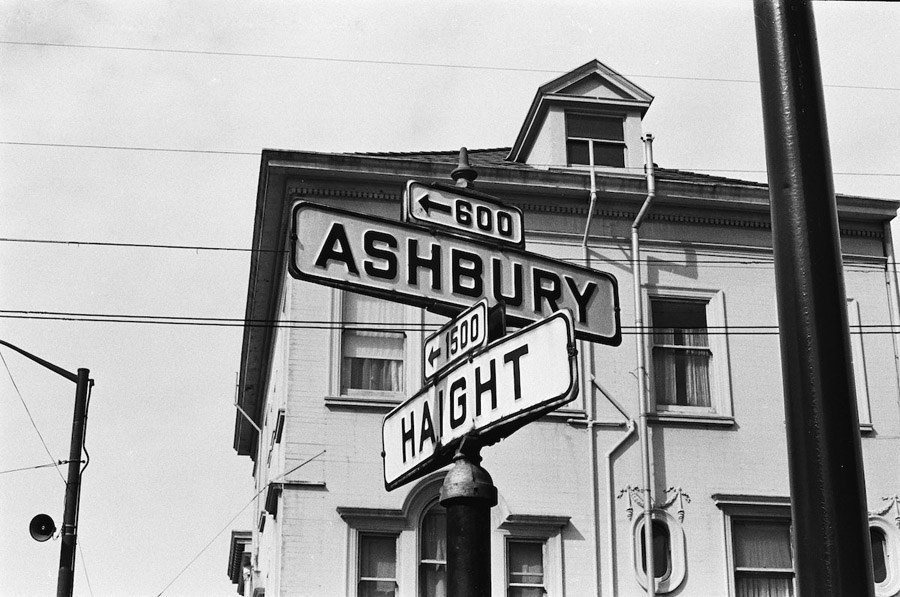
I arrived in the Haight-Ashbury district of San Francisco at the tail end of the “Summer of Love.” It was either late August or very early September. Things were already starting to fall apart before I got up there, but it took weeks before I was able to recognize what was happening.
I had traveled from Los Angeles by thumb, where I had just given up a lucrative business my father had purchased for me at the very end of 1966. Fearing my life was going nowhere (which it kinda was) he took the opportunity to buy a small snack shop from a friend who was going into another business. The place was called DEBS, which was an acronym of the previous owners family’s names. We kept it . . . the name that is.
Situated directly across the street from the May Company, between 8th and 9th Streets on S. Hill Street, I was making big bucks for a snot-nosed teenager. I didn’t realize just how lucky I was at the time which, I suppose, is the very definition of privilege. I just did a time/value calculation and discovered I was making the equivalent of close to a quarter of a million dollars a year back then. Yikes! That doesn’t seem possible or even reasonable, but I’m pretty sure it’s true.
Unfortunately, I was only 19 years old at the time, fresh out of High School the previous year and recently honorably discharged from the U.S. Navy after a total of one month and twenty-three days of service. I’m surely one of a few people in the country who has served, received the National Defense Service Medal, and also a medical discharge while I was still in boot camp. Since I was in for such a short time, I am not eligible for veteran’s benefits, nor have I ever sought to receive them . . . but that’s another story I’ll get to later.

DEBS Snack Shop was open six days a week, twelve hours a day on weekdays, and ten hours on Saturday. I had to be there for every one of those hours and, since I lived in the North end of the San Fernando Valley, the commute took at least an hour and a half, round-trip, every weekday. Saturdays were a little quicker. So I was putting in about 70 hours per week, not including time getting ready to head out the door.
Not only were the hours long, I had to deal with my father coming by every day and pointing out everything I had done “wrong,” i.e. not how he would do it. Not that I didn’t screw up; 19-year-old boys aren’t the sharpest knives in the drawer, no matter how high their IQ. But my old man was not the kind to hand out compliments or praise. Nope. He was a genius at pointing out shortcoming, though.
I remember one weekend I finally had a date with a young woman I had met somewhere. Much of the detail is lost in the mists of time, including who she was and where we met, and the relationship didn’t last long at all. We went out to dinner and were going to go to a movie afterward. Unfortunately, if memory serves, I actually fell asleep at dinner, I was so tired. I don’t think we made it to the movie, and I’m not sure I ever saw her again.
That particular debacle was one of many compelling reasons I asked my father to sell the place after only seven months. I was young and restless, and I had no social life. I had also started smoking pot the previous year and was beginning to experiment with acid (LSD.) I needed to spread my wings and I didn’t see that ever happening as long as I was tied to a demanding business and an overbearing father. But I digress.
What I was thinking of when I decided to write this post was the agricultural workers here in my native County of Ventura. Some of the laborers post videos to a local Facebook group and seeing them brings me back to my two encounters with working in the fields, one of which took place while I was living up in the Haight.
When I was working in the snack shop, I frequently had to go and purchase produce, generally a few blocks away at the Grand Central Market. One of the items I had to buy was tomatoes. I would get them by the “lug,” each of which weighed approximately 30 pounds.
On many a day in the Haight, people would just sit around in front of the stores on Haight Street, sometimes standing to perform for the tourist buses that would pass by. They expected no less from a bunch of “Hippies,” and we were often content to give it to them. One day, a man came by and asked if anyone was interested in picking tomatoes. He said it paid a certain amount (I have no idea what it was) per “lug.” I accepted.
The following day, early in the morning, I boarded a bus with a group of fellow “hippies” and we were taken to a field right next to a mental hospital. We were set loose in the fields to pick tomatoes and it was then I discovered their definition of a “lug” was considerably larger than what I had grown used to purchasing for the snack shop’s use. At least twice as big! I had just turned 20 in June, a couple months prior to selling the business. I was in good shape, yet picking tomatoes, which requires bending over continuously, was physically demanding and, based on how many tomatoes had to be gathered to complete a “lug,” I soon came to the conclusion this was NOT how I wished to make money in the future.
I don’t think I spent more than a couple of hours in the field, but I’ve never forgotten how difficult and back-breaking the work was. It has given me a sense of deep respect for the people who spend their lives working in the fields. It is extraordinarily difficult (and sometimes dangerous) work, for which I’m sure they are not paid enough.
I did mention, above, there were two times I had worked in the field. The second one was in 1973, when I spent two months in Cuba as a member of the 6th contingent of the Venceremos Brigade. During that time I worked primarily in construction, making concrete slabs and pillars used to construct small, single-family dwellings. However, on one occasion we spent a day in the fields cutting sugar cane. In addition to the work being back-breaking, the fields were torched prior to our work in order to burn off some of the vegetation on the canes. It meant we were covered in burnt sugar cane juice by the end of the day.

I had purchased a pair of brown Red Wing boots for the trip. After one day in the fields, they were mostly black from that burnt juice. It never came off.
Those two, admittedly short stints in the field gave me an appreciation for anyone who works in agriculture – especially those who bend over and pick and pack our food for distribution. I’ve done a lot of other things in my life that were difficult, some equally so, but none more difficult than picking tomatoes or cutting sugar cane. I have nothing but respect for someone who makes their living doing such work. It’s why I have long supported the United Farm Workers and all who struggle to be treated with dignity and respect.
I posted the following on Facebook late yesterday, partly in response to all the angst that’s being spit out by the chattering class about Bernie and Fidel:
How come, when we talk about the suffering of Cubans, Venezuelans, and others from dictators and (horrors!) socialism, we don’t also talk about the role of U.S. Imperialism and historical colonialism?
So far it’s been liked by over thirty of my friends and it’s received nine comments and four shares. As of now, that’s after 14 hours since I posted. I don’t know if it will get more, but the response is interesting. What I was attempting to point out is something that really chaps my hide about my fellow Americans. A lot of y’all are really uninformed; either that, or you’re abysmally stupid and incapable of understanding history, economics, and society.
Now . . . to temper what I just wrote, let me add that I’m of the opinion most of us can’t be blamed for this ignorance of our history and what we’ve wrought in the world wherever—and whenever—we’ve put our grubby little money-making hands to work. As I was writing this, I noted another post by a friend who had liked the post I refer to here. She shared a comment from someone else and I think it’s quite relevant to the point I’m making here. Here’s what he said:
“There’s been a lot of criticism of Bernie Sanders for his praise of the Cuban literacy program that was initiated very soon after the 1959 Revolution. Under this program, young people who had been fortunate enough to learn to read and write were sent out into the rural areas, where most people hadn’t, armed with literacy materials and a kerosene lantern. During the day they helped their host family with whatever needed to be done; at night, they taught reading and writing. Cuba became one of the most literate countries in Latin America.
“According to the critics, this was a bad thing. The people learned to read, but they couldn’t read anything they wanted, and what they were given was propaganda extolling the virtues of the Revolution. So there’s 60 years of this evil stuff going on in Cuba. I’d just like to point out that we in the US have a much longer history of propagandizing, extolling the virtues of our system of predatory capitalism in classes like ‘civics’ and ‘social studies.’ The virtues include denying health care to many, keeping many from full involvement in the political and economic life of our country, enculturating people into the happiness that is being less-than-living-wage laborers at the mercy of shareholders and CEOs.
“Nobody in the US has any business calling what other countries do ‘propaganda’ unless they are willing to acknowledge our own long history of it.
~ Ronald Kephart
I’d like to point out that, although I am a Marxist (i.e. a socialist) I’m not much of a Bernie Sanders supporter. Nearly four years ago I posted my reasons for voting for Hillary Clinton in the Democratic primary of 2016. That post is located here. I just voted in the California primary for this year’s election and, again, I did not vote for Bernie. However, as I stated back then, should he secure the nomination I will vote for and support Bernie with gusto. Despite my misgivings, he’s head and shoulders better than Trump or any Republican currently in office. I’d even vote for him if he was running against Bill Weld.
So . . . the point of this post is not necessarily defend Bernie but, rather, to point out the incredible hypocrisy of those politicians (including Democrats running for POTUS) and pundits who are criticizing him for what he said about Fidel and the Cuban revolution.
There’s a doctrine in equity called “The Clean Hands Doctrine,” which states that one can’t complain about, or seek equitable relief from, an offense when one has participated in or supported actions that are as offensive as the action being complained about. I think it fits rather nicely into the common trope about socialist countries and leaders who have wrongly punished their opponents.

I shouldn’t even have to list anything the United States has done to make this point . . . but I will list a couple of the most egregious ones:
I would also suggest that anyone who wants to really understand how the United States, by its actions (mostly done to protect predatory economic interests) has created most of the problems we’re now dealing with, especially those issues related to immigration from the southern half of our hemisphere, should read “The Enemy: What Every American Should Know About Imperialism,” which can be found here.
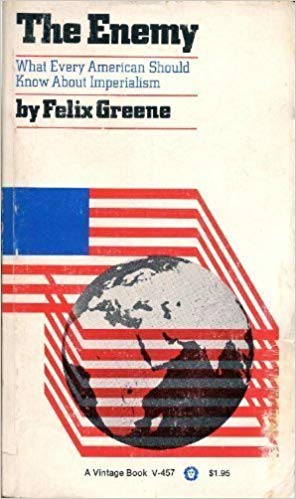
We may not like what Fidel did after the revolution in 1959, but we drove him into the hands of the Soviets back then by being indecisive in our dealings with Cuba. We later initiated an economic blockade that was unwarranted and immoral, IMO. There are literally dozens of other actions we’ve taken over the years throughout Central and South America that resulted in the deaths of thousands and that kept the economies of numerous countries from thriving. Felix Greene spelled it out a half century ago. He wasn’t wrong then . . . and his analysis is still instructive today.
PS – I’m leaving out the effects of our Imperialism in the Middle East, as that’s another clusterfuck that’s likely going to come home to haunt us. Perhaps I’ll address it at a later date.
When I feed the poor,
~ Dom Helder Camara
they call me a saint.
When I ask why the poor have no food,
They call me a communist.
Most of us would agree charity is important. There are, after all, large numbers of people who need a helping hand at times and who, without help, would fall between the cracks of society and suffer needlessly; perhaps perish as a result.
But we don’t seem to ever ask ourselves why charity is necessary; why there are always millions who haven’t enough to get by comfortably. It’s understandable in the face of natural disasters and unfortunate accidents, but more difficult to accept when it’s merely the “way things are.” I haven’t always done so myself.
Shortly after my retirement from Pratt & Whitney Rocketdyne, I was asked to join one of my city’s local Rotary clubs. I knew many of the city’s leaders were involved in Rotary and I also knew the club I was asked to join held a yearly Cajun & Blues festival on Memorial Day each year that was wildly successful and raised a lot of money for the community.
I was happy to join and discovered one of Rotary International’s projects was to eradicate Polio—a worthy endeavor in my estimation. I became fairly active in my club, taking on the responsibility of using social media to promote our activities and volunteering for many of the club’s activities, including providing a full Thanksgiving meal at our senior center, assembling bicycles to give to children for Christmas, and spending an entire weekend (sometimes more) during the Cajun & Blues festival.
Nevertheless, I was somewhat uncomfortable with the realization that quite a few of the members of my club were uncomfortably conservative; some of them clearly harboring deeply bigoted concepts of entire groups of people I felt were undeserving of their scorn. After all, I live in Simi Valley, home of the Ronald Reagan Presidential Library and also known for the acquittal of the police officers who beat the crap out of Rodney King.

I celebrated my fourth anniversary with the club in October of 2016, though I had been attending breakfast meetings for nearly six months prior to becoming an official member (there was some kind of SNAFU that held up my membership.) I had long been uncomfortable with a large segment of the members and, after the election of Donald Trump, I decided I needed to use my limited discretionary funds for something other than rubber chicken circuit breakfasts and a glossy magazine I seldom had time to read.
I tendered my resignation in December and immediately started monthly contributions to five advocacy groups I felt were more aligned with the direction I wished to see society go in. Those organizations included Planned Parenthood, the ACLU, the NAACP Legal & Defense Fund, MALDEF, and the Standing Rock Water Defenders. The last of these stopped accepting donations when they were unceremoniously kicked off the land, and I replaced them with my local Democratic club, of which I had also become a member.
So . . . my point here is that, while charity is important because many are struggling and need a helping hand, it is also an indication (a powerful one, IMO) that something is wrong with our society. Why does such a wealthy nation have such a large population of people living on the razor’s edge of existence? Why are people like Jeff Bezos allowed to amass fortunes in the billions while others are left to starve on the streets? I know it’s the logic of capitalism, but I don’t think it makes much sense from a systems or holistic view of humanity and society . . . even of economics. At twice the national poverty line (~$50K/yr) Bezos’s worth of $110,000,000,000 would bring a reasonably comfortable level of income to 2,200,000 families of four (that’s approximately 8,800,000 people.)
Many are beginning to realize income inequality is deeply hurtful to a society. Large segments of the population can’t possibly contribute as much as they’re capable of when they’re struggling to stay alive and healthy. I’m of the opinion we have a hard time understanding this because we are not conversant in the language of systems; we don’t see the interconnections between all of us and our actions and how such large segments of our population who are under stress is stressful to our society as a whole.
Whether it’s Universal Basic Income or a shift to a more socialistic economic system, I believe something needs to be done to allow as many as possible to reach closer to their full potential as contributing members of our society. Until such time, I don’t see how we can truly call ourselves “the land of the free, and the home of the brave.” The status quo is anything but freedom enhancing, and its acceptance is hardly an act of courage.
When I feed the poor,
~ Dom Helder Camara
they call me a saint.
When I ask why the poor have no food,
They call me a communist.
Most of us would agree charity is important. There are, after all, large numbers of people who need a helping hand at times and who, without help, would fall between the cracks of society and suffer needlessly; perhaps perish as a result.
But we don’t seem to ever ask ourselves why charity is necessary; why there are always millions who haven’t enough to get by comfortably. It’s understandable in the face of natural disasters and unfortunate accidents, but more difficult to accept when it’s merely the “way things are.” I haven’t always done so myself.
Shortly after my retirement from Pratt & Whitney Rocketdyne, I was asked to join one of my city’s local Rotary clubs. I knew many of the city’s leaders were involved in Rotary and I also knew the club I was asked to join held a yearly Cajun & Blues festival on Memorial Day each year that was wildly successful and raised a lot of money for the community.
I was happy to join and discovered one of Rotary International’s projects was to eradicate Polio—a worthy endeavor in my estimation. I became fairly active in my club, taking on the responsibility of using social media to promote our activities and volunteering for many of the club’s activities, including providing a full Thanksgiving meal at our senior center, assembling bicycles to give to children for Christmas, and spending an entire weekend (sometimes more) during the Cajun & Blues festival.
Nevertheless, I was somewhat uncomfortable with the realization that quite a few of the members of my club were uncomfortably conservative; some of them clearly harboring deeply bigoted concepts of entire groups of people I felt were undeserving of their scorn. After all, I live in Simi Valley, home of the Ronald Reagan Presidential Library and also known for the acquittal of the police officers who beat the crap out of Rodney King.
I celebrated my fourth anniversary with the club in October of 2016, though I had been attending breakfast meetings for nearly six months prior to becoming an official member (there was some kind of SNAFU that held up my membership.) I had long been uncomfortable with a large segment of the members and, after the election of Donald Trump, I decided I needed to use my limited discretionary funds for something other than rubber chicken circuit breakfasts and a glossy magazine I seldom had time to read.
I tendered my resignation in December and immediately started monthly contributions to five advocacy groups I felt were more aligned with the direction I wished to see society go in. Those organizations included Planned Parenthood, the ACLU, the NAACP Legal & Defense Fund, MALDEF, and the Standing Rock Water Defenders. The last of these stopped accepting donations when they were unceremoniously kicked off the land, and I replaced them with my local Democratic club, of which I had also become a member.
So . . . my point here is that, while charity is important because many are struggling and need a helping hand, it is also an indication (a powerful one, IMO) that something is wrong with our society. Why does such a wealthy nation have such a large population of people living on the razor’s edge of existence? Why are people like Jeff Bezos allowed to amass fortunes in the billions while others are left to starve on the streets? I know it’s the logic of capitalism, but I don’t think it makes much sense from a systems or holistic view of humanity and society . . . even of economics. At twice the national poverty line (~$50K/yr) Bezos’s worth of $110,000,000,000 would bring a reasonably comfortable level of income to 2,200,000 families of four (that’s approximately 8,800,000 people.)
Many are beginning to realize income inequality is deeply hurtful to a society. Large segments of the population can’t possibly contribute as much as they’re capable of when they’re struggling to stay alive and healthy. I’m of the opinion we have a hard time understanding this because we are not conversant in the language of systems; we don’t see the interconnections between all of us and our actions and how such large segments of our population who are under stress is stressful to our society as a whole.
Whether it’s Universal Basic Income or a shift to a more socialistic economic system, I believe something needs to be done to allow as many as possible to reach closer to their full potential as contributing members of our society. Until such time, I don’t see how we can truly call ourselves “the land of the free, and the home of the brave.” The status quo is anything but freedom enhancing, and its acceptance is hardly an act of courage.
I’ve been an atheist—meaning I don’t believe there is such a thing as God, i.e. a supreme being—since I was 15. I’m now 72. However, I was raised as a Jew and am bar mitzvah (a man of the commandments.) My ethics are fundamentally based on my Jewish background, especially given my four years of Hebrew school, with liberal sprinklings of Christianity and—later—Buddhism, primarily Zen.
I sometimes refer to myself as a Jewddhist, but my favorite designation—for fun—is Quantum Gestalt Humanist. Quantum for my belief in science and reality; Gestalt for my recognition of the totality, synergy, and systemic nature of the universe, and Humanist for my recognition of the beauty and value of my fellow human beings. Still . . . the ethics I recall learning, especially in Hebrew school, form the basis of these beliefs and feelings.
Even though I haven’t been to schul since I attended a very familiar, yet very uncomfortable, Yom Kippur service about 20 years ago, I will always be a Jew . . . and not just because my parents were Jews, but because the world—especially anti-Semites, but even the ignorant and those easily swayed by propaganda—will always see me as a Jew; nothing more. Besides, I was raised to respect and stand up for the oppressed and, despite the actions of the Israeli government, with whom I greatly disagree, there is no place for any kind of bigotry in my world, and that includes anti-Semitism. There is a world of difference between being anti-Semitic and being anti-Zionist.

I hope the United States is the enlightened society I’ve been led to believe it is, but my confidence level is not very high and my Jewish angstometer is slowly flashing a soft, pastel red. Donald Trump has been stoking the fires of hatred since long before he was “elected” president. Incidents of anti-Semitism, as well as attacks on other minorities, have risen rather dramatically and there appears to be a correlation in the rise of these acts following every one of his rallies.
So . . . I want to make it perfectly clear I will defend Jews, including Hasidic Jews with whom I share absolutely nothing save for a long, somewhat convoluted history. At the same time, my “faith” in the interdependency of the human race and all life compels me to stand with everyone, especially the oppressed and downtrodden.
Unfortunately, age is starting to wreak havoc with me. I lift weights and work at staying fit, but I’m approaching 73 and it’s quite clear things are slowing down. I haven’t the stamina, nor the strength, I once had. I’m pretty sure I don’t have the intellectual capacity I once had, but I must continue to fight in any way I’m capable.

I’m planning on attending this year’s Women’s March next Saturday in downtown Los Angeles, not far from the place of my birth. I’m bringing my 18-year-old and a friend of hers who’s in town from the Bay Area, where she’s attending her first year of college. They both went with me last year. I’m hopeful my 16-year-old, who was problematic last year and had to stay home, will also attend. I wish I had the ability to attend the numerous events taking place locally, some as protest and some for electoral politics, but I still have to earn enough to supplement my retirement income (not as easy as it once was), and I also have to help my troubled high school sophomore get through the next two and a half years.


