Category Archives: Philosophy

Out of the Mouths of Babes

Rick's visor

What Geordi La Forge’s visor would look like if it was designed by the British Royal Family.

My youngest daughter, Alyssa (9), says I need to write more blog posts if I expect people to visit and read. Why didn’t I think of that? I don’t know what it is, but sometime you just don’t have a great deal to say. Sure, I frequently post things to Twitter and even more to Facebook, but this is my blog. This is where I give vent to the things that are most important to me . . . or, is it?

I have to admit I’ve always had trouble writing about certain things, not the least of which is my becoming a first-time adoptive father at the age of 55 . . . and doing it again at 59. I want to write about the experience, but I also have long felt the need to protect my daughters’ privacy. It is, after all, their story to tell, and it’s far more about them than it is about me and my wife. I think there may be a happy medium, however, and I’m close to figuring out what it is.

So . . . here are a few goals of mine. I want to continue writing about some of the things that are of interest to me professionally, e.g. Knowledge Management, Social Media (especially as it affects business and civil society), Politics, and Religion/Philosophy. I also want to share some of my personal experiences, especially those I know are a bit out of the ordinary, e.g. International adoption late in life, retirement, becoming a man in the 1960s (including my political activism back then), and maybe some things for which the statute of limitations has thankfully run or for which the trail of evidence is too dry for me to worry about. šŸ™‚

This is a process and involves (I think) my re-doing how this site is set up. I’ll be getting to that soon. Right now I’m busy looking for ways in which to supplement my retirement income. I’ll probably be writing a bit more about that as well. I have always been somewhat of a late bloomer. Now I’m just hoping I live long enough to see my latest “career move” come to fruition. I greatly appreciate those of you who take the time to visit and read. I think, perhaps, another goal of mine will be to see if I can’t elicit a few more comments. I wonder if writing about controversial subjects will accomplish that? We’ll see.

Here’s a thought. Anyone interested in theĀ intricaciesĀ . . . and the legal and moral issues . . . of International adoption should read this. It’s one of the issues I plan on writing about as I loosen up on the subject. It was not something we thought about prior to our first adoption, but was definitely part of the thought process when we adopted our younger daughter. Now it just haunts me. One of my goals is to live long enough to see my girls to adulthood. Then I’ll be able to discuss it with them. The reality is we just don’t know for sure what happened before they came into our lives. I’d much rather it haunted me, and not them.


Will You Miss Your Life After You Die?

Steve Jobs in Heaven

No Doubt!

I don’t obsess about death or life after death but I have thought about it a lot over the years. Haven’t you? After all, one of the main consequences our religions offer us for a life well lived is eternal life in heaven once we die. Some offer the eternal antithesis as well and I know that motivates quite a few. An afterlife. Have you ever thought about what that would be like? I’ll bet you have.Ā What really happens after we die? Everyone seems to think about it. With far fewer years ahead of me than are in my rear-view mirror, I have to admit I think of it even more, especially when I try to imagine the consequences of my death if it occurs before my children are adults and well on their way to a truly independent life. It matters because I’ll be 72 when my oldest is 18 . . . and I’ve already outlived my father by nearly six years. Not saying it’s going to happen, but it’s a reasonable alternative and it concerns me at times.

Now to the other side of the void. I’ve often wondered what the allure of life after death is for most people. I have a hard time believing anyone truly understands what eternity or, more accurately, death is . . . or means.Ā Imagining what it’s like to be dead has got to be one of the most difficult intellectual pursuits known. Consider the following. When you wake up after even a very deep sleep, there’s some sense of time having passed, isn’t there? We may not remember precisely what our dreams are – or even that we dreamt at all – but there is some sense that time has passed and all is well. This is not the case if you’re unconscious. When you come out of anesthesia after surgery it’s entirely different. Almost everyone comes out of anesthesia, even after many hours under, with no sense of time having passed. It’s not uncommon for a person to ask when their surgery is going to begin, the sense of the passage of time having been entirely suspended. And they weren’t even dead!

Now try and imagine what it would be like to not wake up, ever. Can you do it? I would argue it can be approached, but I think it takes some time and, most likely, can never be done completely. It’s like imagining being pond scum, only vastly more difficult. The latest evidence and theory seem to point to the universe being around 14 billion (that’s 14,000,000,000) years old. Do you have a sense of loss for not being around most of that time? Yet, I maintain it’s difficult to imagine that same nothingness now that you’ve experienced consciousness. Somehow, we just can’t imagine the absence of everything.

Now, this isn’t a scholarly article. It’s based entirely on my experience, the things I’ve read and observed, and some obvious guessing. I have not been able to interview anyone who’s been dead for, say, 100 years to learn about their experience. Now that would be something! There is ample evidence the only experience they have is that of returning to dust, and only dust. I am, philosophically, a Materialist. I believe the physical world is a necessary prerequisite to the world of ideas, that is thought and consciousness cannot exist without a brain (and it’s attendant system, a body) to “think” it.

I know there are those who believe after (or as) we come into existence we are imbued with an eternal soul, so what happened before we were born (many would say conceived) is of no consequence afterward. I’m not one of them. I think once you’re dead you will not be looking down on your friends and relatives. Maybe there’s a short period of time, while everything is shutting down, you will imagine looking upon your now lifeless body, but I doubt it. I am quite convinced there is no afterlife and we won’t miss our family, friends, or anything else . . . because there won’t be any we to do so.

Much to my consternation, I just can’t imagine how that will feel. šŸ˜€

Graphic shamelessly stolen from BuzzFeed in case the link to their pic didn’t work

So You Think It’s a New Year

January 1st
The World’s Most Life Changing Day

What is time? Here we have a question that has baffled philosophers and scientists since, well . . . since time immemorial. We measure it in numerous ways and, frankly, we’re not terribly interested in any of them other than the calendar at this point. For our intents and purposes, then, time is measured in days; by the rotation of the Earth 360° on its axis and by years; the compilation of 365.25 days as the Earth completes one orbit around our home star, Sol.

To be even less precise, we’re actually only interested in a simple calendar, whether it’s an application running on a computer or a slick-paper collection of rare and beautiful pictures of well-tended gardens and ornate architecture situated in the world’s most exotic locations. The Gregorian calendar, actually, will suit us.

Furthermore, let’s confine our study of time to – essentially – one day; New Year’s day. The first of January, regardless of the year. This is, perhaps, the only day we celebrate that is entirely arbitrary; marking a line in the continuum we call time that isn’t tied to any particular event we’ve experienced or chosen to memorialize for the purpose of not working and having a bar-b-que, stuffing our faces with rich, fattening food, or conducting a car, bed, or linen sale.

Take for instance President’s Day. On second thought, and upon a little research, let’s not take President’s Day as it is a convoluted mess made somewhat abstruse by it’s being a combination of Federal and State observances of the birthdays of George Washington and, sometimes, Abraham Lincoln, and the occasional desire to commemorate the existence of all Presidents (past, present and, presumably, future) of the United States of America.

How about a holiday that marks a specific date on the calendar and hasn’t been moved around yet for the purposes of creating a three-day weekend and making working stiffs and the travel industry happy? How about the most venerable of them all, the Fourth of July – Independence Day? We celebrate this holiday on the same date of the year, regardless of the day on which it falls. Something happened on that day and, each year – relative to the rest of the days on our calendar – we celebrate that thing; that one thing common to us all.

The new year, however, is merely the day on which we’ve – somewhat arbitrarily – determined everything rewinds and starts over. Never mind that every four years we need to tack another day onto it, which we’ve chosen to do in February, the only month short enough to make room for another day without making the other months jealous. It is, for many, the beginning of a new life; a chance to start over and jettison old habits like a layer of useless, molted skin.

There is one thing – one time independent thing – the new year and its joyously celebrated recurrence is inextricably associated with; the New Year’s resolution. That “time-honored” tradition indulged in by an incredibly large portion of the world’s population. The moment when old habits die with a glass of champagne, the singing of Auld Lang Syne, raucous noisemaking, and the occasional over amorous kiss.

What, we may ask, is a New Year’s resolution and why is it so bound up in this arbitrary date that marks the completion of a year’s journey around the Sun? Why do people not make these changes and affirmations when the need for them becomes apparent? Why wait for one, somewhat otherwise inauspicious date to sever ties to the past and, Phoenix-like, rise to embrace a bright, new future? Especially when, usually no later than mid-February, the Phoenix perversely transforms into Icarus and plummets to the Earth, there to lie – seemingly lifeless – until another December 31st rolls around.

Perhaps most people find it necessary to draw a figurative line in the sand of their personal hourglass at the moment we mark the numerical change from one year to the next. Perhaps it eases our ability to put bad habits and worthless pursuits behind us; to bury them in the mists of time and move toward a brighter, more promising future. Perhaps we just like to kid ourselves – like setting our alarm clocks to read 10 minutes fast in order to ensure we arise in time to begin a new day. Who knows?

So here’s my resolution, but it isn’t a New Year’s resolution as I reaffirm it many times a year. When it becomes obvious something I’m doing isn’t working all that well, I’m going to endeavor to change direction as quickly as possible. I’m going to allow my creativity the freedom to find better ways to proceed and I’m going to look for innovative paths to make those better ways pay off in a richer, fuller life for me and my family.

How about you? Do you wait until the new year to change your evil ways, šŸ™‚ or do you move on down the road as soon as practicable once you realize a change is in order? Either way, I wish you a happy, healthy, and prosperous 2013 et seq., ad infinitum.


I am Numb

Anti-Gun Graphic

It’s the numbers I’m Interested In.

So many dead. So many children. I am numb . . . and I can’t wait to see my kids when I pick them up from school today. I’m also a gun owner. I am not, however, so numb I can’t recognize a need to address the issue of gun control. We treat these occurrences like we treat earthquakes; as if they’re natural disasters and, with the exception of securing loose objects and having some emergency supplies at the ready, there’s nothing we can do about ’em.

We seem to face a choice; either arm everyone – including the children – or come up with rational policies that keep guns out of the hands of those who have no business possessing them. I’m kind of thinking the latter would be easier, cheaper, and more humane . . . not to mention rational.

I didn’t do a comparison of the populations of all six other countries listed, but we can look at one – Canada. With these numbers (assuming them to be accurate) the U.S. population would have to be 47 times that of Canada. Actually, the population of the U.S. Ā is 9 times greater than that of Canada so, were all things reasonably equal, we could expect a gun murder rate of approximately 1800 people, less than 1/5 of what it actually is. That’s got to be pretty strong evidence of some kind of fundamental problem. Don’t you think?


Can I Get an Amen?

Amen Corner at Augusta National Golf Course

The word “Amen” isn’t confined to prayer, though it’s generally closely related.

Yesterday I was inducted into one of several local Rotary clubs here in Simi Valley, CA. The name of this club is Simi Sunrise and, not coincidentally, it meets at 7:00 am every Thursday at the Grand Vista Hotel. I had some trepidations about joining an organization such as Rotary International, best explained by the question a friend asked me when informed of my desire to join; “Aren’t they a really conservative organization?”

Truth to tell, I wasn’t entirely sure they would accept me, especially since this is a fairly conservative city I live in and I’ve made it abundantly clear I am not a conservative – at least not politically. I didn’t really know a lot about Rotary and I knew an awful lot of the people who were in this club. Most of them were quite conservative – politically. At the same time, I live and work with them and know them to be good, decent people. Especially the ones in Rotary 1 and other service organizations.

Fortunately, I got to know a person who ended up convincing – and sponsoring – me to join. Due to an unlikely confluence of events I ended up being the guest who wouldn’t go away, and a process which normally takes a couple of weeks ended up taking a couple of months. Nevertheless, she insisted I continue showing up and, because she had to pay for my breakfast each week, I have offered to do some data input for her at her discretion. It’s the least I can do.

Yesterday was the culmination of two months of meetings and thinking about what I was getting myself into. Now that I’m officially a member I will not only have an ongoing financial obligation and an expectation of service in the form of volunteerism, I will also be expected to perform various duties at the meetings, e.g. greeting members as they arrive, checking attendance, etc. There is one duty I’m somewhat concerned about. Leading the invocation.

I have now heard approximately eight different invocations. I don’t recall any of them being identifiably denominational, though some referenced “our heavenly father”. I believe at least one ended a bit irreverently . . . and comically. They all end with “amen”, a word of Hebrew origin defined by Merriam-Webster online as: “used to express solemn ratification (as of an expression of faith) or hearty approval (as of an assertion).” Although used primarily at the end of a prayer or hymn, it is clearly not limited to religious expression. So it looks like an invocation avoiding the mention of God would most likely be acceptable, even if hard to author.

However, as an atheist I have a lot of experience with people who misunderstand my kind of “faith” and are likely to exhibit one or more of the following traits or attitudes in response to an expression they perceive to be anti-religion: Anger; disgust; defensiveness; dismissiveness; revulsion; incredulity; hatred; need I go on? When you think of invocation, you just don’t think of atheism now, do you?

So . . . my dilemma. I’m going to assume I will, at some point in time, be asked to give the invocation. I suppose I could respectfully decline, but I kind of want to do it. The issue for me is how to do so without offending anyone. Part of me believes that’s a tall order, precisely because of the responses I’ve experienced or observed for so many years, while another part of me believes it isn’t as big an issue as it at first appears. I’ll post the text . . . when I write it!


1 Rotary is very attractive to me as it espouses values I believe are important and progressive. I find it a little ironic so many of the members are staunch conservatives, yet the values they ascribe to can just as easily fit the most progressive agenda. If words are important, and I believe they are, then their foundational writings should matter a lot when determining what kind of an organization they (at the very least) aspire to be. For instance, there’s The Four-Way Test:

  1. Is it the TRUTH?
  2. Is it FAIR to all concerned?
  3. Will it build GOODWILL and BETTER FRIENDSHIPS
  4. Will it be BENEFICIAL to all concerned?

Coupled with numerous other writings, which I will not get into now but will surely bring up as I gain more experiences with this new facet of my life, I think Rotary paints itself as an organization dedicated to the same things I am – Peace, Justice, Goodwill, Internationalism, Fairness, etc.

There’s likely an argument lying beneath the surface here as to the role volunteerism plays in an inherently unfair economic system, but – in my opinion – it is more a philosophical one and should in no way minimize the pain alleviated through the actions of Rotary and other organizations like it. More on this some other time.


Can Men Be Feminists?

What a Feminist Looks Like Hint: It Doesn’t Mean You’re Feminine šŸ™‚

I hope this is a question many men have asked themselves. It’s important to understand and come to a useful resolution about this, as I think there are many men who support women’s equality but are somehow intimidated by the thought of being seen as a feminist. Let me say it right up front. I am not only a feminist; I have been one since the early 1970s. It’s important for men to understand what being a feminist means, because it has nothing to do with being feminine, which I think is why many men might cringe somewhat at the thought.

The Oxford English Dictionary, online edition, defines a feminist as “a person who supports feminism”, and Wikipedia defines feminism as follows: “. . . [A] collection of movements and ideologies aimed at defining, establishing, and defending equal political, economic, and social rights for women. In addition, feminism seeks to establish equal opportunities for women in education and employment”. As a movement, feminism is complex and – for the most part – understanding its history isn’t important to the issue of whether or not men can (or should) be feminists. On the other hand, one of the reasons for this post is to share a short video that addresses one of the more egregious historical responses to the struggle of women for suffrage, i.e. to gain the right to vote.

One of the main reasons I have been so supportive of women’s rights almost as long as I’ve been able to vote is my belief, as Dr. Martin Luther King, Jr. famously said, “Injustice anywhere is a threat to justice everywhere”. Then there’s also this little thing called the Golden Rule, “Do unto others as you would have them do unto you”. I like to think the meaning of these two maxims – and so many like them – is that inequality is not a good thing. Since the very essence of feminism is, as stated above, the goal of establishing “equal political, economic, and social rights for women”, it seems to logically follow it is something anyone – even men – of good conscience must support. Let’s take it a little further, though. Let’s ask ourselves who these women are who wish equality. We don’t have to look very far for they are our mothers and grandmothers; our sisters, nieces, and cousins; our girl friends and wives. In short, they are all women, everywhere. Why would we not support feminism and thereby be feminists?

This November 6th we are going to make a choice in the trajectory our nation will follow for the succeeding four years, almost certainly a lot longer since one or more Supreme Court Justices is likely to retire. The Republican Party, through its most important representatives and through its actions, has made it clear they wish to return to a level of patriarchy that makes women second-class citizens and, in some respects, returns them to the status of chattel. Although the party has tried to move the national conversation away from the highly-charged term “War on Women”, the reality is a victory for Mitt Romney would be a “Disaster for Women“. It is imperative for not only women to understand what’s at stake but, perhaps, even more important for men to understand because they have a tendency to be somewhat timid when it comes to supporting these basic rights of women (should read merely “people”).

Today I came across a wonderful short video that recounts the struggle of a group of women who protested for the simple right so many of us take for granted – the right to vote – and were severely punished for their temerity. This was less than a hundred years ago, when Woodrow Wilson was President. Less than 100 years ago! There are far too many of us who either haven’t registered to vote or, in our apathy or despair, won’t take the time to vote. This is not a good thing. As Plato said, ā€œOne of the penalties for refusing to participate in politics is that you end up being governed by your inferiors.ā€ The struggle for the right of women has come too far to now go backward. Here is the video I want you to see. I hope you’ll share it as well. It’s very powerful.

And get out there this November and VOTE! 

Photo from Douche, Bag and Shoes


More Softiness!

Yesterday I posted my thoughts about empathy and kind of wondered aloud why I find it easy to get so deeply immersed in a fictional drama that I can be moved to tears; sometimes to really distressful levels of sadness and grief. At the end of that post I wrote:

I want to understand what is moving me when this happens. On some levels it seems patently ridiculous to get so emotionally involved in a fiction story. On the other hand, perhaps it is really what makes us human. I’m wondering if someone with a more classical education than I have knows more of the thinking humans have brought to the subject. I’m sure some in the Arts (especially the Theater Arts) have tackled it. I’ll have to do more research. In the meantime, I’m glad there’s plenty of tissue in the house.

As it turns out, thanks to a friend I discovered an interesting answer through a wonderful TED talk by VS Ramachandran, a Neuroscientist who has studied the functions of mirror neurons. It would seem there is overwhelming evidence we humans are more closely connected than I was hinting at.

In his talk he says, “There is no real independent self, aloof from other human beings, inspecting the world, inspecting other people. You are, in fact, connected not just via Facebook and Internet, you’re actually quite literally connected by your neurons.”Ā I find this resonates in many ways with my understanding of Systems Dynamics, Quantum Theory, and Zen and goes a long way toward answering my question. Frankly I find it a meaningful addition to my understanding, but still find myself wondering why it manifests itself so powerfully in some . . . and not at all in others. After all, the world is filled with people who areĀ anti-social in varying degrees of severity from mild conduct disorders to outright sociopathy or APSD.

Regardless, there is much value in this talk. He speaks of the wonders of the human brain and, with respect to the issues I raised yesterday, uses words like imitation and emulation, ultimately winding his way to empathy. Rather than repeat any of his talk, I urge you to listen to it. There’s at least one very cool surprise a little more than halfway through. At less than eight minutes, it’s really engaging. Here’s the video. I’d love to hear what others think of this:


On Being a Softie

Suspension of Disbelief

To Open Up And Believe

The willing suspension of disbelief. What a powerful, magical, and exceedingly frightening thing it can be – at least for me. Not always, though. It’s been quite a while since my last venture into the genre but, a long time ago – in a galaxy far, far away – I read a lot of Science Fiction. Reading it can’t possibly be enjoyable if you aren’t able to suspend your ability to think critically. Nevertheless, I enjoyed the hell out of what many an author hated being called Sci-Fi.

I’m normally somewhat cynical and am a fairly skeptical person, so I’m continuously surprised at how easily I can get sucked into a compelling story, especially if the characters are even moderately complex. I think it actually frightens me to realize how deeply I have disappeared into many a television drama.

This tendency has no doubt been exacerbated by my becoming a father at the ripe old age of 55, when my wife and I culminated a decision we had made a couple of years earlier and traveled to the People’s Republic of China to adopt our first child. We repeated the process four years later and, at the tender age of 59, I once again became a new father.

I now find myself immersed in shows where children are involved (it happens far more often than one might think) and I can’t help but identify with the parents, which sometimes brings me to tears – occasionally racking sobs of grief.

It has always been this way. I’ve been told the men in my family – many of them – were blubberers. Though I couldn’t have been older than five or six at the time, I recall the first time I saw my father cry. He had just received news that my Bubbie Jennie, his mother, had died. He hadn’t seen much of her since moving to Southern California. She had remained in Chicago, where both my parents were born. It was eerie, and not a little unsettling to see my father, a young boy’s tower of strength and resolve, break down like that.

It was made more difficult because I had only met her once, when she came to visit for a week, and she was unfamiliar to me. On the other hand, my maternal grandparents lived with us and I felt a strong emotional tie to them I could not summon up for her. She was by Bubbie, though. My mother’s mother was just Grandma.

I frequently ask myself, however, why I am so deeply and painfully drawn into these stories. I’m not entirely certain I have the answer, but I’m pretty sure it’s not so much the story itself as it is the relationship those stories bear to my own life.

Dictionary.com defines empathy as follows: the intellectual identification with or vicarious experiencing of the feelings, thoughts, or attitudes of another. That seems pretty straight-forward, yes? I am a fairly empathetic person and I tend toward the second part of that definition, i.e. I feel the pain of others vicariously. However, I don’t think this captures the essence of what is happening when I am fully immersed in a story.

Perhaps it’s too fine a point and the distinction isn’t all that great, but it seems to me what’s really happening is I’m overlaying the experience in the story onto my own life. I’m not so much experiencing the feelings of another as I’m experiencing the feelings I would have were I to be in that situation. I don’t think they’re the same. Then again, maybe that’s the mechanism that actually facilitates empathy.

This is a minor conundrum that comes to me most every time it happens and, usually, I forget about it within a minute or two. Lately I decided to try and get a descriptive handle on it and this is my first attempt.

Empathy is a valuable and deeply human trait. It is one of the five traits listed as characteristic of emotional intelligence which, in turn, is seen by many as a valuable business and leadership skill. It’s important to understand and to cultivate in order that we may better understand the people in our lives, whether at work, play, or home.

I want to understand what is moving me when this happens. On some levels it seems patently ridiculous to get so emotionally involved in a fiction story. On the other hand, perhaps it is really what makes us human. I’m wondering if someone with a more classical education than I have knows more of the thinking humans have brought to the subject. I’m sure some in the Arts (especially the Theater Arts) have tackled it. I’ll have to do more research. In the meantime, I’m glad there’s plenty of tissue in the house.


You’re Privileged to be Playing the Game

Levels of Difficult

You Can’t Choose This Difficulty Level!

I think I received my first comeuppance regarding white privilege around 1973. I was not quite 26 years old and had been a very active member in the anti-Vietnam War movement in Los Angeles. I had attended, organized, publicized, and provided security for a number of demonstrations and events.

Now I was preparing to spend a couple of months in Cuba as a guest of the Cuban government. I was a member of the Sixth Contingent (Sexto Contingente) of La Brigada Venceremos. I was excited. However, nobody was allowed to travel without first undergoing some rigorous training in how to not be an ugly American.

We Americans (even the term American is somewhat arrogant, as the U.S. is only one country in an entire hemisphere referred to as America), especially us straight males, have got it way better than we like to think. Unfortunately, due to the concept of American Exceptionalism, we really do like to think our shit doesn’t stink and we are in a class by ourselves.

Well, actually, we are in a class by ourselves – but it’s really not something to be all that proud of, in my less than humble opinion. But I digress.

Part of my ongoing training (which lasted several months) was learning about white privilege, i.e. the numerous and subtle ways in which being white gives those who sport the color (or lack thereof) a leg up on everyone else. The training was excellent. I was not made to feel guilty; merely shown how it works, the evidence of which was impossible for me to deny.

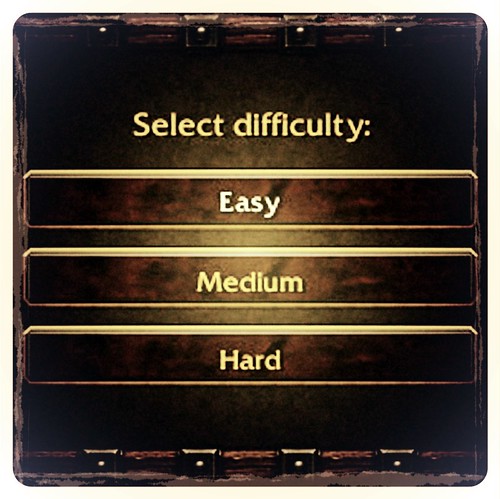
As a Knowledge Management professional, one of the things that’s important to me is the avoidance of re-inventing the wheel. That means, among other things, using the work of others to build on, where appropriate. I think this is an appropriate place to do that with a blog written by John Scalzi who, frankly, I don’t know much about. Nevertheless, this blog he wrote is absolutely brilliant and draws an analogy I think useful in understanding the concept I’m talking about. I want to share it with my small group of readers.

Here’s the link to his post – http://whatever.scalzi.com/2012/05/15/straight-white-male-the-lowest-difficulty-setting-there-is/

I also want to share a video that’s a nice supplement to it. Enjoy!


On Being an Idiot!

Roles and Privilege

Privilege Allows One To Be a Bystander With Little Consequence

One of the most amazing and wonderful things I dearly love about social media is the serendipity, the seeming randomness of connections, that brings certain things to one’s attention; things you would not otherwise have seen or been aware of. For instance, my friend Trisha shared a link to an excellent post by someone I had never heard of before and likely never would have discovered otherwise. She was enthusiastic about this particular post so, naturally, I had to take a look.

I ended up reading not only the post she pointed me to, but four others that preceded – and were related to – it. The issue Joe was writing about is one that is near and dear to my heart; that of privilege and how little most of us understand its presence and power. He was specifically writing about the privilege that inures to men in a patriarchal society and, even more specifically, about how many men don’t even see the privilege we enjoy and, therefore, become bystanders to (and enablers of) gender-based violence and injustice. You really should read his stuff. Start here!

I was moved to add a rather lengthy comment on his final post and I’m hopeful I made sense to him. Sometimes I have so many thoughts stirred up by posts like Joe’s I have a hard time focusing on a simple, coherent answer. I did have some difficulty with this one, in part because it reminded me of something that happened to me around 25 years ago. It was something that made me feel like an idiot, I think in the same way that Joe refers to himself in his post. I’d like to relate that experience and try to tie it in somewhat to his premise.

Privilege can be seen in many different ways. In matters of race and ethnicity there is the reality of “White privilege”. The essence of any type of privilege is a bit of a paradox, as those who enjoy the privilege have the most difficult time seeing its existence. So it is with White privilege which is, just in case it’s not painfully obvious to you, inextricably intertwined with racism. Furthermore, racism and bigotry are not quite the same things – the former being far more insidious and bound up in cultural norms and social institutions.

But enough of that! I make no pretense to being a scholar or academic and it’s not my intention to delve too deeply into such matters, though I’ll circle back around to it in a bit. In my early twenties (keep in mind I turned 20 years old in 1967) I was very active in the peace and justice movement. I organized, participated in, and many times provided security for numerous demonstrations, marches, and other activities in opposition to the war in Vietnam. In 1973 I was lucky to be chosen as one of 100 people (half from the U.S. and half from Canada) who were to travel to Cuba as guests of the Castro government. I was a member of the sixth contingent of the Venceremos Brigade. Our mission was to work and learn, as well as deliver a shipment of books and educational material.

The group was very diverse; far more so than the anti-war movement – which was primarily white. In addition to left-wing members of the Democratic Party, there were representatives of the Black Panther Party and the Brown Berets. One of my travel mates was a “Pinto” a Chicano who had spent some time in prison. He would later become the only human on which I have seriously used my martial arts skills, but that’s another story. As part of our preparation for the journey to Cuba we received some fairly extensive education in the nature of racism; not from some academic or a tome written explaining it, but rather from those who were at the receiving end of it, the people of color who were part of our group.

We also spent a lot of time looking at and working to understand cultural chauvinism in an effort to not be what so many Americans are capable of . . . insensitive, ignorant, “ugly” Americans. One specific admonition I recall came in the form of a story of a woman who, when looking at a worker struggling to complete a job with simple, human-powered technology, remarked at the quaintness of the scene. It was one that, in reality, was of appalling poverty and destitution, but she saw it through the lens of her “privileged” upbringing and parsed it as “quaint”, which it certainly was not to the person doing the struggling.

Now, to circle back to the event that happened around 25 years ago, and which I mentioned earlier. I bring up some of my experience merely to point out that I had been struggling against my own racism, and confronting that of others, for close to 15 years when this happened and I considered myself reasonably far down the path of understanding and overcoming racism, sexism, and other prejudices I (along with so many of my fellow citizens) had been raised with.

I was at a friend’s house, sitting at a dining table chatting with another mutual friend, a woman named Cheryl. Our friend was (still is) Caucasian; his wife Chinese. They had two kids. Cheryl is Sansei, like my wife, third generation Japanese-American. Cheryl and I were talking about our friends’ two kids and I mentioned how strong I thought the Asian genes were and how obvious their expression was in the children’s facial features. Cheryl cocked her head slightly and looked at me like I was someone different than the Rick she had known for quite a while. She offered how she thought just the opposite; that Caucasian features were strong in both the children.

I don’t remember if I had ever considered it before (probably not), but I was suddenly made aware of how insidiously my belief about race had entered into my view of those children. The reality was that they were a mix of both their parents’ racial and genetic heritage. However, I rather unthinkingly considered them White, with an overlay of Asian. I was stunned at my stupidity and casual, unthinking racism.

There are two main lessons I believe I got out of this. The first is that racism can be very subtle and, for those who have benefited from the privileges that come with it, exceedingly difficult to recognize. The second is that racism and bigotry are not the same thing. They may sometimes be congruent, but not necessarily – and therein lies the difficulty many have. I felt nothing but love for my friends and their children, but I nevertheless brought subtle prejudice to the table when thinking about them. It had little consequence for our relationship but, for me, it carried a great deal of weight in terms of understanding how privilege works.

I’m not even addressing Joe’s issue of how it empowers those who are the beneficiaries to become bystanders and, therefore, enablers of prejudice. I’m only pointing out that privilege and the isms that it flows from run very deep and are often silent and difficult to recognize. Fighting racism, sexism, and other forms of prejudice requires constant vigilance in order to recognize when we’re finding ourselves standing side-by-side with the perpetrators. For me it has been a lifelong battle and I know now it’s far from over. Do you question your beliefs regularly? Do you understand what’s behind your view of the world?