Category Archives: Business

Would You Pass Up Free Advertising?

Foursquare Logo

Attract New and Reward Loyal Customers

I’ve been concentrating on a couple of new clients and have neglected to post for a couple of weeks. During this time I’ve been thinking about some of the subjects I’d like to cover. One of those is the use of Foursquare for small, retail businesses. Actually, it can be used for virtually any type of business, but the usage model it presents is most applicable to businesses with lots of traffic and churn. I see them as being in somewhat of a pyramid. For instance, those businesses that will get the most value from Foursquare are restaurants, bars, and clubs. Next in line are retail outlets and, finally, service businesses with a brick and mortar location.

Other types of businesses can use the service to get some free advertising, but if your business isn’t amenable to friends sharing the location (primarily because they want to enjoy each others’ company), it’s not going to have the same kind of value for you. As an example, there are Dentist’s offices who use it to present teeth cleaning and whitening specials. I am pretty sure people don’t check in to their Dentist’s office because they’re having a bang-up time and want to share it with their friends. However, everyone who uses Foursquare on their phone is going to get an impression of the special the office has created. You never know and, after all, it’s currently free!

Thanks to a heads-up from one of my friends, @mor_trisha, I read an article at ClickZ (authored by )  making essentially the same points I wanted to make. I’d like give you my version of why I think Foursquare is an important channel for small business to use, with a bit of local flavor for examples. I’d also like to expand a bit on how to use the service if you are a business owner considering using it.

First, let me say a few things about Foursquare in case you aren’t aware of what it is and how it’s used. Foursquare is a location-based, check-in application that consumers with smart phones can download and use to find nearby locations their friends frequent, as well as check-in when they are there. In addition, those merchants who have taken the time to “claim” their venue using the website provided for their use can create specials to entice new customers and to reward the loyalty of their ongoing customers. More about that in a bit.

As a user, Foursquare provides you with the ability to “check in” at a restaurant, pub, retail outlet, or service provider’s location whenever you are there. Using your phone’s GPS system you are provided, through the app, with a list of those venues that are close by. You can also see if any of your friends (or anyone else for that matter) is at a particular location so you can join them if you wish. In a rural environment or in a small town with few users, this capability is probably not all that useful. In my hometown, which is relatively small, the usage is now growing to the point where enough people are checking in for it to be useful. I imagine in large, urban areas it’s very useful – and likely lots of fun for some. There is also a couple of gaming aspects (points, earned badges) to using the service, but I’ll save that for another post.

Foursquare Globe

Think Global, Check-in Local

For business owners, Foursquare provides some interesting capabilities that are available for free. You cannot access them, however, until you take a little time to “claim” your venue. This is a relatively painless process that involves creating an account if you don’t already have one, finding your location on their website,  and clicking on the link that appears on the right hand side of your screen. It says “Do you manage this venue? Claim here.” Once you click on the link you will have to answer a few more questions, then agree to receive a phone call where you will be given a four-digit code to enter on another screen. After that, you will have access to some useful tools, which I’ll get to in a moment.

Now, I said relatively painless for a reason. I have had several instances where a business that’s been around for a long time was unable to use their phone number because Foursquare said they couldn’t verify it belonged to them. Since they had the number for quite some time, I’m unclear why this happens. Nevertheless, it isn’t the end of the road. Foursquare will give you the opportunity to have them contact you by snail mail, in which case you’ll receive the code you need as well as a cling to put in your window to advertise your presence on the site.

Once you have claimed your venue you will have access to their “Manager Tools”. These include venue statistics, which will show you number of check-ins, social reach (whether or not the info was sent to Twitter or Facebook), time, gender, and age breakdowns (as available), and the profiles of your visitors. This information can be presented in numerous time slices, e.g. today, last week, last 30, 60, & 90 days, or all. All of this information is useful for understanding the penetration and coverage you’re getting with people who use Foursquare.

However, in my opinion the most useful tool of all (and the one that will really make the stats worthwhile) is the ability to create campaigns and specials. To start a campaign you simply add a special, of which there are five designed to attract new customers and two designed to reward the loyalty of existing customers. These specials (with my suggested ways they might be used) are as follows:

  • Attract new customers
    • Swarm Special (If 10 people check in at the same time you all get 20% off your meal, etc.)
    • Friends Special (Check in with 3 friends and dessert is free for the group)
    • Flash Special (The first 10 check-ins after 8pm get a free beverage)
    • Newbie Special (Get a free appetizer on your first check-in)
    • Check-in Special (Get a half-price beverage every time you check in)
  • Reward existing customers
    • Loyalty Special (Get a free appetizer every fourth time you check in)
    • Mayor Special (The Mayor gets 25% off their entire bill)

Foursquare also provides some nice, printable flyers to hand out to your customers and your employees, so everyone knows how it works and what an “opened” special looks like. Hint – if it’s in black and white, it hasn’t been unlocked. There’s also a lock icon that appears as unlocked when it is.

Ms. Jenning pointed out four good examples of how to (and not to) use Foursquare specials to get the results you’re looking for. I’d like to do the same for four locations in my neighborhood.

Aeropostale

They offer a standard check-in special. Each check-in gets you $10 off a purchase of $50 or more. With a purchase of exactly $50 that works out to a 20% discount; large enough to entice new customers. Frankly, I would have used a straight 20% discount, perhaps with a min (maybe even a max), rather than a minimum purchase. As it stands, if you spend $100 (and who spends only $50 on clothing nowadays?) you’re only getting a 10% discount. Maybe not enough to bring in new business.

Cherry on Top

They also offer a check-in special of 10% off with every check-in. This isn’t a bad deal. Most people are going to go for ice cream or frozen yogurt after a meal, or as a summer-time treat, when they feel like it and, all things being equal, I would go to the place that offers a discount. Most don’t, so I suspect this is at least marginally helping them compete with the other venues in town.

Limon Latin Grill

This one is somewhat similar to the example given by Ms. Jennings of Bangkok Joe’s. It’s a bit puzzling to me why they think this would entice anyone. They actually offer three check-in specials presented as one. Your first check-in is worth $2.00 on a drink, the second is $5.00 off any entree after five check-ins, the third is a free drink after 10 check-ins. This is not an inexpensive restaurant and I believe a normal meal, especially if it includes a drink, will cost at least $20. This makes the second of the specials worth about 5%; not exactly something to write home about. The same goes for the other ones. None of them seem very enticing. I’d be curious to know if they’re getting much action at all. I actually used the first one, but only because I went there to see a friend’s band playing. The waitress was unfamiliar with the entire concept, which leads me to believe they aren’t getting much traction out of the campaign. I’m not surprised.

California Pizza Kitchen

This venue is using a Friends Special, stated so: “Show you phone to a manager and get 20% off when you and 3 friends check-in to the same CPK! Excludes alcohol, tax & gratuity, gift cards. Not valid w/other offers. Valid at participating locations.” What I get from this is the place is probably micromanaged, as I find it a bit mystifying they don’t trust their wait staff to validate the check-ins. It’s also a bit comical to me they feel the need to qualify the offer so carefully. Lighten up! Nevertheless, 20% off isn’t a bad deal for a mid-priced meal with 3 of your BFFs.

There are numerous other examples of specials being offered, many by venues you probably wouldn’t expect to find using them. I want to think about them a little more and maybe drop in to a couple to find out how they’re doing with them. The lesson here – if you’re running a restaurant, bar, nightclub, or a retail store with the potential for lots of foot traffic, your venue has probably already been entered into Foursquare’s database. Now you need to get out there, claim it, and start providing some specials to take advantage of what it has to offer. Remember, IT’S FREE, but that probably won’t last forever. Why not take advantage of it while you can? You’re welcome.


The Hell It’s Not About The Tools!

Hand Axes

What Would Lizzie Borden Do?

I had lunch a while back with a former colleague from Pratt & Whitney Rocketdyne. He is also a fellow cohort member from my Masters in KM program, from which we both graduated in late 2009. We have worked together extensively. After eating we were discussing the situation at my former (and his current) place of employment, which is a bit unclear at this point.

As I shared my thoughts about the value (as I see it) of using social media to increase the organization’s capabilities (you know, the innovative, collaborative, communicative ones), he said something he had said to me over and over while I was still a colleague . . . “It’s not about the tools!”

Now, essentially I agree with him – at least to a point. Tools are, by themselves, absolutely useless unless they’re used to get things done in the manner for which they were designed. Even better, if you can figure out how to use them creatively they can be even more powerful. Try pounding a nail into a stud with your bare fist, though, and then tell me it’s not about the tools.

Nevertheless, this argument is valid when taken in the context of an organization where people think that throwing tools at a problem will somehow, magically I guess, solve the problem confronting them. I have personally seen this happen quite a bit and, in fairness to my friend, it did seem to be a common occurrence at our place of employment.

On the other hand, we’re probably all aware of situations where the simplest of tools served an organization well in dealing with a particularly difficult situation. This can only happen, I think, when the people confronting the situation are open and honest about what they’re facing and how it’s affecting the processes and people who are tasked with dealing with it.

This means they have to be able to think both critically and creatively. Too often people get to thinking in predictable ways and they pigeonhole the problem, thereby confining their possible solutions to the things they’re familiar with and have previous knowledge of. This usually leads to failure.

The thing about tools, though, is that they frequently give us the ability to use a bit of lateral – or even sideways – thinking. In the case of social tools such as Jive or Socialcast or Yammer, we’re also given the possibility of working together and sharing our information and knowledge in ways not previously possible.

A perfect example of how not to do it is the way in which the company I used to work at shared their knowledge of rocket engine design and manufacture. It was always the case that younger Engineers would send email requests to their older counterparts, requesting information on design intent or material properties or manufacturing techniques, etc. The older colleague might spend days researching and crafting an answer, which would then be sent back to the requester in an email.

The problem with this was that access to all this wonderfully useful information was now confined to the two (sometimes a few more, depending on who was included initially) people engaged in the conversation. Usually, within a short while the information and knowledge so thoroughly and carefully created was lost; frequently even to the original person asking the question. This was because there was no useful method by which email could be easily searched.

Nowadays we can do much better. We have tools, applications, and systems available to us that provide functionality like instant broadcasting (micro-blogging), collaborative creation (wiki, even Google docs), and ubiquitous indexing and search. There is, in my opinion, no excuse for not taking advantage of as many of these tools as is reasonably affordable – taking into consideration the culture of an organization and its tolerance for experimentation and change. Frankly, from what I’ve experienced and from what I learn from friends and others who are engaged in community organization and leadership, there are ways to introduce, champion, and develop these kinds of tools in just about any organization.

So I would wish to characterize the use of tools just a bit differently. I would say it most definitely IS about the tools, but it’s just not entirely about the tools. Having functionality available that was not possible five or ten years ago can change things dramatically. However, it doesn’t happen overnight. It takes a conscious effort and, sometimes, dramatic changes in the culture of an organization. Nevertheless, the pain associated with change is usually ameliorated by the newfound capabilities the change brings; the possibilities of developing innovative processes and organizational structures and of increasing both the efficiency and effectiveness of those things we engage in. If anyone tells you it’s not about the tools, as if to say they aren’t important, ask them when was the last time they combed their hair with a fork!


For Restaurants Engagement Has Always Been on the Menu

Engage!

Make it so!

Everyone and her aunt – at least those in the social media world – is talking about engagement nowadays. For instance, just a few weeks ago Brian Solis posted “The Rules of Social Media Engagement” on his blog. Ten days ago, Laurel Papworth wrote “7 Levels of Social Media Engagement” at socialmediatoday. Way back in January of 2010 Jason Falls wrote a rather scathing review of the concept in social media explorer entitled “What is Engagement And How Do We Measure it?”

Now, I’m far from an expert in this field. I have no training in marketing, PR, or advertising, though I have pretty extensive experience in sales, having spent many years in the wholesale food business doing just that (lots of cold calling on people who were already buying from someone else, actually). However, since embarking on my new career as a social media marketing strategist and bottle-washer, I do have some thoughts about what “engagement” means to me.

I’m of the opinion the use of “engagement”, in today’s rapidly changing social media fueled world, means a shift away from broadcasting one’s message out through print media, email blasts, websites, etc. toward a model that invites dialogue and conversation. I believe the difference is fairly well expressed in the concepts of “outbound” and “inbound” marketing. As I said, though, I’m a bit of a novice at this, so maybe I’m just full of hot air myself.

Nevertheless, I do have a fair amount of experience with the restaurant business, having eaten at lots of them, as well as managed a couple, and sold lots of product to many. I learned all about service from the restaurant business. I learned how to make people not only comfortable, but happy they did business with me.

So . . . what do I mean by the title of this piece? I am doing some low-level reputation management and I have some Google alerts set up to let me know when some of the businesses I’m working with, or am interested in, are being discussed. Today I got one that led me to read a couple of reviews of a particular sports bar I would like to have as a client. One of the reviews mentioned how the owner walked around and talked to each of the tables where people were eating, drinking, and watching a game. The author of the review also suggested this was no longer the norm, which was why it stood out. Also mentioned was the author’s belief this wasn’t just a cursory walk-around, but a genuine conversation; an “engagement” with the people that pay his rent and his employee’s salaries.

It made me realize the best, most successful restaurants have always done something like this. They make their customers feel as though they are eating with friends, that they matter, and their comfort and satisfaction matter. It’s not something that goes on a checklist of things to do. It’s natural (at least with the best of owners and managers) and – which it always was for me – fun and fulfilling. It’s also a way to get immediate feedback and to address problems before they get out-of-hand.

Engagement is important, and social media provides ways for most anyone in business to participate as never before possible. However, as many also point out, it’s important to be genuine and it helps if you really care. Successful restauranteurs understand this in their bones. Their success proves its value as well. Have you figured out how to genuinely engage with your customers?


Testing to see what this looks like

Testing to see what this looks like when I send from HootSuite directly to my WordPress blog. Please ignore the man behind the curtain. This was merely a test, though I’m not removing it and I’m not apologizing for it. :0P


My Apologies

Anyone coming here from a link in a tweet – or just stopping by because you had nothing better to do – and expecting to see something new should be disappointed . . . and for that I must apologize. I was testing the capability of posting directly from a Slideshare presentation and it didn’t voik. I had to remove the post. I believe I also removed the tweet WordPress automatically generated for me, but I have no control over other avenues. Sorry.

BTW – The presentation I was attempting to post is located here. It’s by Hubspot and is entitled “It’s Time to Transform Your Marketing.”


We Don’t Need No Stinking Meetings!

The Ubiquitous Conference Room: Where Collaboration Goes to Die

Before you get your panties in a bunch, I’m not really advocating the complete abolition of meetings. I always loved getting together with 20 or 30 of my closest associates and spending the first ten minutes – of what always managed to completely fill the exact amount of time allotted to it – with banter about our kids, our pets, our plants, and our plans for retirement. Regardless, it always seemed to me there were just a few too many of them, and many were just . . . well . . . kind of unnecessary. So I’m just saying maybe we should consider there are meetings that are a complete – or near complete – waste of everyone’s time. Allow me to provide an example and, hopefully, I won’t piss off my former employer too much by sharing this.

Quite a few years ago I was a member of the High Pressure Fuel Turbopump team for the Space Shuttle Main Engine program at a famous, but not very well-known organization. [Pop Quiz! Who designed the engines that powered the Saturn vehicles to the moon?] At the time, another company was in the process of certifying their design for the same pump, as (Warning! the following statement may be hotly disputed by the parties, and they are only a partial recollection from a limited perspective) NASA had determined their (the other company’s) design was more reliable and, therefore, more safe. Unfortunately, this other organization was having trouble with some of their design and they weren’t meeting their certification and delivery goals. For this reason, we were given a contract to produce ten more high pressure fuel pumps.
For a length of time I can no longer recall (this was in the late 1990s, I believe, and the experience was somewhat painful), but let’s say it was around or over a year, we had a stand-up meeting every day to discuss what had happened the day before and what we wanted to happen that day. There were always between 15 and 20 people in attendance. However, on most days only a few of these folks actually had to be there. Unfortunately, it was impossible at the time for anyone to know whether or not they were needed without attending the meeting to see and hear what was talked about.
At the time, Macromedia had a product they called Generator which, as the team’s webmaster and web content volunteer learner guy, I had discovered. Generator worked with Flash to create animated displays. Among the things you could do with it was to create a ticker tape that would run a stream of updates at the bottom of an employee’s display. I knew nothing of “social” back then, but it sure seemed to me that having people update their activity through the use of this ticker tape would obviate the necessity for at least half (probably more like 80%, thank you Mr. Pareto) of the meetings we were having. This seemed a significant savings to me. Unfortunately, I might as well have been standing in the corner talking to it.

Now that this occurrence has faded in my rearview mirror, I can look at it a little more rationally. At the time, it was just one of numerous ways in which I saw us spending far more money and effort than necessary to get things done (don’t get me started on how click-to-talk phones could have sped up the flow of components through the shop). It wasn’t to be.

Although I’m no longer in that world (corporate, that is), I have good reason to believe things haven’t changed much in all this time. I know they hadn’t by the time I left (May of 2010). Are you still having meetings that accomplish little other than to fill up the hours? Here’s a suggestion. Read the book by Patrick Lencioni – “Death by Meeting: A Leadership Fable“. It’s a great business book masked as an entertaining fable, in the mold of Eli Goldratt’s “The Goal“. See if you can’t turn your meetings into what they should be, a vital and invigorating component of running an organization rather than a time-wasting drag on everyone’s energy and enthusiasm.


Can I Add an Extra Leg on That Stool For You?

It used to be there were essentially three things a restaurant could do to attract, satisfy, and keep customers; three things they had virtually total control over, not counting advertising and marketing, which has almost always been about pricing (coupons, two-for-ones, etc.):

  1. The quality of food

  2. The quality and attentiveness of service

  3. Atmosphere or ambience

These three things can be broken down into lots of sub-areas, e.g. type of food, number of choices, speed of preparation, cleanliness (or decor) of the bathrooms, etc., but just about everything restaurant owners and their staff have control over comes down to these three choices. Much like the mantra heard in large, project focussed organizations says, “Quality – Price – Speed. You May Choose Two“,  people might overlook one of these if the other two met or exceeded their expectations, but provide them with only one and it better be extraordinary if you want to survive for very long.

If your patrons are dissatisfied with any of these, they might decide sacrificing one for the other two is worthwhile. They might even think it’s a good bargain. On the other hand, they might not be happy about it and not only refuse to return, but also tell their friends if the subject happens to come up. If they had a particularly bad experience – say, a surly or inattentive waiter or a dish that wasn’t prepared properly – they could tell you and, if you cared at all, you could comp their meal or offer them a refund, etc. Unfortunately for many, a lot of people will not say a word; they just won’t come back.

Well, things have changed; dramatically, in my opinion. Thanks to the ever-growing popularity of location-based applications for smart phones, as well as the addition to those applications of review-writing and gaming aspects, this is no longer the case. People who are dissatisfied – I mean truly dissatisfied for good reason – have a bully pulpit from which to share their grief, and it’s no longer confined to just their friends and acquaintances.

The two services I am most familiar with inhabit two similar, yet distinct niches in this expanding field. They are Foursquare and Yelp. If you own a restaurant, or a retail shop, or even a service-based business and you don’t participate in these two applications, you are really missing out on a great bargain and, perhaps, even hurting your ability to compete. Here’s what you need to do.

  1. Go to both of these services and claim your venue. Upon doing so, you will have access to tools designed specifically to help you take advantage of their offering
  2. Complete as much information as they provide space for, e.g. business name, address, phone number, hours of service, general pricing, photos (especially good for pictures of food creations and other products), etc.
  3. On Yelp, create an offer (much like a coupon, but free!)
  4. On Foursqaure, create a special and, once you understand how it works and you have lots of foot traffic, a Mayor’s special as well
  5. Encourage your patrons to share their experiences or to provide tips (in Yelp and Foursquare, respectively)

Doing these reasonably simple things will give you access to the basic tools you need to start taking advantage of these powerful location-based services. Remember, if your marketing and advertising are only reaching people who read papers and their junk mail, or who only use the Internet, you’re addressing a shrinking part of the population. Young people are all carrying smart phones, and they’re talking to each other or, in the case of those who use Foursquare and Yelp, they’re actually playing games with one another as they use them. Why not have them spend their time at your place?

I will be writing more about some of the specific ways in which you can take advantage of these two services and truly engage with your customers/clients/patients, as well as explaining the value of other, similar services like Urban Spoon, Groupon, and local listing services you can take advantage of.

There is such as thing as bad publicity. Maybe not for someone who can thrive on notoriety, but most small business owners would soon be looking for a job if they were unfortunate enough to receive it. However, you can’t have enough good publicity, even if it’s only getting your name out in as many places as possible. Caveat here: You don’t want to spread yourself too thin, as each of these services may be free, but they require some time and energy to use properly.


Channeling the Grand Central Market in Los Angeles

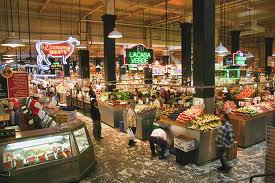
The Grand Central Market

Stalls at the Grand Central Market in L.A.

Perhaps this may seem strange, especially to those who’ve not experienced it, but I just love being out in places where there’s a lot of foot traffic and commerce is humming along. Although I fairly recently left a large corporation, where I worked in a windowless environment for a mostly faceless organization, I spent my formative years in very small businesses. My father was – after he took the money I got for my Bar Mitzvah to  purchase a truck – a food peddler, selling mostly meat and cheese to places like the Grand Central Market in downtown Los Angeles.

I used to love going to that market and walking through it to get to a hand truck or a small four-wheeled cart I could bring back to our truck to schlep boxes of product to some of the stalls we sold to or, better yet, to one of the walk-ins where the vendors kept their produce, etc. they would then put in their cases to sell to the public. There was one place that sold a lot of chiles and spices. I think the dominant smell in that cooler was Cumin, or Cominos. I loved going into their walk-in and would usually loiter there after I had unloaded the cart with the boxes of product they had purchased from us. I was also introduced to things like lamb French Dip sandwiches and Orange Julius at the Grand Central. I can still hear my father pushing a cart loaded with meat and cheese, yelling “Wash (sic) your feet!” to warn shoppers of our presence.

Angel's Flight Funicular

The Angel's Flight Funicular

Across the street was one of the iconic places in the City of the Angels, a funicular called Angel’s Flight. It was an amazing ride to nowhere for me. Up the hill (Bunker Hill) and back down. No place to go, but I was in heaven on that little trolley.

I’ve been back a few times since my father’s death just over twenty-five years ago and it never fails to give me the chills and warm my heart at the same time. Now when I go out to talk with prospects for my business, I find I’m getting the same old feeling. There’s a connection I can’t fully explain, though I’m trying to here. I hope it never goes away. It’s part of what makes everything I do worthwhile.

Angel’s Flight Pic Courtesy of NIEHS


Do You “Like” Me?


I Sure Do Like This!


One of the easiest ways to use Facebook is to “like” the things you actually take the time to read, unless of course either you don’t like what you read or you take even longer to post a comment and engage in conversation. Most of the time you’re probably skimming through stuff your friends or the Fan Pages you’ve “liked” are posting.

You might want to consider clicking the like button for those posts. It’s simple, quick, and goes a long way to let people know you’re actually paying attention. This is especially true of Fan Pages because the admins of those pages have access to Facebook Insights, a set of analytics that tells them if they’re reaching their audience or not. Feedback is one of the things that social is all about, most frequently in the form of some kind of engagement, e.g. comments to blogs, re-tweets, etc.

Clicking on the “like” tag is surely one of the best ways to engage with your friends and the brands and stores you care about. Give it a try. You’ll like it!


Why Do We Bother?

I am constantly blown away by the quality and quantity of good information that’s available on the web. I have been studying the use of social media for some time; initially for use within the firewall of a large organization and, more recently, for small business marketing. One channel I think many businesses, especially those that experience high foot traffic, e.g. restaurants, bars, retail stores, is Facebook. I will never refer to myself as an expert, but I have been gaining some expertise in both the strategy and the mechanics of taking advantage of their fan pages.

Unfortunately, I can’t keep track of all the good information that keeps being thrust my way! I want to share just one of them. I like what Jordan Julien has to say, though I find myself wondering why he’s not including mobile now in his assessments. Perhaps he is and I need to dig a little deeper but, for now I just want to share one post he’s written that I think is quite useful. It’s entitled “How Should I Use Social Media” and you can find it at http://bit.ly/ge2vwl. Check it out and see if it doesn’t clarify some things for you. Study the graphics carefully. There’s a lot of info packed into them.

So, by my title I mean . . . I sometimes wonder why I blog at all, since there’s so much information out there; much of it far more knowledgeable than what I have to offer. I know there’s got to be a good reason, else why do I bother?

The link referred to above is no longer available at Posterous!