Category Archives: Business

For My Eyes Also (Part 4)

https://www.drillingcontractor.org/optimization-taking-a-holistic-approach-9919

What is Knowledge Management?

Knowledge Management. What does it mean? Merriam-Webster’s Collegiate Dictionary (on-line edition) defines knowledge as “the fact or condition of knowing something with familiarity gained through experience or association”[1], and management is defined as the “judicious use of means to accomplish an end”. A cursory search of the internet reveals over 120,000 pages which use the term and, of those who attempt to describe it, there are numerous differences.

Karl-Erik Sveiby  defines it as “The art of creating value from an organization’s Intangible assets”.[2] Knowledge Management News says that it is “. . . about connecting people to people and people to information to create competitive advantage”.[3]

Lexis-Nexis, at its InfoPartner website[4], , points to the Virtual Library on Knowledge Management at @Brint.com, where KM is described as “. . . cater[ing] to the critical issues of organizational adaption (sic), survival and competence in [the] face of increasingly discontinuous environmental change. . . . Essentially, it embodies organizational processes that seek synergistic combination of data and information processing capacity of information technologies, and the creative and innovative capacity of human beings”.[5]

By using this definition of knowledge, it becomes apparent that it is not merely a collection of data or information. The gathering and organization of data, while useful, is not knowledge. Knowledge requires some intimacy, familiarity, or awareness. It is a compilation of experience and discovery, and not a compendium of dry facts.

It is useful to make a distinction between four elements of human understanding, which may be described as data, information, knowledge, and wisdom. Data may be described as “1 : factual information (as measurements or statistics) used as a basis for reasoning, discussion, or calculation; 2 : information output by a sensing device or organ that includes both useful and irrelevant or redundant information and must be processed to be meaningful.”[6]

Using this definition, it is clear that data, by itself, is of little use to an organization seeking to find meaning in its activities. Data can be likened to bricks, which serve no useful purpose when merely stacked in the corner of the yard, yet provide shelter from the elements when constructed into a dwelling. It is the construction of the dwelling which can be likened to the definition of information, which is, inter alia, “. . . the attribute inherent in and communicated by one of two or more alternative sequences or arrangements of something (as nucleotides in DNA or binary digits in a computer program) that produce specific effects c (1) : a signal or character (as in a communication system or computer) representing data . . . .”[7]

Knowledge however, as we’ve seen, requires some familiarity or intimacy gained through experience or association. Using the dwelling example, we might think of knowledge of our brick house as consisting of knowing how to heat it properly, or recognizing which windows to open to adequately ventilate it. Knowledge is not merely the fact (data) that there are windows or heating elements available, nor even the recognition that opening the windows or turning on the heat will have an effect (information), but the familiarity with (knowledge of) their proper use through either trail and error, or from reading a manual or being taught by a friend or family member.

In an organizational setting, knowledge consists of the proper use of information (composed of numerous data points) for such things as manufacturing operations, sales forecasting, income reporting and analysis, human resource management, and all other activities associated with the successful operation of a business or organization.

As to wisdom, it is not my intention to discuss it, other than to say that without the wise application of the tools and strategies we are developing, all our work will be for naught. We can gather all the data available, organize it until we’re exhausted, yet until we have the wisdom to know what to do with our findings, we will merely be organizing things in different containers, oblivious to their true worth, and incapable of take advantage of what they offer us.

Knowledge management then, can be seen as the judicious use of all information and data gathered by a company as it pursues its vision and seeks to perform its mission. The success of an organization turns on its ability to properly gather data and information, organize it in a coherent fashion, and make it both available and useful to its members (employees).

The difficulty, which Knowledge Management attempts to address, is in the process of organizing and making available all the collective knowledge which will optimize the capabilities of its resources, whether human or capital.


[1] Merriam-Webster’s Collegiate Dictionary, hereinafter “Merriam Webster” [online edition] (accessed 10/28/00); available at http://www.m-w.com/

[2] Sveiby Knowledge Management [online consultant] (last modified April, 2000); available at http://www.sveiby.com.au/KnowledgeManagement.html

[3] Knowledge Management News, Hoyt Consulting [online consultant; (last modified June, 1999), http://www.kmnews.com/Editorial/km.htm

[4] Lexis:Nexis InfoPartner [online info and consulting] (last modified March, 2000); available at http://ip.lexis-nexis.com/

[5] Yogesh Malhotra, Ph.D, @Brint.com [online business reference] (last modified October, 2000); available at http://www.brint.com/km/whatis.htm

[6] Merriam Webster, Op. Cit

[7] Merriam Webster, Op. Cit


For My Eyes Also (Part 3)

https://www.linkedin.com/pulse/30-knowledge-management-insights-stan-garfield

The Impetus Toward Knowledge Management

Whether it is called Knowledge Management, knowledge sharing, intellectual capital management, best practice management, the learning organization, or innovation management, there are powerful reasons to learn about knowledge and the process of communicating complex change and ideas in order to achieve rapid action in their integration into the organization.

There are also many reasons proposed for adopting a method of managing the growing volume of information gathered and accessed by various organizations. While these reasons are numerous and varied, they generally share some of the same characteristics. This is true with respect to both governmental and commercial organizations. Two disparate examples are the Directors of Information Management of the United States Army on whose website appears a lengthy presentation regarding Knowledge Management, and the Rochester, New York SGML/XML (Structured General Markup Language/Extendable Markup Language) User’s Group.

The Army’s presentation speaks to two of the basic issues addressed by KM, viz. how an organization can remain effective in the face of a diminished workforce, and how that organization can provide some form of logical continuity to its operations despite the possibility of frequent retirement and turnover.[1]

The SGML/XML User’s Group addresses the same general problem the Army faces, speaking in terms of “Leverag[ing] Work Already Done” and “Stop[ping] Knowledge ‘Walking out of the door’ “.[2] These are two of the most critical issues faced by all organizations today, and have been a continuing problem, the solution of which may now be possible through the use of new technology and new thinking. Much of the new technology has become available recently due to the continuing growth and development of the Worldwide Web and other forms of rapid communication and widespread dissemination of information.

Examples of tools which are commonly in use today, and which did not exist 5 – 10 years ago, are search engines, data mining software, the development of portable data format (pdf) and distillers, Internet and intranet portal sites, desktop dashboards, and knowledge organizing agents.

There are also two basic tracks, or methodologies, with which to approach the concept of Knowledge Management. The first treats knowledge as an object which can be identified and handled using information systems. These systems include artificial intelligence, reengineering, and groupware, among others. The second track looks at people and their management. To the people involved in this track, knowledge is seen as processes to be changed and improved [3]

The former is developing rapidly, as new technology comes on line, whether it be faster processors, wireless communications, new forms of data storage and retrieval, or new software for organizing and comprehending information and data. The latter, however, is where the real developmental difficulty lies. There are several problems inherent in teaching people new methods for acquiring and, especially, for sharing knowledge.

Nevertheless, companies like IBM and Lotus are investing a great deal of time and money in supporting the move toward Knowledge Management. In a recently published paper, these two organizations assert that “Knowledge Management will soon pervade business practices in the same way that eBusiness pervades commerce. Similar to eBusiness, this trend started out on the fringe of computing and gained incremental credibility from the successes of early adopters.

“…

“Similar to eBusiness, Knowledge Management will play a critical role in corporate longevity and ultimately distinguish the winners from those companies that merely survive. It will enable companies to apply their intangible assets, and in the spirit of eBusiness, revolutionize the way they do business. In fact, elements of Knowledge Management are already manifest in many successful eBusiness practices such as electronic procurement where knowledge accelerates and bolsters the entire procurement process.”[4]

The number of organizations, including Universities around the world, which are discussing, teaching, or extolling the virtues of Knowledge Management are too numerous to chronicle in so short a paper. To emphasize the point, as of this writing a search at http://www.altavista.com, typed in as “why do we need knowledge management” (without the quote marks surrounding the phrase) produces 1,274,124 pages or “hits”.

Of those, only the first 200 are available, and my experience is that the last of the pages will generally not be on point, that is their relationship to the original search phrase will only be ancillary. In this case, the 198th page is, although not responsive to the question “why do we need” it, nevertheless directly on point regarding Knowledge Management. Furthermore, it isn’t the website of some college kid who has a passing interest in the subject, it is a page from the Cap Gemini Ernst & Young Center for Business Innovation.[5]

Other organizations whose sites appear in the first six pages of hits are Rutgers University, Oklahoma State University, the Xerox Corporation, Compaq, and the Anderson School of Business at UCLA. I believe it can be safely said that Knowledge Management has come in from the fringe of computing, and is gaining steam with every day.


[1]Using Knowledge Management for Mission Success“, [on-line presentation] 1999 U. S. Army DOIM (Directors of Information Management) Conference; available at http://doim.army.mil/dc99/presentations.htm; accessed 30 October 2000

[2] Jerry Ulbricht, “Turning Information into Knowledge” [on-line presentation]Rochester, New York SGML/XML Users Group; available at <http://www.rnysxug.com/> (1999)

[3] Sveiby Knowledge Management – http://www.sveiby.com.au/KnowledgeManagement.html (accessed October 27, 2000)

[4]Lotus and IBM Knowledge Management Strategy“, [on-line white paper], (Lotus Development Corporation, 2000); available as “Knowledge Management Strategy” at http://www-4.ibm.com/software/data/knowledge/reference.html

[5] Cap Gemini Ernst & Young Center for Business Innovation, [on-line business site] (last updated August 21, 2000); available at http://www.businessinnovation.ey.com/


For My Eyes Also (Part 2)

https://www.sonhslks.com/knowledge-management.html

A (very) Brief History of Knowledge Management

Although the current move toward gathering, cataloguing, storing, and disseminating information and data for widespread organizational use is a fairly recent development, the basic concepts of Knowledge Management have been with us for as long as humans have gathered in communities. Humans have always struggled with the need to pass on information gathered through hard experience and disastrous failure.

In his new book, to be published this fall, Steven Denning sets forth a brief synopsis of the human activities which have preceded our current drive toward Knowledge Management. In it he states, “The pursuit of any significant human activity typically leads to the acquisition by those involved of know-how and expertise as to how the activity may be successfully conducted. Insofar as what is learned in the process can be captured, and communicated and shared with others, it can enable subsequent practitioners – or even generations – to build on earlier experience and obviate the need of costly rework or of learning by making the same repetitive mistakes.

In the village, from time immemorial, the elder, the traditional healer and the midwife have been the living repositories of distilled experience in the life of the community.

“…

Interactive knowledge-sharing mechanisms have always been used – from palavers under the baobab, village square debates, and town meetings, to conclaves, professional consultations, meetings, workshops, and conferences – all functioning to enable individuals to share what they know with others in the relevant area of knowledge. “[1] (emphasis the author’s)

In 1988, as the pace of change was accelerating with the rapid development and deployment of large-scale information systems, Peter F. Drucker observed, “Information responsibility to others is increasingly understood, especially in middle-sized companies. But information responsibility to oneself is still largely neglected. That is, everyone in an organization should constantly be thinking through what information he or she needs to do the job and to make a contribution”.[2]

Drucker understood then the pivotal dilemma with respect to data and information now being faced by many organizations, that of understanding its power and devising the methodologies whereby it can be harnessed and used to the benefit of the people who need it to perform their jobs properly.

In referring to information specialists as toolmakers, Drucker said, “They can tell us what tool to use to hammer upholstery nails into a chair. We need to decide whether we should be upholstering a chair at all.

“Executives and professional specialists need to think through what information is for them, what data they need: first, to know what they are doing; then, to be able to decide what they should be doing; and finally, to appraise how well they are doing. Until this happens MIS departments are likely to remain cost centers rather than become the result center they could be.”[3]

Today, MIS departments are still struggling with the notion of becoming “result centers”. Too frequently, they concern themselves with the infrastructure of the organization’s data processing capabilities, and completely ignore the role Knowledge Management (in its broadest sense) can play. Instead of leading the way through the morass of competing needs, whether perceived or real, they find themselves being led around by various departments seeking to have their agenda legitimized, often to the detriment of the MIS department’s ability to serve the company as a whole.

At Rocketdyne, which employs a large percentage of well-educated, highly computer literate individuals, there exists a great deal of enmity between the users and the Information Systems (IS) department. There are many who feel the department should fulfill the role only of providing the infrastructure, i.e. the telecommunications backbone and the hardware, and maintaining its reliability. These people believe IS has abdicated its responsibility of providing guidance for software development and acquisition, through an historic ineptness in performing this function.

Whether this view is accurate or not, it demonstrates a division which has long been developing and will not soon go away, especially without visionary leadership schooled in the concept of Knowledge Management. Many knowledgeable workers at Rocketdyne believe they must have the freedom to purchase software which will support their needs, or to develop that software without interference and second-guessing by the IS department.

The question which looms now for most organizations, and certainly for Rocketdyne, is how can the data which is both created and collected be harnessed for the purpose of continuing a company’s pursuit of its goals.

What we are experiencing, I believe, is a time of challenge and opportunity. Historically, humans have always valued the hard-earned wisdom of our forebears. We rightly believe in the inappropriateness of “reinventing the wheel”, and we have continuously improved on our methodologies for categorizing and memorializing the lessons we have been taught or have learned through experience.

Knowledge Management is merely the application of this historical pursuit of know-how and expertise to the comparatively new tools we have developed. The concept itself is nothing new, The question then becomes one of how do we go about harnessing these tools to our advantage; how do we make that quantum leap into an entirely new way of viewing an old problem.

In the next section we will look at a little bit of the background of the present day approaches to Knowledge Management, and see how companies are beginning to recognize the necessity of understanding and utilizing this approach to conducting business and running an organization successfully.


[1] Stephen Denning, “The history of knowledge management-The idea of sharing knowledge is not new“, in “The Springboard“; available at http://www.stevedenning.com/history_knowledge_management.html (accessed October 27, 2000)

[2] Peter F. Drucker, “The Coming of the New Organization”, Harvard Business Review on Knowledge Management (Boston: Harvard Business School, 1998) p. 11

[3] Drucker, Op, Cit, . pp. 11 – 12


RAIDI

Robot and Human hands touching

I have no doubt I am a very lucky person. Although I do not have an education in any science, I was able to spend approximately two decades working on the Space Shuttle Main Engine (SSME) program at Rocketdyne (through four major aerospace corporations). I spent a lot of time working with some of the brightest rocket scientists (for realz) as well as world-class engineers and scientists in literally dozens of disciplines.

Since my retirement from (what was then) Pratt & Whitney Rocketdyne, I have worked intermittently with Quantellia, LLC, an artificial intelligence / machine learning software development firm. Needles to say, I have no formal education in any computer field, with the exception of two Visual Basic classes I took at a nearby Junior College. I was introduced to one of the co-founders of Quantellia shortly after my retirement. She showed me a tool they had been developing called “World Modeler”. It was the most exciting thing I’d seen in a long time, and I was especially impressed with how it brought a highly systemic approach to modeling and forecasting in complex situations. I ended up writing several papers and a bunch of case studies for them.

In 2015 I returned to work at what was then Aerojet Rocketdyne (still is, for now) where I worked on a small rocket engine program for a little over two years. After leaving, I started doing some selling for Quantellia and, beginning in March of 2018, I became the company’s Business Manager, a position I’m still working at.

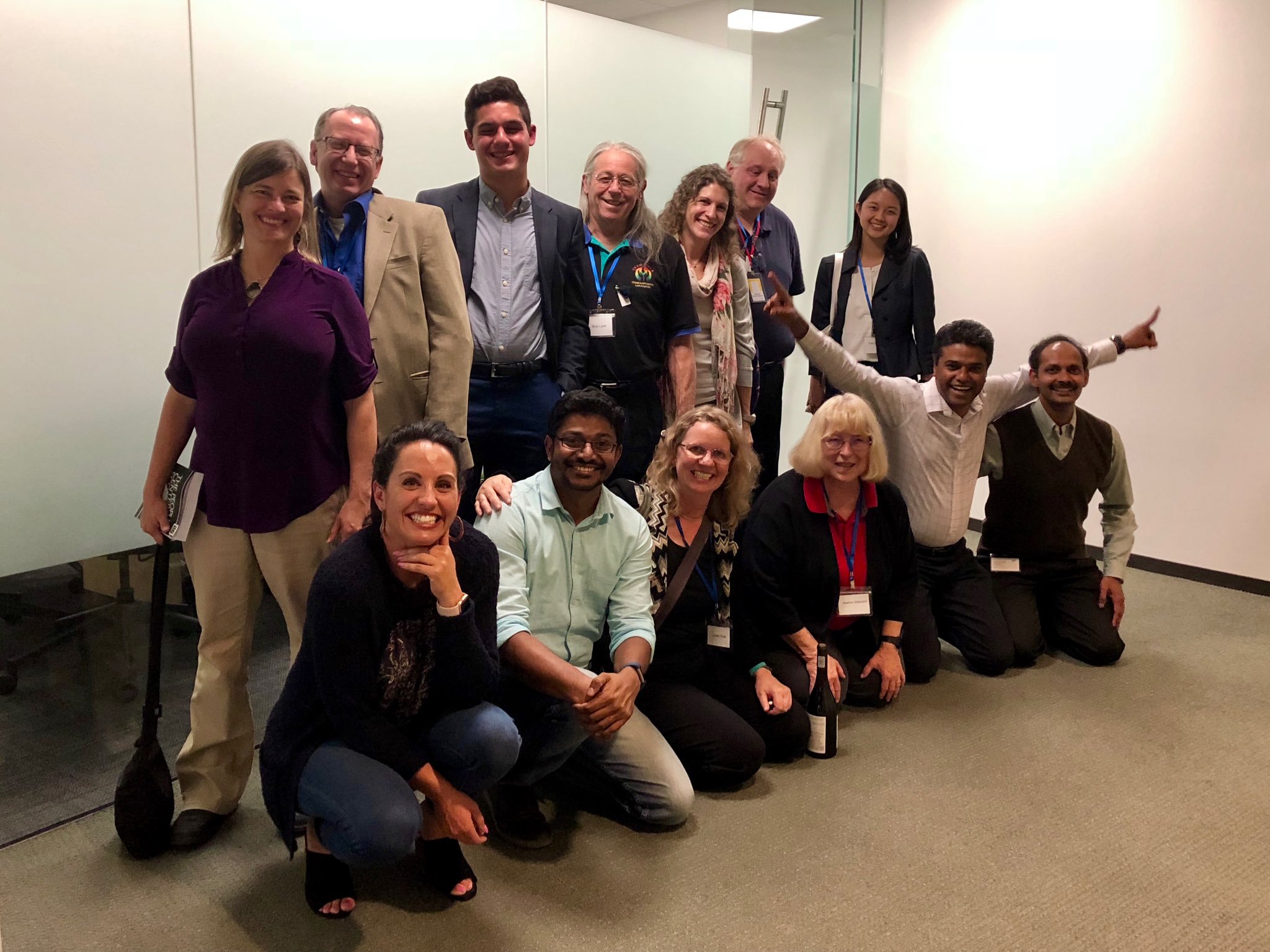
Last year we held a summit, in conjunction with SAP Global Services, at their Labs in Palo Alto. It was called the “Responsible AI/DI Summit.” In this context AI stands for “Artificial Intelligence” and DI stands for “Decision Intelligence.” One of the main purposes of the summit was to discuss how we can develop artificial and decision intelligence such that we concentrate on using them to solve humanity’s most “wicked” problems, rather than merely work at developing apps, the main purpose of which is to make money for the developers, investors, and entrepreneurs involved in the business.

Below are some of the folks who worked on the Summit, including me (the long-haired guy in the middle of the back row). Also, here’s a link to this year’s second Summit – Responsible AI/DI Summit 2019, as well as a link to the RAIDI Blog.

Quantellia and SAP folks who worked on putting it all together

As I learn more about machine learning, artificial intelligence, and decision intelligence, I will work at sharing my knowledge and understanding of these tools, and the issues they raise. I know the people I’m working with are dedicated to serving humanity, not merely milking it for profit. That pleases me and I hope we’ll be able to prove we’re doing the right things to ensure such service continues to exist and grow.


Dimple or . . . ?

I wore a suit and tie for many years. I’m not super vain, but I do like to present a sharp image when called upon to do so, and one of the most important things is how you dress. Many years ago I read a book by John T. Molloy, called “Dress For Success.” If memory serves, one of the most important items in any man’s wardrobe is his tie. The tie must be silk, it must be of a certain pattern and color (though there are numerous styles considered acceptable), and it should have a well-tied knot with a dimple which, believe it or not, takes a bit of practice to execute well. Below is an example of a well-tied (looks like) four-in-hand knot. Actually, it’s so symmetrical, it looks a bit like a Windsor knot, but I’m pretty sure it would be thicker if it were.

The Perfect Dimple

Another thing I learned from Molloy’s book, again if memory serves (I read it right after it was published, in 1976 – the year I graduated Law School), is that young men wear their collars too tight and old men wear them too loose. Then there are men who can’t admit how old they are and who hang on to images of their self that may enhance their self-esteem, but which make them look a bit ridiculous. In the below case we have such a man. Note how he has no dimple in his tie, but his collar is too small for him, creating a classic, oblivious man’s neck dimple (or neck vagina, depending on how uptight you might be).

The Perfect Neck Vagina

I’m not entirely certain what this says about a man, but I have my ideas. You, of course, are quite free to develop your own opinion of what this says about any man, let alone this particularly egregious example.


Preserving My Past

The time has come for me to simplify . . . to apply some feng shui to my collection of old (ancient?) paperwork, some of which is more than several decades old. Paper is the one thing I seem to be a bit of a hoarder with; that and old clothing, I guess.

I am coming across papers, letters, and notes I’ve written over the years, many of them from my over two decades of service at Rocketdyne, where I was privileged to work on the Space Shuttle Main Engine program. In that time I worked for (without changing desks) Rockwell International, The Boeing Company, and the Pratt & Whitney Division of United Technologies. After I accepted an early retirement package in 2010, I returned as a contractor to work for Aerojet Rocketdyne in 2015, where I worked for a bit over two years.

Recently, I purchased a small, portable Brother scanner and I am slowly scanning old papers I’m finding. Inasmuch as I’m now publishing far more frequently to this blog, I’ve decided to save some of these things so I can throw the paper away and still have a record. It’s been over nine years since I retired and I find I’m forgetting what working in a large organization was like. Reading some of the documents I created helps me to remember what I did, as well as to feel reasonably confident I wasn’t just spinning my wheels.

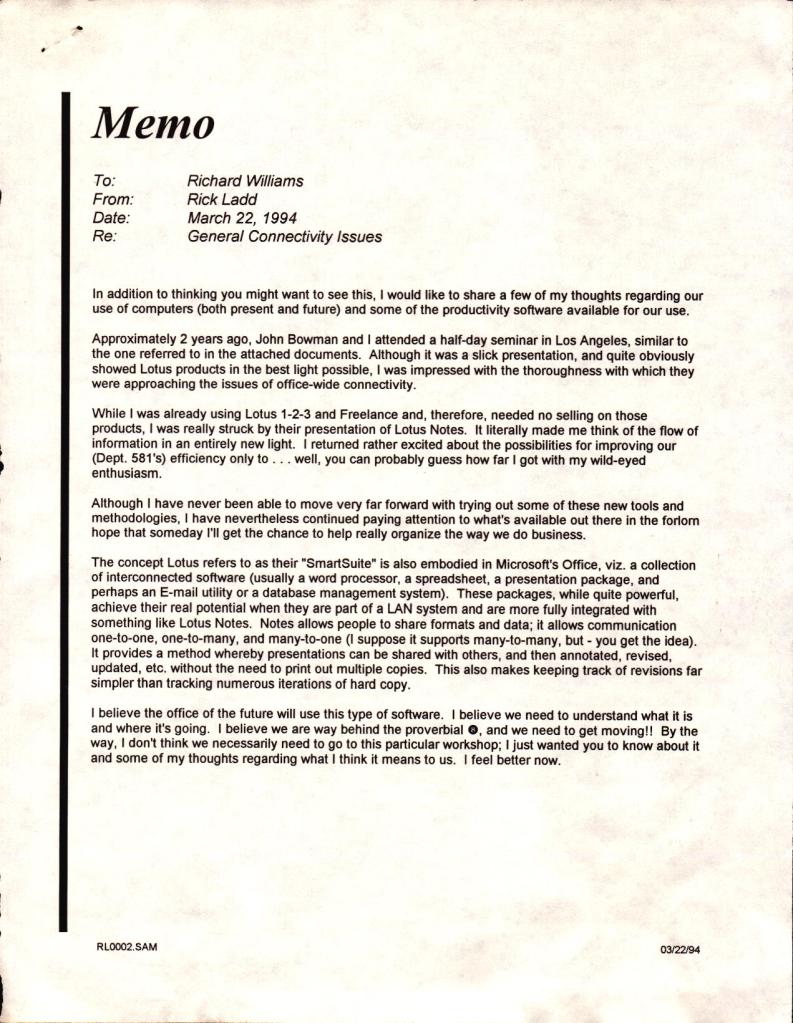
What follows should be somewhat self-evident. It’s a letter I wrote to my manager in 1994, now over 25 years ago. I think I sound pretty reasonable, and I’m gratified to know I was pushing—pretty hard, I think—for positive change back then. I’m not an IT person; never went to undergrad and, besides, the earliest PCs didn’t come into existence until I was nearing my thirties. However, I did recognize the value such tools brought to managing and operating a business and I have always been a big promoter of technology in the office. At any rate, this is more for me than my readers, but some may find it “amusing.”

PS – I scanned the original “memo” in .jpg format and the accompanying Lotus presentation materials in .pdf, which you’ll have to click on if you’re interested in what Lotus was doing 25 years ago, before its acquisition by IBM.


Hey! Long Time, No See.

QuantelliaLogoPaleI know it’s been quite a while since last I posted here. I’ve been continuously active on Facebook and have begun tweeting quite a bit as well, but that’s not why I haven’t posted to this blog in the past nearly three months. As of March 1 I began a new career, probably not the kind of thing you hear about 70-year-olds doing all that often. Since then I have been working as the Business Manager for Quantellia, LLC. You may recall I’ve done work for and with Quantellia on and off for the past six years.

Quantellia is a small AI/ML software development house and, until now, one of the co-founders has been running the business. Inasmuch as she is also the organization’s Chief Scientist, and a well-known pioneer in Machine Learning, this was not exactly the optimal thing for her to be doing. I had been touching on the subject and, since she was having such a hard time getting someone competent to run the business, I pressed my offer to do so. She finally relented and things have been going swimmingly, although there have been times I was swimming against the current. I’m definitely climbing a steep learning curve, which sometimes has me questioning if I’m losing my edge.

Actually, at times I can’t quite tell if my intellect is slipping a little bit, or if I just don’t care as much as I used to and I’m not quite as arrogantly sure of myself. My memory seems to be intact, along with my ability to learn and adapt. I’m going to go with the “I just don’t care as much about things as I used to; I’m more sanguine about life, work, and the need to control everything.

At any rate, I’m having a lot of fun. I was once partnered with two CPAs, doing royalty accounting for some big acts: Jackson Browne, Joni Mitchell, The Cars, Dollie Parton, Ronnie Milsap, The Commodores, even Jimi Hendrix’s estate. I learned a fair amount about accounting back then, and now I’m getting the opportunity to revisit what I learned, applying it in different circumstances. I’m also learning about artificial intelligence and machine learning, and hope to convey some of what’s going on in these fields. Although not a data scientist, I am quite capable of seeing where AI can be applied in business to assist with all kinds of issues. I’m sure you can as well.


What (Who) Is An Expert?

Sometimes Expertise is Clear

Sometimes Expertise is Clear

I originally wrote the following in January of 2012, less than two years after my departure from Pratt & Whitney Rocketdyne. For some reason it got a bit out of control for me and I never posted it. I’m either breaking it into two separate posts, or removing some notes from the end and posting it as a standalone. Actually, I’m doing the latter for now – maybe working the removed notes into a second post at a later date.


How Do We Know?

Are you an “Expert” in anything? How do you know? If you say you are, how do we know it’s true? Furthermore, what is the difference between being an expert and having some – or lots of – expertise in a particular subject or field of knowledge? I was reminded of this problem a while back while talking to a friend and former colleague about the situation at my old company and, especially, how the tool I was the project manager for and had introduced back in 2002 was doing. I got the impression the issue of expertise was still a hot one and the situation hadn’t changed much since we first tackled it.

Some background

In 2001 I was a member of the Knowledge Management team for my former employer. One of the big problems we were grappling with was how to create an online directory or “Yellow Pages” of employees, including a way to search by expertise. The IT department had gone through at least two, possibly three, iterations using HTML as the basis for creating and presenting the information. Unfortunately, people moved around too frequently and the job of keeping it up-to-date was daunting; actually pretty much impossible. We were looking into other ways to achieve the results we thought were necessary to improve our ability to find the right people at the right time.

When the member of our KM team who was working on it decided to retire in the Fall of that year I volunteered to take over the effort. I soon came to the conclusion we were never going to be successful doing it the way we had been. Due to policies I had no control over, there was no way to connect what we wanted to create with HR’s database, which would have simplified the effort somewhat. Even more important, I realized what we needed was far more than just a directory. We needed a way for people to truly communicate with each other; a way to ask questions, receive answers, and conduct discussions on the appropriateness and efficacy of proposed solutions. This wasn’t what a mere directory of names and titles would give us. I set off to discover something better.

In my quest I came across a few tools that began to address the problem. The two that stood out back then were Tacit’s KnowledgeMail® and AskMe Enterprise. In fact, I ultimately conducted a trade study of both, as well as a home-grown (we were part of the Boeing Company back then) system that was designed to help Airplane Mechanics share what they knew and learned about the airplanes they worked on and their various intricacies. I quickly eliminated the latter of the three and concentrated on the two others. In the end I presented my findings to our Chief Engineer. Based on the criteria I used, AskMe was the winner as it addressed our security concerns in a manner far more to our (and our Lawyers’) liking.

What does “Expert” mean?

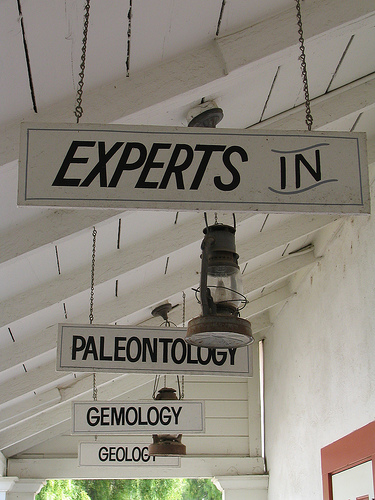
The Experts Are InHaving decided on a platform we then had several important issues to deal with before we could feel comfortable rolling it out to the entire organization. The first of them, which is related to this post, was:

Do we Control The Assignment of Individuals as Knowledge Providers &, if so, How do we Qualify And Present Them Within AskMe?

We developed a set of responses for each of these issues, the first of them being the most important and the one that was at the root of our disagreements, e.g. we decided to let everyone register and self-select as “having expertise” or knowledge in any field we provided a category for.

The biggest bone of contention was that some of our senior technical staff were worried people would overreach and end up providing bad information which might be acted upon. When you design and manufacture products that can easily kill a half dozen people and cost tens if not hundreds of millions of dollars of loss, you tend to be a little cautious. This was understandable. However, many of us felt the likelihood was next to nil, as we expected the internal equivalent of crowd-sourcing would likely take care of it. In fact, in the over nine years I led the project there was only one instance in which I was asked – by a panic-stricken Manager – to remove something from the system. I was able to do so immediately, though I took pains to copy and retain the information in case of a dispute.

We decided to take a few more steps to help users decide for themselves who were the most authoritative people in the organization, among them the labeling of members of the Technical Fellowship, Process Leads, and others in recognized positions of authority.

Recently, I had lunch with my former Manager, the Director of the Program Management Office where I last worked, and where this all happened, and he offered me some valuable insight I’d like to include in this post. Here’s what he suggested:

“I think that our biggest issue wasn’t the overstatement of expertise that was much discussed and worried about; it was the problem that people were reluctant to claim expertise and document it in a profile.  Whether this is an engineering cultural thing, mass humility, fear of ridicule from others or insecurity, I’m not sure, but it’s something that must be considered in making a breakthrough in this area.”

So . . . how do we determine what constitutes expertise? Here’s the problem we had with AskMe. Do we only allow recognized “Experts”, formally organizing our expertise, or do we allow it to become more organic and emergent? In a culture that actively encourages hoarding knowledge through its exalting of patents and intellectual property rights in general, it’s hard to get people to share. Yet feedback to the sharing of knowledge connects people and their behavior to the world around them. It gives everyone the chance to realize how their behavior influences the success of their organization. Effective feedback will reinforce positive behavior and correct negative behavior. The ability to give and receive feedback is a must for leaders who wish to have honest and direct relationships with employees.

Ultimately, it became obvious that the real power in what we were doing was not the listing of “experts,” but rather the facilitation of conversation and discussion. It also became apparent to me that what we had was not so much an expertise location tool in AskMe, but a powerful social media platform that allowed us to securely share information and knowledge about our products and processes. It was an excellent system, a precursor to the types of platforms most enterprise size organizations are currently using, and collapsed within a few years of my departure. To say it was disappointing to see nearly a decade of work be allowed to just fade away and disappear was deeply disturbing, and disappointing. Now, as Aerojet Rocketdyne it’s been several years they’ve had a project to create a front-end that will allow the remaining database (not experts) to be queried, but it’s still on the back burner as far as I can tell. Maybe if I live another 50 years (not likely, since I’m 70) I’ll hit the jackpot with an organization that truly understands the value of these kinds of platforms/utilities. Nah!


Just A Little Reminder To Me

Sometimes I forget the work I’ve done. I mean . . . it’s over, lessons learned have been internalized and generalized . . . time to move on to something else, right? So I move on. My entire career has consisted of learning, sharing, and moving on. I’ve known people who held onto their knowledge like a life vest, scared silly for anyone to even know precisely what they do or how they do it. In my corporate experience there’s a phrase that perfectly embodies that kind of attitude: “Knowledge is Power.”

I’ve never agree with that concept. In fact, when I was doing Knowledge Management work for Rocketdyne, I used to say “If knowledge is power, then knowledge shared is power squared.” Unfortunately, becoming a sharing and learning organization requires a major cultural change and — especially in aerospace and other conservative industries — change is difficult to effect; certainly not within a short window of time.

At any rate, I was looking at the blog and web sites I am an admin for and realized I had written a couple of blog posts for a local business that was a client of mine for a very short while. I thought I would share it, only because I want to preserve as much of my work as possible. I want this in large part because almost everything I did at Rocketdyne is the intellectual property of the organizations that were the mother ship for Rocketdyne in the over two decades I was there.

I have a few presentations I did that are on SlideShare, but they don’t come close to the amount of content I produced over that time, and that includes a couple of years worth of monthly newsletters that were researched, written, and published almost entirely on my own. I even did the graphics for them. As I said, I don’t own them and, frankly, they were written for my colleagues and much of it wouldn’t make a great deal of sense to anyone outside the organization. Nevertheless, it’s a bit sobering to know you did a lot of work you cannot now take credit for . . . at least not easily. What follows is the blog post I wrote for Choice 1 Cleaners.


Your Tortured Garments

Red Wine Stain on White Blouse

Oops!

Many things in this world are a lot more complex than first meets the eye. Dry cleaning happens to be one of them. Actually, when it comes to today’s garments, any kind of cleaning is far more complex than one might imagine. This isn’t true of all garments, but it is true of garments in general.

Take, for instance, the variability in both materials and the things that stain them. There are basic differences, e.g. fabrics are made out of plant-based (cotton, linen), animal-based (silk, wool, leather), or synthetic (polyester, acrylic, nylon) materials. Stains come in different varieties as well; they’re either plant, animal, or synthetic. Proper cleaning requires an appreciation of the science involved when trying to remove those stains without harming the fabric.

In addition to the variations in material and the things that stain them, consideration needs to be given to the method of construction and the existence of adornments or embellishments, such as pearls, beads, chains, etc. Each of these creates different challenges that need to be addressed before the garments they’re attached to can be safely cleaned. Some require gauze to be hand-stitched over them in case they come loose. Some designer clothing can contain materials that need four to six different treatments to be thoroughly cleaned.

In order to get your garments truly clean – as clean as you expect them to be – we need to test spots as well, many of which you aren’t aware exist. For instance, sweat, alcohol, and perfume stains may not show up for a while. Your skin’s oils may leave stains you don’t notice either. However, when we clean your clothes we will discover them.

Rest assured, no matter how difficult the challenge, our mission is to clean your garments so they look and feel brand new. We can’t do much about the effects of time, but we can do an awfully good job removing the things that get on your clothing and render it stained and dirty. We pride ourselves on being the best and we think you’ll agree we are!


A Day With Edward Tufte

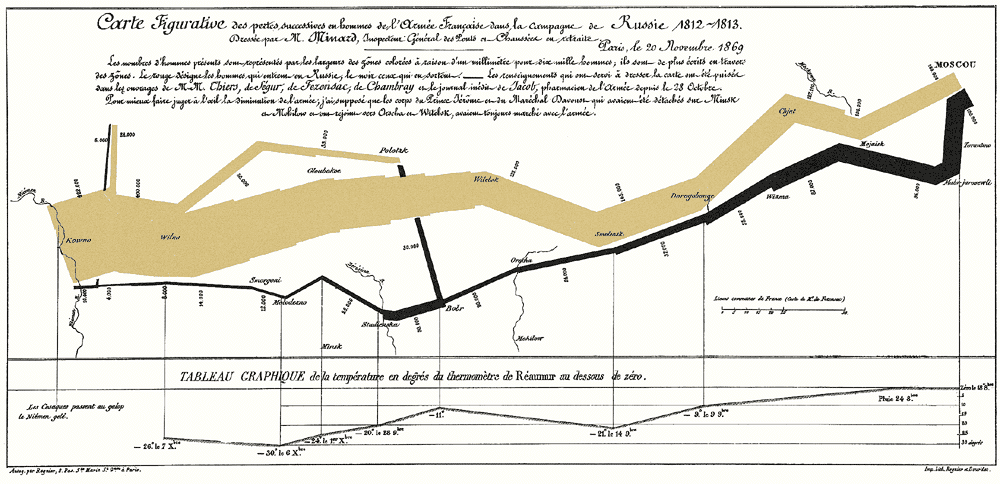
Graphic of Napolean's March

One of the more iconic images Professor Tufte uses in his presentations. I have a mounted, autographed poster of this one.

If you create reports, presentations, info graphics, or are in any way involved with presenting data of any sort, I hope you’ve heard of Edward Tufte. Even better if you’ve heard of his work, especially what I believe is his seminal book, “The Visual Display of Quantitative Information.”

As part of my job at Rocketdyne, I was privileged to attend an all-day seminar of his in Los Angeles in the Spring of 2007 or ’08. Upon my return, I wrote down some notes and impressions for my colleague who paid for the day. There’s some really good stuff in here. As a knowledge management professional, I’m a bit chagrined it’s taken me this long to share it. I truly hope someone finds Tufte’s words useful.

Bill:

Here’s a quick recap of Edward Tufte’s presentation last Thursday. What I did, for the most part, was enter points he made as numbered bullets. Therefore, I’ll do the same here with the addition of some extra comments if I feel they are necessary.

1. Professor Tufte refers to the nature of the work he does as “escaping flatland”. He believes dimensionality is extremely important when using visualization to represent quantitative data.

2. Another aspect of visually presenting data which he emphasizes is data density, i.e. resolution. He repeatedly stressed the need to drive for greater and greater resolution when presenting data.

3. With respect to items such as run charts, histograms, etc., he believes it is far better to label the data directly, avoiding the use of keys, which he feels are distracting.

4. He presented a copy of Euclid’s Elements, which included many “pop-up” graphics used to illustrate his points. The copy of the book he had an assistant bring around (wearing white gloves) for us to view is 432 years old. It was awesome just to see it. He refers to these pop-ups as the “brute force” method of escaping flatland.

5. A key point he stressed is to enforce visual comparisons. The terms he used (should sound familiar) were, “it depends” and “compared to what?”.

6. The visual representation of data should show mechanism, process, or dynamics, i.e. they should present causality as an aide to understanding and clarity.

7. He also stressed the importance of showing more than 1 or 2 variables when preparing a chart.

8. Presentations must be content driven, i.e. they must embody the three elements of quality, relevance, and integrity. Integrity was a big theme of his and one I don’t believe most of us would find fault with.

9. Design can’t rescue failed content, which he referred to as “chart junk”. This is another point which relates to integrity, and one which he continually stressed throughout his presentation.

10. Whether it’s drawing or words, it’s all information. Don’t be afraid to use words to make your point.

11. I’m not entirely certain of what he meant by this point, but what I wrote down was the following: “Better to show info adjacent in space as opposed to stacked in time.”

12. He stressed that you should use small multiples, i.e. strive for high resolution of the data.

13. Another point which he used to continue driving home the importance of integrity was to show the whole data set. At the same time he stressed that one need not show the zero point, i.e. context is what’s important in making a useful, accurate presentation.

14. Detail does not mean clutter. If you can’t present your data in sufficient enough detail without making it difficult to understand, rethink your design; it’s probably faulty.

15. When presenting data always normalize, adjust, and compensate to provide greater clarity and integrity. The example he gave for this involved a situation where it was impossible to know the real changes in costs of consumer items without taking into consideration the rate of inflation over a period of time. Absent this adjustment, the changes appeared to be far greater than they actually were.

16. Perhaps this next point was specific to financial charts, but it seems appropriate for many others. Don’t trust displays which have no explanatory footnotes. Generally speaking, Tufte believes one should annotate everything. His philosophy appears to be to always err on the side of accuracy and completeness (see integrity).

17. He made a point of explaining the human mind’s tendency to remember only the most recent (recency bias) data it perceives. I don’t remember the exact context in which this statement was made, but I think it is related to Ed Maher’s assertion that we tend to focus on the out-of-family (I can’t remember the exact phrase he used) experiences rather than the steady state.

18. He used a word I thought was interesting to describe people who create fancy charts which don’t actually say much – “chartoonist”.

After going into some detail regarding how the Challenger disaster occurred or, more accurately, how it was allowed to happen, he suggested there were three moral lessons to be learned from the experience. He posed these lessons in the form of three questions one must ask oneself when producing information of this nature.

1. Where is the causality?

2. Is all relevant data included?

3. What do I really need to see if I’m going to decide this?

He guaranteed if these three questions were adequately addressed, the chance of getting the decision right were greatly increased.

He then went on to lay out a list of rules for presentations, as follows:

1. Get their attention (he gave an example of what he called the “stumblebum” technique, where a presenter purposely made a mistake – which the audience was more than happy to point out – in order to insure everyone was paying attention (presumably to see if they could catch him again; which they never did.) He made a point of suggesting this probably wasn’t the best technique, unless you’re really good.

2. Never apologize – don’t tell the audience how you didn’t sleep well the night before, etc.

3. PGP – Start with the particular, move to the general, return to the particular.

4. Give everyone at least one piece of paper; something tangible they can leave the room with.

5. Respect your audience’s intelligence.

6. Don’t just read from your charts.

7. Forget K.I.S.S. – Be thorough and accurate, not simple and vague.

8. He stressed the importance of humor, something he was excellent at. He did caution appropriate use (duh?).

9. If you believe what you’re presenting, make sure the audience knows it.

10. Finish early

His final points to improving one’s presentations were directed to the presenter and the presentation, respectively. The first point was to practice or rehearse so the presentation goes smoothly and you are able to get through it without stumbling or going over your allotted time. The second was to have better, stronger content.

Professor Tufte’s presentation was extremely engaging, from my point of view. He knew his stuff and made it interesting, fun, and funny. I confirmed that most of what he discussed is contained in one or more of the three books I took from the seminar, and I’m looking forward to reading again what I think I learned from him. Much of what he had to say was common sense, which I have encountered previously from the years I’ve spent putting together presentations. Nevertheless, I believe he had a great deal to offer which will ultimately improve my ability to present information, whether in a briefing or on a web site. I really enjoyed seeing and listening to him. Thanks for the opportunity.

Rick