In Honor of Working Out Loud Week

First off, let me say I’ve been a proponent of “working out loud” since long before it was called working out loud, even before it was “observable work“, though I didn’t actually have a name for it back then. Since I’m mostly retired, it wasn’t until the end of this week I became aware it was “Working Out Loud Week” and, as a result, decided to look back at the history of the concept. That’s how I came to the two links I’ve shared above. I also know both authors, had encountered their work many years ago, and was not surprised to find them listed among the seminal documents describing either phrase.

I have no desire at this point to write a comprehensive history of the idea and how it’s developed, as well as any prognostication on its future, so I won’t be getting into that. Besides, there are others who are still far more deeply engaged in the day-to-day effort than I, so I think — at least at this point — I can leave that up to them.  I will offer, however, I’m a little disappointed at the idea of setting aside one week in which to suggest people all over the world give it a go; believing instead, it’s a concept worthy of continuous admonition and support. Nevertheless, I understand the forces we’re struggling to overcome and the resistance and inertia standing in the way of progress. It’s often necessary to encourage people to take baby steps, get their feet wet as it were. My disappointment doesn’t run terribly deep.

Actually, due to a chance encounter on the interwebs as I was doing this looking back, I mostly wanted to ask a question. To wit:

If last week was “Working Out Loud Week” (#WOLWeek), then what the hell was this? Color me cornfuzzled although, as I have noted, I’m all for #WOLForever. It’s also good to see Ms. Hart provides links to John Stepper’s, Harold Jarche’s, and Luis Suarez’s efforts, but I’m a bit surprised the author is so unfamiliar with Luis she calls him Luis Elsua! :/ That, I suppose, is another story.

PS – I looked a little further and discovered a post of Harold’s that refers to the post of Jane Hart’s I refer to in the paragraph above. So . . . now that I’m dizzy and, really, a bit delighted at the cross-referrals, I’ll leave my original question. I remain curious as to how we got two #WOLWeeks, but I haven’t the time now to do the research to understand. Maybe someone will actually comment on this post and help me out. In the meantime, I’m glad the concepts of observable and narrated work are getting the attention they deserve. It is a very important aspect of knowledge management and essential to building and maintaining high performing communities, IMO.


Firing Up My Wood-Burning iPad

Next month my iPad will be four and a half years old. I bought it as a present to myself for my 63rd birthday, a couple of weeks after I retired from Pratt & Whitney Rocketdyne. Technologically, it’s already hopelessly out-of-date, the iOS having surpassed its capabilities a couple of releases ago. I kind of gave up on it and was mostly letting my youngest daughter play games on it.

Then, a couple of days ago, Marcia Conner contacted me, wanting to know if I was interested in helping her update the technology references in a book she co-authored and, perhaps, write a new chapter to add on as well. We talked the following day and I enthusiastically accepted the challenge. This, of course, is provided the publisher goes along with her proposal.

Anyway, to help me figure out what’s going on, she sent me four files, one of which is a .mobi – a Kindle – file. Unfortunately, yesterday I started feeling a nasty chest cold coming on and today I wasn’t really up for sitting at my Mac and reading. I do have the Kindle app on my iPad, so I decided to see if I could make use of it. I had no trouble importing the book into my Mac, but it seemed I could only upload the file on my iPad via a GDrive app and each time I opened it I had to start at the beginning, as there was no bookmarking functionality.

Then I discovered, serendipitously, I have an email address I can send all kinds of files to so I can access them through my Kindle app. The other three I had received were Word docs and a .pdf and I sent all four of them to the email address and, voila, I now have access to all of them via the world’s most expensive Kindle device . . . but at least I can lie down and read, which is how I’ve always enjoyed books. I can also bookmark, which is an absolute necessity IMO when you’re doing research or learning something.

Also, even if the deal falls through I’ve already had a positive experience and . . . the book is not just good, but right in my wheelhouse. More to come if this happens.


Sabbatical Out Loud: Working on Vision and Anger

This is from a very good friend, who I would kill to have as a colleague. We are both very interested in the concept of working out loud and here I believe she is also living out loud. Pay attention, folks. Trisha knows how to move forward; not just herself, but everyone around her.

Trisha Liu's avatarTrisha Liu @mor_trisha

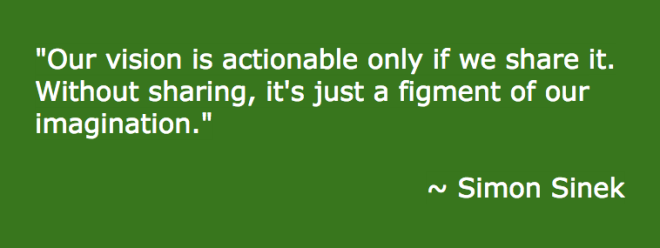
Our vision is actionable only if we share itIn the spirit of #WOLWeek –Working Out LoudWeek – and feeling kicked in the butt inspired by the above quote fromSimon Sinek, here are two things I’m working on.

1. My next job

The biggest project for my sabbatical is: figure out what work I want to do. I want a really clear vision that I can work towards and use as a touchstone. What will I truly enjoy doing? What can I feel connected to? What is important? What’s a good use of my time? Where and how can I use my gifts? How can I provide value? After bumping around with these questions for a while – reading online, reading books, talking to people, journaling, day dreaming – I’m finally seeing some themes that feel right to me. They include:

  • Relationship, connection, caring about people. My gift is to help people feel seen, valued, liked, and…

View original post 724 more words


Oh Snap! Tough Love For Uber

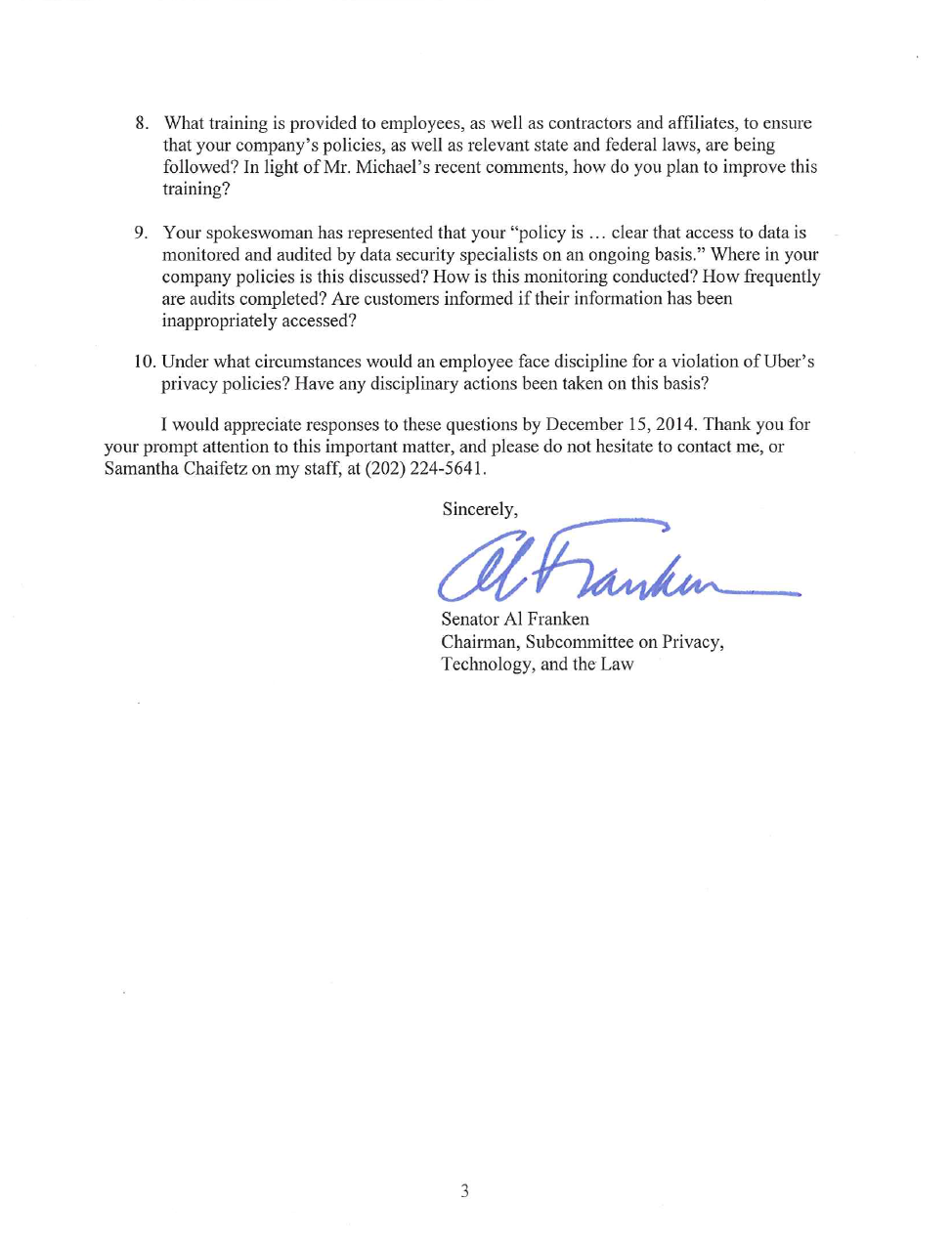
I don’t know about you, but I’ve been following the ongoing saga of Uber as they shove a full-sized sedan up their collective ass. Between the misogyny and now the threat by a VP to use their data to harass journalists they think are being unfair to them, not to mention the calls by lots of people for a few heads to roll, it’s been quite a couple of weeks of revealing info. I don’t usually write about current events, but this one is just so bloated with lessons to be learned and practices to avoid if you want to run a successful business . . . and keep it that way, I thought I would share this latest spike strip thrown on the road, access to which Uber seems so desperate to control. Enjoy!

Franken Letter to Uber - Page 1

Click to Enlarge


Franken Letter to Uber - Page 2

Click to Enlarge


Franken Letter to Uber - Page 3

Click to Enlarge


Six Ways To Avoid Using Lists

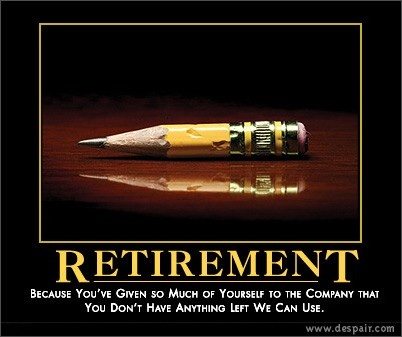
Does Retirement Mean "Used Up"?

Does Retirement Mean “Used Up”?

OK — I’m lying about the six ways and the lists. I couldn’t help myself. I had just been perusing the Pulse articles available on LinkedIn and was amused by how many of them contain lists, e.g. “7 Ways Leaders Fail”, “The 8 Simple Rules Of Expert Negotiation”, “3 Traits Shared By Companies And Hoarders”, “The four types of clients you should fire immediately”, “12 Email Marketing Credibility Boosters”, etc., etc., etc. I could go on for some time, but I won’t bore you as much as I was. I know I’ve read somewhere that lists are a great way to create posts and get people to read them. Nevertheless, I tend to shy away from using that strategy because it seems so formulaic to me, and I’m not interested in taking that route.

I know I should have written this earlier today but, as I’ve noted numerous times before, I’m not a journalist and I don’t do this as a business, so I have never been all that interested in an editorial calendar or lining up my posts perfectly with anything in particular. Nevertheless, today is a bit of a milestone and I thought I should mark it with a bit of possibly rational blather.

It’s been exactly — datewise — four and one-half years since I retired from Rocketdyne, where I labored for approximately 23 years. My last day (though, to tell the truth, I had been working at home and nobody expected much from me for the final two weeks I was officially “there”) was May 14, 2010. I can still vividly recall my final moments; being walked to the guard at the front reception area, handing in my badge, saying goodbye and shaking hands with my Manager, and walking out the door knowing I could not walk back in beyond the reception area without an escort.

I felt both elation and sadness. I threw my arms up in the air, but had tears in my eyes. Both emotions were warranted, as the last four and a half years have made quite clear. It’s not an easy thing walking away from a large group of people who you’ve come to think of as almost family and, make no mistake about it, once the main thing you have in common with them is gone, most people essentially disappear from your life forever.

Blogging on the beach

Blogging on the beach, something I’ve never actually done

For me, this has been the hardest part of retirement. While I’ve stayed in touch with a few of my former colleagues, some of whom remained and others who became casualties of our nation’s decision to essentially forget about space exploration (at least manned space exploration) for what still seems like forever, the majority of people I saw on a regular basis I have not heard from again. There’s also a sort of mid-range group who I’ve connected with via Facebook and LinkedIn, but I’ve had little contact with most of them.

I think this is a big problem with our entire concept of retirement. In our culture it seems once you retire, you might as well be dead. The place you worked at has no use for you and, since we are also a culture that celebrates youth and fears old age and death, nobody really wants to know what you’re doing. A possible exception is made for those people who worked at one company all, or almost all, of their life and, consequently, retire with enough money to not have to do anything to supplement their income. Remaining employees do seem to enjoy receiving the occasional postcard from an exotic location, or another reminder of what they, someday, may be able to do as well.

I’m sure there are those who thoroughly enjoy hanging out and doing whatever they want, or nothing at all. I’m not one of them. Bottom line, I guess, is this. I have managed to survive relatively well, though I have yet to find a way to supplement my income such that we’ll be reasonably comfortable for the foreseeable future. I do worry about what might happen in a few years when our income suffers from inflation or some disease or unfortunate turn of events depletes what little savings and investments remain.

I also worry about my physical and mental ability to generate income. At 67 years old, it’s difficult to not notice I’m gaining speed on that inevitable slide down life’s rollercoaster. Nevertheless, I’m not one for fretting too much about choices I’ve made. I’ve been characterized by others as a survivor; one who will find a way to make things happen. Especially when push comes to shove and I’m backed into a corner. I don’t actually want to reach that point, so I’m working on quite a few prospects and avenues.

In another six months it will have been half a decade since I left the place I had been at longer than anywhere save this planet. I’m looking forward to celebrating that occasion a little more energetically. If I’m lucky, I’ll be able to afford throwing a little party for some of those former colleagues who remain friends. That would be a hoot.


Our Switch to Solar Saves Thousands

Solar Panels

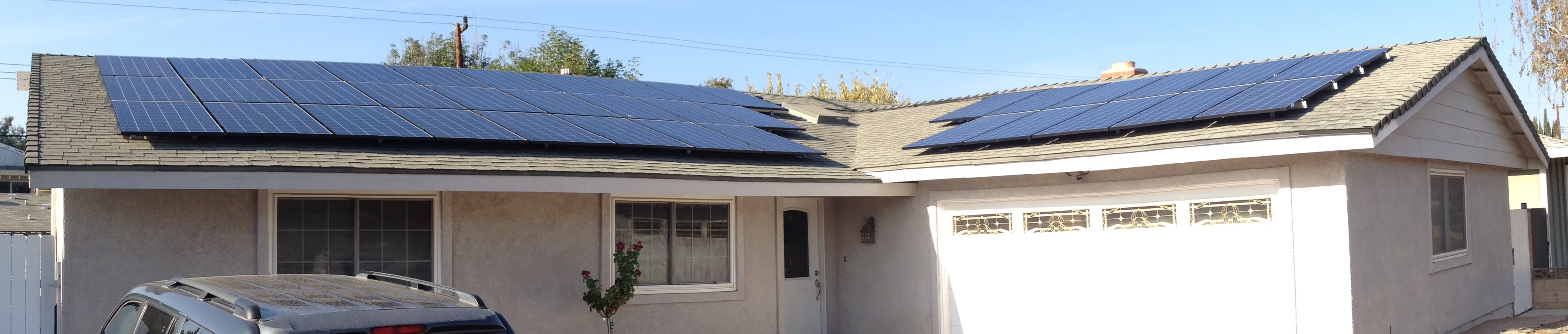
The Finished System – 38 Panels – 9.5 Kilowatts

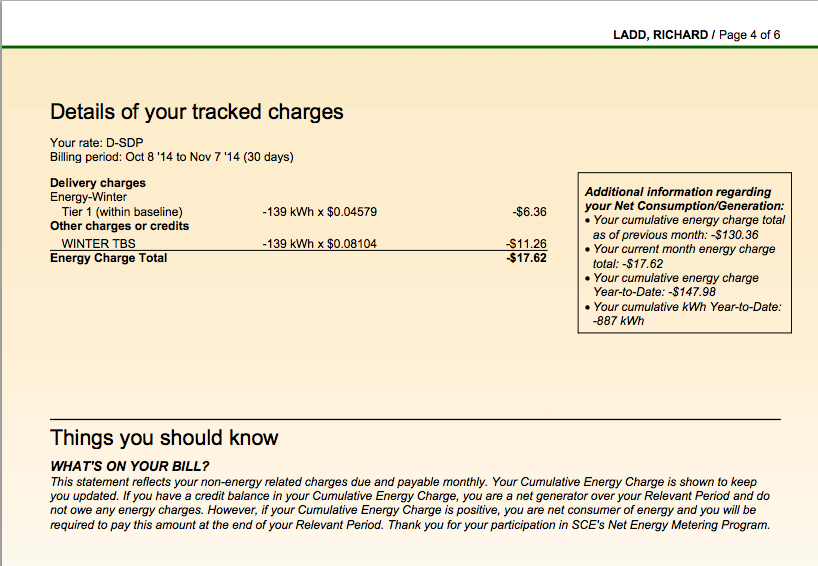
Just received our latest electricity bill from Southern California Edison. Our total charges for delivery are $1.77, which is applied to a current credit balance of just over $200.00. Now that we’ve returned to bundled service from SCE, which means we are totally on a net energy metering account, we are consistently producing more energy than we’re consuming. I have been keeping close track of our total expenses since we had net metering fully enabled and I’m projecting we will save approximately $2,000 over last year’s bill. Think about that. This includes the amount we pay each month on the lease of the solar panels which, since we use a lot of energy, is a large system and is more than some people we know ever spend on a month’s worth of energy.

Some of our savings can be attributed to our being a bit more proactive in cooling the house in the evening and morning by opening up the windows and doors, and using an inexpensive box fan to pump the cooler outside air into the house before buttoning up as the temperature rises. Also, we’ve set our thermostat a bit higher in the Summer months, and have learned to be comfortable with an occasional high temp of 78 or even 80 degrees in the house.

Our two biggest expenses in terms of energy consumption are the pump for the swimming pool filter and our old, not terribly efficient air conditioner. We can’t do much about the pool, as we kind of would like to keep it and there’s nothing we can do to change the need to filter and circulate the water. So the pump remains a drain. I have tweaked the timing so it turns on after the Sun has reached an elevation that generates enough electricity to nevertheless keep our meter running backward, and turns off when the Sun is too low to be of much effect.

SCE Bill

A Portion of our October Bill, Showing Net Production.

Actually, during the Summer I experimented with different settings on our thermostat, which ran the gamut from cooling the house early in the day to take advantage of the abundance of solar energy our system was generating, and waiting until the inside temperature reached 78 degrees before switching on the A/C. Thanks to SCE’s online tools, I was able to track performance on an hourly basis and, by paying attention to the vagaries of the weather as well, I was able to fairly accurately determine what settings made the most sense in terms of production and conservation.

Another aspect of our particular situation is where our house sits relative to the path of the Sun. I don’t think we could have planned it any better if we could have picked the entire house up and planted it facing the perfect angle. Prior to installation of our panels, I’m pretty sure our house heated up far more quickly because of its placement. Now, not only do we have the maximum amount of energy produced by the two sets of panels, but I’m reasonably convinced we benefit as well from the fact the panels also shade the roof and absorb a fair amount of the heat energy as well, meaning the house heats up far slower than it used to.

I have to give kudos here to the company that designed and installed our system. They took into consideration our historical usage and the location of the house and the angle of the rooftops relative to the path of the Sun, and designed a system to provide the bulk of our energy needs. In fact, the system is efficient enough to offset whatever energy we use when the Sun is down, e.g. lights (most of which are CFLs, LEDs, and other fluorescents), TV, computers, etc. That company is Real Goods Solar, one of the first to enter the business and one that is local here in SoCal.

All things considered, I’ve concluded this was a very wise choice for us. Not only do we get to play a role in conserving energy, but we also save a rather substantial sum over what we had been paying for our overall electricity costs. I recommend you consider whether your overall energy consumption, coupled with the amount your house can produce based on its location and conditions, warrants the installation of a system. Not every home will benefit, but I’ll wager a considerable number will find the savings worthwhile. I seriously urge you to consider the alternatives.


Possibly Another Stellar Career Move?

USC Marshall Logo

Yesterday was a very good day. I didn’t make a penny and I don’t care. Jimmy could have cracked an entire bushel of corn and I still wouldn’t care. I had a good morning, posting a few items to my FB page, as well as a special item to my Rotary Club’s group and page. I spent a little time studying a request to get involved in the effort to bring open source, transparent voting technology to bear in California, and I enjoyed some interesting conversations with friends here on FB. I received a copy of a soon-to-be-released, transformational book that I had the privilege to help one of the authors with . . . and it was signed with a nice personal note. I also noticed I received a mention in the acknowledgements. All good stuff.

However, the pinnacle, the apex, the absolutely awesome apogee of my day was an interview at USC’s Marshall School of Business, where I had applied for a position as an Adjunct Professor. At this point I don’t even know who referred me to them. I thought it was a friend who teaches there, for whom I have been a guest lecturer a couple of times, but the woman who interviewed me thought it was a cousin who is a Professor in the Education department. I need to sort that out.

My appointment was for 2:30 pm and, since I live over forty miles from the campus and would have to traverse downtown Los Angeles to get there, I planned on leaving an hour and a half early. It turned out to be perfect, as I ran into the expected traffic, arriving at the entrance a half hour before the scheduled time. It took a couple of minutes to secure a parking permit (they had reserved a slot for me) and the gentleman who did so also gave me a map and instructions.

I parked on the fourth floor of a large structure and, noticing there were no elevators, I walked down the stairs to the street level. I guess I haven’t been in a building that tall in quite some time — at least one without an elevator — and, between the distortion of my bifocals, my being out-of-shape, and what I can only assume is an age related tendency to experience a little vertigo, I felt like a doddering old man, carefully stepping down each flight while holding on to the hand rail. I can remember a time when I could virtually skip down such stairs, but I guess those days are long gone.

As I walked the nearly quarter mile to the building I was headed to, I looked around at all the students walking and riding bicycles and skateboards, as well as the plethora of vehicles that included a large number and variety of electric carts and vans. Coming from the suburbs, I was struck by how closely packed everything seemed to be and I found myself thinking we are preparing the students for life as sardines.

USC Mascot

Tommy Trojan and Traveler – Fight On!

I had little trouble finding the Accounting building, where I was to report and, once inside, I sat down for a moment to get my bearings and to check in with my location on Facebook. I had posted about the interview and was pleased to find so many friends wishing me luck and I wanted to let them know I was there. I once read of a man who, asked to what he attributed his success, answered that he always arrived ten minutes early. As I had long believed a lack of punctuality was disrespectful, I adopted his tactic and, in this case, I was actually 15 minutes early. I don’t know if all this will translate into success, but I’m committed to the effort.

Based on a quick reconnoiter of the office numbers, I figured the one I was headed to was on the fourth floor, so I climbed up the first flight of stairs. At the top I found a sign indicating the stairs provided access to floors one through three, and that there was also access to the roof. I was pretty sure the office I was looking for wasn’t on the roof, but I couldn’t find any sign that pointed out where access to the fourth floor was located. I stopped a couple of students and asked them. They didn’t know, but one offered that she was going upstairs and she would walk with me. When we got to the third floor, it appeared there was another flight, but when we went around the corner it led to a locked door. We clearly weren’t going to the roof.

The student who had accompanied me offered to seek out advice and we ended up finding one of the Deans, who led me down a corridor to a door that opened up to stairs. Not in any way obvious, but . . . voila! I was near the end of my search and still 10 minutes early. I climbed the stairs and found the office I was seeking, announced my presence and the recognition I was early, and took a seat outside. Within minutes, the woman who was to conduct the interview popped her head out the door, introduced herself, and asked me to come on in.

I followed her inside, through the reception area, and into her office where she offered me a seat, closed the door, and sat down at her desk opposite me. We had an interesting opening chat which thoroughly confused me as to how my name had found its way to her, and I intend on researching that a little more, but it wasn’t really all that important. It did serve to show I had more connections to the University than I had realized, which was gratifying.

To make what is now a long story a little bit shorter, she told me I had a very impressive resume and she thought I would be perfect teaching both business communications and writing. She also told me they’re already set with their Spring schedule and that I would likely be offered a position after that, which would probably be teaching either Sophomores or Juniors, students she suggested would be very interested in my eclectic experience and knowledge. She also said I might be able to teach virtually, especially since they’re heading more in that direction and I had fairly recently completed my Masters degree in Knowledge Management entirely online. I would also be assigned a mentor, this being my first experience teaching at this level.

As it stands right now, in the interim I have the opportunity to be a guest lecturer, somewhat at my leisure and with subjects of my choosing. This, of course, would be uncompensated but I consider it valuable experience and a way of showing what I can do. I will soon send her a couple of synopses of what I propose to offer. Otherwise, I wait. Based on her enthusiasm and interest, unless she’s being disingenuous (and I have no reason to believe that to be the case), I expect I will begin what may be a new, interesting, and challenging chapter in my life’s journey within the next year.

One thing I find both interesting and ironic about all this is that I grew up believing I would attend UCLA, if I went to a local University. As it turns out, I never did go to undergraduate school, but UCLA likely would have been my first choice. That I may end up teaching at USC, their bitter crosstown rival, is kind of like growing up wanting to play baseball for the Los Angeles Dodgers, only to end up being drafted by the San Francisco Giants. There are far worse things I can think of.


Making Sense of All That Data

Deep Data

Transforming Big Data Information into Deep Data Insights

Yesterday I posted a question to several of the groups I belong to on LinkedIn. It was related to several of the things I’m interested and involved in: Systems Thinking, Knowledge Management, and Decision Modeling. It was somewhat informed, as well, by an article appearing in the Huffington Post, where Otto Scharmer, a Senior Lecturer at MIT and founder of the Presencing Institute, talks about the need to make sense of the huge and growing amounts of data we have available to us. He argues the importance of turning from “Big” data, where we mainly look outward in our attempt to understand what it is telling us about markets and our external influence, to “Deep” data, where we begin looking inward to understand what it’s telling us about ourselves and our organizations and how we get things done.

The question I asked was designed to seek out capabilities and functionality that people would like to have, but that is currently unavailable. My interests include working with others to understand and provide for those needs, if possible. I thought I would present the question here as well, where it will remain a part of my online presence and, hopefully, might elicit some useful responses. Here it is:

With the growing proliferation and importance of data — a development at least one author and MIT Lecturer has suggested is moving us from the information technology era to the data technology era — what tools would you like to see become available for handling, understanding, and sharing the new types of information and knowledge this development will bring?

In other words, what would you need that you don’t have today? What types of technology do you think would offer you, your colleagues, and your organizations a greater ability to make use of data to bring about a transformation from primarily siloed, outward looking data to collaborative, inward looking data as well?

I would love to hear of any ideas you might have regarding the kinds of tools or apps you could use to better deal with data by turning it into useful information and knowledge . . . perhaps even a smidgen of understanding and wisdom.


Does Your OCD Conflict With Your ADD?

OCD & ADD Hat

Do you find yourself bouncing from one thing to another? I do.

I have always had eclectic tastes and my interests are wide and varied. Couple that with being a bit of OCD in some respects and a little ADD in others, and you get . . . where was I? Seriously, I have long referred to myself as a stimulus magnet. For instance, I was never able to work anywhere near peak capacity if I listened to music, especially if lyrics were involved. It wouldn’t take longer than a minute or two before I’d be tapping my feet and wanting desperately to sing — which, of course, when sitting in a cube farm is not really a good thing to do.

A long time ago, I used to play a game with two friends where we would sit on a couch and the two on the outside would carry on separate conversations with the one in the middle. These conversations had to be more than just idle chit-chat as well; otherwise, it wouldn’t have been much of a challenge. I was pretty good at it and, in retrospect, I’m sure it helped me be able to multi-task, which we all know isn’t possible, except it actually is. I will, however, accept that doing so does reduces each task to being a little less efficient than it would otherwise be if one were to concentrate solely on it.

The advent of the Internet hasn’t made me more focused either. Like many people I know, my browser normally has a couple of dozen tabs open. Part of it is probably just related to my being an information pack rat, and my having a difficult time closing something interesting. I have a hard time escaping the nagging feeling that I’m going to want that document/page shortly after I close it, knowing if it’s any more than an hour or two afterward I’ll have difficulty finding it in my browsing history. I could bookmark it, and I often do, but that’s no guarantee I’ll either remember I did so or will be able to easily find it later.

I also bounce around a fair amount as a word, phrase, or sentence sends me scurrying off to find out more. Thankfully, Chrome includes the ability to highlight a word, right click on it, and look it up in the dictionary. The results also include info from wikipedia and a thesaurus as well . . . most of the time. This is becoming more and more useful as my internal dictionary and thesaurus are suffering from wear and the inevitable gumming up experienced as one ages.

Frankly, I don’t know if others experience these things, or if some of it is age-related as most of my online friends are considerably younger than I am. I’d send out a survey, but I’m quite certain it would piss off too many people or I would just be ignored . . . as I so frequently am normally.

All this greatly affects my ability to concentrate and causes me to constantly struggle to focus. Do you experience this? Is it just normal nowadays, given the firehose of information we are all inundated with via our computers, notebooks, and smartphones? I don’t think I’m the only one who deals with this, but I’m not entirely certain.


Dear everyone who keeps haranguing me to donate, donate, donate!!!

Political Donations

Give! Give! Give! There’s No End to it.

I am well aware the Republicans are threatening to take over the Senate and retain control of the House. I am also well aware that democracy as we think we know it is in danger of going the way of the Dodo bird and the very structure of the universe is threatened.

Unfortunately, I’m kind of stretched real thin and I’ve given about as much as I can for now. Do you want me to take out a second on my home? I receive about a dozen pleas each day, some of them worded so direly as to make me want to vomit.

I can only do so much, even if each one of my $3.00 donations will be tripled. I’d still end up donating a couple hundred dollars each and every week. You know that old saying, “You can’t squeeze dollars out of someone who’s living on a fixed income”, don’t you?

I’ve tried unsubscribing, but each time I sign an online petition about something I really do care about (even if I can’t afford to donate to it) I’m subscribed again because many of them don’t give me the opportunity to opt out. Really. I’m not even a Democrat; you’re too conservative for my tastes, but I am a pragmatist and I will generally vote Democratic. You’re beginning to make me wonder why.

PS – I would definitely vote for Bernie Sanders.

Update!

We have AT&T’s U-verse in our home and The Daily Show doesn’t air until 11:00 pm Mon – Thu, so I record it (along with The Colbert Report) and generally watch the next day. Shortly after I posted this, I went to watch last night’s show and, lo and behold, Jon Stewart addressed this very issue in his opening segment. It’s a great piece, so I’m adding it below in case you haven’t had the opportunity to see it. Unfortunately, I can only find it in two parts. Once again, he nails it and this time he’s skewering the Democrats, who richly deserve every word.

Here’s Part 1

Here’s Part 2