Tag Archives: Marxism

Americans are Ignorami

Reclaiming the Hammer and Sickle: Symbolism, Struggle, and Systemic Illiteracy

In large part because of my activities in the antiwar and peace and justice movements shortly after I celebrated my 20th birthday, I began reading Marx, Engels, Lenin, Mao, Castro, and Guevara, as well as Black authors and activists like Eldridge Cleaver, Malcolm X, and George Jackson, among others. I was especially fond of reading Lenin’s explanations and defense of the theories of Karl Marx and, to a lesser extent, Friedrich Engels. My interest wasn’t only in their political and economic theories, but also in their general philosophy, which is Dialectical Materialism. I’ve touched on this philosophy somewhat tangentially in some of my previous writings.

I’ve long been both dismayed and somewhat fascinated by the sheer ignorance of my fellow Americans when it comes to understanding what some very important terms and concepts actually represent. I am here referring to socialism, communism, capitalism, and dialectical materialism—perhaps a few other economic, political, and philosophical terms as well.

The hammer and sickle is one of the most enduring symbols of communism and socialist movements, representing the unity and solidarity of industrial workers (symbolized by the hammer) and agricultural laborers (symbolized by the sickle). While it gained prominence in the 20th century as an emblem of the Soviet Union, its roots and symbolism tie back to the broader communist ideas as envisioned by Karl Marx and Friedrich Engels.

Theoretical Foundation: Marx and Engels

Marx and Engels, in works like The Communist Manifesto (1848), envisioned a society where the working class (proletariat) would overthrow the capitalist class (bourgeoisie) to establish a classless, stateless society. Central to this vision was the unification of all laborers—regardless of their specific trades or industries—against the exploitative structures of capitalism. The hammer and sickle perfectly encapsulate this ideal by bringing together two key groups of workers who were often divided in pre-industrial and industrial societies:

  • Industrial Workers (Hammer): Factory workers, craftsmen, and laborers—urban dwellers essential to the mechanized production processes of capitalist economies.
  • Agricultural Workers (Sickle): Peasants and farmers who toiled in rural areas, producing food and raw materials. Often marginalized and exploited under feudal and capitalist systems.

By combining these two tools, the hammer and sickle symbolized the unity of these distinct groups in their shared struggle for liberation and equality.

Historical Context of the Symbol

Although Marx and Engels themselves did not create or use the hammer and sickle as a symbol, their ideas inspired later revolutionary movements that adopted it. The symbol gained prominence with the Bolshevik Revolution in Russia (1917), when the Bolsheviks sought to unite industrial workers and peasants under the banner of communism. The hammer and sickle were officially adopted as part of the Soviet Union’s flag in 1923.

Significance to the Communist Movement

The hammer and sickle became a powerful visual representation of several core ideas in Marxist-inspired movements:

  • Worker Solidarity: It emphasized unity among all exploited classes to overthrow the capitalist system.
  • Class Struggle: It depicted the tools of labor, highlighting the centrality of workers and their productive power in shaping society.
  • Revolutionary Change: It called workers and peasants to action—to seize the means of production and build a socialist society.

Criticism and Evolution

In practice, the unity symbolized by the hammer and sickle was not always realized. Tensions between urban industrial workers and rural agricultural communities persisted in the Soviet Union and other communist nations. Moreover, the symbol became associated with authoritarian regimes, giving it a controversial legacy in modern times.

Still, the hammer and sickle remain potent emblems of worker solidarity and the Marxist vision of a classless society—despite how much interpretations of communism have evolved over time.

The American Context: Weaponized Ignorance

This, however, is where things get more complicated—and more infuriating.

In the American political lexicon, socialism has become a slur hurled without understanding, a catch-all bogeyman meant to stoke fear, not provoke thought. The hammer and sickle, meanwhile, has been reduced in the public imagination to little more than a sinister relic—stripped of context, stripped of nuance, and weaponized in the culture war by people whose understanding of history could fit neatly on the back of a fast-food receipt.

The fact is, most Americans have never seriously studied Marx or Engels—let alone Lenin or Mao—and wouldn’t recognize dialectical materialism if it organized their kitchen pantry and handed them a checklist. We are a people sold the myth that capitalism is not just the best economic system, but the only one consistent with freedom, democracy, and morality. Anything that questions this orthodoxy is treated as heresy, regardless of its intellectual rigor or empirical grounding.

Dialectical Materialism: Not a Manifesto, But a Method

Let’s be clear: dialectical materialism is not a manifesto—it is a method. A way of understanding the world not as a series of isolated events, but as a dynamic, interconnected whole; a recognition that history moves through contradiction, and that the driving force behind historical change is the conflict between classes, between ideas, between material conditions themselves. It is not “communism” as caricatured by reactionaries—it is a framework for grasping the engines of change that shape human societies.

The Real Threat to the Status Quo

And therein lies the real threat to the American status quo: not the hammer and sickle itself, but the idea that working people—whether factory machinists, field hands, or Uber drivers—might recognize their common interests. That they might see through the illusion that their suffering is individual, rather than systemic. That they might stop blaming immigrants, or the unemployed, or “welfare cheats,” and instead aim their righteous anger at the extractive systems that keep them exhausted, precarious, and obedient.

The Struggle Continues

We are long past the time for empty patriotism and red-scare hysteria. We need deep, structural critique rooted in historical knowledge and philosophical clarity. Not to idolize past revolutions, but to learn from them—critically, courageously, dialectically.

The hammer and sickle endures not because it’s fashionable, and certainly not because it’s flawless, but because the struggle it symbolizes has never truly ended. The tools have changed. The fields have changed. But the workers are still here. And the fight—for dignity, for justice, for liberation—remains.


You Say You Want a Revolution

I was prepared, and preparing, for a revolution as far back as the late 60s. I was a young man, full of piss, vinegar, and righteous indignation over a war of aggression by my country; a war that had already claimed the life of my best friend. Through my antiwar activities I had become aware of many of the realities of the U.S. that had been hidden from me, especially rampant racism and sexism.

I’m aware many of my fellow citizens have a hard time realizing just how bad things have been in this country. Consider this, and I believe this is pretty much common knowledge: most of the land that comprises the U.S. was already inhabited when the Pilgrims arrived here. Much of the infrastructure of our country was built by slaves or indentured servants, virtually all of whom were kept in appalling living conditions. The fucking White House was built with slave labor. Meanwhile, white people were building generational wealth while systematically preventing POC from doing the same.

Ever hear of Angel Island, where we kept Chinese immigrants from 1910 to 1940? I’m sure you’ve heard of the Japanese detention camps used during WWII. My in-laws were detained at the one in Colorado (Amache) for two years. Many of my wife’s relatives lost everything during those years. The number of horrendous things done by white people to POC is disgusting and worthy of retribution, certainly of derision and disgust. So, why am I bringing all of this up?

Well, As I said, I was prepared decades ago for a revolution in this country. We have been in a class war as long as we’ve existed. However, I came to realize as a straight, white man it wasn’t up to me to decide when and how such an event should be prosecuted. I am somewhat privileged and don’t believe I have the moral authority to ask for the kinds of sacrifice such an endeavor would require.

I am, however, ready to support an effort to free the working class from their servitude to the upper class. I believe capitalism has served whatever purpose it once had (moving us away from feudalism and slavery) and needs to be replaced by, at the very least, a form of democratic socialism. I don’t believe billionaires should be allowed to exist. Having that much money is immoral and should be illegal, IMO. All to say, I’m down with any attempt to upgrade this nation, by any means necessary. I prefer it to be peaceful, but people with far too much money are making that impossible.

Things most likely have to get a lot worse; some of the wealth has trickled down to us and too many of us are either comfortable or convinced wealth and privilege are just around the corner. I don’t believe we can continue along the path we’re following, and it’s not just maga or trump. Capitalism rewards greed and avarice. Money is god! Socialism, OTOH, at least attempts to put people first. That’s what I’d like to see. Who’s on board?


Steve Bannon is no Leninist

“Lenin wanted to destroy the state and that’s my goal too,” replied Bannon. “I want to bring everything crashing down and destroy all of today’s establishment.”

~ Steve Bannon

Bannon is an idiot. Lenin was a Marxist. He believed that economies and societies evolved and that capitalism created the preconditions for socialism, which would create the preconditions for communism, which would then evolve into anarchy. Not bomb-throwing anarchy, but the “withering away of the state”.

Lenin didn’t want to”destroy the state”. Rather, he believed—as did Marx, and as do I—that humans and our economic relationships will evolve (perhaps over centuries) to the point where the coercive institutions of the state, e.g. police, prisons, perhaps even government as we’re used to, would no longer be necessary.

Karl Marx and Friedrich Engels adhered to the philosophy of dialectical materialism. They knew human economies were fluid over time and predicting the march of history was a fool’s errand. After the October Revolution the Russians made a major mistake by trying to move from a feudalistic economy to a socialistic one when the necessary preconditions didn’t exist.

Unfortunately, their (and Lenin’s) blunder still haunts us.

To reiterate – Steve Bannon, like far too many in his orbit, is an idiot.


A Chatbot Experiment

Is Marxism Still Relevant in the 21st Century?

Karl Marx, the bearded revolutionary with a penchant for manifestos, left an indelible mark on history. His economic theories and philosophy of dialectical materialism ignited revolutions, shaped political landscapes, and inspired countless thinkers. But in the 21st century, with globalization, technological advancements, and shifting social dynamics, one can’t help but wonder: is Marxism still relevant?

The Spectre of Capitalism Haunts the World

Marx’s core critique of capitalism remains eerily relevant. He argued that capitalism inherently generates inequality, with the wealthy owning the means of production (factories, machines) and exploiting the labor of the working class for profit. Today, we see this play out in stark income gaps, wealth concentrated in the hands of a few, and precarious job markets that leave many struggling to make ends meet.

Globalization has further intensified these issues. Corporations can now exploit cheap labor in developing countries, further widening the gap between rich and poor. The 2008 financial crisis, triggered by reckless financial speculation, exposed the inherent instability of a system driven by the pursuit of profit at all costs.

Technology: Friend or Foe of the Proletariat?

Technological advancements, a cornerstone of the 21st century, present both challenges and opportunities for Marxist analysis. On the one hand, automation threatens to displace large swathes of the workforce, potentially exacerbating unemployment and inequality. On the other hand, technology can also be a tool for empowering workers. Communication platforms and social media enable workers to connect and organize across borders, potentially building solidarity and challenging corporate power.

However, the benefits of technology are not evenly distributed. Access to education and training is crucial for workers to adapt to changing technological landscapes, but these opportunities are often limited by socioeconomic factors. The digital divide can further marginalize vulnerable groups and exacerbate existing inequalities.

The Metamorphosis of Class

The nature of social class has also undergone significant transformations since Marx’s time. The traditional working class of factory laborers has shrunk, replaced by a more diverse and service-oriented workforce. This makes it harder to identify clear class divisions and build class solidarity.

Furthermore, identity politics have risen in prominence, with groups emphasizing shared experiences based on race, gender, or sexual orientation. While these movements are crucial for addressing specific forms of oppression, they can also complicate the traditional Marxist focus on class as the primary driver of social conflict.

Beyond the Manifesto: Rethinking Marxism for the 21st Century

So, is Marxism still relevant? The answer is not a simple yes or no. While some of Marx’s specific predictions haven’t materialized (like the inevitable proletarian revolution), his core critique of capitalism’s inherent inequalities remains as sharp as ever. However, to remain relevant in the 21st century, Marxism needs to adapt to the changing realities of globalization, technology, and the evolving nature of social class.

This could involve developing new strategies for worker organizing that leverage technology and social media. It could mean acknowledging the importance of identity politics while still recognizing the role of class in shaping broader social structures. Ultimately, a 21st-century Marxism should be flexible, adaptable, and open to incorporating new ideas and perspectives.

Marxism may not offer all the answers, but it provides a valuable framework for analyzing the power dynamics and inequalities inherent in our current economic system. By critically engaging with its core ideas and adapting them to the realities of the 21st century, we can build a more just and equitable future for all.

Remember, the conversation on Marxism’s relevance is far from over. This blog post is just a starting point. What are your thoughts? Do you think Marxism still has something to offer us today? Share your views in the comments below!


U.S. or Him?

The Little Boy Pouts

Yesterday, an article in PoliticusUSA was published under the headline, “Trump Wasted An Entire White House Meeting Trying To Convince His Aides That He’s Mentally Fit.” I’m of the opinion anyone who studies Trump carefully will have no problem seeing this as a predominant feature of his personality. After all, he really is a malignant narcissist, a sociopath, a man with a complete and total lack of humility, humanity, and empathy . . . among other things. I shared the article on Facebook with the following comments:

This serves to highlight the main problem I have (and most of us have) with him as President. How can he serve the interests of the nation when he’s far more interested in how he looks, the optics, than he is on any accomplishment that benefits the American people . . . and I don’t mean corporate America? Kinda reminds me of the concept I’ve held dear since I first became politically active in the sixties: some people are more interested in “being” right, than in “doing” right. These people, who are intent on winning regardless of the cost, need to be avoided.

This also reminds me of something one of my first year law professors said to me. I’m working on a blog post about it and, recently, I hunted him down. His name is Kenneth Cloke and he’s still living and working in Santa Monica, where he’s a mediator and conflicts resolution systems designer. Lately, I’ve tried to articulate the saying and I have yet to convince myself I’m getting it right. There seems to be some nuance missing that I can’t put my finger on, but I’m going to attempt it here.

During a conversation we were having about leftist politics, Ken said “If I had to choose between someone who had the right politics, but was lacking in humanity, and someone who had the wrong politics, but was a humane person, I would choose the latter.” I suppose this is why, despite my being a Marxist, I am always looking for ways to work with people who don’t share my political philosophy. It’s how I’m able to vote as a Democrat. Everything about the Democratic Party, in my estimation, is far more humane than anything about the Republican Party. Also, I think it’s much easier to find compromise with someone who respects your humanity and hard-ass ideologues generally aren’t inhabiting that space.


Let’s Clean Our Own House!

I posted the following on Facebook late yesterday, partly in response to all the angst that’s being spit out by the chattering class about Bernie and Fidel:

How come, when we talk about the suffering of Cubans, Venezuelans, and others from dictators and (horrors!) socialism, we don’t also talk about the role of U.S. Imperialism and historical colonialism?

So far it’s been liked by over thirty of my friends and it’s received nine comments and four shares. As of now, that’s after 14 hours since I posted. I don’t know if it will get more, but the response is interesting. What I was attempting to point out is something that really chaps my hide about my fellow Americans. A lot of y’all are really uninformed; either that, or you’re abysmally stupid and incapable of understanding history, economics, and society.

Now . . . to temper what I just wrote, let me add that I’m of the opinion most of us can’t be blamed for this ignorance of our history and what we’ve wrought in the world wherever—and whenever—we’ve put our grubby little money-making hands to work. As I was writing this, I noted another post by a friend who had liked the post I refer to here. She shared a comment from someone else and I think it’s quite relevant to the point I’m making here. Here’s what he said:

“There’s been a lot of criticism of Bernie Sanders for his praise of the Cuban literacy program that was initiated very soon after the 1959 Revolution. Under this program, young people who had been fortunate enough to learn to read and write were sent out into the rural areas, where most people hadn’t, armed with literacy materials and a kerosene lantern. During the day they helped their host family with whatever needed to be done; at night, they taught reading and writing. Cuba became one of the most literate countries in Latin America.

“According to the critics, this was a bad thing. The people learned to read, but they couldn’t read anything they wanted, and what they were given was propaganda extolling the virtues of the Revolution. So there’s 60 years of this evil stuff going on in Cuba. I’d just like to point out that we in the US have a much longer history of propagandizing, extolling the virtues of our system of predatory capitalism in classes like ‘civics’ and ‘social studies.’ The virtues include denying health care to many, keeping many from full involvement in the political and economic life of our country, enculturating people into the happiness that is being less-than-living-wage laborers at the mercy of shareholders and CEOs.

“Nobody in the US has any business calling what other countries do ‘propaganda’ unless they are willing to acknowledge our own long history of it.

~ Ronald Kephart

I’d like to point out that, although I am a Marxist (i.e. a socialist) I’m not much of a Bernie Sanders supporter. Nearly four years ago I posted my reasons for voting for Hillary Clinton in the Democratic primary of 2016. That post is located here. I just voted in the California primary for this year’s election and, again, I did not vote for Bernie. However, as I stated back then, should he secure the nomination I will vote for and support Bernie with gusto. Despite my misgivings, he’s head and shoulders better than Trump or any Republican currently in office. I’d even vote for him if he was running against Bill Weld.

So . . . the point of this post is not necessarily defend Bernie but, rather, to point out the incredible hypocrisy of those politicians (including Democrats running for POTUS) and pundits who are criticizing him for what he said about Fidel and the Cuban revolution.

There’s a doctrine in equity called “The Clean Hands Doctrine,” which states that one can’t complain about, or seek equitable relief from, an offense when one has participated in or supported actions that are as offensive as the action being complained about. I think it fits rather nicely into the common trope about socialist countries and leaders who have wrongly punished their opponents.

I shouldn’t even have to list anything the United States has done to make this point . . . but I will list a couple of the most egregious ones:

  • Our treatment of native Americans
  • Slavery & Jim Crow
  • The Chinese Exclusion Act
  • Japanese internment camps

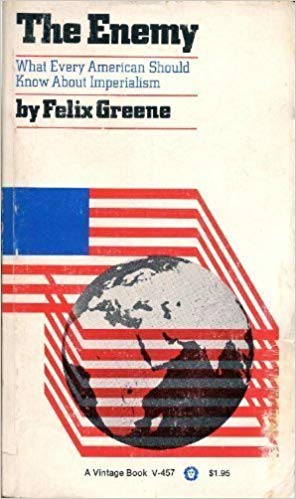
I would also suggest that anyone who wants to really understand how the United States, by its actions (mostly done to protect predatory economic interests) has created most of the problems we’re now dealing with, especially those issues related to immigration from the southern half of our hemisphere, should read “The Enemy: What Every American Should Know About Imperialism,” which can be found here.

We may not like what Fidel did after the revolution in 1959, but we drove him into the hands of the Soviets back then by being indecisive in our dealings with Cuba. We later initiated an economic blockade that was unwarranted and immoral, IMO. There are literally dozens of other actions we’ve taken over the years throughout Central and South America that resulted in the deaths of thousands and that kept the economies of numerous countries from thriving. Felix Greene spelled it out a half century ago. He wasn’t wrong then . . . and his analysis is still instructive today.

PS – I’m leaving out the effects of our Imperialism in the Middle East, as that’s another clusterfuck that’s likely going to come home to haunt us. Perhaps I’ll address it at a later date.


Where’s the Anger?

Listening to only minor excerpts (and some exceptional analysis on KPFK Pacifica Radio) I find myself absolutely incensed at the arrogance of the people who caused the financial meltdown and who gladly took our tax dollars, ostensibly to keep the economy afloat, and are now proceeding to pay themselves handsomely for their indiscretions.

Listen . . . I’m doing OK. I didn’t get caught up – at least not directly – in the mortgage fiasco and I’m lucky enough to have a job that probably isn’t going anywhere, but what about all the people who’ve lost so much? Even if they were a bit greedy (or where they just reacting logically to a society that preaches the ethos of looking out for oneself and the hell with everyone else?), I don’t think they deserve this kind of disrespect and the uncertainty that so many face right now . . . with no end in sight.

But I have to ask, where’s the anger? Why aren’t people really paying attention to how we’re being played. Though I think Phil Angelides probably has the best of intentions, I think his commission is going to end up toothless and, once again, the high-rollers of Wall Street are going to scoop their ill-gained winnings off the table and we’re going to be left wondering what happened? Where are the pitchforks? Why aren’t more people demanding accountability? Where’s the call for bringing back the guillotine?


Once More Unto The Breach, Dear Friends

Blogging is an interesting occupation or, in my case, avocation. For me it has allowed mostly venting, though I started with a blog about my family that was anything but. I finally gave up on that, believing it really wasn’t my place to put out our personal details for everyone to see. I am considering doing just that in a book, which requires some personal investment and input (like moolah) from the reader; something to salve my family’s wounds for having made our foibles public. That, however, is another venue I will explore. For now we are about blogging.

I propose, for this blog, to explore the symmetries, similarities, and synergies of the philosophy of the Dialectic and the teachings of Systems Theory. I propose to explore the writings of people like Karl Marx, W. Edwards Demming, and Russell Ackoff, as well as others who have studied and written on either of the subjects. As far as I can tell, this is a novel approach; some may say strange or even dangerous. Nonetheless, I find it interesting and quite valid, i.e. the juxtaposition of the two seemingly disparate concepts.

I say disparate because the philosophy of the Dialectic (actually Dialectical Materialism) espoused by Karl Marx, Fredrich Engels, and (yes, even) V.I. Lenin is irrevocably and inextricably entertwined with the Soviet Revolution and State no longer extant in Eastern Europe, while the teachings of Systems Thinking took root in post-war Japan and have flourished in the deeply entrenched Capitalism of the United States and elsewhere.

I don’t expect my analysis to proceed quickly, nor do I expect to be able to post all that frequently. The exigencies of my real job, coupled with my attendance in an online Masters program at CSUN – not to mention the fact I have two quite young daughters who demand a lot of my attention – will make it difficult to attend to this blog. Regardless, I think it a worthy objective and, God willing and the creek don’t rise, I’m hopeful it will be the precursor to either a Doctoral Thesis, or – at the least – a serviceable essay on the subject. Who knows? I guess that’s one of the beauties of blogging. I can put forth ideas and, if I’m lucky, I’ll even get some feedback. At the very least I get the opportunity to blather on about something that interests at least one person in this world.