Author Archives: Rick Ladd

About Rick Ladd

Unknown's avatar
I retired over14 years ago, though I've continued to work on and off since then. Mostly I'm just cruising, making the most of what time I have remaining. Although my time is nearly up, I still care deeply about the kind of world I'll be leaving to those who follow me and, to that end, I am devoted to seeing the forces of repression and authoritarianism are at least held at bay, if not crushed out of existence. I write about things that interest me and, as an eclectic soul, my interests run the gamut from science to spirituality, governance to economics, art and engineering. I'm hopeful one day my children will read what I've left behind.

Not So Tough Now, Are We?

Cuban Palm Trees An Early Spring Morning Outside Havana

Mornings in the fields outside of Havana were something special. I had been arising before the Sun since I became a teenager, largely because any day there was a school holiday I would have to work with my father. My Bar Mitzvah coincided with him leaving his job at Faber’s Ham Shop in the Grand Central Market to strike out on his own as a peddler of luncheon meat. Every check I received for my thirteenth birthday was immediately signed over to him so he could purchase the truck he needed in his new venture. Until I graduated High School and moved on, I was his “swamper” whenever I wasn’t required to be in school.

At first I hated getting up that early, but I eventually learned to love and appreciate being awake before sunrise. I still enjoy the sights and the smell of the early morning, though I don’t see – or stop to see – it as frequently as I did earlier in my life. But outside Havana, in the campo, seeing the sun rise in mid spring surrounded by tall, swaying palm trees was a sight to behold.

The year was 1973 and I was a member of el sexto contingente de la Brigada Venceremos (the 6th contingent of the Venceremos Brigade). Me and 99 of my best friends from the U.S. and Canada, traveling to Cuba to deliver books and medical supplies, working construction (with one-half day cutting sugar cane – whew!), and attending numerous cultural, historical, and political presentations.

Most every morning we were there, the day would begin quite some time before sunrise, when we would awaken to a breakfast of cafe con leche and pan. After eating, as we filed out of the mess tent, there would be three bowls on a table. One bowl contained candy (sugar!) and the other two cigarettes. The only names I can recall for the cigarettes were suaves and fuertes (mild and strong). The suaves were stronger than any cigarette I ever smoked in the states and, needless to say, I didn’t even bother with the fuertes. The tobacco was kind of coarsely chopped and in almost every pack there was at least one cigarette that would “flower” when the heat reached a piece of tobacco that was tightly compacted. It was mildly entertaining – mostly annoying.

This one morning came at the tail end of a couple of days in which one of my fellow brigadistas had been riding me hard. I couldn’t figure out what was bothering him, and didn’t have a clue how to deal with it. Although the group of people I was with ranged from members of the Democratic Party to card-carrying Communists, we were all there to show our support for the Cuban people, to protest the economic blockade of Cuba, and to learn what we could of their economy and politics. A large part of what we did was to provide labor, mostly for construction of some small homes and an elementary school.

So there I was, standing out in the middle of the countryside on the outskirts of Havana, getting ready for the workday to begin. I was enjoying the fresh air, made palpable by a slight breeze, and taking in the effects of the rising sun on the slightly swaying palm trees. It was refreshing and I was very content.

I heard a noise that didn’t sound familiar and looked in its direction to see what it was. To my chagrin, it was my so-called camarada, charging at me with his arms flailing. Now this guy was a Pinto, an ex-con and – as I said – he had been messing with me for days. He outweighed me by about twenty pounds, which didn’t make him all that big since I only weighed about 170 at the time.

Part of the reason I was in Cuba with the Brigade had to do with my political activity for the past few years, most of which was within the anti-Vietnam War movement, though some was in the general Peace & Justice movement as well. I had been studying Hapkido with a group of people who became the premier providers of security for most demonstrations, concerts, and other politico-cultural events in the Los Angeles area.

I had done everything from bomb searches to building security to armed bodyguard work. I had been the lead for organizing all of the security for Jane Fonda’s Southern California swing during the run-up to the 1972 Presidential election, including a couple of stints as her personal bodyguard. I was not quite 26 years old and in my prime. I guess he took my silence in dealing with him over the previous few days as intimidation. He was wrong.

As he got close I stepped toward him and placed a side thrust kick into the middle of his chest . . . hard. It drove him back and he fell to the ground, muttering after he hit “What’d you do that for?” There was no answer for so silly a question so I remained quietly in a ready stance. I had seen his friend standing nearby and knew he was a black belt in some form of the martial arts. I had no idea what was going to happen next.

Fortunately, that was the end of it. He got up, dusted himself off, and I never heard about it again. He did stop talking to me, which brought no objection on my part. I had learned long before that just because someone professes to have the same political goals you do, it’s quite conceivable their methodology won’t mesh well with what you think is proper. It’s also possible they won’t respect you based on their perception of you. This was surely reinforcement of those lessons. It’s been nearly forty years and I remember it well.

Aside from the time I had to take out a rooster who was threatening me and, more importantly, the two-year-old boy on my shoulders I was walking with around a farm in Morro Bay, this episode is the only time I have ever used what I learned in the martial arts in seriousness against a living being. The greatest lesson I have ever learned from my studies is that once you actually have to touch someone you’ve lost. I would have preferred it had never reached the point it did. In this case I felt I had no choice. Perhaps he learned something out of it. I doubt I’ll ever know and I’ve not lost any sleep over it.


People ARE Talking. Are YOU Listening?

Infoweek Cover

Yes. They Are. You Need to be Paying Attention.

The title of this post used to be the tag line I put on my business card. It’s still on the vehicle sign that covers the rear window of my Honda Pilot, and it’s still in my Facebook Fan Page’s “about” section. The first paragraph of that section continues, “Your company – your brand – is being discussed publicly. Don’t you think you should join the conversation?”

Information Week made it the cover story of their June 25, 2012 edition and I pointed out the similarity in a graphic I created and posted on my Facebook Fan Page. In some respects, we weren’t quite talking about the same thing, though, but they’re closely related. Their article focuses on sentiment analysis and my thoughts were more directed toward overall engagement, which includes sentiment analysis. They are also far more attuned to the needs of larger brands, whereas my concern is for small businesses and the value they can get from what I see as the proper use of social media.

Today I was pointed to an article by Brian Solis of the Altimeter Group, entitled “Why Digital Influence is So Important“. Brian discusses the value of shared experiences, the building of trust, and the spread of influential content, pointing out the value of online recommendations from people we know and trust. He concludes with the following questions: “Do you know what’s being said about your business? And who’s saying it? How are you getting closer to your customer by examining your digital influence?”

Now the reason I bring this up is there are a number of people here in Simi Valley who have created Facebook groups designed to help us communicate or promote local businesses or both. One of the activities that’s taking place is what some call “Cash Mobs“. We are trying to pick out small, independently owned businesses that we might be able to help out (at least with their cash flow) by patronizing them.

As a result of this, one of the members suggested a location that might be able to use a small infusion of business and, consequently, cash. Since I have been trying to get locals to realize the value of using mostly free platforms, services, and apps to market and publicize their businesses, I’m always wondering how well certain ones are doing this. So I decided to check out this particular business with respect to a few things I think it could (or should) be doing.

I didn’t do extensive research, but I did find out some things I think are interesting in light of what Brian has to say about digital influence, as well as what I know about it from my research and experience. What I found was the following:

  • They have a Facebook fan page but do very little with it. The page has 45 likes and 10 people have gone to the trouble of checking in there.
  • They haven’t bothered to claim their venue on Foursquare (a very simple process) and, even though 30 people have checked in a total of 106 times (that’s an average of 3 times per person; an indication of some loyalty), they cannot create specials to reward that loyalty and, perhaps, entice more people to try them out.
  • They also have two listings in Yelp but have yet to claim either of them. Were they to do so, they would be able to correct one of the listings, as well as provide accurate information on what it is they do. What they do have is four (two for each listing) high quality, five-star reviews for their establishment. I say high-quality because all of the reviewers have numerous friends and have posted multiple reviews in Yelp.
  • I also checked Yahoo Local (basic minimum listing), Bing Local (basic listing w/two of the Yelp reviews), and they don’t show up at all in Google+ Local.

So what’s wrong with this picture? Here’s another quote from Brian:

“In the end, people are at the center of your business. And connections are the ties that bind in social media. Your next step is to see what people are saying or what they’re not saying about your business to learn how you can become part of the conversation and ultimately part of the decision making process.”

My contention is that by not taking the small amount of time required to at least claim venues and ensure they are completely populated with information about your business, you are showing you don’t really care what people are saying about you. Your absence from Yelp means you lose the ability to both thank people who take the time to say something nice about you, and to respond to those who take the time to report a problem they may have had. Without Foursquare you lose the ability to create specials designed to reward loyalty from current customers who are using the service and to entice new customers to try you out.

Even if you’re reading the reviews on Yelp and the tips on Foursquare (and it’s highly likely you aren’t) you have no possibility of “becoming part of the conversation and ultimately part of the decision making process.”

There’s another factor as well, which Brian discusses in his article. When people check in to your business on Facebook or Foursquare or Yelp, which they can do with their smart phones, tablets, and laptops there is always the chance some of their friends will see where they are or where they’ve been. Since the most trusted method of referral is that received from a friend, either online or in person, every business that doesn’t take advantage of these tools is shortchanging themselves. There are other issues having to do with gamification, peer response, and virality but we’ll leave them alone for now. They are important to fully understanding how to use each of these applications, but they don’t matter one bit if your business isn’t using them at even their most basic level.

In this economy I’m of the opinion not taking advantage of free marketing seems almost criminal and, while the tools may change as time goes by, the concepts aren’t going anywhere. What are you doing about it?


Two Olives, Please. Medium Rare.

Smoky Martini

The Marvelously Complex and Delish Smoky Martini

Alchohol

One of my all-time favorite television series is M.A.S.H. I loved the movie as well and I think I read the book, but the TV series went on for 11 seasons (1972 – 1983) and continued in syndication . . . well, actually, I just checked my DirecTV listings and it’s still around. Now, while I think the show was incredibly important for the anti-war message it conveyed, I’m actually bringing this up because of something completely different.

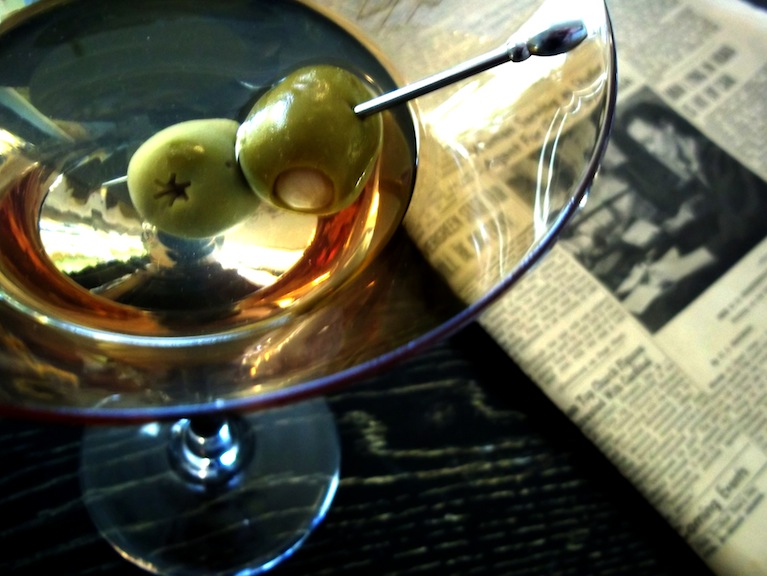
I could not watch a M.A.S.H. episode, especially in the later years, without craving a Martini. Well, maybe not every time the show was on, but every time Hawkeye and Trapper (or Hunnicut) would repair to their tent for a libation. I was seldom able to actually pour myself one during the show, but the urge was always there. It was a kneejerk reaction I had little control over, especially after I discovered the Smoky Martini. I’ve been a Scotch drinker for decades, but there’s something about the immediacy of a Martini I really like. For a while (and it’s been quite a while since I’ve had one) I was prone to order one made with Absolut (I prefer Vodka) and a splash of The Glenlivet . . . with two olives. Three of those and I had dinner knocked!

Other Carbohydrates

Of course I’m much older now and have a rather young family to boot, so those kinds of shenanigans are no longer available to me. However, something similar (and entirely non-alcoholic) happened yesterday. Even better, I was able to scratch the itch fairly quickly. I don’t recall how I came about it, but I’m pretty sure it was from a link in Facebook. Probably from Mashable or Lifehacker. It was to a story listing 12 hamburgers you can enjoy in Los Angeles. Now, I don’t currently live in L.A., though I was born downtown and lived in its suburbs for most of my life. I do live nearby. Just not close enough to have a casual meal anywhere but the North San Fernando Valley, which is just over the hill from Simi Valley. However, this is the U.S. and burgers are ubiquitous, with many unheralded places that make a pretty mean burger, as well as some well-known ones that didn’t make it to the list. There’s a couple of both in town here, and I’ll get to that in a moment.

Interestingly, the story points out that National Geographic had just named the hamburger at The Apple Pan (in West L.A.) as the best burger in America. As a native, I have eaten at the Apple Pan . . . though I’ve had a Smoky Martini more recently than one of the Hickory Burgers they’re best known for. Meaning it’s been a long, long time. Of course, you can’t have a burger there without topping it off with a slice of Apple Pie. Still, it’s been a long time. Regardless, despite it being a very subjective thing, I’m inclined to think NG’s selection was a bit biased by history and nostalgia.

Bob's Big Boy Statue

Oh, Little Big Boy. How I Have Loved Thee!!

Final piece of this story. My wife has Shotokan Karate classes on Mondays and Wednesdays, leaving me and our daughters to our own devices for dinner. Normally, I’ll make something for the three of us, but last night it was In-N-Out Burger time. I just had to scratch that itch (Animal Style!). I shouldn’t even be eating the damn things because of type II Diabetes. Plus, I added fries and a chocolate shake. Horrors! The hamburger was excellent, but the fries were rather pedestrian. They did not taste fresh to me. Maybe I’m somewhat jaded, but we got a mandolin slicer recently and I made some french fries here and, even though I didn’t get it quite right, they were way tastier than what I had yesterday. Also, the shake wasn’t bad; nice and thick. Frankly, I prefer malteds.

I can’t end this without paying homage to the hamburger I would give my personal lifetime achievement award to . . . The Bob’s Big Boy. I’m pretty sure the Big Mac was designed to emulate it, which I don’t think it’s ever come close to doing. I recall getting a Big Boy burger, fries, and a Silver Goblet Chocolate Shake many times in my life. It’s one of those taste combinations I can still evoke in my mind and it’s heavenly! Sheesh. I’m getting hungry again. Time for a salad . . . or a Martini.


That’s Just Stupid, You Moronic Idiot!

Mediation Blues

Getting Along
Can’t We All Just Get Along?

I have often said I spent over two decades – the entire length of my career at Rocketdyne – trying to get Engineering to talk to Information Technology; two different groups of geeks, each of which thought they were superior to the other.

I didn’t work on it full time, and it wasn’t my job to get them talking, but had I been successful it would have made my job a lot easier. I worked at being a voice of reconciliation between them. It’s in my nature. I was not successful; at least not overall.

Now, the difficulty in getting these two organizations (we called them  “Processes”, as opposed to “Functions” or “Departments”) to talk to each other, was deeply ingrained in the culture of that enterprise. Part of the problem stemmed from the way we, as an enterprise, were organized. When I first arrived there in 1987, we were heavily command-and-control and pathologically hierarchical. There were kingdoms; fiefdoms, if you will and very few people thought further ahead than their own careers and organizations.

I’m happy to say things improved pretty dramatically over the years. One reason was the tireless efforts of a group of people, led by Dr. Bill Bellows, to apply the concepts and tools of thought leaders like W. Edwards Deming, Russell Ackoff, Edward de Bono, and many others to the way we did business. The term Dr. Bellows used for many years was Enterprise Thinking.

What made this way of thinking stand out, in my opinion, was its recognition of the systemic nature of an organization, an enterprise. It was clearly understood that all things – all processes or departments – were interconnected. Nothing in an enterprise exists by itself, outside the system(s) with which it interacts.

When you can clearly see this, suddenly you recognize how counter-productive it can be to blame people for things that go wrong, as well as expect individuals to make things work properly, which brings me back to the Engineering and IT departments I so futilely attempted to arbitrate for, as well as the title of this post.

Civility in Argument

Although I am guilty of it myself at times . . . I’m working on it . . . I don’t believe it is productive to blame others and, especially, to completely alienate them by using labels like “Idiot” or “Moron”. This is true whether you’re working together at an enterprise and – ostensibly – you share the same basic vision and goals, or you are on completely opposite sides of the political spectrum when it comes to how you think the country and the economy should be run.

I started writing this to make a point about the level of incivility I find at times on the Internet, especially in the comments of non-moderated news sites. Even the moderated ones contain some really argumentative and, at times, nasty comments. As I worked on what I was trying to say, the tragedy in Aurora played out and, true to form, the arguments between those who believe the second amendment is sacrosanct and those who wish to see access to guns more regulated are heating up.

My original intention was to point out how I have been able to get along with many very conservative people in my life, especially when we live and work together and see each other face-to-face on a fairly regular basis. I have long said that locally, in terms of how our cities and neighborhoods are run, we all want essentially the same things, e.g. safe neighborhoods, good schools, jobs, access to health care, etc.

I seldom have anyone disagree with this and it doesn’t surprise me. The problems seem to arise when we start talking about more abstract affairs; the economy, foreign relations, use of the military. Yet, I find with the people I know best we’re able to disagree without labeling each other as morons or idiots. We disagree but, somehow, we manage to continue getting things done together and not getting into actual fights over who’s right or how best to accomplish something.

I suppose this is one of our biggest problems in this country. Many of us have the tendency to ascribe the worst of motives to those they disagree with. I’m inclined to think that’s not a very good way to work together and achieve anything other than a continuous standoff. It seems that’s precisely how our government is now being run and it does not portend well for us as a nation. I’d like to see it stop.

A Taste of the Future

I have seldom written about politics or civic affairs here, but they weigh heavily on me. I have two young girls my wife and I adopted from China. I worry about the future they face here, where everything seems to be falling apart. I want to leave them a better world than I found as I was growing up and it sure as hell looks like that’s going to be a tall order.

I’ll leave this particular post with one thought and I will no doubt have more to say in the future . . . especially now that I’ve sort of broken the ice (not very well). Ironically, given I live in Simi Valley – still notorious for its role in the acquittal of the Los Angeles Police Officers who beat Rodney King, the thought that comes most readily to mind is, “Can’t we all just get along?” I know it’s a bit more complicated than that, but it is something to wonder about. It happens quite frequently in real-life, on the ground . . . as they say.


Why I Love Facebook’s Timeline

A Pic From My FB Timeline

How My Friends Can Share With Me

Change is Good

Every time Facebook changes something on their (not sure whether to call it a platform, app, or service) offering, people seem to get all freaked out and complain because they have to learn something new or change the way they were doing things. I understand and appreciate change can be a bit disconcerting, but I’m one of those people who not only accepts change; I actually seek it out. So when Facebook adds or rearranges things I immediately start looking for how I can take advantage of it.

Just so I’m clear, I am not referring to the issues of privacy and information security that arise now and again. That’s an entirely different story and, while I am clearly not as protective as many, I am always concerned about the security of my truly private information and that of my family. Changes in functionality are an entirely different animal and that’s what I’m concerned with here.

Embracing Timeline

When Facebook first introduced Timeline and made it available as a developer version, I was all over it. I was anxious to try it out, primarily because I was building a business that was based in large part on my understand of and familiarity with Facebook. I was anxious to see what they were doing, even though at the time it was not available to fan pages, which is the part of FB my business is involved with. I went through the necessary steps and got myself going. Much like my introduction to Twitter well over four years ago, I really wasn’t sure how I was going to use or benefit from it, but I was sure I wanted to figure it out.

Now that it’s a part of fan pages and I’ve grown increasingly familiar with it, I’ve finally figured out how to use it for myself. Not my fan page, but my personal Timeline. I came into this world about the time personal photography was starting to take off. As a firstborn son, my parents took lots of pictures of me. They also took lots of pictures of family and, over the years, many of them have come into my possession. It wasn’t until Facebook made it possible for posts to be scheduled, i.e. given a Timeline date in the future and held in a queue until that time, when they would then appear, that I made the connection to the past.

Yes, It’s About Me

Up until very recently I have shared some old pictures, but I have dated them on my Timeline on the date I posted them. I have since come to realize I can create somewhat of an autobiography by posting items (pictures, scanned documents, etc.) and dating them appropriately. I can even add in locations and people I was with, provided they are current Facebook friends. This is no small thing for me, as I have two fairly young (11 and 8) children to whom I want to leave a record of my life. Using Timeline to do so seems so much easier than writing a book. It also is far more graphic and, because many of my friends (including those who were present when some of the pictures were taken) can post comments to them, they become even richer and more engaging. Furthermore, as evidenced by the picture above, my friends can share pictures they have, which become part of my Timeline as well.

Interestingly, this picture was posted last November and I only just tried to change the date to the year and approximate month in which it was taken. I wasn’t able to do it, but I requested my friend who posted it to make the change and he did. Actually, he told me he didn’t know how to do it (people my age seldom do), but he had someone take care of it. I also realized there was a friend in the pic who has since become a Facebook friend as well and I was able to tag him. He chimed in within less than a day.

I could never recreate my past in this way by myself. First of all, I don’t know any other tool that provides the combination of functionality that Facebook does. Surely there’s nothing that would allow me to slowly record a retrospective with input from many people who were there at the time or who experienced similar episodes and milestones. I believe I have a lot more to learn about doing this, but I’m enjoying discovering new ways in which to create the virtual experience I want to leave for my kids. Maybe it won’t work the way I am envisioning. Maybe my kids won’t care when it comes down to it. I don’t much care at this point. It’s a great learning experience and – so far – it’s a lot of fun because I almost always get feedback from others when I do post something. After all, it may be dated long ago on my Timeline, but it’s something new and it shows up in my friends’ news feed when I post it.

Anybody out there have stories about their use of timeline, or have you discovered a bit of functionality you really like that you think others might want to know about . . . or that I might want to know about? Please be so kind as to share. Thanks.


Intertwingled in Plain Sight

Intertwingled

All Things Are Ultimately Intertwingled

I’m going to continue on a theme from my 4th of July entry, where I kind of resurrected an old post of mine from Content Management Connection. This time, however, it’s not a post of mine but that of a friend, Greg Lloyd – President and co-founder of Traction Software, Inc.

There are two terms I remember from when I first read Greg’s post – originally published on July 5, 2010 – which have helped me understand what I expect from the application of knowledge management and social business (formerly Enterprise 2.0 © ) design concepts and tools. These two terms also help me describe several of the most important attributes and indications of a well functioning, successful organization or group. They are “intertwingled” and “observable work”.

As a knowledge management professional (hemidemisemiretired) my long-standing and overarching goal has been to help people (and their organizations) improve on their ability to make sense of the huge amount of data that flows from their work. Doing so requires consideration of both macro-environmental factors and micro-environmental factors. For me, intertwingle describes the macro environment and observable work is what helps the micro environment to thrive. Let me very briefly explain why I believe this. Then I’ll send you off to Greg’s wonderful post where he explains it far better than I am capable of doing.

I frequently use the term “systems thinking” to describe what I see as an ongoing process of understanding that recognizes the interconnection, as well as the interdependency, of . . . well . . . everything. Useful systems thinking also requires the ability to see boundary conditions in pursuit of knowledge, but keeps the systemic nature of all things in mind when considering how they work. The word ‘intertwingle” seems to succinctly embody what I just spent a paragraph attempting to explain; probably not very well. 😦

“Observable work”, on the other hand, evokes a vision of people communicating with each other and the data and information essential to the smooth functioning of the work they do. It promises not necessarily the disappearance of silos, but does suggest making those silos – and the varying and very real relationships they have with each other – more transparent and discernible.

There’s much, much more that flows from these two concepts but, since I have no intention of rewriting that which has already been published, I urge you to read Greg’s post. If you have the time and the inclination, you may want to follow some of the numerous links he provides that serve to further define and illustrate these two concepts. Think of it as a quest to find the social business/knowledge management version of the Higgs Boson particle or, at least, the Gluon.  Here’s the link.


Knowledge Management Ain’t Actually Going Anywhere

I completely forgot I had posted this over a year and a half ago. I never actually posted it here, but did post about it and provided a link to it at Content Management Connection. Despite the passage of time since I did post it, I don’t really think much has changed, but I’ll let you be the judge of that.

PS – Click here to see an up-to-date graph and some regional data as well from Google Trends.


Google Trends Graph

Knowledge Management vs. Social Media Searches via Google

As a result of two tweets I just read; one from @SameerPatel and the other from @ralphmercer, I wanted to get a thought down before it recedes forever into the darkest corners of my brain, where I know I will feel the remnants of its presence, but will also never be able to fully recall it.

Based on something Sameer said I went to Google Trends and searched on the terms “Knowledge Management” and “Social Media”. In the past almost two years, with the exception of a large drop at the end of 2009, and a slight dip at what looks like the end of June in 2010, Social Media searches have been steadily increasing. During that same time period, searches for Knowledge Management – which are now less than a fifth of the searches for Social Media have remained arguably steady, with perhaps a bit of a continuous waning.

I suppose some would suggest this portends the eventual death of KM, but I really don’t think that true . . . or even possible. KM has always been based on the belief that we humans are unique in our ability to pass knowledge on to others, as well as to collectively create new knowledge and retain it for future use.

As I had suggested to Ralph, and what he was kind enough to point out in his tweet, is the reality that it’s “very expensive to reacquire knowledge”. This isn’t something anybody wants to do, anymore than they want to produce re-work or scrap. Yet people seem to be mulling over the viability of KM for the future.

I think the reality is two-fold. First, the need for sharing and re-using knowledge or information continues as strong as it’s ever been. What it’s called is of little consequence and, if KM has gotten a bad rep, then let’s move on and call it something else.

Second, I believe a lot of what we mean when we refer to social media is actually the next iteration of KM, insofar as it enhances collaboration, sharing, finding out what others are doing, etc., as well as captures and makes available collective knowledge and wisdom.

So, what do you think? Has KM run its course, or is it just taking on a new “identity” in the form of social media and (something I don’t think I mentioned above) Enterprise 2.0?


Getting to Observable Work

Observable Work

We Can Work Smarter & More Effectively When We Can See What Our Colleagues Are Doing.

One of the concepts I think best conveys what many are trying to do with social media inside organizations, mostly large ones, is that of “working out loud” or “observable work”. The idea is that one’s efforts and day-to-day activities are conducted in such a way as anyone who wants to can find and see visible artifacts of that work.

There are numerous benefits to doing this. One way in which it is highly beneficial is it obviates the need for regular activity reporting. Where I used to work, a great deal of time was spent at the end of each month as employees gathered information and wrote up their reports on the activity they could recall or that they had been organized enough to make notes about.

Once they had done so, these reports went from the workers to first-level managers, who read, edited, consolidated, and passed the information up. This continued through the organizational hierarchy until it finally reached the President, where it had been re-written, re-organized, and (sometimes) thoroughly filtered to ensure bad news wasn’t included or was glossed over or minimized. Not the best way to do business, IMO. It was very stressful and quite time consuming.

A good friend and long-time blogger in the field of knowledge management and social media – Luis Suarez of IBM – recently summarized the most important issues he got from last month’s Enterprise 2.0 Conference in Boston. Especially useful to enabling observable work, I think, is Alan Lepofsky‘s concept of social task management, which Luis discusses in an excellent post on CMS Wire. There’s lots of good info Luis offers there as well as some links to other stuff, including one to an excellent Slideshare presentation on Social Fatigue. Check it out yourself:

http://www.cmswire.com/cms/social-business/social-task-management-when-social-business-got-down-to-work-016309.php


What Facebook and Google are Hiding from the world.

Wonderful 10 minute TED talk on how Facebook, Google, and others are doing us a disservice by personalizing the things we see. This speaker points out that we are in danger of becoming a web of one when algorithms without deep ethical roots are used to determine what we want to know about. Great talk.


Dreadful and Delightful

My Daughter's Class

See if you can spot Alyssa

And so it begins. Another Summer vacation filled with excitement and challenge. I know my kids want to spend the entire seventy days watching television and swimming. They’ll want to do it at home and at their friends’ homes . . . and back at our home with their friends. They will resist anything that smells of homework or, heaven forbid, learning.

My job is to stand in their way and keep them from having a good time. We can be sure that’s how they see it. I see it as a challenge to figure out creative ways to get them to think without it appearing as though that’s what I’m doing. I have some ideas. My education has been mostly unconventional and I am a life-long learner. Hopefully, I can instill in them some of the excitement I get out of the chase for knowledge.

I picked up my youngest from school today. I got there a little early so I could find a parking space and walk in to greet her. The kids were all assembled on the lawn outside their multi-purpose room, sitting fairly patiently with their classmates and their teachers. I had the opportunity to thank my daughter’s teacher for all she’s done this year and, let me tell you, she was challenged on our behalf. She earned whatever they pay her, which I’m pretty sure isn’t enough.

About three minutes before Noon, the Principal said a couple of words and put on the single version of James Brown singing “I feel good!”. When it was over she said a few more words. Then she did something I wish I had been prepared for, because I would have loved to share what would have been a powerful, exciting 15 seconds of video. She looked at her watch and started a countdown from 10 seconds. The kids got into it – big time – and the area was filled with the full-throated chanting of around 350 – 400 kids. When they reached zero they erupted into cheering.

I haven’t experienced a casual and cavalier Summer, where I really wasn’t required to do anything but have fun, for a long time; somewhere around 50 years. I don’t really remember the feeling any longer. However, for about 10 seconds today, while those kids were marking a big step in their lives, I think I was able to capture the sheer joy of it all. It was awesome!