Category Archives: Education

For My Eyes Also

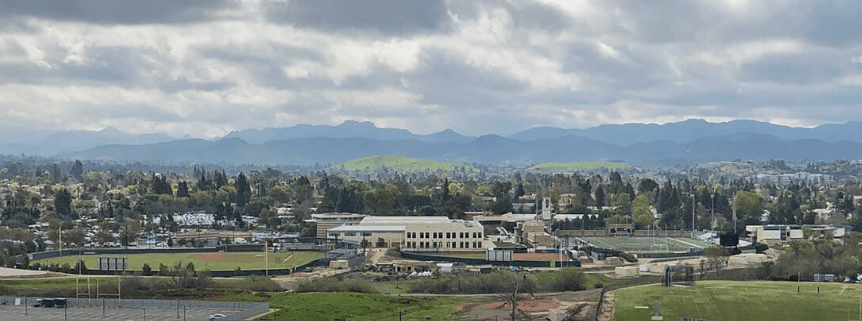
California Lutheran University Campus

I’ve begun work on something I have wanted to do for a long time but, for numerous reasons (some of which actually make sense in retrospect) have not been able to accomplish. I’m speaking of writing a book. Actually, I’ve had three books in mind for a few years: One sharing my blog posts; one about the years I spent in the Peace & Justice movement, with special emphasis on the movement against the war in Vietnam; and, my memoirs. I can say with reasonable objectivity, I have had a rather unconventional and interesting life.

Since the beginning of March of 2018, I have been working part-time as the business manager for a small AI software development firm. In doing so, I transitioned from my Mac to a PC laptop in order to comply with the company standards. Today I moved my Mac out into a place in our living room where I can sit quietly and write. Since this is the first time I’ve actually spent a while at the Mac, I have been going through my files and am somewhat pleased to discover there are a lot things I’ve written over the years that should prove helpful in writing (at least) my memoirs. Some of the things I’ve written are only a couple of sentences or a paragraph or two, but they convey the essence of a thought I can expand upon. On the other hand, some of them are completely unintelligible.

What I’m going to do here, however, is use this blog to publish a term paper I submitted 19 years ago, when I was attending classes at California Lutheran University, in their Center for Lifelong Learning offering, ADEP (Adult Degree Evening Program.) It’s 22 pages long, so I’m going to post it in sections, as I wrote it. Today I’m sharing the intro. As I’ve re-read parts of it, I’m reasonably certain some will end up in at least my memoirs, as they are part of my unusual education.

Introduction

Although this paper is being written as part of the requirements for a grade in Organizational Management, its impetus and content are driven by a real life situation at the company I work for, Rocketdyne Propulsion and Power, a business unit of the Space and Communications Division of the Boeing Company. As suggested in the course syllabus, I selected a subject which I felt had some relevance to my company’s activities and my position within it.

As with many organizations throughout the world, mine is struggling with understanding and implementing the concepts of Knowledge Management. These concepts, and the issues surrounding them, are numerous and complex. As an example, one question which must be asked is how does an organization determine the importance of the information it uses and how does it weight that importance? How does it determine who needs it, who wants it, who might benefit from knowing of its existence, or whether or not it should be available to everyone who might wish to make those determinations for themselves?

Furthermore, there are numerous software developers who are touting their particular method of capturing data and making it available to a company’s workforce. Each of these developers will attempt to convince you their method is best for your application. Of course, this situation is hardly different from that faced by anyone who has to determine what method they will use, or what software they will purchase, for any task. Nevertheless, at this early stage of the game it doesn’t make the task any easier.

I propose, in the following pages, to set forth some of the history of Knowledge Management, from tribal times to today, and the perceived need for Knowledge Management, both in general, and with particular emphasis for my company, Rocketdyne. I will look at what knowledge management means, and briefly mention some of the tools which are being used to develop its use. The definition of tacit knowledge, and the importance of understanding it when implementing Knowledge Management will be discussed, along with a brief look at how we acquire and share knowledge. I will close with a glance at what is probably the most daunting task facing a company which desires to utilize Knowledge Management to its advantage, the need for dramatic cultural change.

Before beginning, however, I would like to quickly explain the nature of this paper’s subtitle, “Breaking the Information Bottleneck”. Here, the word bottleneck has the same meaning we use when speaking of a traffic jam. Most of us have experienced being caught on the freeway when suddenly we come to a crawl or dead stop. Usually there is an explanation for the delay. Sometimes, however, there is no apparent reason.

In the same way that freeways experience bottlenecks, so too does any system which requires the smooth flow of some activity or commodity. On the shop floor, it is generally components, though it can also be tooling, raw material, or usage hardware. In the office it is generally data or information, and when its flow is restricted the organization suffers.

I believe, with the advent of computers, and their widespread use through Local Area Networks and intranets, and with our increasing dependence on technology to solve our problems, we have forgotten how sharing knowledge actually works and, in the process, created huge information bottlenecks which will not go away until we learn once again how to manage knowledge.

Unfortunately, the scope of this paper is woefully inadequate to fully treat all the issues involved in this major change now occurring. It is my hope that I will be able to expand upon and use it to help melt the glacier of resistance which surrounds my organization at present and makes change painful and tedious.


Back At It!

Welp . . . after a Summer vacation punctuated by a month of Summer School, the new school year began yesterday. As it now stands, I have another three years of taking my youngest to High School and picking her up. That means I will have just celebrated my 75th birthday when she graduates, unless I can afford to buy her a car before then.

Problem is, She has so many issues I’m worried she will be a real danger behind the wheel, not so much to the world, but to herself. I should be able to afford driving lessons for her pretty soon, then we’ll find out how well she’s going to do.

I have to admit I’m reaching the point where I really miss being a grown-up, solely a grown-up. If I live to be 90 I’ll have plenty of time to enjoy my children as adults, and plenty of time to once again enjoy being an adult. Since I’m already close to 13 years older than my father was when he died, I’m not sure I’ll make it that far. Which, basically, leads me to believe I need to just appreciate what I have now and stop worrying about the future. I’m normally pretty good at that, but it seems the beginning of school has jarred my psyche somewhat.


Black Then | The First Massive African American Protest in U.S. History Was Led By Children Marching Against Lynching In The Silent Protest Parade

It is clear to me that racism in America will not go away if white people do not stand up and denounce it as the destructive force it is. In order to do so respectfully and honestly, white people need to listen to the voices of people of color. Only by listening to their authentic voices; to their stories and their life experiences, can we even begin to understand how racism affects their lives and why it needs to stop if we’re to progress as a race . . . a human race, that is. Here’s an interesting story that was shared with me on Facebook. Though I would share it here as well.


First Massive African American Protest in American History (July 28, 1917) were children in New York City participating in the Silent Protest Parade against the East St. Louis Riots. Between 8,000 and 10,000 African-Americans marched against lynching and anti-black violence in a protest. The march was precipitated by the East St. Louis Riot of May and July of that year, which was an outbreak of labor and race-related violence that caused up to 200 deaths and extensive property damage. The Parade was organized by famous civil rights activist and first African-American to earn a doctorate (from Harvard University) W. E. B. Du Bois and the NAACP. The protesters hoped to influence President Woodrow Wilson to carry through on his election promises to African-American voters to implement anti-lynching legislation and to promote black cases; to the great horror of civil rights activists across the country, Wilson repudiated his promises, and federal discrimination actually increased during his presidency. It was the first parade of its kind in New York and the second public civil rights demonstration of African-Americans.

The paraders assembled at Fifty-ninth Street and Fifth Avenue and marched thirty-six blocks downtown to Madison Square Park. They were led by about 800 children, some no older than six, dressed entirely in white. Following the children were white-clad women, then rows of men dressed in black. The marchers walked wordlessly to the sound of muffled drumbeats. Despite their silence, their concerns were articulated on neatly stenciled banners and signs.

The banners and signs read: “MOTHER, DO LYNCHERS GO TO HEAVEN?; “GIVE ME A CHANCE TO LIVE”; “TREAT US SO THAT WE MAY LOVE OUR COUNTRY”; “MR. PRESIDENT, WHY NOT MAKE AMERICA SAFE FOR DEMOCRACY?; AND “YOUR HANDS ARE FULL OF BLOOD.”

Source: Black Then | The First Massive African American Protest in U.S. History Was Led By Children Marching Against Lynching In The Silent Protest Parade


The Anger of the White Male Lie – Ijeoma Oluo – Medium

If we’re ever to truly deal with the legacy of racism in America, white people—especially white men—are going to have to step out of their comfort zone and learn a little more about history and the trappings of power, which lie at the root of our racist past . . . and present. One of the best ways to do this is to listen to Black people; listen to their stories; listen to their description of how the world works, because it doesn’t work the same for them as it does for us white folk. It just doesn’t, and it really needs to for all of us to enjoy peace and a modicum of safety and security. This Medium essay is a wonderful example of a piece from which we can glean some incredibly important lessons. Check it out . . .


White men who shoot up schools and workplaces are not murderous monsters, or mindless thugs. They are “lovesick” or “misunderstood” or “tragic.” Hundreds of thousands of words are dedicated to finding the reasons why someone with so much promise could have fallen so far.

But how much promise was there really?

How much promise is there in a life where you are told that all you have to do is exist in order to inherit a kingdom. How much promise is there in a life where your mediocrity is constantly applauded and every hero looks like you and every love interest is a supermodel, but at the end of the day you will be working in a cubicle with everyone else and your only consolation is that you will be making $1.50 an hour more than the women and people of color in your office?

Source: The Anger of the White Male Lie – Ijeoma Oluo – Medium


Be Safe! ¡Cuidate!

This weekend Trump is threatening mass deportations . . . again! It may not happen. However, if it does here’s some information you or someone you know may want to have available. One of the hallmarks of our nation is the concept of the rule of law, which means nobody is above the law; neither is anyone outside the law. Every “person” enjoys the rights afforded them by the Constitution of the United States. We’re all entitled to due process and the equal application of the law. Know your rights . . . and be thankful we have an organization like the ACLU that fights for them, incessantly. They’re one of five organizations I donate to monthly. Please consider sending them a few bucks to support their work. And please consider sharing this info with someone you know who might benefit from it. Thank you.


President Trump Says There Could Be No Wildfires If We Did Forest Management, ‘Cleaning’

I’m sorry, but this poor excuse for a human has got to be the dumbest lump of protoplasm to ever sit behind the Resolute desk. It’s difficult to be sanguine about the mess he’s getting us into. This particular episode of dumbfuckery, however, while typical of the kind of unabashed bullshit this dork is capable of spewing, is totally wrong, off-the-wall, and completely uninformed.

In fact, according to the Forest History Society‘s website, whose mission is “. . . to preserve and help people use the documents of forest history. The Forest History Society identifies, collects, interprets, and disseminates historical information on the relationship of humans and forests, contributing to informed natural resource decision-making,” Forest Management has been a primary focus of the U.S. Forest Service since its inception.

Also, the U.S. Forest Service‘s own website says “Federal forest management dates back to 1876 when Congress created the office of Special Agent in the U.S. Department of Agriculture to asses the quality and conditions of forests in the Unites States.”

Less informed than Dubya – and ten times as arrogant

Below is a small excerpt from Esquire’s article about the monumental idiocy of this man and his narcissistic gaslighting. You should read the full article—then share it far and wide. Four more years of this crap and we may never recover. We need leaders who are capable of processing actual facts. This jerk is incapable of that . . . and he ensures, with his pettiness, no one else gets to do it either. This would be funny, if it wasn’t so devastating to our ability to deal with the real causes of our problems.


Exhibit Z came to us yesterday in an appearance at the White House, when the world’s most powerful man got going about wildfires. “You don’t have to have any forest fires,” you see, but nobody knew about forest management before he came along and told them, you know, and forest management means “cleaning” the forests, which are dirty, unlike in other countries—”forest nations”—where they do the forest management and they don’t have the wildfires. Not like California, anyway, whose governor he talked to and told about the forest management, which the governor had never heard of about a year ago, and then he mocked the idea, but now he agrees with President Smokey. Also, many tremendous things are happening and a lot of people are looking at it.

Source: President Trump Says There Could Be No Wildfires If We Did Forest Management, ‘Cleaning’


I Feel Much Better Now

I think I wrote the following a couple of weeks ago. Shortly after my oldest participated in her final dance recital at Santa Susana High School, I was hit by the realization my baby is now an emancipated adult. She just got notification of her registration to vote yesterday. I was a little beside myself but, as you can tell, it passed fairly quickly, in large part due to numerous friends who were willing to listen and allow me to vent, which helped me understand what I was feeling.
Aimee Grajeeatin’

As many of you know, the impending graduation and emancipation of my oldest has hit me kind of hard with a case of “empty nest” syndrome. I know my grief is unwarranted, especially since she’s not leaving the house for the foreseeable future, and I know I’ll get over it; already am. Please don’t worry about me. Two things (among many) I’ve learned so far:

1. My greatest sense of loss involves time and it’s having passed. “Did I do the right things?” “did I help her enough?”; “did I neglect her by paying too much attention to her younger sister, who desperately needed it (still does)?”

2. Merely talking to Aimee helps for two reasons. The first is she reassures me I have been a good father and she feels no lack of love or attention. That feels good. The second is related, because talking to just about any teen with tude is often enough to make you want to cut yourself. Doesn’t feel as good, but I’m real familiar with it.

I really appreciate everyone who has reacted to, or commented on, my cries of agony. Special thanks to those whose shoulders I cried on, both figuratively and literally. Y’all are wonderful therapists.


An Interesting Age

Kind of interesting to be spending part of my birthday waiting for my younger daughter to get out of school. I hadn’t quite put my foot on what always feels just a bit strange every time I’m here.

It finally hit me. It’s the knowledge I’m at least 54 years older than the oldest kids here. I’d venture to say the vast majority of parents here are no more than 30 years older than their kids. I mostly don’t feel like an outlier, but I am.

I’m also processing the reality that Alyssa had far more challenges than Aimee, who also has three friends who’ve known each other since kindergarten or the first grade, and whose families we have spent a lot of time with over the years. Alyssa doesn’t have any friends like that, which troubles me deeply.

I guess I’m living in interesting times. All I have to do is stay healthy and productive for about another eight to ten years. Slice pie!


Free Access to “A People’s History”

A People's History

A Classic . . . and Important . . . work!

Most historians in the U.S., as far as I can tell, tend to believe in the “Great Man” theory of history; the belief that history can be largely explained by the impact of great men, or heroes; highly influential individuals who, due to either their personal charisma, intelligence, wisdom, or political skill used their power in a way that had a decisive historical impact.

Howard Zinn’s classic, A People’s History of the United States, takes the exact opposite view; that history is made by the people, the masses, the average working man and woman who comprise the body politic, and whose lives tell the story of a society’s development. Individuals are seen as products of the society in which they grew and came to prominence, representatives of the people or oppressors of the people, but not apart from the “salt of the Earth”.

If you ever wanted to read this wonderful book, but haven’t gotten around to it, or you’d like to be able to peruse it before taking the plunge (it is a formidable, but entertaining, read) you can find the book in its entirety at History is a Weapon. I believe this particular book is more important than ever, as we become more and more politically active and strive to wrest control over our government, which has been hijacked by vile white nationalists, religionists, and science deniers. I’ve included the link to the book below.

http://www.historyisaweapon.com/zinnapeopleshistory.html


Thanksgiving: Passover For Indigenous People

Passover is a very meaningful holiday for Jews. During the seder, the ritual dinner that’s served that evening, the story of bondage by the Egyptians is recounted and thanks are given for their release after a series of plagues are visited upon the slaveholders, culminating in the slaughter of first-born Egyptians and the successful escape via Moses’s parting of the Red Sea.

Turkey Unfriended

Oops!

Thanksgiving has been a meaningful holiday for we “Americans”, first celebrated in 1621 but not officially until 1863, when President Lincoln declared it a national holiday. It was meant to celebrate the good fortune of the original Pilgrims, as well as that of all of us who came to live in this land.

Much as we have learned Christopher Columbus’s “discovery” of America wasn’t exactly as benign and wonderful as we were led to believe (certainly when I was growing up in the 50s and 60s), we now know the generosity of those indigenous people who provided for that first Thanksgiving we now celebrate, was rewarded with hatred and genocide.

I can’t speak for everyone but, as far as I’m concerned, Thanksgiving is now a holiday in which we celebrate the love of family and friendship, as well as remember how deeply racism, nationalism, and white supremacy are rooted in our national identity. In this time of deep despair over the backward direction our nation is heading, it’s more important than ever to pay attention to a history that includes everyone, regardless of ethnicity, national origin, or any other distinguishing characteristic, as well as seek what objective truth there is, absent favoritism, nationalism, and whataboutism.

I hope everyone has – or had – a wonderful holiday, filled with love and generosity of spirit. I also hope everyone remembered – and remembers – we are far from blameless and sometimes we have – and do – stumble on our journey toward a “more perfect union.”