Category Archives: History

Fani Flames Gym

Just finished reading Fani Willis’s response to Jim Jordan’s ill-conceived attempt to bully her into backing off of her RICO J6 investigation/prosecution. She flames him at least a half dozen times while refuting every position he asserted in his previous demand letter sent to her on August 24.

While it was an eminently enjoyable read given the disgust I feel, and the disdain I have, for the congressman, Fani’s (or her staff’s) approach is readable and succinct. If you ignore the numerous citations—which I would only research if I was intent on answering her letter, which I’m not—the points made are clear, concise, and to-the-point. That she occasionally takes him to the woodshed is a lagniappe.

Don’t take my word for it, read it yourself. Feel free to download it. I’m also including the original letter sent by Jordan to DA Willis for your reading pleasure (see below).


Dare We Say “Murderer”?

I have long contended that, taking into consideration his knowledge of the pandemic, along with his reckless disregard for the consequences of his inaction, Donald John Trump is guilty of second degree murder. It’s clear he was more interested in his re-election and “legacy” than the safety or security of the American people.

One of the primary duties of the President is to protect the national security of the United States. In addition to serving as the commander-in-chief of the U.S. armed forces, the President has a responsibility to protect the health and safety of the American people. This includes responding to public health crises, such as pandemics or natural disasters, and taking proactive measures to prevent the spread of disease or other health risks. The President may work with federal agencies and state and local governments to coordinate responses to these types of emergencies, and may also provide guidance and support to individuals and communities affected by such events.

These tapes, shared and discussed on “The Beat With Ari Melber” with Bob Woodward and Dr. Kavita Patel, make it clear (if you weren’t already convinced years ago) that Trump cared little for the American people’s health and safety during the worst years of the Covid-19 pandemic. He consistently downplayed the severity of the problem, instead lamenting about how it was affecting his re-election. Had he not been so callous and dismissive of the disease and its impact on the nation, he likely would have been re-elected. Instead, his single-minded, narcissistic focus on himself made it clear to a majority of the people he was singularly unfit for the job.

Anyone who votes for this clown is an imminent threat to the health and security of the United States of America and the world. Please be sure you’re registered to vote and that you get out there November 5, 2024 and ensure he is never allowed near the seat of power again.


Juneteenth and Passover

NB – Before reading the following post, please be advised it was written with the assistance of Chat-GPT, after a couple of iterations of my asking for a blog post on the subject, and clarifying what it was I looked for. It’s not quite my style, but it gets across the subject I was having a bit of difficulty honing in on. I would likely have been more wordy, so I’m content to leave this up in order to get the gist of my thinking out in the world.

As a former Jew who is now an atheist, I have always been interested in social justice issues and have been an advocate for antiracism for many years. However, it was only in the last few years that I learned about Juneteenth, an American holiday that celebrates the emancipation of African American slaves. As I learned more about Juneteenth, I couldn’t help but compare it to Passover, a Jewish holiday that commemorates the liberation of the Israelites from slavery in ancient Egypt.

At first glance, it may seem like Passover and Juneteenth have little in common. Passover is a religious holiday that is celebrated by Jews all over the world, while Juneteenth is a secular holiday that is primarily celebrated in the United States. Passover has a long history that dates back thousands of years, while Juneteenth is a relatively new holiday that has only been officially recognized by the federal government since 2021. However, as I delved deeper into the meanings behind these holidays, I found that they share a common theme of liberation and freedom.

For Jews, the story of the Exodus is a powerful reminder of the importance of freedom and the need to fight against oppression. The story tells of how Moses led the Israelites out of slavery in Egypt and into freedom, and it is a story that has been retold for thousands of years. During the holiday of Passover, Jews gather with family and friends to retell the story of the Exodus, eat traditional foods such as matzah and bitter herbs, and participate in symbolic rituals such as the Seder. The holiday is a time to reflect on the past and to look towards a brighter future.

Juneteenth, on the other hand, celebrates the emancipation of African American slaves. The holiday commemorates June 19, 1865, which is the day that Union General Gordon Granger arrived in Galveston, Texas, and announced that all slaves in Texas were free. This announcement came two and a half years after the Emancipation Proclamation was signed, and it marked the end of slavery in the United States. Juneteenth is a time to celebrate the end of slavery and the beginning of a new era of freedom and equality.

Despite the differences between Passover and Juneteenth, they share a common theme of liberation and freedom. Both holidays celebrate the idea of breaking free from oppression and moving towards a brighter future. They also emphasize the importance of family and community. For Jews, the Seder is a time to retell the story of the Exodus and to pass down traditions and values to the next generation. For African Americans, Juneteenth is a time to celebrate their heritage and to remember the struggles and sacrifices of their ancestors.

As an antiracist, I find it important to acknowledge the intersectionality of these two holidays. While Passover and Juneteenth have different histories and meanings, they both symbolize the fight for freedom and justice. As a former Jew, I feel that it is important to recognize the role that the Jewish community played in the civil rights movement. Many Jews were active participants in the struggle for civil rights and worked alongside African Americans to fight against racism and discrimination. As an atheist, I believe that it is important to recognize and celebrate the diversity of cultures and traditions in our society.

In conclusion, Passover and Juneteenth are two holidays that may appear to be very different on the surface, but they share a common theme of liberation and freedom. As someone who is no longer practicing Judaism but is committed to antiracism, I find it important to acknowledge the intersectionality of these two holidays and to celebrate the diversity of cultures and traditions in our society. Passover and Juneteenth are reminders that the struggle for justice and equality is ongoing and that we must continue to fight against oppression in all its forms.


Test Driving Google’s AI, Bard

In early 2009 I was privileged to spend a weekend with Dr. Russell Ackoff thanks to a friend and former colleague. I recall one incident where, while we were at Russ’s home, I mentioned my belief there was a similarity between the philosophy of dialectical materialism and the concept of systems thinking. As I recall, he was pretty upset with me for saying this. It’s stuck with me over the years.

Thanks to another friend on Facebook, I now have access to a set of AI tools, one of which is Google’s Bard. The other day, in an effort to test drive it, I proposed the following task and received the following reply:

Me:

Compare the philosophy of dialectical materialism as expressed by Karl Marx and Friedrich Engels to the concept of systems thinking as expressed by Russell Ackoff and others.

Bard:

Dialectical materialism

• Dialectical materialism is a materialist philosophy that emphasizes the role of conflict and change in history.

• It is based on the idea that the world is constantly changing and evolving, and that this change is driven by the conflict between opposing forces.

• These opposing forces can be social, economic, or political, and they can be found at all levels of society, from the individual to the global.

• Dialectical materialism is a dynamic and evolving philosophy that has been used to explain a wide range of historical events, from the French Revolution to the fall of the Soviet Union.

Systems thinking

• Systems thinking is a holistic approach to understanding the world that views it as a complex system of interacting parts.

• It is based on the idea that the whole is greater than the sum of its parts, and that it is impossible to understand any part of a system without understanding the system as a whole.

• Systems thinking has been used to understand a wide range of problems, from environmental degradation to economic inequality.

Comparison

• Both dialectical materialism and systems thinking are complex and sophisticated philosophies that have been used to understand the world in different ways.

• Dialectical materialism is more focused on the role of conflict and change in history, while systems thinking is more focused on the holistic nature of the world.

• Both philosophies have their strengths and weaknesses, and they can be used to complement each other.

For example:

• Dialectical materialism can be used to explain how conflict between social classes leads to social change, while systems thinking can be used to understand how the different parts of a society interact with each other.

• By combining these two approaches, we can gain a more complete understanding of the world and how it works.

Not quite as in-depth as I would have liked, but it does kind of jive with my understanding of the overlap of the two outlooks.


A Needed Update

The DOJ’s OLC policy of not pursuing criminal investigations or prosecutions into or against a sitting president needs to change! Their argument that it would ” … unconstitutionally undermine the capacity of the executive branch to perform its constitutionally assigned functions”—in light of the serial criminality of the former President—no longer holds up, IMO. Look how thoroughly it screwed up every aspect of public life and how much it’s cost us in both treasure and prestige. This raises some thorny questions I will try to tackle in the future. I’m just spitballing right now in light of what we’re learning (and many of us knew long ago) about the criminality of the former President, Donald John Trump.

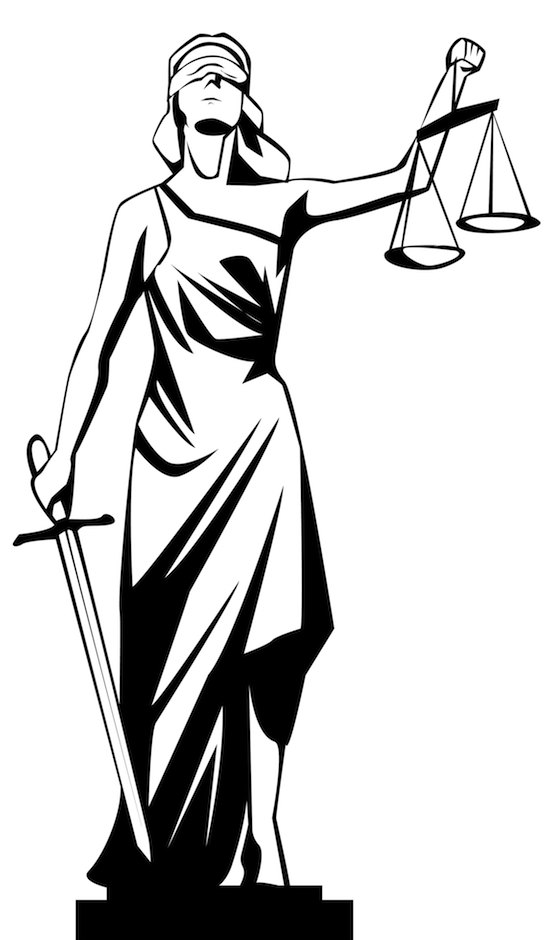
Lady Justice. She shouldn't be blind to criminality by anyone.
She Shouldn’t be Blind to Outright Criminality by Anyone!

String Him Up!

To be clear, If the evidence warrants it (and all but the most partisan know it does) I want to see an indictment—actually several—of Trump. He remains innocent until proven guilty and I want to see the “rule of law” upheld by our court system. If he’s so fucking innocent, let him prove it to a judge and jury. He’s been treated more “fairly” by our justice system than millions of our poorest citizens. Neither he, nor his supporters have ever uttered a single word about the unfairness of that system. Now, all of a sudden it’s rigged and unfair. Screw them and him. Let’s see it play out.


Strange Encounters

I must confess to being a bit of a pack rat, primarily with papers and a few collectibles or mementos. For instance, I have official NASA mission patches for all the Mercury, Gemini, and Apollo missions, as well as numerous patches for significant events and test activities, including for Vandenberg launch facilities that were never built. I also have two commemorative seat cushions from sporting events I attended; Superbowl XIX, between the San Francisco 49ers and the Miami Dolphins, and the 1981 World Series between the Los Angeles Dodgers and the New York Yankees. I don’t remember which game of the WS I attended, but it had to be either 3, 4, or 5 since it was at Chavez Ravine (Dodger Stadium).

Recently, I came across a binder I’ve had for at least forty years that’s filled with business cards neatly preserved in plastic pages specifically made for such things. I had forgotten I had it out in the garage, but I encountered it recently. Most of the cards are from either when I was in the wholesale food business with my family, or when I was in the music business pretending I knew what I was doing. SIDE NOTE: As it turned out, despite a propensity to be a bit of an asshole, I was nowhere near the kind of asshole one needs to be to succeed in the business end of the music biz.

One of these cards is particularly interesting to me. It’s from the lawyer we engaged to keep a friend out of prison for possession for sale of cocaine. This is part of a much longer story which I am writing about in my autobiography/memoirs (have yet to decide the final format). A little over a decade after our engagement with this lawyer, he became far more well-known due to his representation of a famous athlete, who was accused of murder. The card is somewhat unique, as it is a parchment fold-over, with a script inside for people to use if they come under the scrutiny of law enforcement personnel. Do you remember this guy?


My Life as a Wiener Clerk

Sometime in my first year of law school I had the opportunity to work at a place called The Wiener Factory. It was located just west of Kester on Ventura Blvd. in Sherman Oaks. Owned by a former stock broker turned English teacher, it was one of the truly iconic places in the San Fernando Valley to get a hot dog or other type of sausage (knackwurst, polish). The dogs all had natural casings, so they snapped when you bit into one. We also used egg bread buns that were steamed prior to placing a dog in them and the mustard was Gulden’s, slightly thinned with a bit of pickle juice. We did not serve French Fries; instead we served hot German potato salad and coleslaw.

I worked for the original owner, whose name I can only remember as Gene. He had a way with words, as evidenced by the walls, which were covered with graffiti. The entire inside of the place was filled with different pithy sayings and slogans, many of which he had invented himself (I think; who knows?). The only two I can remember are “Please tell us how long you want us to hold the onions” and “We may be contumacious, but we’re never revocatory.” They were all amusing. However, were you to step out in the back where the bathrooms were located, it was a different story. There, the graffiti was raunchy and risqué, bordering on the profane. It was not something you were likely to encounter very often in your life. It was, after all, the early seventies.

The Wiener Factory after it closed.
Da Kine!

We served them with mustard, relish, and onions, mustard and sauerkraut (one of my all-time favorites), mustard, chili, cheese, and onions, and two that were oddballs at the time – red cabbage and cheese and coleslaw and cheese. Lately, I have been purchasing Hoffy all-beef, natural casing wieners and they are reminiscent of the Vienna dogs we served back then and that I used to buy in 10-pound bags when I was working with my father in the wholesale meat business.

This morning I got nostalgic. I had been eating kraut dogs intermittently for some time, but the thought of a coleslaw and cheese dog has been invading my consciousness with increasing frequency. Since I had to make a stop at Vons to pick up some items for a dinner we’re making for some friends tonight, I checked out what was available coleslaw-wise. There was some at the service deli, but it was early and they weren’t quite up and running and I didn’t feel like waiting. However, I was able to find a tub of it in one of the stand alone deli cases where they provide salads, cold cuts, cheeses, and other items one might want.

I don’t have any egg buns, but I do have hot dog buns and I also have some Gulden’s mustard and some cheddar cheese slices. So I used a paring knife to further slice the cheese into bits (impossible to grate a slice of cheese). I nuked the dog, then the bun with the dog in it and the cheese on top (I had already drawn a thick thread of mustard at the bottom of the bun) and, finally, topped it off with a generous helping of coleslaw.

Of course it wasn’t exactly as I remembered (is anything?) but it was close enough … and it was heavenly. I’m going to do it again. Tonight, though, is reserved for Italian Wedding Soup that Linda made for our friends. We’re taking a big pot of it over to their place and serving it with pepperoncinis, stuffed olives, and fresh garlic bread.


Conservatism Will Lose

“Know thy enemy and know yourself; in a hundred battles, you will never be defeated. When you are ignorant of the enemy but know yourself, your chances of winning or losing are equal. If ignorant both of your enemy and of yourself, you are sure to be defeated in every battle.”

~ Sun Tsu

For me, this quote explains why conservatives are eventually going to lose the “culture wars”. They consistently insist on ascribing thoughts and values to liberal and progressives that are figments of their overactive imaginations when, in fact, they are more often than not projecting. They don’t know their “enemy”, nor do they know themselves.

This isn’t to say they won’t cause a lot of damage, destruction, and even death as they attempt to control the narrative and impose their values on everyone. But I do believe their “causes” will never prevail in the long run, in large part because they’re clueless about not only our motivations, but even their own.


It’s A Mystery!

I really enjoy Jim Wright’s rants, especially when he gets riled up. He reminds me of a famous sports writer for the Los Angeles Times, Jim Murray who, sadly, passed away nearly a quarter century ago (kinda shows you how old I am). Jim Murray had a way of making and remaking a point without the reader getting tired of the exercise. Jim Wright has that same quality in the political world, IMO. I came across this post today and shared it with my friends and anyone else who might stumble across it – my posts are all public – and I thought I would share it here as well. I also added a few thoughts of my own that sprung out of Jim’s post and some of the resulting comments, most notably those suggesting the work of protecting against fascism is hardly over because of this one election. In fact, I vividly remember the “America. Love it or leave it” crowd that attacked those of us who were protesting the war in Vietnam back in the sixties and seventies, as well as the majority of Republicans since who want to restrict our freedoms and tell us what to think, who to love, and how to relate to the universe. My comments follow this Facebook embed.

The concerning part is there’s still a disturbingly large swath of the electorate who embrace fascism and authoritarianism and likely an equally large group of people who haven’t a clue what’s actually happening and merely respond to the right-wing propaganda that permeates our culture and vote reflexively, not thoughtfully.

My time on this planet is coming to a close, even if I live to be 100, but I still care deeply about the kind of society, economy, and environment we’ll be leaving those who come after me. While I have two daughters who are 19 and 21, and whose future matters a great deal to me, I would feel this way even if I was childless.

The forces of darkness are not soon going away; they’ll most likely never go away – at least not for generations to come. Therefore, we must be eternally vigilant as well as discerning in our choice of those we allow to have the power to make decisions affecting our lives and the lives of our fellow humans. This means paying close attention to elections at every level and for every office, as they’re currently the most impactful activities that determine how we live.

I honestly believe we need a socialist revolution, but I don’t see it happening soon, nor do I see it happening in the manner others have gone down. We’re not early 20th century Russia or mid 20th century China. Neither are we similar to Cuba or any other country I can think of that had a revolution and attempted to become a communist economy.

My knowledge of Marxism, which is admittedly incomplete, tells me that Marx and Engels did not believe a country could go from an agrarian or feudal economy directly to socialism. If you’re not familiar with their theories, they believed that human economic systems evolved and there was a progression from tribalism (primitive communism) to slavery, to feudalism, to capitalism, to socialism, to communism, to anarchy (which didn’t mean crazy-ass bomb throwing, but the absence of the coercive organs of the state, i.e. the “withering away of the state.”) Neither were these transitions/evolutions necessarily smooth or linear, but they were overall inexorable.

Materialistic Dialectics also requires us to understand the situation in which we find ourselves and our society in its historical context, not as some abstract notion of how things “ought” to be, but as they truly are; a seemingly Herculean task given the complexity of today’s world.

I don’t have all the answers; I’m not even sure I have any answers. However, of this I’m reasonably certain – believing that capitalism is the zenith of human economic activity is foolish and counter productive. As well, we have a long way to go just to honor the principles on which the United States was ostensibly founded. Liberty and justice for all is still a goal; an apparently distant one at that.

Semper Vigilantes!