Tag Archives: Capitalism

You Say You Want a Revolution

I was prepared, and preparing, for a revolution as far back as the late 60s. I was a young man, full of piss, vinegar, and righteous indignation over a war of aggression by my country; a war that had already claimed the life of my best friend. Through my antiwar activities I had become aware of many of the realities of the U.S. that had been hidden from me, especially rampant racism and sexism.

I’m aware many of my fellow citizens have a hard time realizing just how bad things have been in this country. Consider this, and I believe this is pretty much common knowledge: most of the land that comprises the U.S. was already inhabited when the Pilgrims arrived here. Much of the infrastructure of our country was built by slaves or indentured servants, virtually all of whom were kept in appalling living conditions. The fucking White House was built with slave labor. Meanwhile, white people were building generational wealth while systematically preventing POC from doing the same.

Ever hear of Angel Island, where we kept Chinese immigrants from 1910 to 1940? I’m sure you’ve heard of the Japanese detention camps used during WWII. My in-laws were detained at the one in Colorado (Amache) for two years. Many of my wife’s relatives lost everything during those years. The number of horrendous things done by white people to POC is disgusting and worthy of retribution, certainly of derision and disgust. So, why am I bringing all of this up?

Well, As I said, I was prepared decades ago for a revolution in this country. We have been in a class war as long as we’ve existed. However, I came to realize as a straight, white man it wasn’t up to me to decide when and how such an event should be prosecuted. I am somewhat privileged and don’t believe I have the moral authority to ask for the kinds of sacrifice such an endeavor would require.

I am, however, ready to support an effort to free the working class from their servitude to the upper class. I believe capitalism has served whatever purpose it once had (moving us away from feudalism and slavery) and needs to be replaced by, at the very least, a form of democratic socialism. I don’t believe billionaires should be allowed to exist. Having that much money is immoral and should be illegal, IMO. All to say, I’m down with any attempt to upgrade this nation, by any means necessary. I prefer it to be peaceful, but people with far too much money are making that impossible.

Things most likely have to get a lot worse; some of the wealth has trickled down to us and too many of us are either comfortable or convinced wealth and privilege are just around the corner. I don’t believe we can continue along the path we’re following, and it’s not just maga or trump. Capitalism rewards greed and avarice. Money is god! Socialism, OTOH, at least attempts to put people first. That’s what I’d like to see. Who’s on board?

Steve Bannon is no Leninist

“Lenin wanted to destroy the state and that’s my goal too,” replied Bannon. “I want to bring everything crashing down and destroy all of today’s establishment.”

~ Steve Bannon

Bannon is an idiot. Lenin was a Marxist. He believed that economies and societies evolved and that capitalism created the preconditions for socialism, which would create the preconditions for communism, which would then evolve into anarchy. Not bomb-throwing anarchy, but the “withering away of the state”.

Lenin didn’t want to”destroy the state”. Rather, he believed—as did Marx, and as do I—that humans and our economic relationships will evolve (perhaps over centuries) to the point where the coercive institutions of the state, e.g. police, prisons, perhaps even government as we’re used to, would no longer be necessary.

Karl Marx and Friedrich Engels adhered to the philosophy of dialectical materialism. They knew human economies were fluid over time and predicting the march of history was a fool’s errand. After the October Revolution the Russians made a major mistake by trying to move from a feudalistic economy to a socialistic one when the necessary preconditions didn’t exist.

Unfortunately, their (and Lenin’s) blunder still haunts us.

To reiterate – Steve Bannon, like far too many in his orbit, is an idiot.


A Chatbot Experiment

Is Marxism Still Relevant in the 21st Century?

Karl Marx, the bearded revolutionary with a penchant for manifestos, left an indelible mark on history. His economic theories and philosophy of dialectical materialism ignited revolutions, shaped political landscapes, and inspired countless thinkers. But in the 21st century, with globalization, technological advancements, and shifting social dynamics, one can’t help but wonder: is Marxism still relevant?

The Spectre of Capitalism Haunts the World

Marx’s core critique of capitalism remains eerily relevant. He argued that capitalism inherently generates inequality, with the wealthy owning the means of production (factories, machines) and exploiting the labor of the working class for profit. Today, we see this play out in stark income gaps, wealth concentrated in the hands of a few, and precarious job markets that leave many struggling to make ends meet.

Globalization has further intensified these issues. Corporations can now exploit cheap labor in developing countries, further widening the gap between rich and poor. The 2008 financial crisis, triggered by reckless financial speculation, exposed the inherent instability of a system driven by the pursuit of profit at all costs.

Technology: Friend or Foe of the Proletariat?

Technological advancements, a cornerstone of the 21st century, present both challenges and opportunities for Marxist analysis. On the one hand, automation threatens to displace large swathes of the workforce, potentially exacerbating unemployment and inequality. On the other hand, technology can also be a tool for empowering workers. Communication platforms and social media enable workers to connect and organize across borders, potentially building solidarity and challenging corporate power.

However, the benefits of technology are not evenly distributed. Access to education and training is crucial for workers to adapt to changing technological landscapes, but these opportunities are often limited by socioeconomic factors. The digital divide can further marginalize vulnerable groups and exacerbate existing inequalities.

The Metamorphosis of Class

The nature of social class has also undergone significant transformations since Marx’s time. The traditional working class of factory laborers has shrunk, replaced by a more diverse and service-oriented workforce. This makes it harder to identify clear class divisions and build class solidarity.

Furthermore, identity politics have risen in prominence, with groups emphasizing shared experiences based on race, gender, or sexual orientation. While these movements are crucial for addressing specific forms of oppression, they can also complicate the traditional Marxist focus on class as the primary driver of social conflict.

Beyond the Manifesto: Rethinking Marxism for the 21st Century

So, is Marxism still relevant? The answer is not a simple yes or no. While some of Marx’s specific predictions haven’t materialized (like the inevitable proletarian revolution), his core critique of capitalism’s inherent inequalities remains as sharp as ever. However, to remain relevant in the 21st century, Marxism needs to adapt to the changing realities of globalization, technology, and the evolving nature of social class.

This could involve developing new strategies for worker organizing that leverage technology and social media. It could mean acknowledging the importance of identity politics while still recognizing the role of class in shaping broader social structures. Ultimately, a 21st-century Marxism should be flexible, adaptable, and open to incorporating new ideas and perspectives.

Marxism may not offer all the answers, but it provides a valuable framework for analyzing the power dynamics and inequalities inherent in our current economic system. By critically engaging with its core ideas and adapting them to the realities of the 21st century, we can build a more just and equitable future for all.

Remember, the conversation on Marxism’s relevance is far from over. This blog post is just a starting point. What are your thoughts? Do you think Marxism still has something to offer us today? Share your views in the comments below!


Power to the Workers!

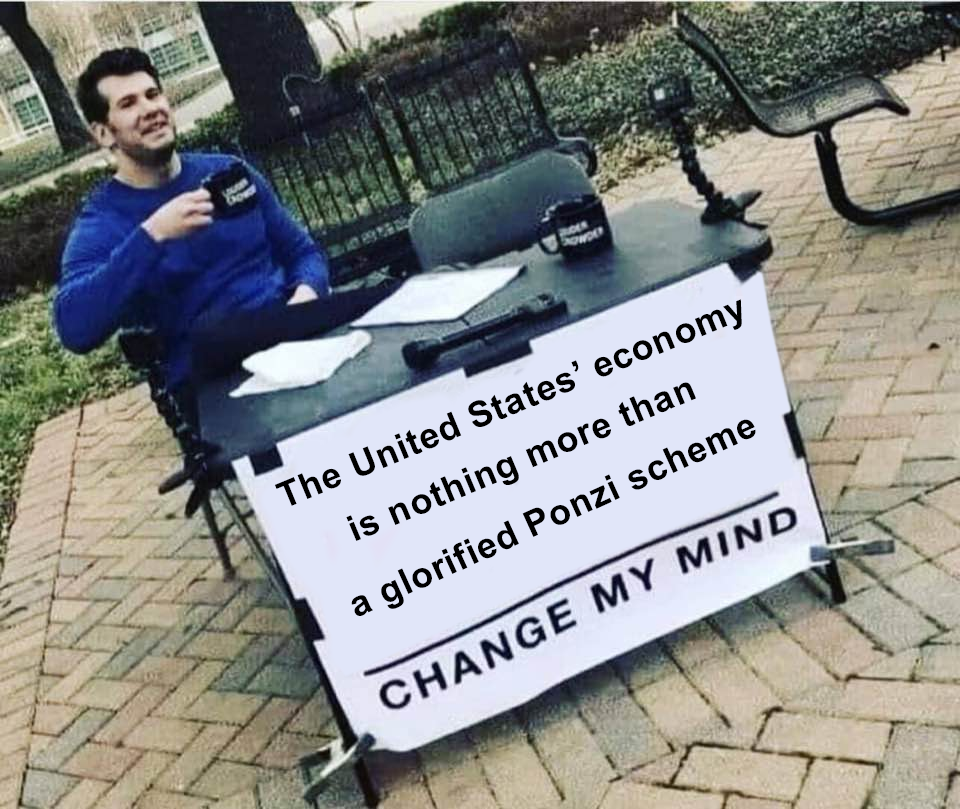
Capitalism served its purpose bringing us out of feudalism. Now it’s become nothing more than a generalized Ponzi scheme and an industrialized version/analogy of legacy admissions. It’s high time we socialized the value we, the workers create. #SupportWorkers


Use Every Tool Available!

I am 75 years old. I have been voting since June 4, 1968, my 21st birthday and the day of the California Democratic primary. My introduction to voting was to have the person I voted for assassinated the night I voted for him. I have never missed voting in an election, including any special elections.

I have been a socialist since my first vote so, in reality, I’ve never been able to conscientiously vote for someone who represented my actual views or for the system I would like to see implemented. Sure, there were socialists running for office but, lets’ face it, this is a two-party political system and I’ve never wanted to waste my vote.

My point isn’t to argue the validity of voting for the lesser of two evils or the value of the protest vote. I had my reasons, but I’ve always voted – always, and if you don’t get off your ass and vote I don’t know what to say other than I have no use for you. Not voting is akin to voting for the worst possible choice, IMO, especially when those who support the worst possible choice vote en masse every. damn. time.

Vote, goddam it! Just vote.


It’s Not Inflation-It’s Greed

I’m old enough to remember paying $0.25/gal back in 1968. Adjusted for inflation that would be $2.10/gal today. Clearly, the petroleum companies are screwing us royally.

PS – This was a first for me (>$100) and it was at Costco, where had can be up to $0.50 cheaper than most anywhere else.


Capitalism vs. Humanism

I’m beginning to think nobody (at least not progressives) should use the word “socialism” any longer. We should replace it with the word “humanism.” This way it’s easier to point to the most important distinction between the two. Capitalism is concerned with capital, i.e. profit/money/wealth/things. Humanism is concerned with humans. Capitalism exalts things over everything else unless there’s a huge regulatory environment seeking to ensure capitalists don’t overreach. Humanism exalts humans over things, and seeks to ensure everyone has the basic things (shelter, food, clothing, healthcare, education) to become a fully realized, contributing member of society.

I know humanism is used differently, but socialism has been saddled with this connotation of authoritarianism, and too many people don’t see the difference between economic systems and systems of governance. Using the word humanism puts emphasis on who we want to benefit from our economic activity … the pipples.

Fight me!


Power To The People

Corporations, conglomerates, and industrial organizations aren’t the enemy, ipso facto. In fact, they make socialism not only possible, but necessary, IMO.

What is the enemy is unbridled greed, rampant cronyism, nepotism and, especially, the codification of deep income inequality. It is not good for a society when individuals can amass fortunes they can’t possibly spend. That they then turn some of that fortune into philanthropy and charitable organizations doesn’t change the fact that it should be criminal for one individual to take that much surplus value from the workforce that made their fortune possible. It’s estimated Jeff Bezos makes (not earns) around $2,500/second. Dafuque does he do, other than own Amazon stock?

I’m not saying inventors, creators, entrepreneurs, etc. aren’t entitled to profit from their efforts, but they shouldn’t be able to continue siphoning profit off an organization that has reached a point where it could easily survive without them. By the same token, intellectual property law has expanded patent and copyright protections way beyond their original intent, creating other avenues of indecent profit-making.

And getting back to what I said about making socialism possible and necessary, without large profitable organizations, we’d all be living off mom & pop’s and craft-making. Many of the products we enjoy, and that provide the grease that skids civilization as we know it, would not be possible without large factories, laboratories, and other institutions. By their very nature, though, they transcend the control and direction of any one individual, and I believe our pay/profit structure needs to take that much more into consideration, providing a larger share to the workers who have helped make the org successful.


A Death Cult

Quite some time ago, I finally came to the conclusion the Republican Party has no business being in government. The job of a public servant, which is what a member of Congress is (both Representatives and Senators,) is to protect their constituents, the oft-referred to “American people.” Yet, it’s quite clear the Republican Party doesn’t care about the American people, which they have amply demonstrated by their obstruction of any program that might have alleviated much of the pain suffered by millions due to the Corona virus and the near collapse of our economy. It’s also clear to me their definition of economic growth, and their criteria for success, skew heavily in favor of capital and the inexorable forces of consolidation and monopoly.


Image by herotimes from Pixabay

If the shenanigans of the Republicans during this last election hasn’t shown you who they are, I submit you’re either not paying close enough attention or you’re a closet Republican. How does one explain the constant drone of allegations of election fraud, which are made more ridiculous by the reality not one Secretary of State—Democrat or Republican—has come forth with any evidence of fraud?

In fact, what little fraud has been uncovered was a couple of instances of people illegally voting for Donald Trump . . . and what are we to make of the revelation by the Republican Secretary of State of Georgia that Lindsey Graham suggested he find a way to dump legitimate Democratic ballots?

Now we find ourselves in the unenviable position of having a lame duck POTUS for the next 64 days. Unbeknownst to the majority of us, the transition period between administrations has always been a time of heightened vulnerability and, thanks to the narcissistic sociopathy of the outgoing president, this time may be the most dangerous in our nation’s history.

Trump has always been the show pony, the elephant at the circus, designed to keep our attention while the guys under the bleachers steal our wallets and photograph our daughters’ underwear. The grift should be ending on January 20, but you can bet your house the Republicans will be jockeying for position to mingle under the bleachers.

We need to stop this cycle. Think of how much cleanup there was after the GWB administration; an eight-year period that made Dick Cheney a far richer man than he had been, while coming close to bankrupting the entire country. Seems like every time we have a Republican president, at least through the last three to five, we’ve had to claw our way back to solvency. Did I mention the thousands, maybe tens or even hundreds of thousands of deaths resulting from our knee-jerk reactions (and over-reactions) to 9-11 and the ongoing, so-called “war on terrorism?”

I’m not letting the Democrats off the hook entirely, either. The majority of the Party are enthusiastic supporters of capitalism, an economic system that has, in my opinion, outlived its efficacy and needs to be adapted and adjusted to meet the exigencies of the times we’re in.

This pandemic has made it clear we need to take better care of our people. We need universal healthcare. One’s health, and the health of one’s family, should not depend on where you work or how long you’ve been there. Healthcare should be seen as a right, not a privilege.

We also need to institute a much fairer way to distribute the wealth of our nation. We produce so much of value, yet the majority of that value is captured by a very small percentage of the population, hence the constant referral to the 1%. It’s a bit more nuanced than that, since there’s a lot of wealth that goes to the top 10%, but there should be little doubt the value produced by the labor of the 90% is not inuring to the benefit of those who create it.

Although I voted for Joe Biden, and I will support his presidency for the most part, he was not my first choice. In fact, nobody in the Democratic Party actually represents or advocates for the direction I’d like to see the country go in, which is socialism as the predominant form of economy. I’ll have much more to say about this in the weeks, months, and years to come.

I have long said I would be a Democrat, but they’re too conservative for me, but I was not only a member of the Simi Valley Democratic Club, but served as an officer (Corresponding Secretary) for the years 2018 – 2019. I only left that post because my youngest daughter was threatening to drop out of school. Since she was a sophomore in High School at the time, I had to work hard to show her what a bad idea that was.

As of today, she’s not only thriving in this online schooling methodology, she’s actually improved her grades dramatically and is doing very well. I still have to help her, but I refuse to do her work for her. She’s gaining confidence as she’s learning her subjects. Now I have to go and take her to the orthodontist. Hopefully, they’ll be removing her braces soon. She’s really tired of them.