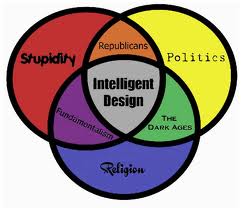
The Intersection of Stupidity, Religion, & Politics
I had an experience this morning that reminded me of something Neil deGrasse Tyson said, which I’ve read in many places. I’ve also had the experience many times in my life and consider myself somewhat lucky so far having managed not to suffer the final indignity the experience portends.
I’m speaking about nearly choking to death because I fell victim to the inherent – as Neil points out – stupid design of my body that has me breathing, eating, and talking through the same hole.
I was at my weekly QBN (Quality Business Network) breakfast meeting. We meet each week on Tuesday, at 7:00 – 8:30 am at The Junkyard Cafe here in Simi Valley, CA. Most of what is on a breakfast menu I can’t conscientiously eat if I want to keep my blood sugar under control. Pancakes, waffles, french toast, regular toast, potatoes, syrup, jam . . . they’re all verboten. I can have a plate of bacon, eggs, and cheese . . . and sometimes do.
However, today I asked for a salad, with ranch dressing and balsamic vinegar. I don’t have a cholesterol problem, so I don’t worry about the dressing too much. I’ve long liked ranch and Italian, which the vinegar substitutes for nicely.
No sooner did I start shoveling food in my mouth than a stream of vinegar squirted off the salad on my fork into my throat. I inhaled it slightly and immediately started coughing; nearly choking. It was so bad others started to get alarmed for my safety and I had to leave the room to keep from interrupting the presentation that one of our members was giving.
Obviously, I made it. It wasn’t the first time this has happened. I once inhaled some hot sake at a sushi bar in Venice Beach. The owner was horrified. He thought I was going to die right there in the restaurant and indicated how much he would like me to die outside on the sidewalk. I ignored him.
Anyway, back to Mr. deGrasse Tyson. I thought I would share this lovely video of his explaining – by pointing out how stupidly we, and the universe, are designed for life – how there is no such thing as intelligent design. Keep in mind, please, I’m not attacking religion, faith, or spirituality. I don’t care what you believe in. However, if it’s intelligent design, I (and Neil) maintain there is absolutely no evidence for it and only someone who refuses to face reality would entertain such a belief. Here’s the video:
I think I received my first comeuppance regarding white privilege around 1973. I was not quite 26 years old and had been a very active member in the anti-Vietnam War movement in Los Angeles. I had attended, organized, publicized, and provided security for a number of demonstrations and events.
Now I was preparing to spend a couple of months in Cuba as a guest of the Cuban government. I was a member of the Sixth Contingent (Sexto Contingente) of La Brigada Venceremos. I was excited. However, nobody was allowed to travel without first undergoing some rigorous training in how to not be an ugly American.
We Americans (even the term American is somewhat arrogant, as the U.S. is only one country in an entire hemisphere referred to as America), especially us straight males, have got it way better than we like to think. Unfortunately, due to the concept of American Exceptionalism, we really do like to think our shit doesn’t stink and we are in a class by ourselves.
Well, actually, we are in a class by ourselves – but it’s really not something to be all that proud of, in my less than humble opinion. But I digress.
Part of my ongoing training (which lasted several months) was learning about white privilege, i.e. the numerous and subtle ways in which being white gives those who sport the color (or lack thereof) a leg up on everyone else. The training was excellent. I was not made to feel guilty; merely shown how it works, the evidence of which was impossible for me to deny.
As a Knowledge Management professional, one of the things that’s important to me is the avoidance of re-inventing the wheel. That means, among other things, using the work of others to build on, where appropriate. I think this is an appropriate place to do that with a blog written by John Scalzi who, frankly, I don’t know much about. Nevertheless, this blog he wrote is absolutely brilliant and draws an analogy I think useful in understanding the concept I’m talking about. I want to share it with my small group of readers.
Mornings in the fields outside of Havana were something special. I had been arising before the Sun since I became a teenager, largely because any day there was a school holiday I would have to work with my father. My Bar Mitzvah coincided with him leaving his job at Faber’s Ham Shop in the Grand Central Market to strike out on his own as a peddler of luncheon meat. Every check I received for my thirteenth birthday was immediately signed over to him so he could purchase the truck he needed in his new venture. Until I graduated High School and moved on, I was his “swamper” whenever I wasn’t required to be in school.
At first I hated getting up that early, but I eventually learned to love and appreciate being awake before sunrise. I still enjoy the sights and the smell of the early morning, though I don’t see – or stop to see – it as frequently as I did earlier in my life. But outside Havana, in the campo, seeing the sun rise in mid spring surrounded by tall, swaying palm trees was a sight to behold.
The year was 1973 and I was a member of el sexto contingente de la Brigada Venceremos (the 6th contingent of the Venceremos Brigade). Me and 99 of my best friends from the U.S. and Canada, traveling to Cuba to deliver books and medical supplies, working construction (with one-half day cutting sugar cane – whew!), and attending numerous cultural, historical, and political presentations.
Most every morning we were there, the day would begin quite some time before sunrise, when we would awaken to a breakfast of cafe con leche and pan. After eating, as we filed out of the mess tent, there would be three bowls on a table. One bowl contained candy (sugar!) and the other two cigarettes. The only names I can recall for the cigarettes were suaves and fuertes (mild and strong). The suaves were stronger than any cigarette I ever smoked in the states and, needless to say, I didn’t even bother with the fuertes. The tobacco was kind of coarsely chopped and in almost every pack there was at least one cigarette that would “flower” when the heat reached a piece of tobacco that was tightly compacted. It was mildly entertaining – mostly annoying.
This one morning came at the tail end of a couple of days in which one of my fellow brigadistas had been riding me hard. I couldn’t figure out what was bothering him, and didn’t have a clue how to deal with it. Although the group of people I was with ranged from members of the Democratic Party to card-carrying Communists, we were all there to show our support for the Cuban people, to protest the economic blockade of Cuba, and to learn what we could of their economy and politics. A large part of what we did was to provide labor, mostly for construction of some small homes and an elementary school.
So there I was, standing out in the middle of the countryside on the outskirts of Havana, getting ready for the workday to begin. I was enjoying the fresh air, made palpable by a slight breeze, and taking in the effects of the rising sun on the slightly swaying palm trees. It was refreshing and I was very content.
I heard a noise that didn’t sound familiar and looked in its direction to see what it was. To my chagrin, it was my so-called camarada, charging at me with his arms flailing. Now this guy was a Pinto, an ex-con and – as I said – he had been messing with me for days. He outweighed me by about twenty pounds, which didn’t make him all that big since I only weighed about 170 at the time.
Part of the reason I was in Cuba with the Brigade had to do with my political activity for the past few years, most of which was within the anti-Vietnam War movement, though some was in the general Peace & Justice movement as well. I had been studying Hapkido with a group of people who became the premier providers of security for most demonstrations, concerts, and other politico-cultural events in the Los Angeles area.
I had done everything from bomb searches to building security to armed bodyguard work. I had been the lead for organizing all of the security for Jane Fonda’s Southern California swing during the run-up to the 1972 Presidential election, including a couple of stints as her personal bodyguard. I was not quite 26 years old and in my prime. I guess he took my silence in dealing with him over the previous few days as intimidation. He was wrong.
As he got close I stepped toward him and placed a side thrust kick into the middle of his chest . . . hard. It drove him back and he fell to the ground, muttering after he hit “What’d you do that for?” There was no answer for so silly a question so I remained quietly in a ready stance. I had seen his friend standing nearby and knew he was a black belt in some form of the martial arts. I had no idea what was going to happen next.
Fortunately, that was the end of it. He got up, dusted himself off, and I never heard about it again. He did stop talking to me, which brought no objection on my part. I had learned long before that just because someone professes to have the same political goals you do, it’s quite conceivable their methodology won’t mesh well with what you think is proper. It’s also possible they won’t respect you based on their perception of you. This was surely reinforcement of those lessons. It’s been nearly forty years and I remember it well.
Aside from the time I had to take out a rooster who was threatening me and, more importantly, the two-year-old boy on my shoulders I was walking with around a farm in Morro Bay, this episode is the only time I have ever used what I learned in the martial arts in seriousness against a living being. The greatest lesson I have ever learned from my studies is that once you actually have to touch someone you’ve lost. I would have preferred it had never reached the point it did. In this case I felt I had no choice. Perhaps he learned something out of it. I doubt I’ll ever know and I’ve not lost any sleep over it.
I have often said I spent over two decades – the entire length of my career at Rocketdyne – trying to get Engineering to talk to Information Technology; two different groups of geeks, each of which thought they were superior to the other.
I didn’t work on it full time, and it wasn’t my job to get them talking, but had I been successful it would have made my job a lot easier. I worked at being a voice of reconciliation between them. It’s in my nature. I was not successful; at least not overall.
Now, the difficulty in getting these two organizations (we called them “Processes”, as opposed to “Functions” or “Departments”) to talk to each other, was deeply ingrained in the culture of that enterprise. Part of the problem stemmed from the way we, as an enterprise, were organized. When I first arrived there in 1987, we were heavily command-and-control and pathologically hierarchical. There were kingdoms; fiefdoms, if you will and very few people thought further ahead than their own careers and organizations.
I’m happy to say things improved pretty dramatically over the years. One reason was the tireless efforts of a group of people, led by Dr. Bill Bellows, to apply the concepts and tools of thought leaders like W. Edwards Deming, Russell Ackoff, Edward de Bono, and many others to the way we did business. The term Dr. Bellows used for many years was Enterprise Thinking.
What made this way of thinking stand out, in my opinion, was its recognition of the systemic nature of an organization, an enterprise. It was clearly understood that all things – all processes or departments – were interconnected. Nothing in an enterprise exists by itself, outside the system(s) with which it interacts.
When you can clearly see this, suddenly you recognize how counter-productive it can be to blame people for things that go wrong, as well as expect individuals to make things work properly, which brings me back to the Engineering and IT departments I so futilely attempted to arbitrate for, as well as the title of this post.
Civility in Argument
Although I am guilty of it myself at times . . . I’m working on it . . . I don’t believe it is productive to blame others and, especially, to completely alienate them by using labels like “Idiot” or “Moron”. This is true whether you’re working together at an enterprise and – ostensibly – you share the same basic vision and goals, or you are on completely opposite sides of the political spectrum when it comes to how you think the country and the economy should be run.
I started writing this to make a point about the level of incivility I find at times on the Internet, especially in the comments of non-moderated news sites. Even the moderated ones contain some really argumentative and, at times, nasty comments. As I worked on what I was trying to say, the tragedy in Aurora played out and, true to form, the arguments between those who believe the second amendment is sacrosanct and those who wish to see access to guns more regulated are heating up.
My original intention was to point out how I have been able to get along with many very conservative people in my life, especially when we live and work together and see each other face-to-face on a fairly regular basis. I have long said that locally, in terms of how our cities and neighborhoods are run, we all want essentially the same things, e.g. safe neighborhoods, good schools, jobs, access to health care, etc.
I seldom have anyone disagree with this and it doesn’t surprise me. The problems seem to arise when we start talking about more abstract affairs; the economy, foreign relations, use of the military. Yet, I find with the people I know best we’re able to disagree without labeling each other as morons or idiots. We disagree but, somehow, we manage to continue getting things done together and not getting into actual fights over who’s right or how best to accomplish something.
I suppose this is one of our biggest problems in this country. Many of us have the tendency to ascribe the worst of motives to those they disagree with. I’m inclined to think that’s not a very good way to work together and achieve anything other than a continuous standoff. It seems that’s precisely how our government is now being run and it does not portend well for us as a nation. I’d like to see it stop.
A Taste of the Future
I have seldom written about politics or civic affairs here, but they weigh heavily on me. I have two young girls my wife and I adopted from China. I worry about the future they face here, where everything seems to be falling apart. I want to leave them a better world than I found as I was growing up and it sure as hell looks like that’s going to be a tall order.
I’ll leave this particular post with one thought and I will no doubt have more to say in the future . . . especially now that I’ve sort of broken the ice (not very well). Ironically, given I live in Simi Valley – still notorious for its role in the acquittal of the Los Angeles Police Officers who beat Rodney King, the thought that comes most readily to mind is, “Can’t we all just get along?” I know it’s a bit more complicated than that, but it is something to wonder about. It happens quite frequently in real-life, on the ground . . . as they say.
My friend Steve Ostroff (on the left) just before his untimely death
“Life doesn’t cease to be funny when people die any more than it ceases to be serious when people laugh.” — G.B. Shaw
I have written previously that I am not a journalist and this post is clear evidence of that. My original intent was to publish this on either the Sunday before, or on the Monday of, Memorial Day. However, the subject was a bit emotional for me and I found it difficult to finish until now. I, therefore, offer it as a remembrance. It need not be tied to any particular holiday.
It’s Confusing
Memorial Day – much like Veteran’s Day, Pearl Harbor Day, and many other holidays or special days that commemorate the military or significant days in our nation’s history – almost invariably brings me a storm of mixed emotions. I have enormous respect for those who serve our nation. At the same time, I believe they are most often sacrificed not in defense of our freedom, but in the defense of others – who never serve – and in defense of their fortunes and their “right” to make money incessantly.
This Autumn it will have been 45 years since I had the dubious distinction of being a pallbearer at the funeral of one of my best friends, Steven Larry Ostroff, who was killed in the battle of Ong Thanh on October 17, 1967. He was the first of five classmates of mine who would perish in that unjust, stupid conflict and I was highly conflicted about it.
“I want to be an Airborne Ranger. I want to go to Vietnam. I want to live a life of danger. I want to kill the Viet Cong.”
Steve was by no means an innocent, angelic hero. I remember my brother recounting running into him shortly after he finished either Boot Camp or Advanced Infantry Training. What stuck out for him was Steve’s enthusiasm for battle and his desire to kill. I was a bit put off by hearing that at the time, but not entirely surprised. It was, after all, the mindset the Army wanted in their Infantrymen. It was what they trained them for.
I was just beginning to understand what the war in Vietnam was all about; an understanding that would soon blossom into full-blown resistance and activism in an effort to bring it to a halt. Steve, born 15 days before me, was barely twenty years old when he was killed. During the funeral his casket remained closed. As I remember it, we were under the impression his body was not recovered for a couple of days and his family did not want anyone viewing his remains.
I’m not sure at this point that was the reason, though. Based on the accounts of his death I’ve read recently, it seems more likely to me there wasn’t a whole lot of him left to identify and having what was left on display in an open casket would have been too horrific for his family and friends. The web sites I have found with his information state he was killed by “Multiple fragmentation wounds“.
I clearly remember the grief on his parents’ faces as we went through the acts of remembrance, consecration, and burial. I have always been moved most by the loss experienced by those who have been left behind and it’s especially painful to see parents having to endure the loss of a child. In this case, it was made even more difficult because – if memory serves – Steve was an only child.
Twice-Baked Rye Bread
He and his family lived right across the street from John H. Francis Polytechnic High School, where we both attended, and he and I used to hop the fence to eat lunch at his home. His mother, I believe her name was Sarah, always had hard salami in the house and, if I played my cards right, I could count on enjoying one of my favorite sandwiches, served on Jewish Rye . . . with real garlicky kosher pickles on the side.
We belonged to the same temple, Valley Beth Israel, and became Bar Mitzvah at around the same time. We went to the same Jr. High as well and, as crazy kids and adolescents, we had some good times together, the memories of which have receded well into the background after all these years. This is especially so because we never had the opportunity to reinforce our memories by reliving them and, probably, embellishing them.
When I was in Washington, D.C. years ago, I made a trip to the Wall to see Steve’s name and to reflect on his life and death. I did the same in Sacramento, where there is a memorial to the Californians who perished in Vietnam. Both of these trips were some time ago and both were quite emotional.
What Is Really Going On
I have remained dead-set against every engagement we have indulged in since, but I am hardly anti-military – and here is where the conflict, the cognitive dissonance, comes alive and dances crazily in my head. Steve was a friend of mine and the men and women who continue to serve include friends and family. I know and love many of them, yet I don’t believe they are keeping our country safe; at least not for the most part.
For the most part, I believe they are being used as pawns – as “cannon fodder” – in our ongoing efforts to make the world safe for lucrative investments in natural resources and trading opportunities including, and maybe especially including, the sale of arms and ammunition to just about anyone who has the money to pay for it.
I will continue to honor Steve’s memory, despite his apparent thirst for killing and despite my belief he was not fighting for our way of life or to keep us safe, just as I will continue to honor the men and women who serve today. However, I do so only because I also believe most of those who serve honestly believe they are fighting to defend their country. They believe this because they’ve been told it’s true and I’m not going to hold their naivete and ignorance against them.
Some would argue I should condemn them, based on the principles that ignorance is no excuse and the existence of the duty to refuse to obey unlawful commands. However, I think the situation is far more complex than that and I cannot turn my back on people who have been taken advantage of for so long they have no way of knowing how terribly they’ve been duped.
I feel for them – especially for those who have made the ultimate sacrifice – and I feel for their families. So much of the suffering that takes place due to war and conflict is completely unnecessary and truly counter-productive for all but a very few . . . and those are the ones who also profit the most handsomely from war. They’re the ones who should be shot.
24 August 2015
In preparation for my High School class’s 50th reunion in about six weeks, a classmate was putting together a Vietnam veteran’s collage. As part of the effort he is also creating a memorial to our fallen classmates. In doing research for this tribute, he came across this post and asked me, since I mentioned we had lost six classmates, who the sixth was. He was familiar with only five. I had long thought there were six members of our class who perished in that conflict, but I believe I was wrong. I have made the correction, above.
The other day a friend of mine posted an interesting item on his blog, Global Neighbourhoods (love that other side of the pond spelling) and asked on Twitter if anyone had read it. I saw the tweet because it was ported over to my Facebook news feed. I answered I hadn’t, but would shortly . . . which I did. Shel makes an interesting point that, regardless of how one may feel about Newt Gingrich – and we both agree we wouldn’t vote for him even if Hell froze over – his idea about establishing a colony on the Moon isn’t such a bad one. Consider that President Kennedy’s call to put a man on the Moon preceded an unprecedented growth in innovation through the technologies that needed to be developed in order to accomplish the feat required by the Apollo program.
Shel goes on to ask that we think about what such an endeavor might mean for us, regardless of the situation we are in right now. As he says:
“It seems to me, that what makes us unique from other animals is that our entire history is based on going beyond what we have done. Before we consider the benefits or catastrophes, we simply have to see if we can do it.
“Why should man walk on the moon? Because some day, we can build a colony on it? What will we do then? Look around and see what else we can do, where else we can go, we can learn more about the moon, and thus about the earth and our universe and how life got to here and anywhere else that it might exist.
“And yes the cost is huge at a time when people are losing their homes. But to me, the cost is an investment, one that will create a great many new jobs that may be more appealing than the manufacturing our current president seems to be focused upon.
“What we learn along the way will give the world new technology that is likely to pervade into computing, science, medicine, earth sciences, the classroom and places that we cannot yet imagine.”
I responded the next day in a comment. As of the date of this posting, it still says it’s waiting moderation but, hopefully, by the time most read this it will have been posted. Suffice it to say I agree with Shel’s assessment of the technologies it will create and that it is an investment. I also have another, long-standing reason I believe we should go back to the Moon and establish a permanent presence there, which I have set forth in my comment. I have also written about it several times in various posts on this blog. I encourage you to read Shel’s post. Tell him I sent you.
This is a wonderful analysis of the competing approaches and philosophies of Mitt Romney and Newt Gingrich. You can read the entire article, but I find the final paragraph says volumes about what this year’s election means, and the direction our country is going in. Click on the link at the bottom for the entire article. Here’s that final paragraph:
“We’ll find out this election whether the Republican vision of an unfettered capitalism—one that redefines ‘socialism’ as not state ownership of the means of mass production but any government involvement whatsoever in the social and economic life of the country (including saving the auto industry)—is one that the public accepts anymore. Pundits have argued that the central question of the campaign is how much government we want. It’s more profound than that. The question of this election is what it means to be a country—whether we’re 300 million free agents who happen to be roaming the same piece of real estate or if any of us is ever bound by a social compact.”
A while back I wrote about the dilemma I faced when I first realized my Facebook “friends” consisted of numerous constituencies, and my concern that speaking frankly to one may unwittingly offend or alienate some from another. I also mentioned that, despite this initial fear, I quickly resolved it in favor of just being myself and not worrying too much about it.
Lately I’ve noticed another phenomena that’s been slowly creeping into my activity on Facebook. While it’s related to my interest in economics and politics, it does seem to be driven considerably by the Occupy movement (I use only Occupy advisedly, as there exist not merely an Occupy Wall Street group – which started this whole thing – but also other groups, most evident on Facebook as Occupy Together, Occupy Marines, etc.)
As part of my decision to just “let it all hang loose” and be myself, I have increasingly shared articles, pictures, etc. from some of the political sites I either frequent or that like-minded friends have shared with me. As it happens, I generally characterize my political leaning as so far to the left I’m almost a Libertarian (mind you, emphatically not one). I have also responded to some posts from people with whom I don’t exactly agree, telling them politely of my problems with their positions. Most of these conversations have been quite pleasant; spirited debates over policy and principle. Several times someone has actually commented on how they were pleased with the civility of the thread and its participants.
Is Useful Political Discourse Possible?
So, what I’m beginning to wonder is if this is, indeed, a new phenomena that may turn out to be useful and healthy for political discourse. If you have a fair amount of friends there’s a substantial chance they will represent numerous viewpoints and positions on the important issues facing us. Might not we be able to understand each other better and, consequently, move away from the precipice of irreconcilable differences we seem to be teetering on lately?
I have to admit there is a bit of a dark side to this as well. Two things have happened to me that I find a bit chilling. The first was a friendly “suggestion” I received that I might want to tone it down a bit when discussing the Occupy movement and the politics and economics behind it. The impact this might have on my standing in the business community was the implication, and its seriousness did not go unnoticed by me. The second is related, but needs a bit of background.
Not Exactly a Meeting of Minds
Maybe We Can’t All “Just Get Along”
I live in a relatively insular city – Simi Valley, CA – home of the Ronald Reagan Presidential Library and Museum. The City leaders are, for the most part, far more conservative than I am (who isn’t?) and I have become Facebook friends with a lot of them, including the Mayor, members of the local Chamber of Commerce, and at least one City Council member. Being a strong proponent of the right of free speech, I have spoken my mind rather openly; at least on Facebook. I don’t get into too many political discussions when doing business and I am a big supporter of local small business and wish to actively contribute to making our local economy strong and vibrant.
Last night I realized the City Council member had “unfriended” me, presumably due to a conversation I had with a couple of his friends. As I recall, it was one that received a post of praise for its tenor and the level of intellect involved. I do recall, though, I was very adamant in pointing out what I saw as fallacious arguments based on incomplete or incorrect knowledge. Frankly, I’d like to hear of anyone having a really fruitful discussion about the merits of Dialectical Materialism with a rabid anti-Communist. In my experience, the philosophy behind Marxism is little known here in these enlightened United States, and it’s very hard to receive any respect from someone who is certain of the correctness of their knowledge and the evilness of yours.
A Profound Dilemma
So I’m also wondering . . . despite my essentially being out of the job market and, therefore, not having to worry about alienating a potential employer, do I now have to censor myself politically lest I “upset” a city leader and risk throwing a roadblock in my meager, but important, efforts at making Simi Valley a better place to live? I don’t ask that people agree with me; merely that they respect my position and – especially – my desire to do what’s right for the community as I see it . . . just as I respect their beliefs and integrity. I really don’t care for revisiting this whole dilemma around what’s appropriate when it involves the core issues of our lives and livelihoods.
As well, I’m very disappointed this person decided to unfriend me. I believe we have more in common than we differ on. I also wanted to keep up with what he was doing as a Councilperson, as he uses Facebook to post from various events he is involved with. It seems I’ve been cut off from a useful, viable channel to the goings on of one of my city’s leaders and I’m still not sure how I feel about it. How do you feel about this?
There’s a reason I named this blog Systems Savvy though, to be truthful, I haven’t really done what I intended when I decided on the title. Blogging for me has been somewhat aimless as I’ve attempted to find my voice and considered what I wanted to accomplish. For the last year and a half, starting with my decision to accept the early retirement package offered by my former employer, I’ve considered how to use it to both promote my new business and educate the people I wanted to reach.
The result has been a number of fairly well-directed posts on various issues involving small business and social media marketing. However, I am only beginning to become accomplished at marketing, in general, and frequently feel I don’t have anything to say that hasn’t been said – and said better – by others.
Lately, especially during a period of time I have been working with an associate on a fairly ambitious proposal (which, last week, was declined), I haven’t had much to say at all. I have, however, been giving a lot of thought to the direction I would like this blog to go in, and I think I’ve come to a decision on what I want to do. Let me explain.
My original intent was to look at various world views, philosophies if you will, that attempt to provide a systemic approach to understanding nature, society, economy, etc. The thinkers I have come to respect and, I think, understand include people like W. Edwards Deming, Russell Ackoff, and Peter Drucker (among others) from the business world, and Karl Marx (an eyebrow raiser, I know, but more about that in later posts) and Friedrich Engels, especially with respect to the philosophy of Dialectical Materialism. This effort began on January 7, 2008 where, in my first post, I explained what I hoped to accomplish. Unfortunately, the distractions and obligations I referenced back then kept me from accomplishing what I then thought would be useful . . . and possible.
Changing Direction
Now, after being somewhat forced to accept what for me was a way too early retirement package, and having embarked on my journey back into the world of small business, I’m finding I need to rethink the direction this blog should take. I want to bring it somewhat back to my original intent – with one small wrinkle. I need to write more about the lessons I’ve learned; not merely with respect to the things I experienced and accomplished in my over two decades at Pratt & Whitney Rocketdyne, but also with respect to those things I learned in the preceding two decades in small business, as well as the many experiences I’ve had outside of the business world. One more thing. I’m not dead yet and I am far from inactive in my community.
To do this, it seems I will have to buck one of the “rules” of blogging, i.e. “it’s not about me“. This concept has made it exceedingly difficult to share some of the things I wish to write about for two main reasons. One I wrote about earlier, and that’s this feeling I’ve had all my life that everyone knows what I know. After all, it’s obvious! Right? The second is I’ve been repeatedly asked to write about many of my life experiences, which are not quite “mainstream” and from which I have gleaned some lessons that have been important . . . at least for me, but I’ve been constrained by that admonition against making it about oneself, as well as my inborn desire to please, not offend, others.
I’m constantly working on the first of these issues and here’s what I’ve come to think about the second. I am NOT in the middle of my career. After all, I’m now collecting Social Security and a pension from my previous employer. Less than a year from now I will be eligible for Medicare and, increasingly, I will need it to deal with the medical problems that come from aging. Most bloggers I know (not all) are between 20 and 30 years younger than I am. They have decades to go in their worklife. I may have a decade or two left, but the prospect is far less certain and, truth to tell, I really want to slow down a bit.
I think a change is in order. I think I need to write about all the things I care about. I have also previously written about the dilemma I faced when I realized the disparate “friends” I had on Facebook and how it momentarily took me aback and caused me to reconsider what I was willing to share – with everybody! As then, I have come to the conclusion I can, and should, write about the things that interest me, no matter how they might seem disconnected . . . because they aren’t! They’re taken from my life, my experiences, and the conclusions I’ve drawn or the questions I still have regarding them. If some are offended by this, oops! Too bad.
Me and You as Systems
I am interested in systems theory; systems thinking. Part of my understanding about it is we are all part of various systems. As living organisms we are ourselves systems. For over 60 years I’ve felt, as most of us do, forced at times to separate my life into its constituent parts: Personal; professional; political; religious; philosophical; etc. Yet they are all – for me – intimately related and inextricably intertwined. They are what has made up my life.
Perhaps I’m getting a bit melancholy as I realize my time is surely winding down. I hope to have at least a couple more decades left in me, but there are physical changes making it clear that it won’t be the same. I am showing signs of essential tremors, which my mother had and which sometimes make it hard for me to eat with a fork or grab a small bottle out of the medicine cabinet. Just this past Monday I had a suspicious mole removed from the scar on my back that is the result of surgery to remove a melanoma a couple of years ago. My hair is mostly gray. I have chicken skin, moderate hypertension, and type II diabetes! There are other signs. Perhaps I’ll write about them too.
So here’s the deal. Although I will continue to build my business, which includes a large dose of pro bono and civic-minded activities as well as remunerative ones, I intend to increasingly share my thoughts about the rest of my life as well. I know I have written some posts that were personal, political, and even relating to religion (thought certainly not promoting it), but I have lately been going in the direction of making this a business blog. I will no longer do that. I’m not sure this is the right thing to do. Were I younger, perhaps it would definitely not be the right thing to do. However, I’m not really worried about looking for a job or offending my parents. They both shed their mortal coils years ago.
Frankly, I don’t know if anything I have to say is all that important, but I have the opportunity to write about it and, if nothing else, it will be available for my children, who are now only 7 and 10 years old. I want to leave something so they will be able to better understand who I was and, especially, just how much I love them and want the very best for them. That’s important to me!
Listening to only minor excerpts (and some exceptional analysis on KPFK Pacifica Radio) I find myself absolutely incensed at the arrogance of the people who caused the financial meltdown and who gladly took our tax dollars, ostensibly to keep the economy afloat, and are now proceeding to pay themselves handsomely for their indiscretions.
Listen . . . I’m doing OK. I didn’t get caught up – at least not directly – in the mortgage fiasco and I’m lucky enough to have a job that probably isn’t going anywhere, but what about all the people who’ve lost so much? Even if they were a bit greedy (or where they just reacting logically to a society that preaches the ethos of looking out for oneself and the hell with everyone else?), I don’t think they deserve this kind of disrespect and the uncertainty that so many face right now . . . with no end in sight.
But I have to ask, where’s the anger? Why aren’t people really paying attention to how we’re being played. Though I think Phil Angelides probably has the best of intentions, I think his commission is going to end up toothless and, once again, the high-rollers of Wall Street are going to scoop their ill-gained winnings off the table and we’re going to be left wondering what happened? Where are the pitchforks? Why aren’t more people demanding accountability? Where’s the call for bringing back the guillotine?








 Systems Savvy