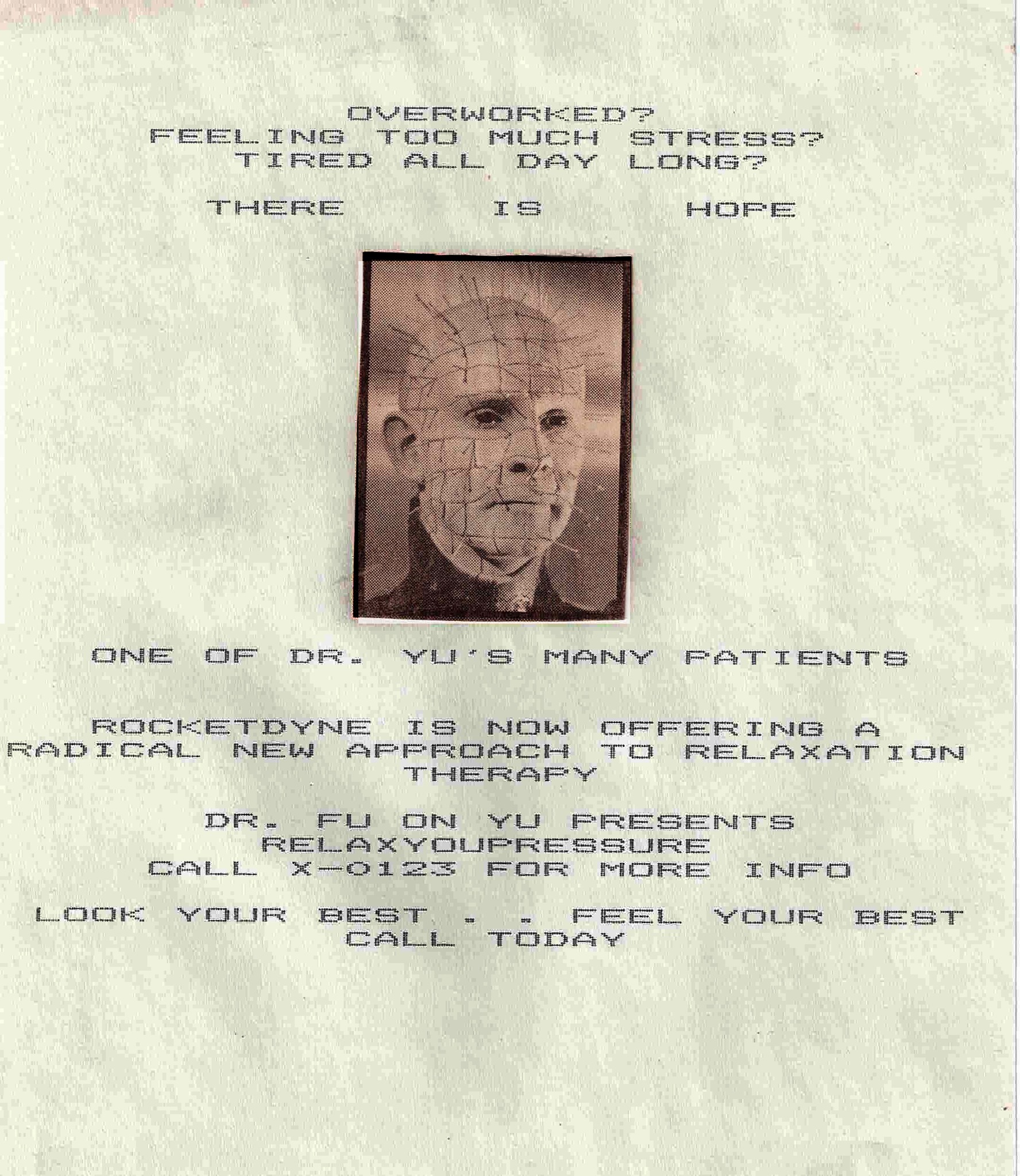
When I first ended up at Rocketdyne (it was serendipity, not a conscious move) I was gobsmacked knowing I was working on the Space Shuttle Main Engine program, with bonafide rocket scientists and engineers. It was 1987, almost exactly one year since Challenger exploded and I was working on the FMEA/CIL (Failure Modes and Effects Analysis/Critical Items List) in anticipation of the shuttle’s return to flight. There were frequent dead times while I waited for an engineer/scientist to bring me their work so I could input it into the format we were using to present the information.
I was just going through a folder I found stashed away that’s chock full of some of the things I created back then while I was bored. Keep in mind we only had dot matrix printers and early IBM PCs. I’m pretty sure we were using IBM XTs running Intel 8088 processors. Anyway, here’s one of the things I put together to assuage my boredom back then.
Author Archives: Rick Ladd
I Was Just Passing The Time
An Aging Update
So, I think I owe it to at least some of my friends to report on the results of all this doctor shit I’ve been doing. Here ’tis.
I have been dealing with an autoimmune skin condition known as Granuloma Annulare (GA) for at least a year and a half, more likely two years. I have been treating it with phototherapy for the past five months and it seems to be somewhat efficacious. Just when I thought the raised, sometimes itchy, sometimes painful lesions were the best it had to offer, a new “side-effect”, possibly a “companion” condition began to emerge about a month or so ago. I’m now experiencing joint swelling, stiffness, and pain in my knees, my ankles, my wrists and occasionally, at least one elbow. Did I mention my fingers?
I can’t definitively make a correlation between the GA and the joint pains which, by the way, generally appear and disappear fairly suddenly.
So Kaiser wanted me to see my GP for possible referral to a rheumatologist. That’s what I was up to yesterday at the Simi Valley office. Stay tuned.
Today I went to see my cardiologist, now a routine part of my overall health regimen given he implanted a pacemaker in me six months ago and he likes to keep track of his work. Pacemaker’s working as expected. Heart is working on its own more than I expected.
Saturday I’m having my first echocardiogram and I’m giddy with excitement and anticipation. Hope I don’t embarrass myself. ![]()
Bottom line, I have issues (who doesn’t at 76?) but I’m still enjoying life, especially as my girls are really beginning to spread their wings. I’m hoping the future holds a few more years of “adulting” in store for me.
Fani Flames Gym
Just finished reading Fani Willis’s response to Jim Jordan’s ill-conceived attempt to bully her into backing off of her RICO J6 investigation/prosecution. She flames him at least a half dozen times while refuting every position he asserted in his previous demand letter sent to her on August 24.
While it was an eminently enjoyable read given the disgust I feel, and the disdain I have, for the congressman, Fani’s (or her staff’s) approach is readable and succinct. If you ignore the numerous citations—which I would only research if I was intent on answering her letter, which I’m not—the points made are clear, concise, and to-the-point. That she occasionally takes him to the woodshed is a lagniappe.
Don’t take my word for it, read it yourself. Feel free to download it. I’m also including the original letter sent by Jordan to DA Willis for your reading pleasure (see below).
Hot Diggity
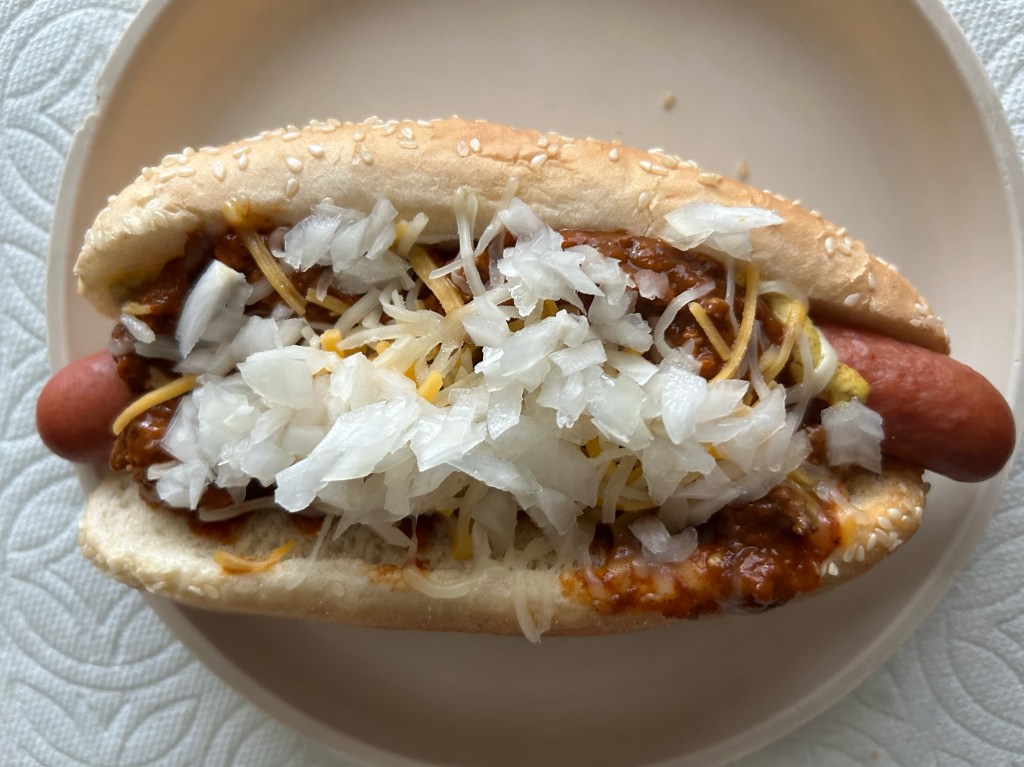
Perfect hurriquake lunch. Hoffy all-beef, natural casing hot dog, Francisco seeded bun, Gulden’s spicy brown mustard, Hormel chili (no beans), Trader Joe’s Mexican cheese blend, and freshly chopped onion.
I’m calling this a cHilary dog.

On The Rebound
I’ve finally recovered from my almost year-long downward spiral of both physical and emotional uncertainty and difficulty. My pacemaker is working as it should, the incision has healed completely, and I’ve pretty much recovered from the shock of being disqualified from what would have been somewhat of a dream job. The amount of prospective income lost from the incident would have made a huge difference in my and my family’s life. C’est la vie!
I’ve been keeping my FB friends up-to-date on my weekly activities regarding my physical/emotional recovery with short check-ins from either my return to golf or my return to the gym. Below are those posts for all but the last week of July.
July 2 – Steve and I both hit some balls today, then putted for a while. For someone who’s barely touched a club since last August, I’m heartened by what I was able to do today. I don’t think I’ll be able to play a full round though, until later this year; maybe not until next year.
July 9 – I hit the ball a little better today. Not as far as I’d like, but mostly straight – which is very important. I once played the second hole (a par 5) with only a pitching wedge. I almost bogeyed it. I didn’t hit anything below my eight iron today.
July 16 – Continuing to improve, but must remain patient. The last 10 months have really taken a toll on me – physically, mentally, and emotionally. I shared a large bucket of balls with Steve and his son, Jake. I’m beginning to recall swing thoughts and each week I’m hitting the ball better and more consistently. I’m sure I would benefit greatly from a few lessons, but I can’t afford them now. I’m beginning to look for work again.
July 17 – I went to the gym and actually worked out for the first time in nearly seven months, since my heart started acting up. It’s been four and a half months since pacemaker implant surgery, and my energy level continues to improve. I also sent my resume and a list of my writing/editing/proofreading experience to a headhunter who specializes in lawyers who want to change careers, accompanied with an introductory email. It’s a longshot but, as they say, nothing ventured, nothing gained. I’m ready for my next incarnation.
Dare We Say “Murderer”?
I have long contended that, taking into consideration his knowledge of the pandemic, along with his reckless disregard for the consequences of his inaction, Donald John Trump is guilty of second degree murder. It’s clear he was more interested in his re-election and “legacy” than the safety or security of the American people.
One of the primary duties of the President is to protect the national security of the United States. In addition to serving as the commander-in-chief of the U.S. armed forces, the President has a responsibility to protect the health and safety of the American people. This includes responding to public health crises, such as pandemics or natural disasters, and taking proactive measures to prevent the spread of disease or other health risks. The President may work with federal agencies and state and local governments to coordinate responses to these types of emergencies, and may also provide guidance and support to individuals and communities affected by such events.
These tapes, shared and discussed on “The Beat With Ari Melber” with Bob Woodward and Dr. Kavita Patel, make it clear (if you weren’t already convinced years ago) that Trump cared little for the American people’s health and safety during the worst years of the Covid-19 pandemic. He consistently downplayed the severity of the problem, instead lamenting about how it was affecting his re-election. Had he not been so callous and dismissive of the disease and its impact on the nation, he likely would have been re-elected. Instead, his single-minded, narcissistic focus on himself made it clear to a majority of the people he was singularly unfit for the job.
Anyone who votes for this clown is an imminent threat to the health and security of the United States of America and the world. Please be sure you’re registered to vote and that you get out there November 5, 2024 and ensure he is never allowed near the seat of power again.
Juneteenth and Passover
NB – Before reading the following post, please be advised it was written with the assistance of Chat-GPT, after a couple of iterations of my asking for a blog post on the subject, and clarifying what it was I looked for. It’s not quite my style, but it gets across the subject I was having a bit of difficulty honing in on. I would likely have been more wordy, so I’m content to leave this up in order to get the gist of my thinking out in the world.
As a former Jew who is now an atheist, I have always been interested in social justice issues and have been an advocate for antiracism for many years. However, it was only in the last few years that I learned about Juneteenth, an American holiday that celebrates the emancipation of African American slaves. As I learned more about Juneteenth, I couldn’t help but compare it to Passover, a Jewish holiday that commemorates the liberation of the Israelites from slavery in ancient Egypt.
At first glance, it may seem like Passover and Juneteenth have little in common. Passover is a religious holiday that is celebrated by Jews all over the world, while Juneteenth is a secular holiday that is primarily celebrated in the United States. Passover has a long history that dates back thousands of years, while Juneteenth is a relatively new holiday that has only been officially recognized by the federal government since 2021. However, as I delved deeper into the meanings behind these holidays, I found that they share a common theme of liberation and freedom.
For Jews, the story of the Exodus is a powerful reminder of the importance of freedom and the need to fight against oppression. The story tells of how Moses led the Israelites out of slavery in Egypt and into freedom, and it is a story that has been retold for thousands of years. During the holiday of Passover, Jews gather with family and friends to retell the story of the Exodus, eat traditional foods such as matzah and bitter herbs, and participate in symbolic rituals such as the Seder. The holiday is a time to reflect on the past and to look towards a brighter future.
Juneteenth, on the other hand, celebrates the emancipation of African American slaves. The holiday commemorates June 19, 1865, which is the day that Union General Gordon Granger arrived in Galveston, Texas, and announced that all slaves in Texas were free. This announcement came two and a half years after the Emancipation Proclamation was signed, and it marked the end of slavery in the United States. Juneteenth is a time to celebrate the end of slavery and the beginning of a new era of freedom and equality.
Despite the differences between Passover and Juneteenth, they share a common theme of liberation and freedom. Both holidays celebrate the idea of breaking free from oppression and moving towards a brighter future. They also emphasize the importance of family and community. For Jews, the Seder is a time to retell the story of the Exodus and to pass down traditions and values to the next generation. For African Americans, Juneteenth is a time to celebrate their heritage and to remember the struggles and sacrifices of their ancestors.
As an antiracist, I find it important to acknowledge the intersectionality of these two holidays. While Passover and Juneteenth have different histories and meanings, they both symbolize the fight for freedom and justice. As a former Jew, I feel that it is important to recognize the role that the Jewish community played in the civil rights movement. Many Jews were active participants in the struggle for civil rights and worked alongside African Americans to fight against racism and discrimination. As an atheist, I believe that it is important to recognize and celebrate the diversity of cultures and traditions in our society.
In conclusion, Passover and Juneteenth are two holidays that may appear to be very different on the surface, but they share a common theme of liberation and freedom. As someone who is no longer practicing Judaism but is committed to antiracism, I find it important to acknowledge the intersectionality of these two holidays and to celebrate the diversity of cultures and traditions in our society. Passover and Juneteenth are reminders that the struggle for justice and equality is ongoing and that we must continue to fight against oppression in all its forms.
A Different Kind of Foodie
Like many a young American, my very first job, that is the first one I got paid for, was at a McDonald’s in Arleta, CA. I was sixteen years old and had just earned my driver’s license. This was in the Summer of 1963 and my father had bought me a used ’57 Chevy – my dream car. On my first day I did nothing but make milkshakes. On the second day I bagged french fries. Then the manager discovered I knew how to work the cash register and to make change, a skill I learned in Junior High when I worked in the student store. From then on I worked the window, taking and fulfilling orders. I had nightmares involving endless lines of people who ate every meal there (at least lunch and dinner; McDonald’s didn’t serve breakfast in 1963) every day. These dreams were based, in part, on the fact there were several customers who did eat there every day. It was a frightening thought.
My second job was as a bus boy at Pancake Heaven, which no longer exists but was just around the corner from the McDonald’s I cut my working teeth on. I eventually became a fry cook there for a while and learned how to make breakfasts, for the most part. At least, that’s all I can barely remember. Actually, one specific skill I recall learning was how to hide mistakes with garnish; a slice of orange or a sprig of parsley. I also worked at Mike’s Pizza on Van Nuys Blvd. for a while. The only thing I remember about that job was sneaking out a bottle of Chianti in a trash can filled with the sawdust I was responsible for changing out every few days so the floors were reasonably clean.
The Summer before I graduated High School, which was actually the Summer after I should have graduated High School, I worked as a “bus boy” at Pacific Ocean Park (POP). My job was to walk around the pier on which the park was built and scoop trash into one of those self-opening dust pans and empty it into one of the larger trash bins that were placed all over the “park”. It actually had nothing to do with food or food service, other than that most of the trash was created by people who had purchased something to eat and were too damned lazy to deposit the trash in a receptacle themselves.
I didn’t work in or around food service again until 1973, when I tended bar at the Ash Grove in Los Angeles, where I was raising money for my upcoming trip to Cuba with the 6th contingent of the Venceremos Brigade. I had studied Hapkido with Ed Pearl, the owner of the club. It was a favorite target for anti-Castro Cubans and was burned down for the third and final time shortly after I worked there. I don’t think we had a liquor license; only a beer and wine license, so tending bar wasn’t quite as intellectually challenging as it would have been had I been required to remember dozens of mixed drinks, but it was a busy venue and I enjoyed my time there.
Shortly after returning from Cuba, in my first year of law school, I secured a position as a “wiener clerk” at The Wiener Factory in Sherman Oaks, CA, where I served up the finest hot dogs, knackwurst, and polish sausage to ever cross a taste bud. Even though they closed on December 31, 2007 (>15 years ago) it’s still talked about as the top example of how a hot dog should be presented to the discriminating public. I loved it there. PS – Click on the link and you might find my posthumous review of the place, which I posted almost 13 years ago.
I didn’t work in food service again until sometime in the mid-nineties. I had left my job at Rocketdyne to rejoin my brother in a family wholesale food/restaurant supply business our father had started when I was 13. After less than two years it wasn’t going well and I decided to leave and fend for myself. One of my customers was Les Sisters Southern Kitchen in Chatsworth, CA. The owner at the time, Kevin Huling, was working his butt off and wanted to be able to take a day off during the week. I offered to run the place for him on Wednesdays and, until I returned to Rocketdyne, I managed the restaurant once a week. My favorite day was when I had to wait on tables. I made quite a bit more money than I did from just managing the place (hint: tips!).
In addition to all these jobs, my father was working at the Grand Central Market in downtown Los Angeles when I was born. He worked at Faber’s Ham Shop, which was a stand in the market that sold lunch meats and fresh chickens. He liked to refer to himself as a butcher, but my birth certificate lists his occupation as “Food Clerk”. I remember my mother taking me shopping there when I was about five years old. We took Pacific Electric’s Red Car on the Red Line that stretched from San Fernando, running right through Panorama City, where we lived, to downtown L.A. My father put me in a far-too-large, white butcher’s coat, and put a Farmer John paper campaign hat on my head, stood me on a milk crate and had me selling lunch meat for an hour or so. I learned my first three words of Spanish behind that counter, which were “¿Que va llevar?” literally “what are you going to carry?”, but was more loosely translated as “what’ll you have?” or “what can I get for you?”
Later on, specifically right after I handed over every check I received for a Bar Mitzvah gift to my father so he could buy a truck, he went out on his own. He became the broken wienie king of Los Angeles, buying (essentially) mistakes from packing houses and selling them to his old boss, as well as to other small markets scattered throughout the greater Los Angeles area. Until his death in 1984, I spent virtually every school holiday being his “swamper” on his route or—later on—delivering and selling on my own as part of the business. Somewhere around 1994 I left my job at Rocketdyne to rejoin my brother in the family business, once again selling almost exclusively to restaurants.
My point is, I have no formal training in the culinary arts, but during a rather large portion of my life until I was around 50, I spent quite a bit of time working in jobs and being in businesses that involved food; at times merely delivering it and at other times preparing and serving it. I know my way around a kitchen and I know quite well how to operate a successful food business. It’s not easy. People can be real assholes when they’re hungry, and people who cook can be real prima donnas, so learning to satisfy your customers can be a painful experience. It is, however, quite rewarding when it works out. I think you have to genuinely like people in order to do it well.