Tag Archives: COVID-19

How NOT to Lead!

The Best & Brightest?

As long as Trump is president, we will never—repeat, NEVER—deal with this pandemic intelligently. He is a micro-manager, which means he will not allow anyone other than himself to control how this virus is dealt with. Consequently, since he is an ignoramus who thinks he knows absolutely everything (“I, alone, can fix it.”) there’s no aspect of this battle that will be addressed with the knowledge and understanding (forget wisdom) needed to limit the damage Covid-19 will cause in the coming years.

I feel the need to repeat myself. As long as this highly unqualified, prime example of the Dunning-Kruger effect, is president of the United States, this pandemic will NOT be dealt with with any semblance of scientific rigor . . . at least not if the results contradict his painfully limited understanding of just about everything other than how to properly grift and enrich himself and his cronies.

Remember when he said “And again, when you have 15 people, and the 15 within a couple of days is going to be down to close to zero, that’s a pretty good job we’ve done.” How does one pre-emptively declare victory? It’s one thing to suggest how things might go, but to declare how those very things went before they actually “went” is the height of folly or, better yet, the mark of a snake oil salesman.

As long as this man is POTUS, we’re well and truly fucked. This country is already a shell of its former self. He’s going to wreak a whole lot more havoc in the next seven or eight months (at least) and, if re-elected, we can probably kiss our nation good bye. I, for one, will be working diligently to support California’s exit. I don’t want to live in Gilead.


Feng Shui or Marie Kondo?

Funny how being mostly confined to your house gives you a lot of time on your hands. After over a month of familial isolation, I think I’m finally getting used to what will likely be my existence for up to another year; maybe more. The reason I expect it to take that long for me to feel comfortable going to the gym or eating out at restaurants has to do with my vulnerability to this virus. I will be 73 in a little over a month. I have type II diabetes, essential hypertension, stage 2 kidney disease, and mild COPD. All of these health issues are normally well-controlled but, with COVID-19 that quite likely won’t matter. Ergo, great caution is warranted, IMO.

So . . . what am I doing with that time? Well, it generally doesn’t feel like much, though I do spend a lot more time planning our grocery shopping. I would prefer to have our groceries delivered, but nobody was doing a very good job of it for the first few weeks of this social isolation effort. At first, I went online and spent anywhere from a half hour to forty-five minutes carefully choosing what I wanted to have delivered, only to discover when attempting to check out that there were no times available. Frustrating! That’s beginning to change and I’ve been able to successfully get a couple of deliveries. This necessarily includes several disconnects (for instance, I had coffee from Trader Joe’s delivered but forgot to ask the woman who did the shopping to grind it for us.) Also, nobody picks fruit and some other things the way I do, and we normally shop from a half-dozen different stores depending on what it is we’re purchasing. That’s no longer possible for now.

I also find I’m spending a fair amount of time helping my 16-year-old with her homework, some of which requires a significant investment of time. Today I learned (or re-learned) a lot of stuff about the difference between Napoleonic warfare and WWI warfare, so I could help her answer questions about them. I don’t think I’m capable of helping her with her algebra homework. Although I was in one of the first classes in the Los Angeles Unified School District allowed to take Algebra in the second semester of eighth grade (in 1961) I don’t remember a damned thing about it and I don’t recognize anything when I look at the equations she has to work with. Frankly, I’m not relishing revisiting high school; it was a disaster when I was a student from 1962 to 1966 (one extra semester as a result of cutting far too many classes.)

Now, the point of this post isn’t to regale you on all the ways in which I’m coping—or not—with this pandemic lock-down. I just want to share something I found while straightening out some of the clutter in my office. This “Birthday” card, homemade by my brother’s daughters almost 28 years ago, was in a bag with old photos, etc. I decided to scan it and I’ve share it on Facebook. I want to share it here as well. It warms my heart. My nieces were four and seven at the time.

It WAS a happy birthday; my 45th

Yikes!

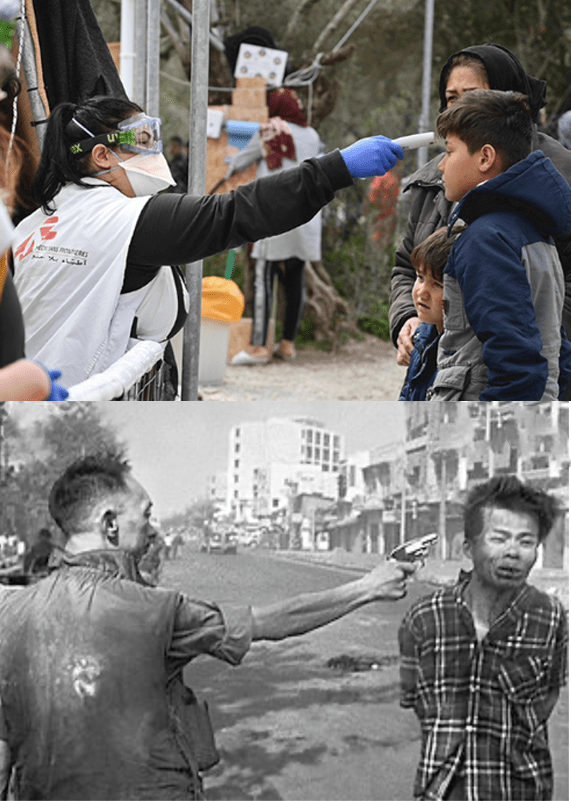
The photo on the bottom has haunted me for 50 years. Not that I think about it every day . . . or even every year, but over a half century it’s come to mind far more times than I would have liked. So, when I saw the top picture on my phone, it instantly evoked the extra-judicial execution of Nguyễn Văn Lém. I needed to do this to stop thinking about it. Too much thinking about death lately. 😕


Contemporary American History

I just came across one of the better summarizations of two disparate responses to infectious diseases by our two latest Presidents here in the United States. I am not the author of what follows, but I would like to post it here, as I believe it will ultimately get more exposure than it will on Facebook (where I encountered it.)


For those of you complaining about Trump being blamed for the COVID-19 pandemic, here’s a little history lesson for everyone on both sides of the political divide. It’s important that we understand the truth, especially come November when it’s time to vote. Forgive the length, but hey, we all have time on our hands to read, correct?

In December 2013, an 18-month-old boy in Guinea was bitten by a bat and died a brutal death a day later. After that, there were five more fatal cases. When Ebola spread out of the Guinea borders into neighboring Liberia and Sierra Leone in July 2014, President Obama activated the Emergency Operations Center at the Centers for Disease Control in Atlanta. The CDC immediately deployed CDC personnel to West Africa to coordinate a response that included vector tracing, testing, education, logistics, and communication.

Altogether, the CDC, under President Obama, trained 24,655 medical workers in West Africa, educating them on how to prevent and control the disease before a single case left Africa or reached the U.S. Working with the U.N. and the World Health Organization President Obama ordered the re-routing of travelers heading to the U.S. through certain specific airports equipped to handle mass testing. Back home in America, more than 6,500 people were trained through mock outbreaks and practice scenarios. That was done before a single case hit America.

Three months after President Obama activated this unprecedented response, on September 30, 2014, we detected our first case in the U.S.A. A man had traveled from West Africa to Dallas and somehow slipped through the testing protocol. He was immediately detected and isolated. He died a week later. Two nurses who tended to him contracted Ebola but later recovered. All the protocols had worked. It was contained. The Ebola epidemic could have easily become a pandemic, but thanks to the actions of our government under President Obama, it never did. Those THREE EBOLA CONFIRMED CASES were the ONLY cases of Ebola in the U.S.A. because Obama did what needed to be done THREE MONTHS PRIOR TO THE FIRST CASE.

Ebola is even more contagious than COVID-19. Had Obama not acted swiftly, millions of Americans would have died horrible, painful, deaths like something out of a horror movie (if you’ve never seen how Ebola kills, it’s horrific). It is ironic because since President Obama acted decisively we forget about his actions since the disease never reached our shores.

Now the story of COVID-19 and Trump’s response that we know about thus far:
Before anyone even knew about the disease (even in China) Trump disbanded the pandemic response team that Obama had put in place. He cut funding to the CDC, and he cut our contribution to the World Health Organization (WHO). Trump fired Rear Admiral Timothy Ziemer, the person on the National Security Council in charge of stopping the spread of infectious diseases before they reach our country – a position created by the Obama administration.

When the outbreak started in China, Trump assumed it was China’s problem and sent no research, supplies or help of any kind. We were in a trade war, why should he help them? In January he received a briefing from our intelligence organizations that the outbreak was much worse than China was admitting and that it would definitely hit our country if something wasn’t done to prevent it. He ignored the report, not trusting our own intelligence.

When the disease spread to Europe, the World Health Organization offered a plethora of tests to the United States. Trump turned them down, saying private companies here would make the tests “better” if we needed them. However, he never ordered U.S. companies to make tests and they had no profit motive to do so on their own.According to scientists at Yale and several public university medical schools, when they asked for permission to start working on our own testing protocol and potential treatments or vaccines, they were denied by Trump’s FDA.

When Trump knew about the first case in the United States he did nothing. It was just one case and the patient was isolated. When doctors and scientists started screaming in the media that this was a mistake, Trump claimed it was a “liberal hoax” conjured up to try to make him “look bad after impeachment failed.”

The next time Trump spoke of COVID-19, we had SIXTY-FOUR CONFIRMED CASES but Trump went before microphones and told the American public that we only had FIFTEEN cases “and pretty soon that number will be close to zero.” All while the disease was spreading, he took no action to get more tests. What Trump did was to stop flights from China from coming here. This was too late and accomplished nothing according to scientists and doctors. By then the disease was worldwide and was already spreading exponentially in the U.S. by Americans, not Chinese people as Trump would like you to believe.

As of the moment I am posting this, the morning of April 20, 2020, we have 770,076 COVID-19 CONFIRMED CASES and 40,316 COVID-19 DEATHS in the U.S.A. The actual number is undoubtedly more than triple that amount.

As if you needed one more reason to vote, here it is.


Casual Everyday?

I wonder if this pandemic, and our response to it, will change how seriously we take ourselves. If you’ve been watching television—and I’m going to go out on a limb here and assume most everyone is—you may have noticed some changes in much of live news and late night programming.
Since nearly everyone who’s reporting is at home, by themselves, it’s obvious that the women anchors, reporters, and pundits are having to do their own hair and makeup. Regardless of how well they might do it, it’s not the same and it’s noticeable. I haven’t noticed how much, if any, makeup the men are wearing, but I have noticed a whole bunch of them has decided it’s not worth shaving right now (I’m one of them.)


So . . . what I’m wondering is, after we are able to return to some semblance of a normal life, where we can gather again so that newscasters and performers can return to the studio, when knowledge workers can return to their cube farms . . . will we? Better yet, should we? I spent the last few years of my career at Rocketdyne working from home. I’d like to think I was at least as productive, if not more so, than I was when I was going in to the office each day.


When I first started working there, I wore a suit and tie each and every day. By the time I left, the only time I wore a tie was if the “customer” (usually NASA) was visiting and we had to blow smoke up their asses. Knit polo shirts and chinos became acceptable and, on Fridays, everyone wore denim. I’d like to think one of the lessons we’ll glean from this (and there will be dozens, no doubt) is that we can be a lot more casual and still perform at a high level. And there are numerous ways to communicate, connect, and collaborate, especially if we’re not hamstrung by unnecessary and awkward notions of propriety.


What do you think?


Moving Forward

No matter what happens as we are coming out of this crisis, we should never settle for returning to the status quo ante. We need to think of humans and our societies as living organisms; as interconnected and interdependent systems. When some of us are suffering, we must recognize it as an insult to all of us.

“We’re all in this together” doesn’t stop being true when this pandemic is “over.” It remains true except for those idiotic and stubborn people who still believe in rugged individualism as the ideal condition for humans to follow. In my opinion, that model is a recipe for disaster for all but people who live in the woods and, even then—with the exception of people like Ted Kaczynski—if they take advantage of roads, communication channels, and the efforts of entities like the US Forest Service, etc. they’re part of the gestalt that is humanity.

A friend of mine posted this quote on Facebook. It was posted by someone who I don’t know, and his name isn’t important here, but the quote is useful and is what prompted me to write what I did above:

“Indeed, you have to wonder if the virus is so very different from extractive capitalism. It commandeers the manufacturing elements of its hosts, gets them to make stuff for it; kills a fair few, but not enough to stop it spreading. There is no normal for us to go back to. People sleeping in the streets wasn’t normal; children living in poverty wasn’t normal; neither was our taxes helping to bomb the people of Yemen. Using other people’s lives to pile up objects wasn’t normal, the whole thing was absurd. Governments are currently busy pouring money into propping up existing inequalities, and bailing out businesses that have made their shareholders rich. The world’s worst people think that everybody is going to come out of this in a few months and go willingly back into a kind of numbing servitude. Surely it’s time to start imagining something better.”

~ Frankie Boyle

I was also sent a link to a wonderful essay in The Guardian’s “The Long Read” collection. I recommend it highly, though it is a long read. I’m memorializing it partly because I want to return to it and re-read it, perhaps numerous times. I see it as a booster to help me continue to advocate for fundamental structural change in our economy and our society. Our culture.

Here’s a quote, though there are so many useful ones in this particular essay, it’s hard to pick only one:

The first lesson a disaster teaches is that everything is connected. In fact, disasters, I found while living through a medium-sized one (the 1989 earthquake in the San Francisco Bay Area) and later writing about major ones (including 9/11, Hurricane Katrina and the 2011 Tōhoku earthquake and Fukushima nuclear catastrophe in Japan), are crash courses in those connections. At moments of immense change, we see with new clarity the systems – political, economic, social, ecological – in which we are immersed as they change around us. We see what’s strong, what’s weak, what’s corrupt, what matters and what doesn’t.

I often think of these times as akin to a spring thaw: it’s as if the pack ice has broken up, the water starts flowing again and boats can move through places they could not during winter. The ice was the arrangement of power relations that we call the status quo – it seems to be stable, and those who benefit from it often insist that it’s unchangeable. Then it changes fast and dramatically, and that can be exhilarating, terrifying, or both.

Finally, here’s a link to the article itself. Read it. You won’t regret it.


More Sorrow

Today’s COVID-19 death toll in the U.S. jumped 45% over the previous high, which was last Friday. As of a few minutes ago, there were still about six or seven states (and D.C.) that have yet to report their identified cases and deaths, but they shouldn’t add significantly to the overall figure as they’re smaller states, population-wise, that have yet to see a real outbreak.

I cried a little today, watching a couple of tributes to police officers who died from this virus. One was a woman, the other a couple who had both retired and were just beginning to enjoy being together. They died within a week of each other. None of them were able to have family with them during their last moments, though the woman’s family were able to record their last thoughts and have them played to her, even though she was unconscious. It was reported that she experienced an elevated heart rate while they were playing them.

Since nobody has truly come back from the dead yet (sorry, Jesus. Hit me up if you return “again,” please) we’ll never know if that wasn’t actually more painful for her emotionally or whether it uplifted her spirits. I wish we could know how she felt in those last moments. I want to believe she was comforted by hearing the voices of her loved ones. I know that’s what the HCWs had to be thinking. I’m having a hard time dealing with imagining what everyone is going through. It’s difficult when you’re empathetic. There’s going to be a lot of PTSD in this country when this is finally put behind us.


A Guy Can Dream, Eh?

Last night I dreamed I was grocery shopping. It’s not like I haven’t done so in the past few weeks. I think it’s because, unlike the past, when I could just stop into a store to pick up a few things, and a lot of our shopping was ad hoc, now we have to carefully plan and resign ourselves to not getting some of the things we’d like to have because it’s just too risky to be out there.

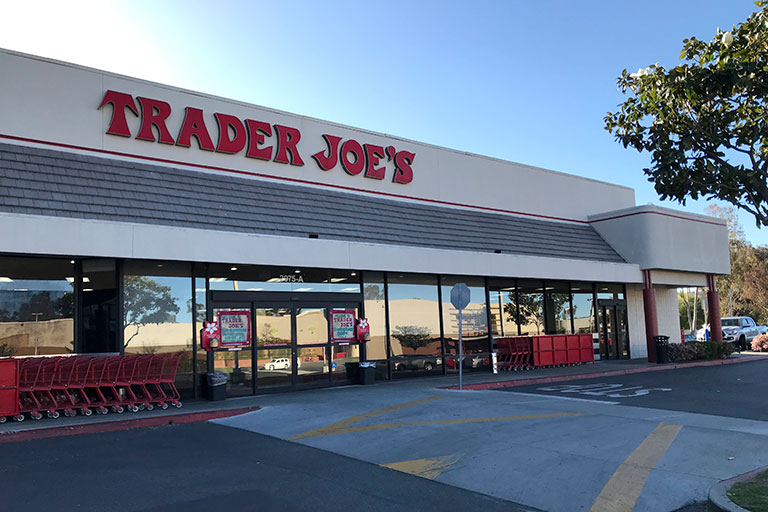
Last Monday (not yesterday Monday) I hit Trader Joe’s early, when us old folk are given an early hour to avoid the crush, picking up just about everything I figured we needed for the week. On Thursday, I had to take my youngest to her high school, where they were allowing kids a half hour—staggered, so there weren’t too many kids there at once—to empty their lockers. Afterwards, we hightailed it to Smart & Final to grab a few things we can’t get at Trader Joe’s.

That’s been it. However, I’ve been constantly thinking about how and when I need to get more groceries. It’s difficult to get a month’s worth of food, especially perishables, and especially when you haven’t done anything like it in your entire life. I think that accounts for the dream. It’s just on my mind more than it has ever been in the past.


He’s Fakin’ It!

Cosplay is defined by Wikipedia thus: “[A] portmanteau of the words costume play, is a performance art in which participants called cosplayers wear costumes and fashion accessories to represent a specific character. Cosplayers often interact to create a subculture, and a broader use of the term ‘cosplay’ applies to any costumed role-playing in venues apart from the stage. Any entity that lends itself to dramatic interpretation may be taken up as a subject and it is not unusual to see genders switched. Favorite sources include anime, cartoons, comic books, manga, television series, and video games.”

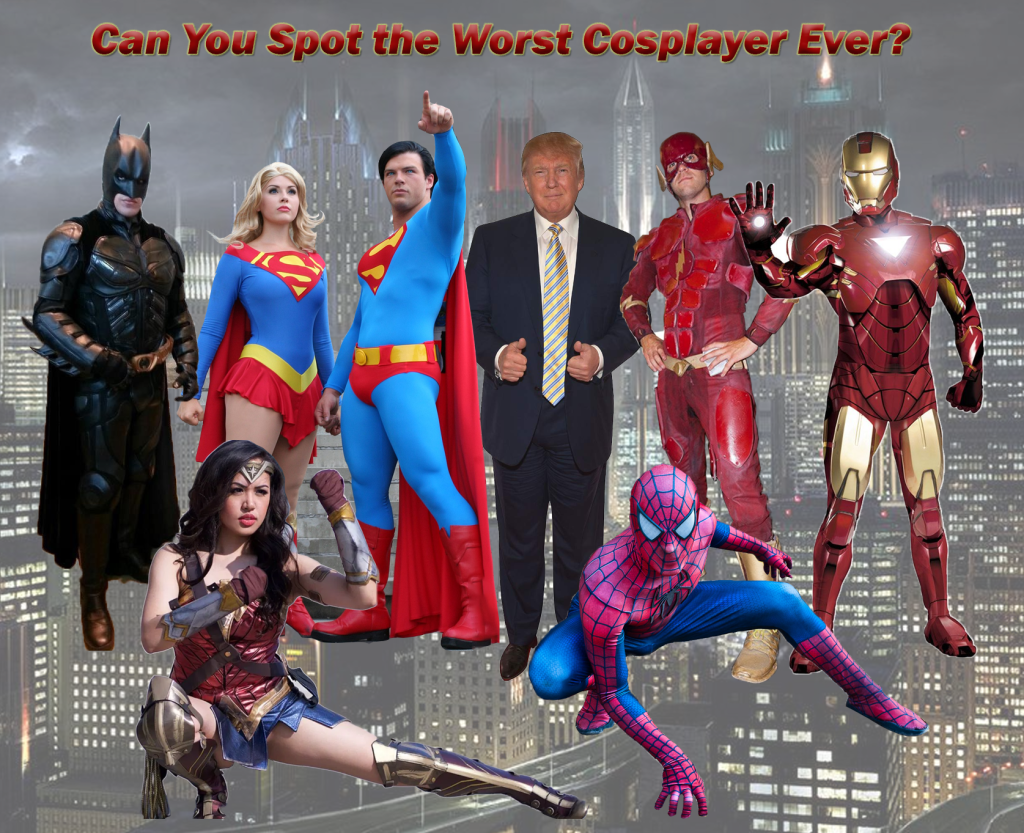
I am of the opinion Donald Trump really isn’t the President, he’s merely a cosplayer pretending to be one. He’s clearly not interested in actually governing the nation, only in destroying what he and Steve Bannon refer to as the “Administrative (or Deep) State.”

In furtherance of making my point, and in getting some good practice in upping my Photoshop skills, I created a couple of memes expressing how I feel. Here’s the first one, which I posted on Facebook on March 7:

Playing the Big Shot

The second one, which I posted to FB on March 19, is a bit more elaborate, but kind of makes the same point:

Milquetoast Marmalade is his Cosplay Character’s Name

Regardless of the authenticity of his costume, I maintain he’s doing a really shitty job of acting the part. In fact, based on his performance with the COVID-19 pandemic response, I’m arguing he’s guilty of 2nd degree murder, but I’d settle for a conviction of negligent homicide, even maybe reckless endangerment. Anything to remove him from any position of authority over the workings of our government.


Isolation: “Its Like Forever Only Much Shorter”

I’ve never understood how people who once loved and cared about each other can not merely drift apart (which is far more normal than we think) but who end up hating each other. In my early twenties, somewhere around 1969 (I think) I had been living in Berzerkely and wasn’t taking very good care of myself. I became very ill with a form of asthma. I ultimately decided—thanks to the I Ching; the Chinese Book of Changes—to return to Los Angeles and get medical help. I don’t quite remember how I met Susan, but we ended up living together and she literally nursed me back to health. Our relationship didn’t last that long, mostly due to my being an asshole, but we’ve remained friends over the years; perhaps because we shared a lot of the same friends. Susan Marlow is her name, and she sent me this short essay, which I want to share. Self-isolation, social-distancing, shelter-in-place, whatever we’re calling it . . . seems to be fueling some interesting creativity and innovation. I’m happy to share it.

PS – Thank you, Sue . . . for this and, especially, for taking care of me way back in the wayback machine. I’ve long regretted how I acted back then, but I’m pleased we both went on to have wonderful, interesting, and fulfilling lives and that we remained friends. Hopefully, we’ve got another decade or two to enjoy . . . once this is behind us.


by Susan Marlow – 26 March 2020

I am finding this Covid-19 isolation, while mostly strange, not entirely unpleasant. The disease has me frightened. It is such an unknown and one that I want to keep that way.  Yet clouds can be fluffy and white and pretty or dark and sullen. They bring us rain which cleans and they filter and cool the heat.  So too has this isolation that we are living through brought some very interesting and beneficial changes for us all.

“This too shall pass” and “That which doesn’t kill you makes you stronger” are my favorite quotes. And perhaps that is what is happening.  I actually do not mind being home I am not bored. I have oodles of half baked ideas and partially concocted schemes that I can pick up and play with.  Who knows I might finish the knitting project, or begin my composting and renewed vegetable and flower garden. The composter has been ordered through amazon prime.  I have learned to order household items to avoid shopping. My pointer finger is getting stronger, as I push those order buttons. With each boxed item it’s a bit like Christmas.  

Learning to Cope

I have gone into the garden to collect worms for the composter.  They are busy I hope eating what is in their temporary home. Now I’ve read that there are specific worms that are better than the garden variety.  Wouldn’t you know it there are designer worms available on line 1000 per pack.

I am not much of a cook and my husband (the cook) has grown tired.  His meals are not so exciting after 37 years. So we joined a meal delivery service.  The food comes fresh and ready to prepare with complete instructions. Surprisingly it is a lot of work but very tasty.  My back aches as I stand by the sink cutting chopping and stirring. So I prep the meal early allowing myself time to rest.  Then maybe 2 hours later together we finish. It’s become a very nice, even anticipated activity for the two of us. Time is not of the essence anymore or maybe it is but there is a lot of it to spread about. We don’t have anything to argue about and we are able to laugh at ourselves quite a bit.  I like that part the best.

I should tell you that I have actually been in semi isolation since 2/27 so I consider myself the expert.  I love the quiet streets which remind me of my childhood where a kid could safely ride a bicycle at break neck speed  down a hill across a residential street without much chance of getting creamed unless you hit a pothole and there were fewer potholes back then as there was less slurry, trees were younger and their roots had not yet begun to encroach.  People are out walking cranky children or happy dogs. We are walking Peanuts twice a day and he is now a very happy doggy. We waive at our neighbors most of whom we have never even met. Hundreds of bees are darting to and fro through rain soaked flower beds.  

Maybe people will once again remember how nice this all is and make the necessary changes to keep it that way once this crisis passes.

The amount of world nastiness seems to be reduced.  Everyone seems to be getting the message that we are all in this together.  Borders, walls, languages will not protect us. Jobs have changed and are still changing.  Many types of employment never to be seen again or never seen before. Creativity is running high.  California needs ventilators and someone is crafting them on 3D printers. 

My husband and I seem to be getting along better than ever which amazes me.  We treasure humor and stuff that makes us giggle a bit.  I am checking on friends whom I rarely see.  Despite our limits we are finding common concerns. People are caring for each other even at a distance which I find nothing short of magical. The  meanness that Trump fostered has finally been challenged by something far bigger than that “Stable genius.” He can not buy it, sell it, hide from it, or manipulate it.   Nevertheless, I know he tries.

I am learning more about myself.  I’ve been sequestered for a month now.  I can withstand a fair amount of isolation from others. But I can not stand our 24 hour news cycle. Our TV isn’t going on until 5:00.  

I am finding that when I casually throw out “I love you,” I really do.  I mean it. Likewise, the kiss throwing emojis have sincere meaning to me now.

And so to all my essay girls and guys—stay safe.

🥰