Tag Archives: SSME

Deming and Rocketdyne

Sometime in late January of 1987, almost one year to the day after the Space Shuttle Orbiter Challenger was destroyed as it ascended to orbit, I was assigned by the temp agency I was using at the time to begin work on the Space Shuttle Main Engine team at Rockwell International’s Rocketdyne Division in Woodland Hills, CA.

Prior to that fateful date I had, with one exception, never worked at a company with more than a dozen employees. My family’s wholesale food business, at its peak, was only my father, brother, me, and one employee and most of the numerous jobs I had held over the previous 20 years or so were similarly small.

Rocketdyne employed several thousand people, most of whom labored at our campuses in Woodland Hills and Canoga Park, CA. It was a division of Rockwell International, which employed over 100,000 people world-wide. It was a jarring transition to go from small (really small) businesses to a multi-national aerospace conglomerate. However, having been somewhat of a space-cadet, i.e. enthusiast most of my life, I was thrilled with the opportunity.

A year later on 1 February 1988, I was hired to work in Engineering Computing on the Flight Ops team – a position I would not have dared to dream of filling. Nevertheless, there I was helping our nation’s space program get back on track. It was truly a dream come true.

At the same time, I was becoming aware of the unique way in which large organizations conduct themselves. Some of it wasn’t pretty. I first encountered the business philosophy of W. Edwards Deming soon after I was officially hired as I was lucky enough to have a colleague who was a student of his. Deming had written a book (he wrote many) in which he laid out a fourteen-point explication of his concept of TQM (Total Quality Management).

I was enamored of his positions, as they coincided with my growing understanding how things worked in virtually any organization. I had long been someone who looked for and found ways in which to improve the processes and procedures of any organization I was involved with, and Deming’s philosophy made a great deal of sense to me.

At the same time, I was becoming increasingly aware of the reality that many companies, including Rocketdyne, were honoring those principles in their breach, not their adherence to them. As I was studying Deming’s 14 points I began to realize just how thoroughly many of the managers I encountered were oblivious to the virtues Deming laid out.

Somewhere around 1990 I decided to see if I could capture the differences between what Deming offered and how Rocketdyne was actually doing things. I captured Deming’s 14 points and then created Rocketdyne’s 14 counterpoints. I’ve kept them over the years and am here sharing my understanding with two screenshots of those differing points of view. Please keep in mind not all managers were as controlling as the worst of them. I was lucky to work under the supervision of several truly wonderful managers in my nearly quarter century of employment there. Regardless, I think my analysis was reasonable, even after over 34 years. You?


More Than 2 Dozen Jobs!

In my 76 years on this planet, I’ve worked no less than 2 doz jobs, ranging from short order cook, busboy, waiter, restaurant manager, truck driver, forklift driver, butcher, jewelry bench worker, and wiener clerk, to legal secretary, project manager, knowledge manager, and business manager.

I retired from Pratt & Whitney Rocketdyne, where I worked on the Space Shuttle Main Engine program for nearly a quarter century and I am neither an engineer nor a scientist. Now … in a desire to get out of the house and make a little money, I am beginning a job working as a clerk in a liquor/convenience store. It’s low pay, low stress, and part time (26 hours/week).

My experience runs the gamut from highly physical work to entirely knowledge/mental work. If I’ve learned nothing else, it’s that there’s no such thing as a menial job. There is dignity and sanity in working at virtually any job. I know this one won’t tax my intellect, but I’m looking forward to it.


I Was Just Passing The Time

When I first ended up at Rocketdyne (it was serendipity, not a conscious move) I was gobsmacked knowing I was working on the Space Shuttle Main Engine program, with bonafide rocket scientists and engineers. It was 1987, almost exactly one year since Challenger exploded and I was working on the FMEA/CIL (Failure Modes and Effects Analysis/Critical Items List) in anticipation of the shuttle’s return to flight. There were frequent dead times while I waited for an engineer/scientist to bring me their work so I could input it into the format we were using to present the information.

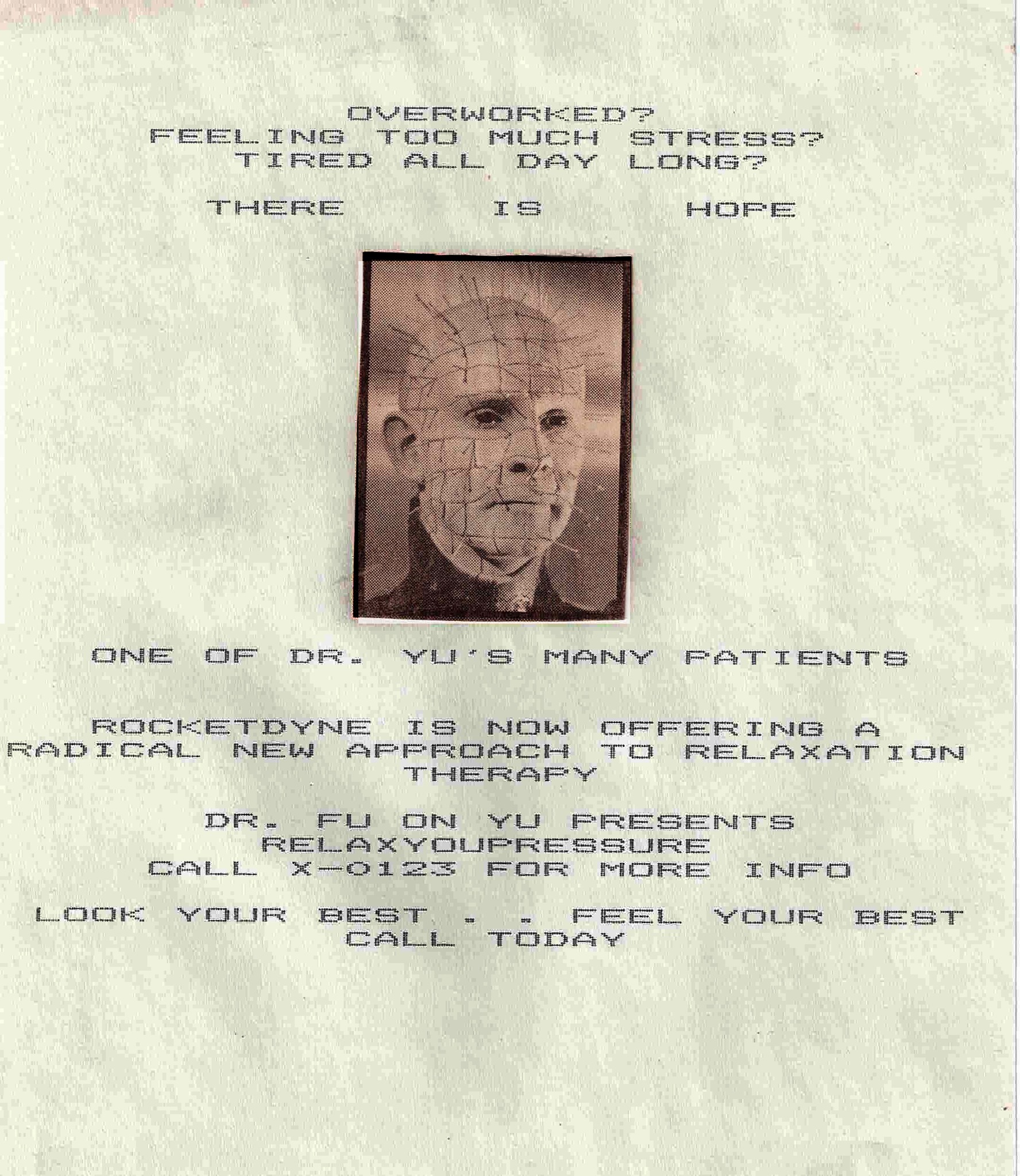
I was just going through a folder I found stashed away that’s chock full of some of the things I created back then while I was bored. Keep in mind we only had dot matrix printers and early IBM PCs. I’m pretty sure we were using IBM XTs running Intel 8088 processors. Anyway, here’s one of the things I put together to assuage my boredom back then.


Bye Bye Twitter?

I first joined Twitter in March of 2006. At the time part of my job at Rocketdyne Propulsion and Power, a division of The Boeing Company, was to examine platforms described as examples of what was then referred to as Web 2.0, as well as new applications being referred to as “social media.” I was doing this as a member of the Knowledge Management team for the division, and as the Knowledge Management lead for the Space Shuttle Main Engine team.

In 2002, I had been leading the team that introduced one of the earliest “social media” applications to the SSME team and the organization as a whole. We didn’t think of it as social media at the time, however. Our main goal was to provide a tool (we called it an “enabler”) that made it easier to locate subject matter experts (SMEs) and facilitate not only communication between those seeking knowledge and those possessing it, but to capture that knowledge and make it easily accessible for others who might need it at a later date.

The name of the tool we purchased 1000 seats for was AskMe Enterprise. It was, if memory serves, based on a former website of the same name, but was now a proprietary tool meant to stay within the firewall of an organization. Rocketdyne needed something that would be useful internally and had no reason to use something that was open outside the organization’s firewall. In fact, given the nature of its products being open to the outside was anathema and a matter of national security.

At the same time, we were looking for a communications tool that provided one-to-many capabilities and short-form text sharing and publishing. There were several tools that were coming online around that time, including Jive and Yammer, but Twitter seemed to be the most interesting. Nevertheless, it took me something like six months before I could identify a use case for it. At the time it seemed merely a tool for non-productive jabber and gossip.

What changed it for me was when I found out the team preparing the Space Shuttle Orbiter for the next launch was using it to communicate their activities and progress. There were something like two dozen people who were working on various tasks that were independent in numerous different ways. If you’ve ever done project management, especially if you’ve used a tool like Microsoft Project, you know there are several types of dependencies between activities, e.g. finish-to-start (the most common). The Orbiter team, much like many of the teams that organizations (not just Rocketdyne) have to accomplish their work, would meet every morning to present progress and discuss how to proceed with remaining activities.

Twitter changed the dynamic significantly. Now, instead of waiting until the team gathered each morning, team members who were out in the field accomplishing tasks could communicate in real-time with their colleagues (all of them) when they had finished a task which was a predecessor to another team member’s task. All they had to do was Tweet. They didn’t have to compose an email, direct an IM to two dozen people, or make a phone call. They just had to follow each of their teammates.

This may seem a trivial thing, but if a predecessor task was completed at, say, two in the afternoon and that fact could be communicated to the entire team, anyone who needed that information to know where they stood in the flow of activities didn’t have to wait until the following morning stand-up to find out what their status was. Work on complicated engineering projects can be expensive and even apparently small savings of time could add up to saving tens, if not hundreds, of thousands of dollars.

So, that was my introduction to Twitter. I never could get my colleagues at Rocketdyne to use it. I had a hard enough time getting them to use AskMe and soon after I accepted an early severance package in May of 2010 (as the Shuttle program was coming to an end) it became obvious without my constant agitating for its use it wasn’t going to survive. It didn’t.

However, I kept a kind of love/hate relationship with Twitter over the years. There were times I didn’t pay much attention to it, and periods where I was quite active. Unfortunately, a couple of years ago, after nearly a decade and a half, I was permanently suspended after I suggested a certain former guy might benefit from a coronary episode (I was only looking out for his best interests!). I created another account, which I am still using. Actually, I created two more accounts, one of which was also suspended, but reinstated upon appeal, though I no longer use it. Now, instead of @rickladd I’m @retreado.

I really wish I still had my real name, but it looks as though Twitter may not survive the petty indulgences of the world’s richest 10-year-old. Toward the end, I found Twitter to be an invaluable source of news, not so much as a primary but as a pointer to in-depth analyses, opinion, and good, solid journalism. It was a great way to keep track of trends and what movers and shakers were thinking, as well as hints as to which direction developing issues might go in. If Twitter does go away, I will miss it, but it won’t be the end of the world. I’ve already created an account at Mastodon and am considering other apps. Time will tell. Frankly, I wouldn’t mind taking a break from the immediacy and constant movement of Twitter. I’m getting old and I appreciate moments of silence more than ever.


Returning To The Scene Of The Crime

Yesterday I noticed I had a voicemail from late Friday. It turned out to be from someone at PRO-Unlimited, the organization that handles temps for Aerojet Rocketdyne. She said she was calling about the position I interviewed for a week ago last Thursday. I won’t know for sure until I can return her call tomorrow, but I’m pretty sure this means I’m getting the job I really wanted.

I’m beyond excited to think I may return and work on the same engine (RS-25, formerly the SSME) I worked on for over 20 years and that it will once again be hurling humans into space.


Some Personal Space Shuttle History

Thirty-four years ago next month I showed up for work at Rockwell International’s Rocketdyne Division. Having grown up in the San Fernando Valley in Southern California, I was familiar with Rocketdyne, as during the Mercury, Gemini, and Apollo programs the rocket engines they made, which powered the vehicles used to launch our astronauts into space, were all designed and manufactured not far from where I lived.

The factory was in Canoga Park, but the engines were tested at the Santa Susana Field Laboratory, which was in the hills to the west of my home. I have vivid memories of seeing the night sky light up and hearing the roar of those engines as they were being tested. I also remember going out at night and lying down on our front lawn to watch Sputnik 1, the world’s first artificial satellite (launched by the Soviet Union on October 4, 1957) go by overhead. I was ten years old at the time.

While these experiences didn’t cause me to pursue a career in engineering, they did serve to pique my interest in astronomy and space exploration. They also had absolutely nothing to do with my ending up working at Rocketdyne. My beginning there was entirely serendipitous. I was working for the temp agency, Apple One, where I had been temping at a hard drive manufacturer called Micropolis. Their business model, perhaps the industry itself, was somewhat seasonal and work for temps was boom and bust there. As had happened many times before (we’d heard about it and weren’t surprised when it happened) business slowed down and they decided to lay off the temps, who comprised the majority of the workforce.

That was on a Friday. That evening, my contact at Apple One called me and asked if I could show up at Rocketdyne the following Monday. I don’t remember the exact date, but it was in the middle of January, 1987, almost exactly a year after OV-099, Space Shuttle Orbiter Vehicle Challenger, exploded as it was ascending to orbit, killing all seven crew members.

I was to turn 40 years old later that year and of course I would show up. I needed to work. However, that it was Rocketdyne I was to show up at was something of a bonus, as far as I was concerned. I had known people who worked at Rocketdyne over the years, and it never occurred to me I could work there. I wasn’t an Engineer or a Scientist. I didn’t even have a college education, though I did have a Juris Doctorate, which I had earned eleven years before. I was the only person in my law school without a baccalaureate. None of that mattered as a temp (or what they called a “job shopper”.) They didn’t ask anything about my background or my capabilities. They just needed a warm body who could perform data input.

So, that following Monday I showed up to work at the plant on Canoga Ave. in Canoga Park. I had never worked at a really large organization before. In fact, with the exception of the temp job I had previously been working at, I had never worked anywhere that had more than a dozen or so people. Most places I’d worked only had five or six, at the most. Rocketdyne had armed guards at the gates. There were at least four entrances guarded by men with guns. It was actually a bit heady.

I ended up hiring in a year later and worked there until May of 2010, when I accepted an early severance package offered to everyone over the age of 60. I turned 63 the next month, June. I’m writing several memoirs, and my time at Rocketdyne will play a big role in at least one of them. However, my purpose here is merely to introduce one of the “awards” I received when I worked there.

I was not a big fan of individual performance awards, believing they tended to pit people against each other when, in fact, we needed to find ways to improve our collaborative and collective abilities. This particular award was given to each of the members of the Space Shuttle Main Engine High Pressure Fuel Turbo-pump team, who labored mightily to manufacture, test, and deliver 10 additional pumps for the program when Pratt & Whitney was unable to certify their alternate design. As our contract ran out, and we knew there would be no new business, the team had to wind down and members had to find other places to hang their hats.

You should note that everyone on the team received one of these shadow boxes, with a flag, a turbine blade, several mission buttons, and these inscriptions (see below.) I’m including the back, because our managers took the time to personally thank each person on the team; there were well over fifty, if memory serves. This “award” hangs in my home office. This coming May it will have been 20 years since I received it, and I’m every bit as proud of it now as I was back then. Plus … how often do you get to have a piece of rocket engine hardware and other space memorabilia?

PS – In case you don’t get to it (it’s on the back of the shadow box) that turbine blade traveled a total of 27,600,000 miles, mostly doing nothing after MECO (Main Engine Cut Off) on each flight.

PPS – Just to be clear, in these two photos (below) I’ve superimposed the award (from the front) on a picture of a shuttle night launch. It has a glass door, which I opened because it’s reflective and I didn’t want that in the photo, and digitally removed with Photoshop. I’ve separately added the two pieces of text from the back, without including the box, and superimposed them on that same night launch photo.

Obverse of My Turbo Team Award
Reverse of My Turbo Team Award

Fear of Sharing

My wife would say I’m overly gregarious and too willing to share things about my life and experiences, and from all appearances, I seem to have spent much of that life being outgoing and transparent, yet I think I just realized that in actuality, I have always hidden much of who I am from others. Specific others, not everyone . . . and not about everything. Most of the things I’ve kept to myself over the years aren’t deeds I’m ashamed of or thoughts I’ve believed in and now think are wrong. It’s just that it wasn’t important for certain people to know about them.

Photo by Andrea Piacquadio on Pexels.com

For instance, I never shared my experiences in the late sixties with the “Free Love” movement with my mother. Somehow, I felt she wouldn’t have appreciated learning why I refer to myself as a “battle-scarred veteran” of the Sexual Revolution. Similarly, when I first hired in at Rockwell International’s Rocketdyne division, to work on the Space Shuttle Main Engine team, I didn’t think they needed to know I had spent two months in Cuba in 1973 as a guest of the Cuban government. The list goes on.

When I became a first-time, adoptive father at the age of 55, I considered writing about the experience of adopting, but decided against it because I thought it stood too much of a chance of violating my children’s privacy. I’m still a bit conflicted over how much I can share about my experience for fear of sharing too much of their lives, and those things don’t belong to me alone.

Now that I’m less than a year and a half from my 75th birthday, I’m thinking it’s time to stop being so concerned about embarrassing anyone who knows or is related to me . . . and just write my truth and put it out there for everyone to judge for themselves. That is what I’m doing, but I’m also just realizing how seriously I have been hobbled by my unwillingness to risk bringing shame to my family . . . even though I’m hardly ashamed about anything I’ve done over the years. Sorry for some things, yes – because they hurt me or others I loved and cared about – but shame does not emanate from this boy.

Having recognized this serious impediment to telling my story, it’s now my job to overcome what it’s done to me over the years (it hasn’t perzackly helped me overcome “imposter syndrome.”) I can no longer embarrass my parents or grandparents; they’ve been gone for quite some time, and I need to get these stories out, regardless. Even if I live to be ninety, I won’t have to regret anything (which I likely won’t anyway) for very long.


Another Change of Pace

In my last couple of years in High School I took a lot of photography classes. Back then (this was in 1964 – 1966) there was no such thing as digital photos. Everything was film and darkroom work. I remember enjoying taking pictures at football games, using Kodak Tri-X 400 black & white negative film.

I had to take it into the darkroom and develop both the film and then use the negatives obtained from the film strip to project onto photographic paper, which we then developed ourselves in the darkroom. It involved a lot of banging around in the dark, getting used to working by dim red light, and lots of chemicals to develop, set, and finish the work.

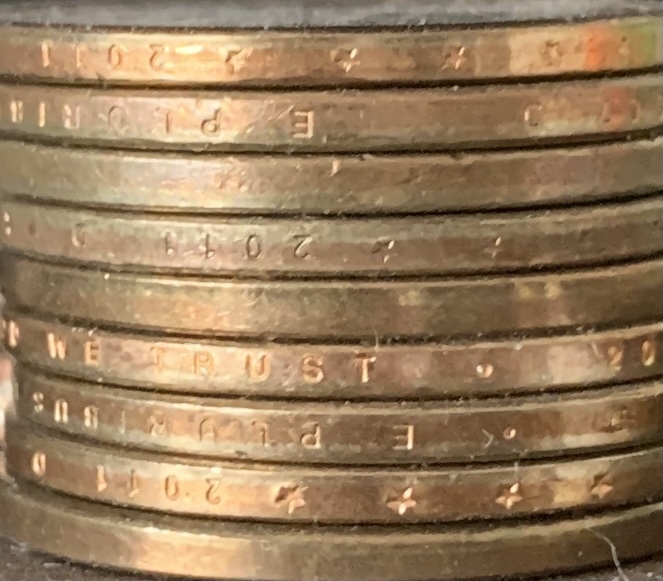
I’ve long enjoyed photography and still enjoy using tools like Photoshop to tweak and improve photos; sometimes to create political memes from them as well. I recently started using the magnification app that came with my iPhone XR and I’ve realized I can produce some interesting photos by zooming way in on subjects that have intricate or visually remarkable patterns.

Several of the ones I’m publishing here should be fairly easily recognizable to most people. At least one of them requires a bit of engineering knowledge and, perhaps, familiarity with space hardware. A couple of them should be easy to discern. Two of them relate to cooking in one way or another. What do you see?


Time Stamp!

The RS-25, aka Space Shuttle Main Engine (SSME)

Just thought I should mention today (Thursday, 14 May 2020) is the 10th anniversary of my retirement from Pratt & Whitney Rocketdyne. I’m still not entirely sure it was the right thing to do (accept the early severance package they offered everyone over 60) but her I yam!


quicKMemos Vol. 1 No. 2

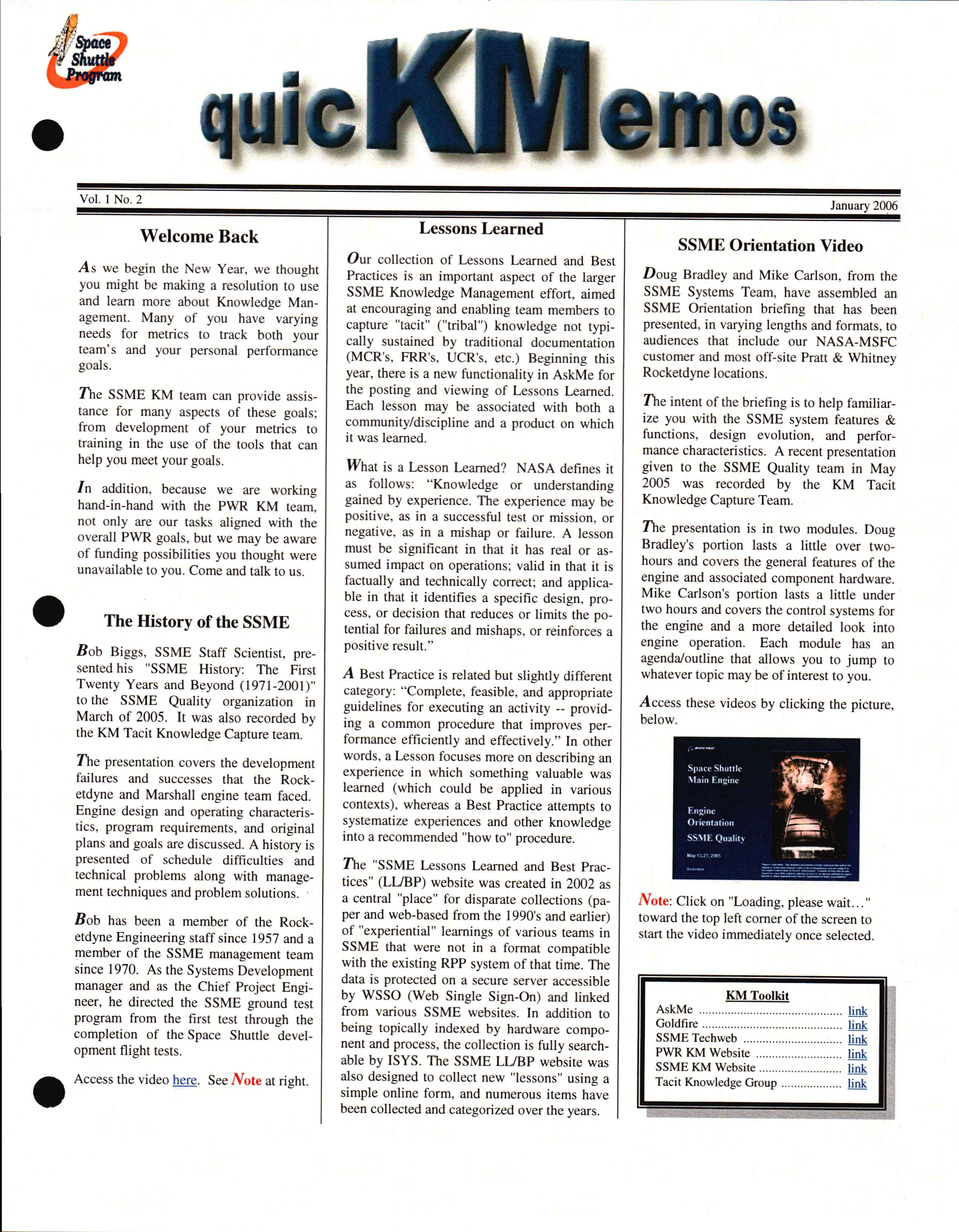
Here’s the second issue of the KM newsletter I wrote and published for the SSME KM team. This one was for January of 2006. The middle column has a couple of decent descriptions of “Lessons Learned” and “Best Practices.” What it doesn’t address, which is something many of us came to understand later, is that we don’t actually want “Best” Practices; which implies there won’t be any room for improvement, as “best” is a superlative adjective, which means it just doesn’t get any better than best. We, therefore, preferred to talk about “Better” Practices, which also fits rather nicely into the philosophy of continuous improvement. My apologies if this is boring.