Author Archives: Rick Ladd

About Rick Ladd

Unknown's avatar
I retired over14 years ago, though I've continued to work on and off since then. Mostly I'm just cruising, making the most of what time I have remaining. Although my time is nearly up, I still care deeply about the kind of world I'll be leaving to those who follow me and, to that end, I am devoted to seeing the forces of repression and authoritarianism are at least held at bay, if not crushed out of existence. I write about things that interest me and, as an eclectic soul, my interests run the gamut from science to spirituality, governance to economics, art and engineering. I'm hopeful one day my children will read what I've left behind.

Chasing Earned Value

Recently, I was given the task of writing a short (4 – 5 page) paper on the basics of Earned Value Management (EVM), and why it’s useful for medium to large organizations in managing their projects. The idea was to deal with the “why”, not the “how”. I worked in a large aerospace organization for over two decades and we used EVM extensively. It is, after all, a requirement for all government contractors.

Earned Value Terminology

A Plethora of Acronyms Revealed

Having retired from that industry a little over four years ago, I was a bit rusty. However, you can’t have that stuff drummed into your head without it engraving itself fairly deeply on your consciousness. It didn’t take me long to come back up-to-speed. In fact, the biggest problem I had was knowing where to stop. EVM is full of acronyms and formulae (BCWS, BCWP, ACWP, SPI, CPI, etc., etc., etc.), all of which I’m fairly certain are useful . . . when used intelligently. As with most things, how valuable they are depends a great deal on what you’re trying to accomplish, how prepared and disciplined you are, and how well you execute over time.

Now this brings me to a somewhat vexing problem and the reason I’m sharing this. I could swear there’s a good argument somewhere as to why EV is not a very good method for managing a project. However, when I searched for problems or reasons not to use EV, all I could find were lists of where organizations go wrong because they don’t plan properly, they don’t pay attention to detail, or they don’t use tools as they’re designed to be used.

So I have a question, which I am now going to throw out into the aether. Assuming some who read this actually know about, and have experience with, Earned Value Management and maybe one or more of the systems used to facilitate its proper application, are you aware of any reasons NOT to use EVM and, if so, could you point me to a resource or school me on the subject? Thanks.


Who Needs Progress Reports?

Brain in light bulb

Working Out Loud – What a Bright Idea!

I recently posted a little bit about a presentation I gave entitled “The Crowd, The Cloud, and Working Out Loud”. One of the examples I’ve always given when explaining the value of working out loud (sometimes referred to as “Observable Work”) is that of eliminating monthly progress reports. Most anyone who’s had to do these knows how time-consuming they can be and how much of the information meant to be conveyed by them is lost or distorted as it moves up the corporate power structure.

The whole idea of working out loud is to make the things we’re doing more (and more immediately) visible to those who need or can use such information. In this way, less fidelity is lost in translation and useful  information and knowledge are available quicker than with conventional methods, which generally take more than a month before they get filtered, rehashed, and finally communicated.

At any rate, I am currently working on a short introductory paper on the usefulness of an Earned Value Management System (EVMS) and, in doing so, I was searching through some of my old papers, etc. I came across a status report I sent to my managers at what was then called Boeing North American, Inc. – Rocketdyne Division (part of the Boeing Defense & Space Group) on October 1, 1999. Interesting, the subject is “August 1999 Status Report”, so it looks like information lagged even further behind than I have been thinking.

The sections of the report are Accomplishments, Issues, and Performance Improvements. In each of the first two sections there’s some serious stuff being addressed regarding our effort at the time to complete 10 High Pressure Fuel Turbopumps for the Space Shuttle Main Engine. I find it somewhat fascinating to read this stuff after almost 15 years have passed.

However, what really stood out for me is the final entry under Performance Improvements. As I have indicated, I’m not a big fan of status reports . . . and here’s what I had to say in that section:

Probably lots of little things. Nothing significant I can remember. Oh! I’ve started using a 7-Iron again to chip around the greens. I chipped in for a birdie on number 10 at Simi the other day. That was an improvement.

Although I have no specific recollection of writing that bit of important information, I am not surprised. Clearly, I did not take the authoring of status reports any more seriously back then than I do now. Neither should you.


Can We Impeach Roberts & His Cronies?

Ruth Bader Ginsburg

Can the Court’s decision be considered “bad behaviour”?

Article III. Section. 1. of the Constitution of the United States:

“The judicial Power of the United States shall be vested in one supreme Court, and in such inferior Courts as the Congress may from time to time ordain and establish. The Judges, both of the supreme and inferior Courts, shall hold their Offices during good Behaviour, and shall, at stated Times, receive for their Services a Compensation, which shall not be diminished during their Continuance in Office.” (emphasis supplied)

There exists precedent for impeaching a Supreme Court Justice. Thomas Jefferson requested articles of impeachment against Justice Samuel Chase, who was impeached, but acquitted by the Senate.

Inasmuch as the House of Representatives must present articles of impeachment and the Senate must convict by a two-thirds majority, it’s impractical to believe we could realize such a result. Nevertheless, I have tilted at windmills before and, at times, it is the only way to begin a movement for change.

Clearly, the Hobby Lobby case is another in a long line of cases that have been decided by the kind of judicial activism most of those who favored the decisions decried and abjured in many of their writings and during their confirmation hearings, which makes them guilty of perjury in my eyes.

Give it some thought. Call it a BHAG or a stretch goal. 


The Crowd, The Cloud, & Working Out Loud

A couple of years ago, in response to a request from the Simi Valley Chamber of Commerce, I conducted (as I recall) twice-monthly seminars on the use of social media for small businesses. They were called “Facebook Fridays” and you’ll never guess what day of the week we held them on. They started out as presentations on various aspects of the technology and the philosophy behind their use. However, after a short while it became clear that people had lots of specific questions they wanted answered. In response, I changed the nature of what I did and started each session off by opening it up to questions.

It worked quite well for nearly a year but, toward the end, attendance dwindled and I grew somewhat weary of doing the necessary preparation and having to show up twice a month. The Chamber found someone else willing to continue the work and I moved on. By that time I was becoming disenchanted with the direction I had chosen to attempt building a useful business and was looking to other areas of endeavor as well.

Recently, I had lunch with the CEO of the Chamber and we decided it would be useful for me to bring back what I had done before, the difference being the subject matter would be a little less focused on marketing and a lot more focused on business model, business process, technology, and cultural transformation. Today was the first of what I hope will be many such events.

I used a vehicle I have not used before to conduct this 50 minute webinar – Google Hangouts on Air. I’m not sure it’s the best way to conduct something like this, but viewership is unlimited and the session is both recorded and automatically placed on my YouTube Channel. I’m embedding the session below. This really was somewhat of an experiment and the subject was quite broad. I’d love to get some feedback. Don’t be shy now.


Living Out Loud

Lanterns afloat

My intent is for the act of sharing to be liberating for me . . . and informative for others.

I decided to celebrate my birthday this year by doing something I may regret. No, I’m not taking off to Vegas with $5k and a desire to lose my inhibitions completely, nor am I going to see if I can find some Window Pane or Orange Owsley and relive the late sixties. I’m going to delve a little deeper into what I see as a corollary of something I’ve been writing a little bit more about lately . . . working out loud. The corollary is . . . living out loud. Let me explain.

Working out loud is about finding ways to work where not merely the fruits, but also the cultivation, planting, and meticulous care and grooming of those fruits are conducted in a manner that allows others to follow along, perhaps contribute somewhere along the way. It involves activities such as moving conversations away from email and into other forms of internal communication; e.g. micro-blogging, wikis, other types of social networking/communicating/collaborating tools, etc. I have found from experience it is not an easy thing to do, even when you are a wholehearted supporter of the idea. The entire ethos of our work culture militates against it and, for some, it’s downright dangerous and heretical.

Living out loud, however, is something a little bit different. I’ve never had to do an activity report though, come to think of it, as a kid I did have to face my father’s wrath when I forgot to do one of my chores. Now, however, I’ve retired from the last place I had a regular job at, so nobody much requires me to report to them. I do have some activities I’m involved in where I keep people apprised of my efforts and progress, but it’s not the same as when I worked at Rocketdyne. Anyway, in an effort to share a little more of me, here’s my first formal attempt. I posted the following on Facebook first.

This is the first birthday I haven’t much looked forward to. Although it seems not to mean all that much, since some time in April I am seven years older than my father was when he died. I think about it, because I grew up being told I was “exactly like your father”, especially when I did something untoward or displeasing to my mother. Medically, although my experience is not like my father’s, I am nonetheless in uncharted waters. It’s a situation both my daughters will likely have to deal with their entire lives.

Also, this year I will be closer to 70 than to 65. I am entering my dotage and, frankly, my worry isn’t for me. If it was just me and Linda, I think we’d be fine. We’d get along OK. However, we have two young girls to care for and see into adulthood and sometimes I fear I won’t be there for them much longer. I’m not yet losing any sleep over it and I surely don’t plan to, but the thought I could be gone any day has a little more power than it would have even 10 years ago.

I also think the feeling was somewhat exacerbated by the sudden loss a couple of weeks ago of a long-time friend who was a half a decade or so younger than me. I was deeply affected by her loss and I’m quite certain it’s still haunting me a bit, though I don’t consciously think about it that much.

I know a few of my friends are older than I am. If you’re reading this and you’re older than me, please take pity on me.  I’m a relatively new old man. It takes some getting used to and I’ve also kind of determined this is one hell of a good place to leave some stuff for my kids. It’s why I welcomed the Timeline when it was introduced, and why I’ve uploaded some pictures I have that were taken before digital pics existed.

Sorry if I’m bothering or boring anyone. I’m experimenting with living out loud. Your mileage may vary.


Simplicity is the Ultimate Sophistication


In an effort to improve my “working out loud” chops, I’m learning from a friend who has begun sharing the text of (not links to) his blog posts on Facebook and LinkedIn, as well as on the blog he’s had for a very long time. <Light Bulb!> This one’s a kind of reverse emulation, as this is something I shared on Facebook first.

Simplicity - Da VinciI have found an interesting difference of opinion on the subject of simplicity versus complexity, but it seems to hang on what dimension of endeavor we’re looking from. From an engineering design perspective – especially wrt products for the consumer market – there’s evidence complexity (think shiny objects) is actually a better seller than simplicity.

It seems to me, however, that da Vinci was looking a little deeper than marketing prospects and was more interested in the aesthetics of design . . . all kinds of design.

So . . . I’m thinking of it in terms of this software tool I am now representing, called World Modeler, which is used to model the elements required to make important and quite likely expensive organizational decisions to better . What we (Quantellia, LLC and I) can do is transform highly complex decision models (involving numerous decision levers, external factors, intermediate effects, interconnections, and even qualitative assumptions) to graphically (and quite simply) show how they will play out over time given certain values. The goal is to render the complex simple, not to simplify that which is complex.


Teach, Learn, Share

The following is from a post I published in LinkedIn, in response to an emailed request from Dan Roth, Executive Editor. They implied I’m an “influencer”. How could I resist?


Giving advice to young people beginning their professional careers is not something I’m generally asked to do. How does someone whose background and experience is as unconventional as mine even relate to others who have already gone a different route? You just finished earning a Bachelor’s Degree. I never attended undergraduate school. What can I say to you that will make any sense? Nevertheless, LinkedIn has suggested I give it a shot and even ensure my thoughts stand out by tagging them with #IfIWere22, so here goes.

Twenty-two! Whew. That was 45 years ago. I have a hard time even being certain what I remember from back then actually happened. By that age I had already been in the US Navy (medically discharged after a short stint), owned a small business, lived on the streets of the Haight-Ashbury district in San Francisco during the waning days of the Summer of Love, and the North Campus district above the University of California at Berkeley after that.

By all measures of the time, I was a failure. I had nothing to show for those years save a hell of a lot of street smarts. How does one put that on a résumé? I did manage to get a job at a jewelry manufactory, where I learned to melt . . . er . . . solder gold and silver, making some very high quality jewelry, but it surely wasn’t a career I was interested in pursuing. In the next few years I had lots of jobs, but no career to speak of.
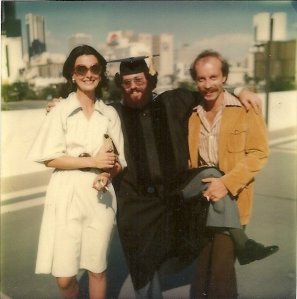
Law School Graduation

Don’t take life too seriously.

At 26, despite having no undergraduate education and never having taken the SAT, I was able to attend an accredited Law School, largely because I scored very high on the LSAT and after my first year easily passed the First Year Law Student’s Exam. It was not required of those who had their Baccalaureates. I received my Juris Doctorate in 1976.

I was lucky. I had some resources at my disposal and I had always been an avid reader and a self-learner – an autodidact. After graduating Law School I realized I didn’t much care for the legal profession and, coupled with my father having a major heart attack, I felt I had no choice but to join my family’s wholesale food distribution business. For the next 12 years I worked with my family and in several different jobs and businesses. You can see my profile for yourself. This is LinkedIn, after all. 🙂

Now . . . the question remains, what did I learn and what can I pass on to you as you begin your career? One thing, probably, is you don’t want to do what I did. However, there are at least two very important things I think brought me to where I am today (btw – check out my last job before retirement. It was a doozy), which isn’t wildly successful, but has given me a considerable amount of satisfaction.

First, don’t ever stop learning. Read, experience, experiment, test, and share. Learn so you can share what you know with others. It is the best way, IMO, to move forward. Too many people try and create a persona for themselves they hope will be perceived as irreplaceable. Don’t be one of them. Your value is in sharing knowledge, not hoarding it. You will be much happier because you won’t be constantly looking over your shoulder, wondering who’s sneaking up to replace you. You’ll be too busy concentrating on the steps above you.

Second. Perseverance. In the words of Coach Jimmy Valvano, “Don’t Give Up . . . Don’t Ever Give Up.” No matter how bad things are, they will improve if you just don’t give up. This doesn’t mean you won’t experience failures and setbacks. They’re inevitable. What it means is, despite your losses, despite those failures and setbacks, you need to pull yourself up and get on with your business. And when these things happen, refer to the previous paragraph; learn. Turn that sow’s ear into your very own silk purse; defeat into victory. You can do it.

I hope some of what I’ve written here will be of use to you. If you are in the intended audience for these “If I were 22” posts, you’ve got your entire career ahead of you. Keep your eyes and ears open. You don’t need to plan every step; serendipity is a wonderful thing. As you can see from the picture of my Law School graduation in 1976, above, I also think it’s important to not take oneself too seriously. Enjoy your lives and make others happy. Good luck out there.


It’s OK, Beth. We’ll Carry On From Here

Beth Thompson

Farewell, Beth. You touched a lot of lives and will be sorely missed

I posted the following on Facebook two days ago and I want to share it here as a tribute to my friend and former colleague:

I am beside myself with grief. A couple hours ago I received a message from a friend who wanted to confirm what he had heard – that our former colleague and good friend, Beth Thompson, had passed away. I started frantically contacting as many people as I could think of, all the while hoping it was just some stupid Internet screwup. It was not to be. Apparently, while preparing to leave for work this morning, Beth suffered a heart attack and passed.

Beth was one of my first friends when I joined the Program Office on the Space Shuttle Main Engine program at Rocketdyne. Her good humor and iconoclastic attitude helped me ease into the corporate world, a world I didn’t join until I was 40 years old, and was ill-suited for. Along with many others I’m proud and happy to still call good friends, Beth was family. I still have the card she picked out for me and had everyone sign when I left for what turned out to be a short stint back in my family’s business. That was about 17 or 18 years ago.

She moved up to the Seattle area with her husband, Paul, and their three children, where she continued to work for Boeing, one of several major players that passed Rocketdyne around like a financial hot potato. This is tough to digest. My kids have seen me cry for the first time in their memory. People who are younger than you aren’t supposed to die before you do. It’s just not right.

We hardly saw each other in the past few years, but we liked and commented on each other’s FB posts now and again. At least I knew she was there and I got to see a little bit of her life and happiness. That is now gone and my world is poorer for it. Goodbye, Beth. I love you and will always remember how you brightened my world and the world of so many others.


Universal Innovation

Sometimes, it seems like innovation is all anyone talks about. It’s been a really hot topic for the last five or six years; probably more. In the last two years before I left Rocketdyne — let’s see, that would have been from 2008 to 2010 — I participated in several innovation classes/exercises and, in fact, I setup the SharePoint collaborative spaces that were used by the teams in one of these exercises that were exploring different avenues for the company to invest in. I was also part of a team looking at one of the many technologies we were investigating at the time, and we even brought in a Professor from the USC Marshall School of Business to help us “learn” innovation.

I’m not going to get into my thoughts about what it takes to be innovative, or creative, but I just want to throw out this observation I’ve been mulling over for some time and see what others think about it. One of the things I think I’ve noticed is that almost everyone approaches innovation primarily as a way to come up with new products or services to sell. There seems to be what I think of as a blind spot when it comes to how we got things done, to our processes and procedures that are the backbone of our day-to-day activities. I’m also not confining the daily activities we might look at to businesses or governmental agencies and institutions either. I’m also thinking about things like mass public transportation and local traffic patterns and uses, our use of public facilities like parks and schools, the ways we approach (or choose to ignore) recycling, the value of our food and how we produce, distribute, and consume it – and on and on.

So here’s my big question for now. What if we started looking at enabling – empowering, if you will – everyone who was interested, to be involved in social and cultural innovation; in our continuous social and economic evolution . . . as citizens of our local municipalities, our neighborhoods, our nations, and even as inhabitants of the planet Earth, i.e. as a species? What if we came up with ways to encourage, communicate, evaluate, and pursue ideas that would improve – dramatically or otherwise – the lives of many people, perhaps everyone? Very public ways. What would that look like? How would we do it? What would be the biggest challenges? What infrastructure and social constructs are already in place to support such a thing?


Flying without slides…

After a great, useful conversation with Euan Semple yesterday, I am ramping up my efforts at “Working Out Loud” again (make sure you check out the links provided that address the question “What is #WorkingOutLoud). I came across this short post via a tweet on Euan’s website. It touches on several themes I find of great interest, not the least of which is the necessity of accepting – perhaps embracing – one’s vulnerability. There’s also some sage advice here in the comment by guy1067.

ballantine70's avatarmmitII

I’m presenting tomorrow morning to an audience of which I’ve been advised that one of the main people “doesn’t like Powerpoint”. The theme of the presentation is disruption.

In a spirit of self-disruption I’ve decided to present without slides. I might do an odd bit of the old flip chart, but no pictures. I don’t regard myself as a “bad Powerpoint” person. I tend to use big images and the decks I produce are usually visual aides that make little or no sense without me talking. Some might say they make little or no sense with me talking…

Preparing to present without them, though, has made me realise how much they have become part of my schtick. Visual metaphors. Puns. Pictures of the children to win over parts of the audience. Tomorrow morning I fly without any of that.

It’s been interesting, because it’s made me really think about the narrative of what I’m…

View original post 148 more words