This was my first week running the business I’ve been working at for nearly eight months. The owner had to return to England with his family to renew their visas and for him to take care of some family business.
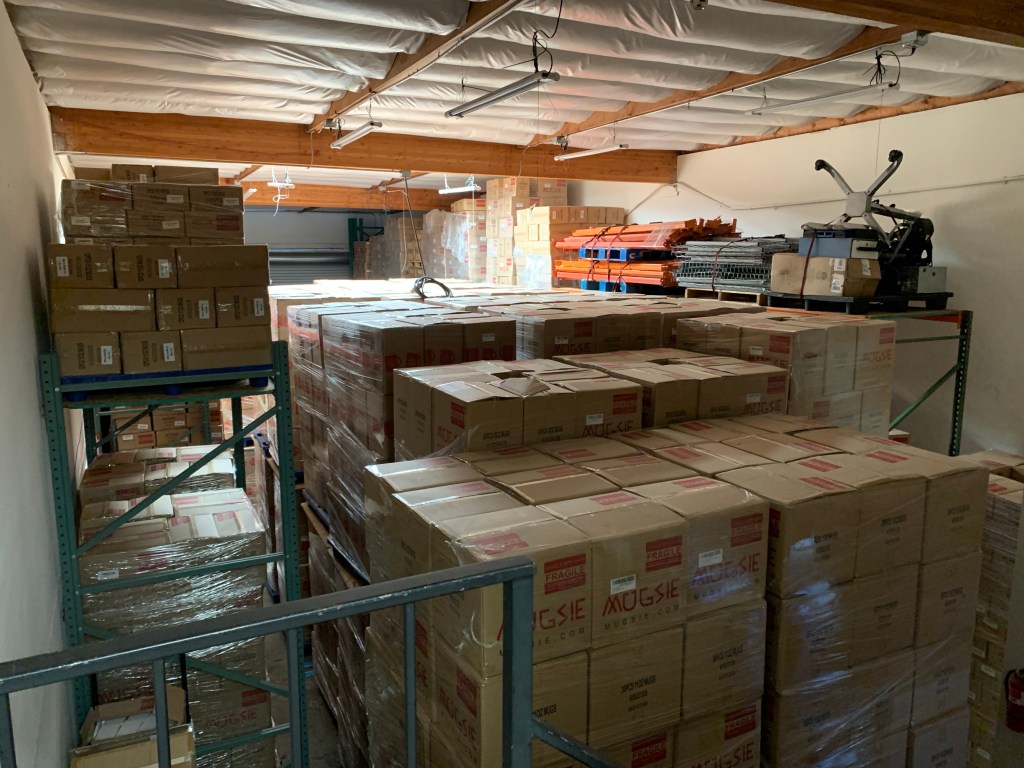
One of our three warehouses
It wasn’t a surprise. He had asked me early on if I was prepared to do it and I told him I would be happy to. Today was fairly slow, but the guy who’s been helping me out—and who I’m training to replace me when I get a job more suitable to my skills—decided not to come in.
I had to do a bit more than I expected to and by the end of the day I was whipped. I don’t generally have any problems doing the physical work I have to accomplish each day, but I ain’t no spring chicken and some days I really do feel my age. Today was one of them.
Going to bed early so I have the best chance of getting a refreshing night’s sleep. It will be another two and a half weeks before the boss returns. Fortunately, there are cell phones, texting, and email.
I don’t get much feedback that isn’t spam on this blog site, but I continue to carry on despite it. I did, however, just receive a wonderful communication with some good information that I’ve been asked to pass along. I’ll share the text and the link that accompanied it for you to check out. I have and there are some interesting businesses represented at the site. Most of them appear to be closely allied with activists and social justice causes. The page, located at a site called “Website Planet,” is “Support Black-Owned Businesses: 181 Places to Start Online.”
Here’s the text of the feedback, as I received it:
Hi there , I saw your page rickladd.com/, and I wanted to thank you for supporting the Black community. The events of last summer (BLM protests and COVID-19) saw many people rally to support Black-owned businesses. Sadly, since summer ended, people forgot to keep sharing and supporting these businesses. I just found a new article with links to more than 150 Black-owned businesses. I was so happy to see that people still care about helping these companies thrive! The link is here: https://www.websiteplanet.com/blog/support-black-owned-businesses/ I think sharing this link on your page would be a great way to help your readers keep supporting Black-owned sites and stores. I think it will be a great addition to your site and that your audience will love this new resource! Thank you in advance for your support, Fabiola
I believe now, more than ever, we need to show our support for our black brothers and sisters. This seems a good way to do it. Thanks to Fabiolo, who I’ll be emailing shortly to thank for providing the info.
One caveat … while some of these businesses offer merchandise online, many if not most of them are located in Brooklyn, NY and aren’t easily accessible by folks like me, who are out here on the west coast.
Most people likely have no idea who John Flannery is, even though he’s a fairly well-known, former Federal Prosecutor. I know him from his frequent appearances on The Beat With Ari Melber. Ari is fond of pointing out that John is a bit of a doppelganger for Robert Redford. If you’re interested, here’s his biography at the firm of Campbell Flannery, where he is a senior partner.
John likes to take walks in the morning and record his thoughts about current events, with his primary focus on politics and the law. This is a short video where he discusses Trump’s attempt to hold on to power, as well as the progress of the pandemic we’re suffering from. I think John’s insights are invaluable and quite interesting. Three minutes and fifty-nine seconds of usefulness. Take a listen.
Just thought I should mention today (Thursday, 14 May 2020) is the 10th anniversary of my retirement from Pratt & Whitney Rocketdyne. I’m still not entirely sure it was the right thing to do (accept the early severance package they offered everyone over 60) but her I yam!
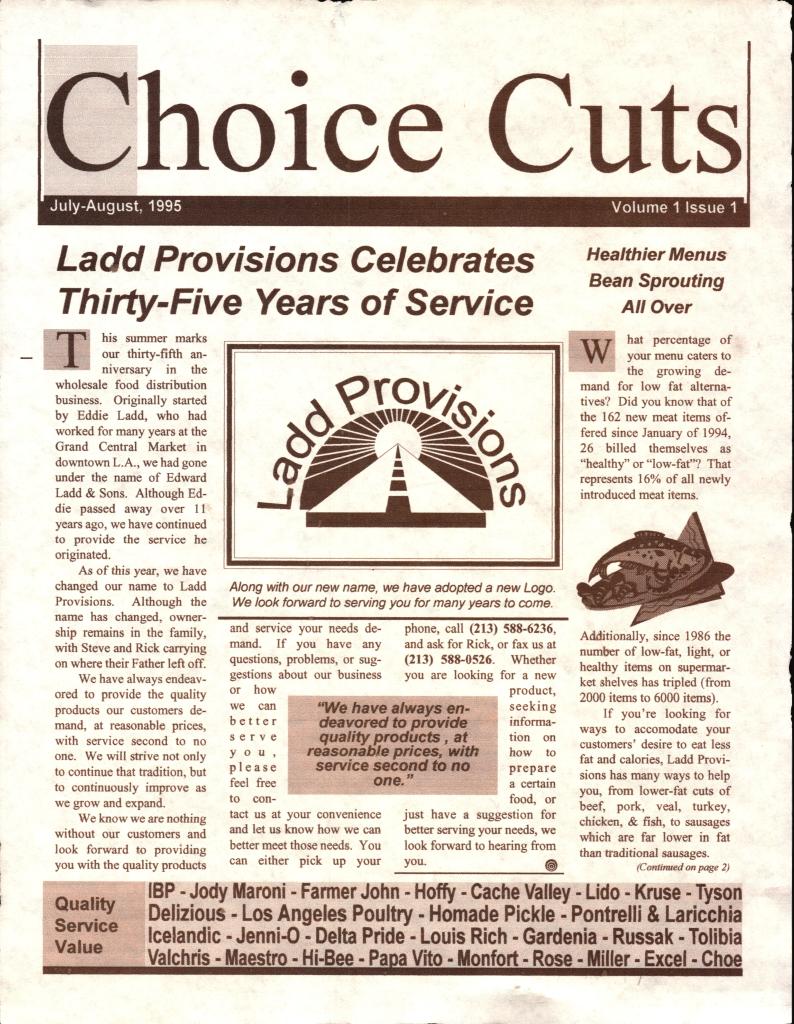
I think I’ve mentioned before that I’ve done quite a few newsletters over the years. I think I started doing them in part because it was what my father had done aboard ship during World War II, when he served as a Radioman in the U.S. Navy. I used to have a collection of his newsletters, which would be about five years older than me now. They might still be in a box somewhere in our garage. Maybe I’ll find out one of these days.
At any rate, here is a newsletter I found recently. I’m just posting it here because I scanned it and want to preserve it. Now I can throw away (recycle) the paper copy which, as you can see, is discolored from age. A quarter century is a fairly long time for it to have lasted. I probably shouldn’t have kept it, but I’m a paper pack rat.
I wonder if this pandemic, and our response to it, will change how seriously we take ourselves. If you’ve been watching television—and I’m going to go out on a limb here and assume most everyone is—you may have noticed some changes in much of live news and late night programming. Since nearly everyone who’s reporting is at home, by themselves, it’s obvious that the women anchors, reporters, and pundits are having to do their own hair and makeup. Regardless of how well they might do it, it’s not the same and it’s noticeable. I haven’t noticed how much, if any, makeup the men are wearing, but I have noticed a whole bunch of them has decided it’s not worth shaving right now (I’m one of them.)
So . . . what I’m wondering is, after we are able to return to some semblance of a normal life, where we can gather again so that newscasters and performers can return to the studio, when knowledge workers can return to their cube farms . . . will we? Better yet, should we? I spent the last few years of my career at Rocketdyne working from home. I’d like to think I was at least as productive, if not more so, than I was when I was going in to the office each day.
When I first started working there, I wore a suit and tie each and every day. By the time I left, the only time I wore a tie was if the “customer” (usually NASA) was visiting and we had to blow smoke up their asses. Knit polo shirts and chinos became acceptable and, on Fridays, everyone wore denim. I’d like to think one of the lessons we’ll glean from this (and there will be dozens, no doubt) is that we can be a lot more casual and still perform at a high level. And there are numerous ways to communicate, connect, and collaborate, especially if we’re not hamstrung by unnecessary and awkward notions of propriety.
This is another paper I found on my computer. Truth to tell, I have no idea who wrote it. It could have been me, but I don’t remember. I searched the phrase from the title in Google, but could not find anything. Inasmuch as I retired from Rocketdyne (and the pursuit of enterprise-wide KM) nearly 10 years ago, it could be from something I encountered more than a decade ago. Nevertheless, I’m sharing it with the caveat that I’m not claiming to have written it; I’m only asserting it’s an important document for anyone who’s struggling with getting their organization’s people to share their knowledge for the benefit of their company. My experience, as well as my discussion with those who are still involved in the corporate world, is that knowledge sharing is still nowhere near as widespread as I think it should be. So, without further ado, here’s that Baker’s dozen of reasons people aren’t sharing:
They
don’t know why they should do it. Leadership has not made a strong case for
knowledge sharing. Solution: Have the leader of the organization communicate
regularly on knowledge sharing expectations, goals, and rewards.
They
don’t know how to do it. They have not received training and communications on
how to share knowledge. Solution: Regularly communicate and conduct training,
webinars, and knowledge fairs. Web-based training and webinar recordings should
be available for all tools.
They
don’t know what they are supposed to do. Leadership has not established and
communicated clear goals for knowledge sharing. Solution: Establish and
communicate clear knowledge-sharing goals.
They
think the recommended way will not work. They have received training and
communications but don’t believe what they are being asked to do will work.
Solution: The KM leaders, knowledge brokers, and other members of the KM team
have to convince people in small groups or one-on-one by showing them that it
does work.
They
think their way is better. They are used to working on their own or
collaborating only with a small group of trusted comrades and believe this is
the best way. Solution: Regularly share stories of how others are benefiting
from sharing knowledge using the recommended ways. This should help sway those
stuck in their current ways to consider using better ways.
They
think something else is more important. They believe that there are higher-priority
tasks than knowledge sharing. Solution: Get all first-level managers to model
knowledge-sharing behavior for their employees, and to inspect compliance to
knowledge-sharing goals with the same fervor as they inspect other goals.
There
is no positive consequence to them for doing it. They receive no rewards,
recognition, promotions, or other benefits for sharing knowledge. Solution:
Implement rewards and recognition programs for those who share their knowledge.
For example, award points to those who share knowledge, and then give desirable
rewards to those with the top point totals.
They
think they are doing it. They are sharing knowledge differently than the
recommended ways (e.g., sending email to trusted colleagues or distribution
lists). Solution: Assign people to work with each community and organization to
show them how to use the recommended ways and how they work better than other
ways. Providing a new tool or process which is viewed as a “killer app” – it
quickly and widely catches on – is the best way for the old ways to be replaced
with new ways.
They
are rewarded for not doing it. They hoard their knowledge and thus get people
to beg for their help, or they receive rewards, recognition, or promotions
based on doing other tasks. Solution: Work with all managers in the
organization to encourage them to reinforce the desired behaviors and stop
rewarding the wrong behaviors.
They are
punished for doing it. As a result of spending time on knowledge sharing, they
don’t achieve other goals which are more important to the organization.
Solution: Align knowledge-sharing processes and goals with other critical
processes and performance goals.
They
anticipate a negative consequence for doing it. They are afraid that if they
share knowledge, they will lose their status as a guru (no one will have to
come begging to them at the time of need), that people they don’t trust will
misuse it or use it without attribution, or that they will not achieve other
more important goals. They are afraid of asking a question in public because it
may expose their ignorance or make them appear incompetent. Solution: Position
knowledge sharing as being a critical success factor for the organization.
Facilitate ways for people to establish trusting relationships through enterprise
social networks and face-to-face meetings. Recognize those who ask in public,
and provide ways to ask questions on behalf of others.
There is
no negative consequence to them for not doing it. Knowledge sharing is not one
of their performance goals, or it is a goal which is not enforced. Solution:
Work with all first-level managers to get them to implement, inspect, and
enforce knowledge-sharing goals. This needs to come from the top – if the
leader of the organization insists on it and checks up on compliance, it will
happen.
There are
obstacles beyond their control. They are not allowed to spend time sharing
knowledge, they don’t have access to systems for knowledge sharing, or they
don’t have strong English language skills for sharing with those outside of
their country. Solution: Embed knowledge sharing into normal business
processes. Provide ways to collaborate when not connected (e.g., using email
for discussion forums). Encourage those with weak English skills to share
within their countries in their native languages.
Corporate
culture consists of three levels: Artifacts; espoused values; and shared tacit
assumptions.[1]
Each of these levels is important in understanding not only what corporate
culture is, but how it works, and how it can be both changed and used to the
benefit of the organization as a whole.
Artifacts
Artifacts
consist of real, tangible things which can be associated with the organization.
For example, McDonald’s has its golden arches, KFC has its colonel, and Nike
has its swoosh. These are the most obvious, though not necessarily the most
powerful, artifacts which can be associated with a company or organization. The
more important artifacts are, for our purpose, things like architecture, décor,
and the way people act while at work.
Some
of the deepest feelings attributable to an organization’s culture are
engendered by artifacts. For example, outside the main entrance to Rocketdyne
sits an F-1 Rocket Engine. The engine stands approximately 20 feet high and, at
its base, is around 12 – 15 feet in diameter. In front of it is a simple,
bronze plaque, which informs you that this is the engine, along with four
others, which lifted the Apollo Lunar Modules off the earth on their trip to
the moon.
For
anyone who works there, and knows anything about the company where they work,
this engine evokes powerful feelings of accomplishment and success. I know from
firsthand experience and observation that this frequently translates into a
willingness (at the very least, resignation) to work that extra hour, to take a
little more time in assuring your work is the best it can be.
Espoused Values
These
may be characterized by, among other things, an organization’s beliefs, level
of communication, and methods of accomplishing it mission. These values may be
seen in such things as a company’s rules, policies, and procedures. It may be
found on the walls as slogans and posters. In talking to members of the
organization you may be told that the company believes in things like teamwork,
“best practices”, continuous improvement, and lean manufacturing.
At
Rocketdyne, the corporate mantra involves team-based component production,
commitment to safety, scientific analysis at all levels of the corporate
structure, and lessons learned, in addition to other policies and procedures
too numerous to mention. It is the background against which our daily
activities take place and translates into copious collections of data, numerous
briefings to higher and higher levels of management, and close inspection and
analysis of every piece of hardware which goes out the door.
However,
while many of these concepts may be spoken of, and may even appear as items of
value on the corporate web pages and on slogans and posters put up around the
plant and offices, it does not necessarily follow that they are actually
carried out in our day-to-day lives. Frequently, managers and others who will
say they believe in stated policies, are nevertheless placed in positions where
they are required by more specific policies to do exactly the opposite of what
the company says it believes in.
At
Rocketdyne, this can be seen in the use of individual awards and yearly
performance reviews, in spite of the outer appearance given by a team-based
organization. This is a case where the management, due to executive
requirements, fails to “walk the talk”, and falls back on “the way we’ve always
done it”.
This
inconsistency leads to what is arguably the most important aspect of culture,
the real, deep assumptions by an organization and its members of how to
accomplish the daily tasks, the sum total of which are the company’s true
vision and mission.
Shared Tacit Assumptions
This
is perhaps the most pervasive and, with respect to efforts at change, the most
insidious of the three aspects of corporate culture. They are the things which
“go without saying”, which we accept as the ways of the world, or the ways in
which things get done. People cannot readily tell you what their culture is,
any more than fish, if they could talk, could tell you what water is.[2]
In
the same way, a company’s shared tacit assumptions are taken for granted. Many,
if not most, people are incapable of seeing any other way to perform a task or
get a particular result. It is all they know, and to think otherwise is, in a
word, unthinkable.
At
Rocketdyne there are numerous ways in which this happens. They are frequently
discovered only when something goes wrong, or when a series of small things go
wrong which, by themselves might go unnoticed, but which lead to a major
problem. We have studied the Valuejet disaster in 1995 at some length, yet as
soon as we return to our jobs we occasionally find it easy to forget that it
can, and sometimes does, happen to us.
We
have instituted numerous methods of improving quality and performance, such as
quality circles, continuous process improvement, and total quality management.
We are in the process of instituting “lean manufacturing” and some of the
aspects of the theory of constraints. Nevertheless, we continue to assume
individual action and heroics are the real way things get done. We look for the
engineer or mechanic who will come up with the answer to difficult problems,
and neglect to look to the whole company for answers.
Recently,
some managers have been looking for people who can “think out of the box”, who
are capable of changing their frame of reference and understanding our problems
in unique ways, or approaching them from a different perspective. Still, the
focus is more on the individual and not on the team.
If
one sets about to change a company’s culture, its view of the world, it is of
the utmost importance to understand not only these three aspects of culture,
but also the depth with which they pervade the organization. Failing to do so
will certainly result in a misapprehension of the difficulty involved in
change.
The
most important things to realize are: 1. Culture is deep – it is tacit and
gives meaning and predictability to our daily lives; 2. Culture is broad – it
involves every aspect of our work and sometimes even invades the way we conduct
our personal lives, and; 3. Culture is stable – people are generally not fond
of change, and are far happier when everything goes along smoothly, just like
it did yesterday and the day before. Any attempt to enforce change is likely to
produce resistance and anxiety.[3]
As
formidable as the technical and procedural issues of Knowledge Management are,
the need to change an organization’s culture far exceeds them. Most all have
heard the term “knowledge is power”. This is generally perceived to be so and
frequently translates into a desire to hoard information. Many organizations
have experienced the “building of empires” which stands in the way of its
freely sharing collective knowledge. Without a major change in our attitude
toward ownership of information, we will not be able to take advantage of the
tools available to us.
Peter
Senge, in his book “The Fifth Discipline”, writes of the steps and the “core
disciplines” involved in creating a learning organization[4]
He points out that, among those disciplines, is that of having a shared vision,
and why it is important. Here is what Senge has to say about shared vision.
“In a corporation, a shared vision changes people’s
relationship with the company. It is no longer ‘their company;’ it becomes ‘our
company.’ A shared vision is the first step in allowing people who mistrusted
each other to begin to work together. It creates a common identity. In fact, an
organization’s shared sense of purpose, vision, and operating values establish
the most basic level of commonality. . . .
“Shared visions compel courage so naturally that people
don’t even realize the extent of their courage. Courage is simply doing
whatever is needed in pursuit of the vision.”[5]
I
can think of no better way to conclude my paper. Moving from our current
relationship with collective knowledge, our intellectual capital, may well
require a massive rethinking of our entire corporate culture. There are
organizations, mostly younger and already possessed of a shared vision which
includes becoming a learning organization, who are already pursuing this path.
However,
there are numerous, often older organizations which will be hard-pressed to
find the courage and character it will take to let go of the control they feel
they now have and embrace a new kind of control; that which comes from an
entire organization pursuing the same goals and vision. Until we experience the
transformation from being data and information driven, to being truly knowledge
driven, we will frequently be at war with ourselves.
Knowledge
Management provides some of the understanding of the problem, and the vision
and direction we must strive toward. However, without fundamental changes in
our attitudes the path will be long and fraught with difficulty. It is, however,
truly a worthy struggle and is almost certainly inevitable. Changes in
technology are coming at us with greater rapidity. We have no choice but to
develop new ways of thinking to better take advantage of the new tools placed
at our disposal. We owe it to ourselves.
[1]
Edgar H. Schein, The Corporate Culture
Survival Guide, (San Francisco, CA, Jossey-Bass, Inc., 1999), pp. 15-20
[4]
Peter M. Senge, The Fifth Discipline, “The Art & Practice of The Learning
Organization” (New York: Bantam Doubleday Dell, 1990; A Currency Paperback,
1994)
The
amorphous collection of knowledge residing within the minds and computers of
any organization is now being referred to as “Intellectual Capital”. The
question we face is how to preserve and invest that capital wisely. In order to
understand and solve this problem it is important first to understand how we go
about acquiring and sharing our collective knowledge.
The
processing of knowledge can be seen as occurring in one of four interrelated
steps. These steps may be characterized as sensing, organizing, socializing,
and internalizing. Each of these steps may be further characterized by specific
activities that people engage in to develop their understanding of, and ability
to use, the information they receive.
Sensing
Sensing
consists of two basic dimensions, discovering and capturing. Every day we are
experiencing the world around us, whether at work, play, or rest. Regardless of
where we are, be it work or home, the world impinges on us. It is the degree to
which we pay attention to our world that determines how much we will discover,
and how much of it we will manage to capture (remember).
In
order for information to be shared, or even utilized by an individual, it must
be captured. Capture in the context of this analysis consists of placing
information or knowledge in a form which is accessible by others. One of the
most obvious manifestations of information capture is a report, written and/or
posted on an intranet site, This aspect of Knowledge Management can also be
characterized as turning tacit knowledge into explicit knowledge. It prepares
the way for the next step in the acquisition and sharing of knowledge.
At
Rocketdyne, this is done through reports such as Monthly Progress, Inspection
Discrepancy and Correction, Periodic Schedule updates, Budget Variance, and
others. These items memorialize the analysis, by various individuals, of
information gleaned from sources as varied as the mainframe computer systems,
their own experience, and anecdotal knowledge learned from others.
Organizing
Once
information is acquired, it must be categorized and fit into each of our
personal set of experiences. People who have been at a particular function for
a long time generally know more about that function than those who have just
started performing it. This is so because “veterans” have had time to make
mistakes, to learn from those mistakes, and to adjust their behavior
accordingly.
They
understand almost intuitively how best to approach particular problems and how
best to solve them. This is the area in which we develop our tacit knowledge,
our knowledge which we find difficult to put into words, but know deep down.
Organizing
also has an external dimension and involves such activities as: The writing of
reports and presentations; the compilation of data, specs, or rules, and; the
maintenance of databases, spreadsheets, drawings, and other documents.
Socializing or Sharing
No
matter what our intelligence and experience, we still need to work with other
people. Although not true of all, most of us do our best, and learn the most,
when we collaborate and work with others. By working together, and sharing our
thoughts and feelings, we are capable of looking at problems and situations
from many different perspectives.
This
is where the whole becomes greater than the sum of its parts. When people
collaborate, they are generally capable of getting more done than when they
work separately. This is obviously true of producing a complex product, and it
is also true of understanding
Socialization
consists of all the informal ways in which workers interact with each other and
share knowledge. It is the tacit to tacit aspect of knowledge transfer.
Informal email, conferencing tools, even meetings over lunch and before and
after presentations and briefings fit into this category.
At
Rocketdyne this activity take many forms and, in some ways, continues on
throughout the day. In addition to the ways in which people share information
informally listed above, there are numerous conversations which take place at
peoples’ desks, over a cup of coffee, or during a cigarette break outside the
building.
Internalization
Once
information or knowledge is captured and set forth in explicit form, it is then
possible for others to benefit from it. This is done, for the most part,
through the reading of reports (however published) and the studying of graphs,
charts, etc. This phase may be characterized as explicit to tacit and leads to
summarizing, orienting, and personalizing of tasks and content.
At
Rocketdyne, this is done in numerous ways. There are briefings taking place on
a daily basis. There are Corrective Action Boards, Preventive Action Boards,
Material Review Boards, Flight Readiness Reviews, etc. Numerous schedules and
reports are placed on the intranet and each product team has its own intranet
presence. Additionally, every process has an intranet presence.
Regardless
of how we process knowledge, there remains the question of how we actually
relate to it and its pursuit. Too often, in our zeal to get through the day,
get things done, finish what we started, we fail to take the time to process
what’s happening in our lives or on our jobs. By failing to do so, we rob
ourselves of the sense of wonder and awe which precedes discovery and
invention. A complete approach to Knowledge Management must include an
understanding of the importance reflection and relaxation can play in the role
of innovation. To do so may require entirely new methods of presenting
information to knowledge workers, methods we can only begin to comprehend.
We
do know this. These methods will undoubtedly spring from the World Wide Web and
the Internet. Already, most large companies are using their intranet more and
more to gather and present the collective knowledge of their organization. Both
Boeing and Rocketdyne have an extensive intranet presence which includes Vision
statements, Mission statements, and items ranging from “Lessons Learned” to
benefits information to product part numbers and the Manufacturing Engineers
responsible for them. There are pages and pages of content devoted to
education, organization, and even Knowledge Management.
There
is one further dimension of knowledge which needs to be discussed, and that is
the concept of tacit knowledge. Tacit knowledge is knowledge which cannot be
put into words. Despite the numerous definitions, and the apparent disagreement
of what exactly Knowledge Management is, there appears to be a great deal of
agreement on the type of knowledge which presents the greatest amount of
potential benefit to a business.
IBM states the issue thus, “. . .lots of valuable
knowledge ‘falls through the cracks’ within business organizations, never
finding its way into databases, process diagrams, or corporate libraries. As a
consequence, much of what the firm ‘knows’ remains unknown or inaccessible to
those who need it. Such knowledge is present within the organization, but it
remains hidden, unspoken, tacit. In business organizations, this hidden or tacit knowledge takes one of two forms:
1) knowledge embodied in people and social networks, 2) knowledge embedded in
the processes and products that people create.”[1]
Tacit knowledge, therefore, represents at once both the
most important type of knowledge and the least accessible form of knowledge. It
is invaluable in efficiently carrying on the activities of an organization, yet
is exceedingly difficult to harness in any meaningful fashion. Even when an
organization is able to somehow chronicle the experience of its employees, it
does not follow that it will be capable of passing that knowledge on in a
manner that is both easily accessible and effortlessly assimilable. Two
examples which come to mind from the organization of which I am a part are
welding and scheduling.
Welding
of exotic metals, especially for components which will be used in manned space
flight and are, therefore, subject to the most stringent specifications, is
composed of both explicit elements and tacit elements. While the former (the
explicit elements) may be capable of precise, scientific expression, the latter
of these are similar to art. It is not uncommon to find that a welder has
retired and, suddenly, the company is without a person who can reliably perform
a critical weld. Immediately, the company finds itself in a position where it
must either allot a far greater amount of time to accomplishing the weld, or
attempt to lure the retired welder back to perform the weld or to teach a
younger welder how to do so.
The
second example involves the scheduling of complex, time-phased activities which
include the procurement, manufacture, inspection, and testing of literally
thousands of items used in the manufacture of rocket engines. This task was
performed for years by groups of individuals using hand-drawn Gantt charts. It
is now being performed by individuals using a combination of mainframe software
(e.g. MRPII, OPT21) and PC-based, standalone software (e.g. Microsoft
Project98, Advanced Management Solutions’ RealTime Projects). Experience is
showing that the earlier, more labor-intensive methods were, against all logic,
accomplished with greater accuracy and reliability.
These
two problems point to the necessity of Rocketdyne’s utilizing one of the basic
elements of Knowledge Management, that of acquiring, retaining, and
disseminating the tacit knowledge, gained through years of experience, of its
workforce. This is not the same as simply cataloguing items such as tools used,
temperatures achieved, lead time per component, and supplier on-time
reliability, nor even placing all this information within easy reach through
the company intranet.
Inherent
in the definition of tacit knowledge is its ephemeral nature, the difficulty of
conveying things which are understood, at times, only subconsciously or of
which people are only vaguely aware. This, then, is probably one of the most difficult
tasks faced by any organization, given our current state of development in the
field of Knowledge Management.
[1]Working With Tacit Knowledge.
Horvath, Joseph A., Ph.D. IBM





 Systems Savvy