Author Archives: Rick Ladd

About Rick Ladd

Unknown's avatar
I retired over14 years ago, though I've continued to work on and off since then. Mostly I'm just cruising, making the most of what time I have remaining. Although my time is nearly up, I still care deeply about the kind of world I'll be leaving to those who follow me and, to that end, I am devoted to seeing the forces of repression and authoritarianism are at least held at bay, if not crushed out of existence. I write about things that interest me and, as an eclectic soul, my interests run the gamut from science to spirituality, governance to economics, art and engineering. I'm hopeful one day my children will read what I've left behind.

On The Cusp!

There are two books that have had an inordinately large effect on my life. One of them I can remember large parts of and can offer reasonably intelligent analyses of what the author was trying to say. The other one I can hardly recall one thing about, save for the overall message the author was trying to convey. The reason these two come to mind—and have affected me so greatly—is that they’re closely related conceptually and their messages resonate and overlap, at least as I see them and I’m pretty sure that’s about all that counts.

Photo by Pixabay on Pexels.com

The first of these two books is “The Wisdom of Insecurity,” by Alan Watts. The second of these books is “Passages,” by Gail Sheehy. Without going into any detail, I’ll merely note that each of them speaks to the inexorable rhythms of life and the inevitability of change. They also offer a philosophical approach to dealing with those rhythms and changes that offers one a chance to navigate them with as little friction and pain as possible. I read the book by Watts in my early twenties. At the time I was head-over-heels in love with a young woman, but the relationship wasn’t to be and she broke up with me. I was young, impetuous, and prone to bouts of manic happiness and deep, dark depression.

I somehow found the book; how is lost in the mists of my slowly calcifying synapses. Perhaps it found me. It wasn’t the first book by Watts I had read. That was “The Book: On the Taboo Against Knowing Who You Are,” which I found quite helpful in navigating the changes I was going through shortly after high school, a short stint in the U.S. Navy, a slightly longer stint as a businessman, a somewhat shorter flirtation with Haight-Ashbury in the Summer of ’67, and a steadily growing antipathy toward the nation’s conduct of the war in Vietnam.

Another thing I thought interesting, and somewhat serendipitous, was the juxtaposition of the release of two Beatles records that coincided with my reading of these two books by Watts. When I read “The Book: …” the Beatles had just released “Everybody’s Got Something to Hide Except Me and My Monkey.” The book was kind of my introduction to Zen Buddhist philosophy and the concept of the dialectic as represented by the Yin-Yang symbol. I was beginning to understand the duality of nature and the essence of all forms of evolution. Some of the lyrics in the song point out that same kind of duality, e.g. “Your inside is out when your outside is in. Your outside is in when your inside is out,” and the title of the song seemed to resonate with Watts’s message that we needed to get in touch with our actual selves (our “inner monkey”) if we were to understand our place in the world and not color it with the expectations of others.

The second song, which coincided with my reading of “The Wisdom of Insecurity,” was “Let It Be” which, as I understood it was the message Watts was conveying about the reality there is no such thing as security, that all things are in a constant state of flux, and the only way to (paradoxically, a very Zen concept) achieve any semblance of security—no matter how ephemeral and transient it may be—was to stop seeking it.

Sheehy’s book, as I recall it (and I only read it once, whereas I’ve read The Wisdom of Insecurity three times) had a similar message, but it was less on a spiritual and philosophical level and more on a practical, everyday “here’s what to expect” kind of approach. She wrote of what she referred to as the “passages” we all go through as we age and gain experience, while everything around us is changing and moving forward.

The reason I’m bringing this up is because I have reached a point (a passage, if you will) in my life where I find far too many reasons to prepare myself for the end. I’ll be 74 years old three months from today. Next month I will be fourteen years older than my father was when he died. I realize I’ve reached an age where I could, conceivably, live another decade or more, but I could also drop dead tomorrow. There sure are a lot of people doing it who are younger than me.

Throw in the reality that I still have two daughters at home, one of whom is a Junior in High School, the other a Freshman in College, and it’s producing a bit of a tension arc that I’m struggling to put behind me.

I’m not trying to be morose, or overly glum. I am, however, attempting to approach what is definitely the autumn (more likely winter) of my life with as much spring in my step and lightness in my heart as I can muster. I need to understand what this passage I’m experiencing is all about (Sheehy did not write about septuagenarians) and position myself to take advantage of all it might offer. If there’s one thing I have learned over the years, it’s that there’s always benefit to be found in nearly every situation, at least until there isn’t (if that makes sense.) I am an optimist, so even when I get deeply (perhaps depressingly) introspective, I usually snap out of it within a few hours or now more than a day or two.

I’m looking forward to what the next stage of my life is going to offer. Both of my girls will be on their own in a few years, God (or whoever’s in charge of these things) willing and the creek don’t rise, and Linda and I will be on our own again. The difference for us, is we won’t be in our early to late fifties, like most people who have their families when they’re no older than their thirties. As long as I know my girls are doing well and taking care of themselves (which is an entirely different story) I’ll be OK with whatever happens. I will say this. Not having to help with high school homework will be deeply enjoyable!

If I live that long. 🙂


White History Month’s Greatest Hits

I’m not normally fond of using WordPress’s “Press This” function, because it only pulls a few words into my blog from the original post. It’s good because it means anyone wishing to read the article can see it in its entirety as originally published, but it also means I might have to copy some words over to make the post a little more intelligible and to provide some needed context.

Nevertheless, this article is one I consider extremely important . . . for white people to read. As I commented when posting it to Twitter and Facebook: “We may not have invented racism, but we sure as hell have benefited from it these last 3 or 4 centuries. It’s up to us to end it. That’s the real “White Man’s Burden!”

Check this article out. You might want to read more at The Root as well.

After a grueling 28 days of watching corporations, institutions and random white people pretend to care about the legacy of Martin Luther King Jr., Harriet Tubman and that other Black guy with the big part in his afro (I think it’s Booker T. Douglass), we now return to our regularly scheduled program.

Source: White History Month’s Greatest Hits


Manzanar & Toyo Miyatake

In the Spring of 2018, my wife’s niece arranged for a few members of the family to take some portrait photos. She chose the studio of Toyo Miyatake, a photographer who was imprisoned in the Manzanar concentration camp, during World War II. My wife is Sansei (3rd generation Japanese-American) and grew up on Monterey Park, CA, where most of her family continues to reside. The studio is currently being run by his son, Archie, who took some wonderful pictures of my wife, our daughters, and her mother, sister, and niece.

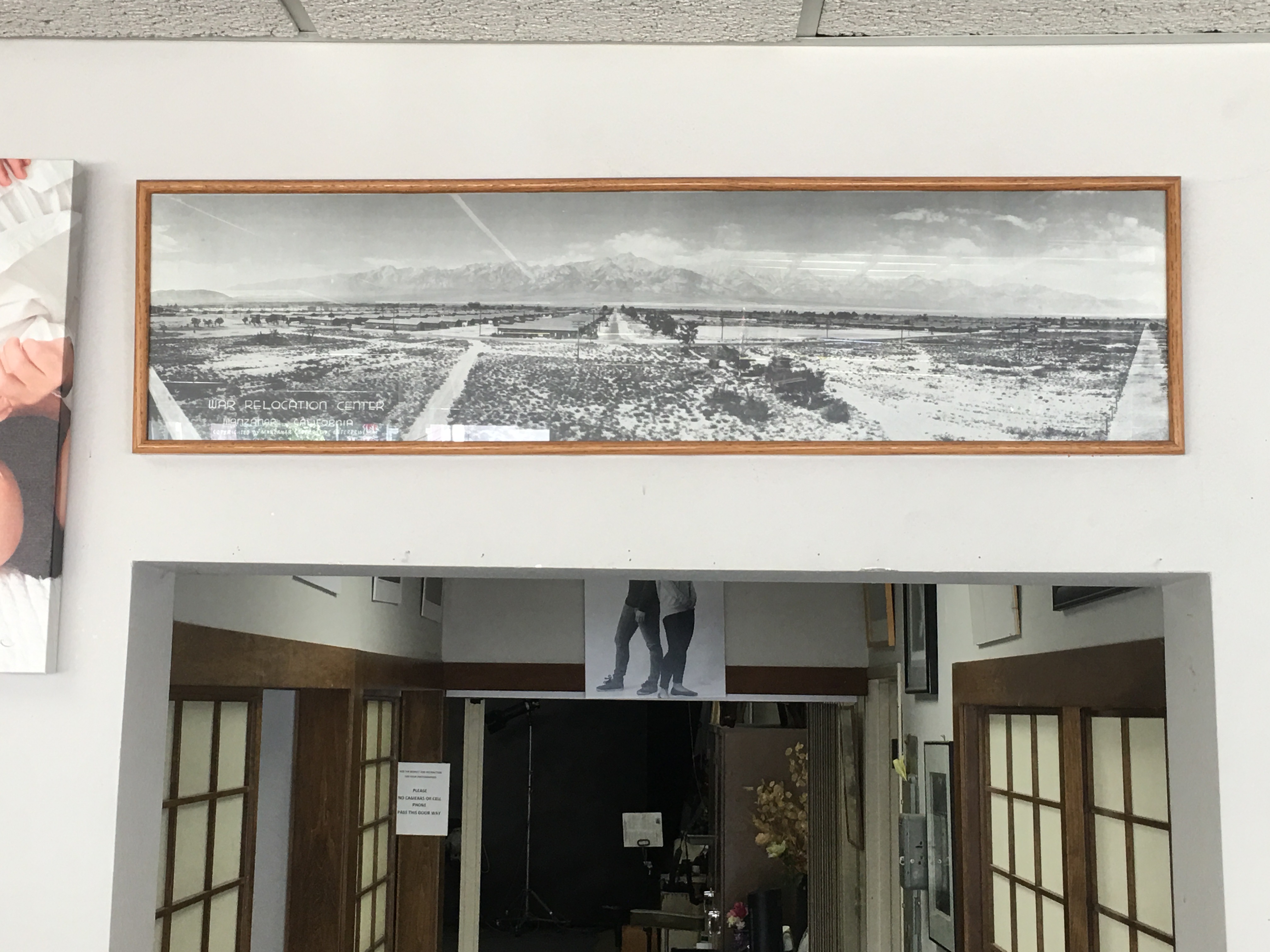
Caption on photo reads “War Relocation Center – Manzanar, California”

The studio is in San Gabriel and it’s filled with lots of photos taken by Toyo and Archie and I snapped some pics with my phone to share. I didn’t get around to doing anything until now, for reasons I’m incapable of reciting. Nevertheless, here they are. In looking for information on Toyo and Manzanar, I came across the Densho Encyclopedia, which has this to say about their work:

From the Densho Encyclopedia’s website:

The Densho Encyclopedia is a free and publicly accessible website that provides concise, accurate, and balanced information on many aspects of the Japanese American story during World War II. It is designed and written for a non-specialist audience that includes high school and college students and instructors, multiple generations of Nikkei community members, confinement sites preservation groups, amateur and professional historians, librarians, journalists, documentarians, and the general public.

The Encyclopedia is thoroughly cross indexed and articles are linked to relevant primary and secondary materials from the Densho archive and from other websites that include still and moving images, documents, databases, and oral history interview excerpts as well as standard bibliographical sources.

https://encyclopedia.densho.org/about/
Caption on left reads, “Manzanar Spring 1944”

The history of America’s treatment of Japanese-American citizens during WWII is a stain on everything this country is “supposed” to stand for, yet rarely seems to be able to provide. It was the result of racism and chauvinism, of nationalism and white supremacy. It set the Japanese-American community back years, if not decades, especially for those families whose property was stolen by white citizens who remained behind. Some were able to reclaim their homes and farms, but many didn’t. Toyo Miyatake was imprisoned here in California, at Manzanar. Here is what the Densho Encyclopedia has to say about his time there.

From the Densho Encyclopedia’s website:

The exclusion order forced Miyatake, his wife and four children, to the concentration camp at Manzanar. He was able to store his photographic equipment but managed to smuggle a camera lens and film plate holder into the camp against government orders. Miyatake told his son Archie that he felt it was his duty to document camp life. An Issei carpenter in camp constructed a box to house the lens, and Miyatake was able to get film into camp by way of a hardware salesman and former client. The photographer eventually asked camp director Ralph Merritt if he could set up a photo studio, and Merritt, who learned about Miyatake from Edward Weston, consented with the provision that Miyatake only load and set the camera, and a Caucasian assistant snap the shutter. Eventually, that restriction was lifted, and Miyatake was designated official camp photographer, and granted the freedom to take photos of everyday life at Manzanar. While there, Miyatake met and began a longtime collaboration with Ansel Adams, who wanted to capture candid photos of people there; the two men later published their work together in the book Two Views of Manzanar. Miyatake’s groundbreaking Manzanar photographs have also been featured in a 2012 exhibition at the Eastern California Museum called “Personal Responsibility: The Camp Photos of Toyo Miyatake.”

https://encyclopedia.densho.org/Toyo_Miyatake/

The collage I’m sharing, below, is of Archie recreating one of his father’s more iconic photos. He was able to find the now grown men who were originally pictured in Manzanar and bring them to the site for the shoot. I think the photos are pretty self explanatory, but the second row has the money shots, IMO.

Manzanar then and now!

I’ll share three more photos I took while we were there. The photo on the left is of a portion of the front of the studio, where much of Archie’s work is displayed. It was there I saw large photos of people like Condoleezza Rice and Vin Scully, in addition to many others. The center photo is of Archie shooting photos of my family, which consisted of my wife, my MIL and SIL, along with My SIL’s daughter (our niece), her grand daughter by her other daughter (deceased) and our two daughters. The photo on the right is a collage of photos Archie took at the wedding of “Uncle” George Takei and Brad Altman. Click on any of the pics to see a larger version.

Aaaand . . . since I’ve mentioned George and Brad, I have one more photo to share, below these three. On September 19, 2019, Linda and I attended a talk at The Ricardo Montalbán Theatre, in Hollywood, where George was discussing his newest book, “They Called Us Enemy.” We purchased a copy and, while waiting in line to get it autographed, Brad walked through the line greeting everybody. We got a nice photo with him. Here’s how George’s book has been described:

George Takei has captured hearts and minds worldwide with his captivating stage presence and outspoken commitment to equal rights. But long before he braved new frontiers in Star Trek, he woke up as a four-year-old boy to find his own birth country at war with his father’s-and their entire family forced from their home into an uncertain future. In a stunning graphic memoir, Takei revisits his haunting childhood in American concentration camps, as one of over 100,000 Japanese Americans imprisoned by the U.S. government during World War II. Experience the forces that shaped an American icon-and America itself-in this gripping tale of courage, country, loyalty, and love.

https://www.hoopladigital.com/title/12579768

Linda, Brad, & Moi

TJ’s 5-Tab Browser

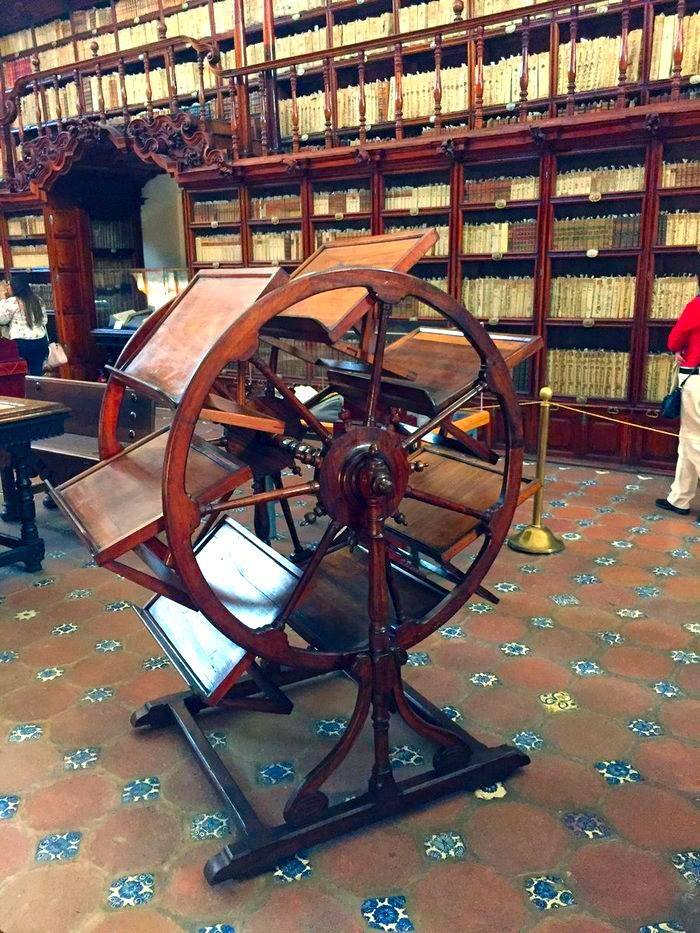
A friend of mine posted an interesting picture the other day. She’s a librarian and often posts items of interest regarding libraries, books, reading, and education in general. It was of a 300-year-old library tool that enabled a researcher to have seven books open at once. She also commented, “Now they’re all just browser tabs,” referring to how we do research nowadays using multiple tabs on whatever browser we happen to be using, whether it’s Chrome, Firefox, Edge, Opera, etc. Below is the photo from her post.

Old-Fashioned Browser

Seeing it instantly reminded me of a tool I had seen over a decade earlier when I had the opportunity to visit a vendor in Charlottesville, Virginia, the owners of which I had become friends with. I was on my way back home from a conference in Maryland and stopped to visit with them for a couple of days. Inasmuch as Thomas Jefferson’s mansion and slave plantation, Monticello, was nearby, I felt obliged to check it out. It was in Jefferson’s library that I saw the item this tool had reminded me of. It was another type of research tool (depicted below) that served the same purpose. Also, I remembered it specifically because, at the time, I thought the same thing my friend did; this was the 18th/19th century equivalent of having five (Jefferson’s wasn’t quite as lavish as the one above) browser tabs open simultaneously.

TJ’s Monticello Five-Tab Browser

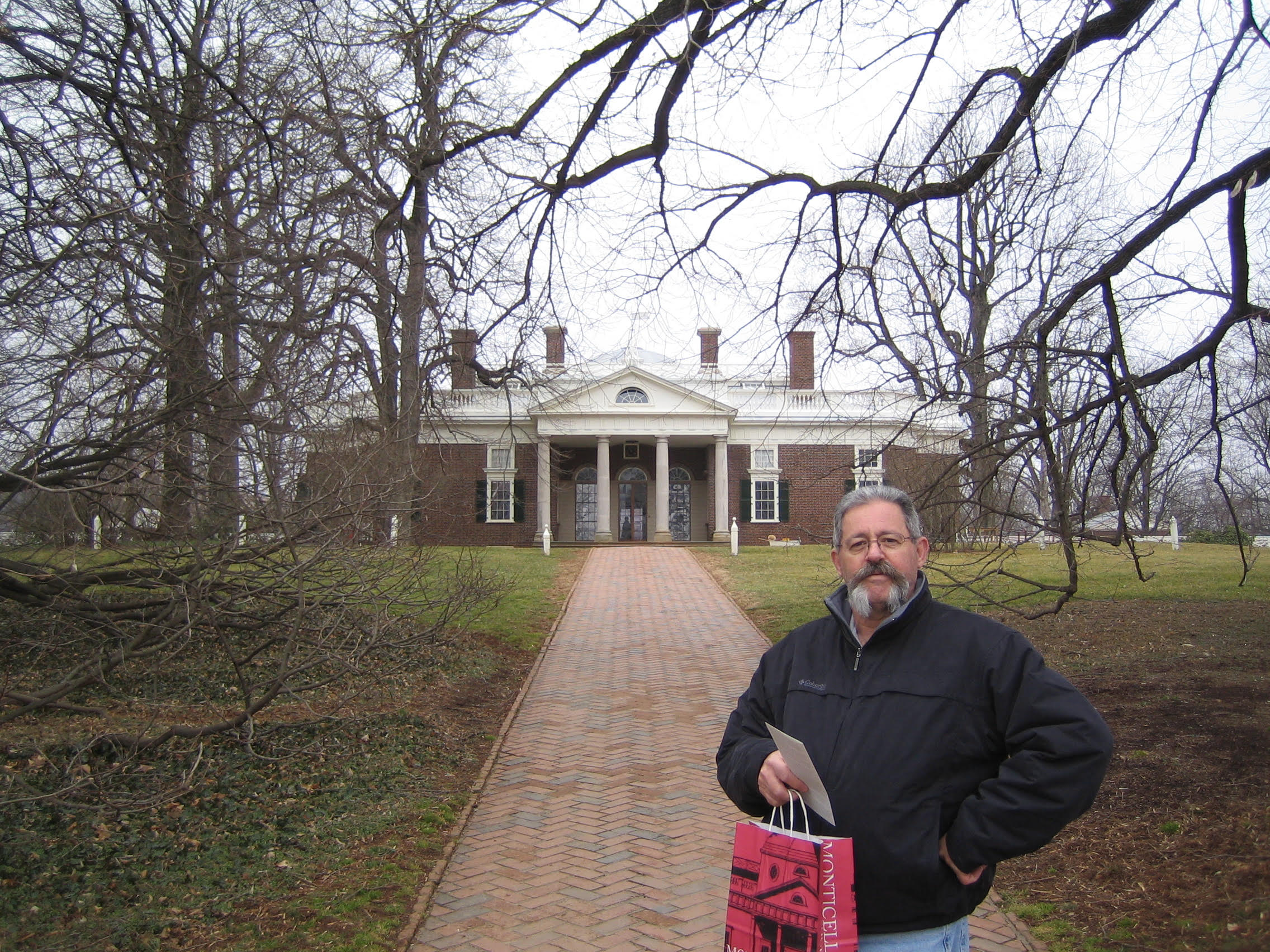
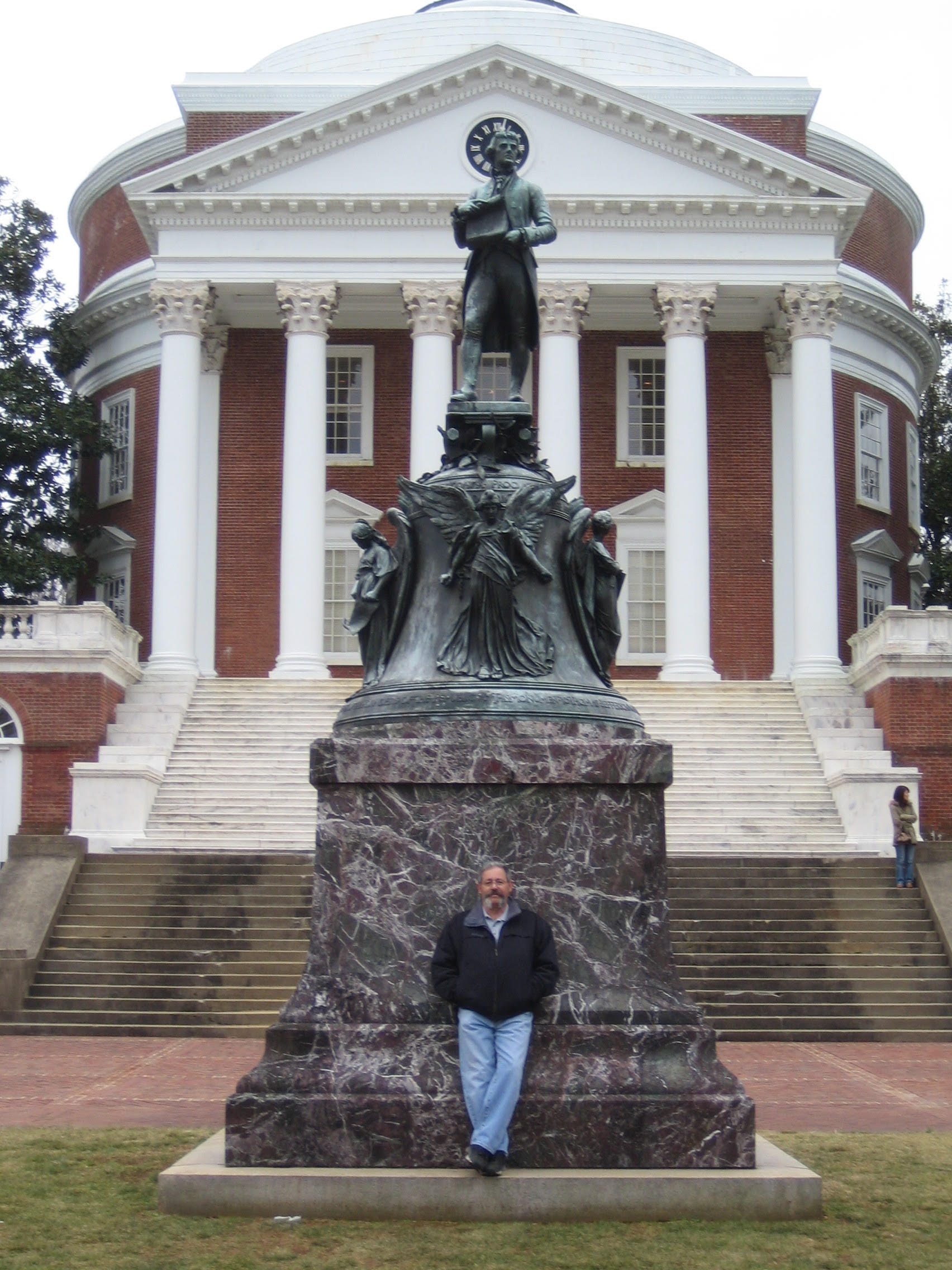
I also had the pleasure of visiting the University of Virginia, which had been founded in 1819 by Jefferson. Seven years later, Edgar Allan Poe attended the University where, apparently, he had to raise money for tuition by gambling because his father hadn’t sent him to school with enough money to get my. Below are a few more pictures from my visits in Charlottesville.

Fully-Mustachioed Rick Apres-Visit
Jefferson’s Burial Plot Marker
I Think This Is The Entrance To The University Of Virginia
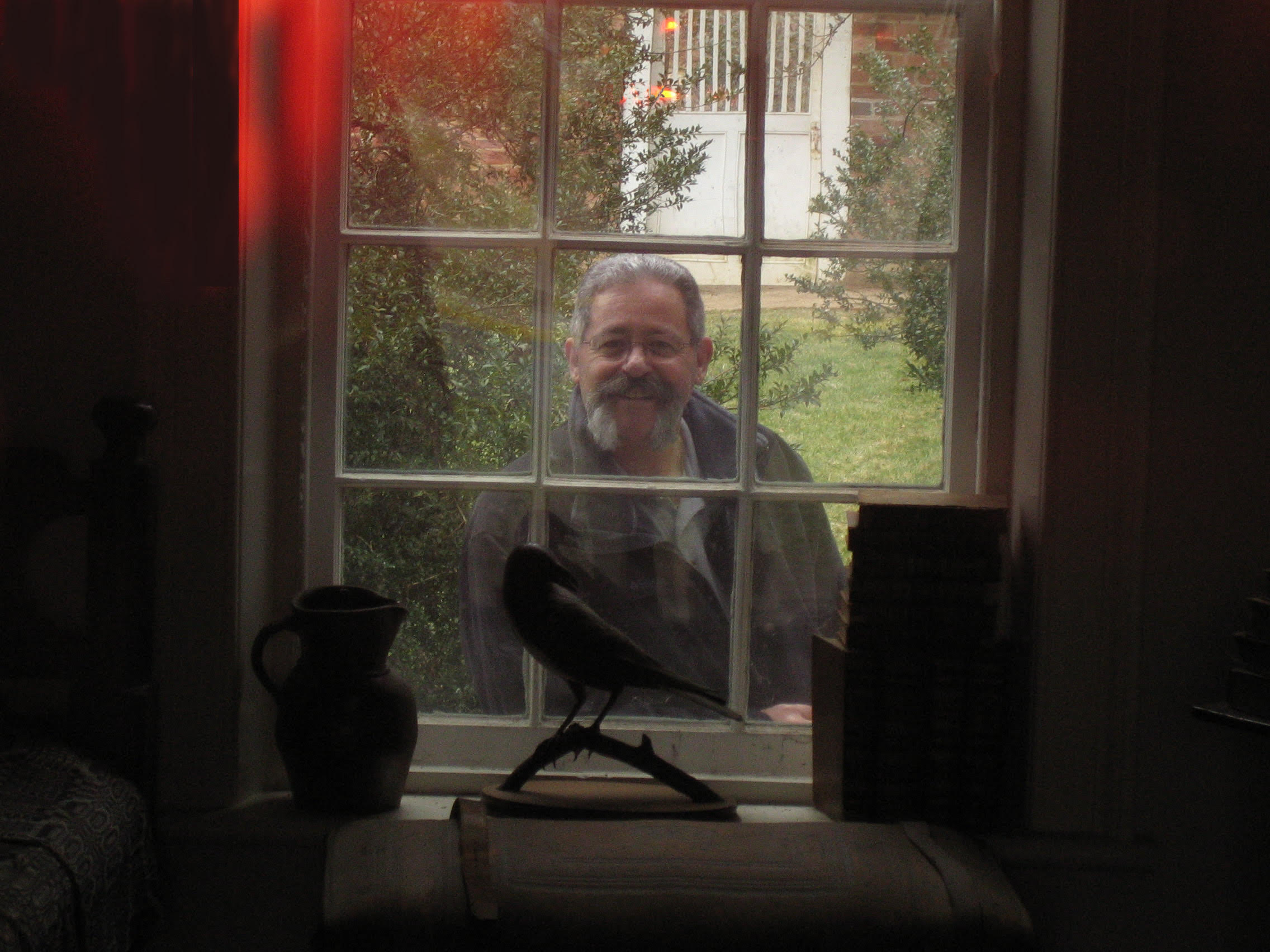
Edgar Allan Poe’s Dorm Room, Which Is Sealed. This Photo Was Taken Through A Window On The Other Side Of The Room. Can You Say, “Nevermore“?

Perseverance Arrives!

A Blue Martian Sunset

I was raised in the San Fernando Valley. Sputnik 1 was launched exactly four months after my 10th birthday. I remember lying outside on our front lawn, watching it go over. It was exciting and mysterious at the same time. I have a vague memory of seeing the United States’ first satellite, Exlorer, go over and I have a real vivid memory of seeing Echo as it orbited our planet. Echo was a giant aluminum balloon that, when inflated in orbit, was 100 feet in diameter and reflected the Sun, making it the brightest object in the sky except for the Moon.

I also have vivid memories of rocket engine tests in the Santa Susana mountains, just slight northwest of where I lived. Many of the tests were conducted at night, and I could see the sky light up over those mountains. As I grew up, I had friends whose parents worked at Rocketdyne, the company that built just about every liquid-fueled rocket engine used to power America’s space program, including Mercury, Gemini, and Apollo, not to mention the Space Shuttle.

Little did I know that many years later I would, quite serendipitously, get sent on a temporary assignment to work at Rocketdyne. I had been working at a company that manufactured what were, at the time, high density hard drives. This was in 1986 – 1987, and high density meant something like 5 Gigabytes! It was, for some reason I still can’t quite fathom, a seasonal business and when demand dropped all the temporary employees got laid off. That was me. I lost my job on a Friday. Later that evening I got a call from Apple One, the organization I was temping through, telling me to show up at Rocketdyne’s Canoga Park facility the following Monday.

To make an exceedingly long story short, I started work on the FMEA-CIL (Failure Mode & Effects Analysis-Critical Items List) the document that would prove Rocketdyne’s RS-25, SSME (Space Shuttle Main Engine) was safe for the Shuttle’s return to flight almost a year to the day after Challenger exploded during the ascent of STS-51-L. (For clarity, I think it important to note those engines were not responsible for the loss of Challenger; they had worked just fine.) I had long been a space cadet (in far more ways than one) but I never imagined I could end up working there, as I wasn’t an engineer. Silly me. I just hadn’t realized it takes a lot more than engineers to run a business that large and complex.

I was hired in after a year as what they referred to as a “job shopper.” I was forty years old. I retired 23 years later and it was the best, most fulfilling job I ever had, though dealing with a huge corporation (and “the Rock,” as we called it, was part of Rockwell International, the Boeing Company, United Technologies’ Pratt & Whitney Division, and Aerojet) was why I left early. The Shuttle program was winding down and P&W offered everyone over 60 a severance package I just couldn’t refuse, even though it wasn’t terribly generous.

Nevertheless, I’ve remained deeply interested in space exploration. I have long believed it’s important to the survival of humanity we get off the surface of this planet. I believe we need to establish not merely a scientific, but also a cultural presence off-planet in case of an extinction-level event. Frankly, it’s my opinion if we don’t do something about climate change and our contribution to it, we may be the ones causing such an event.

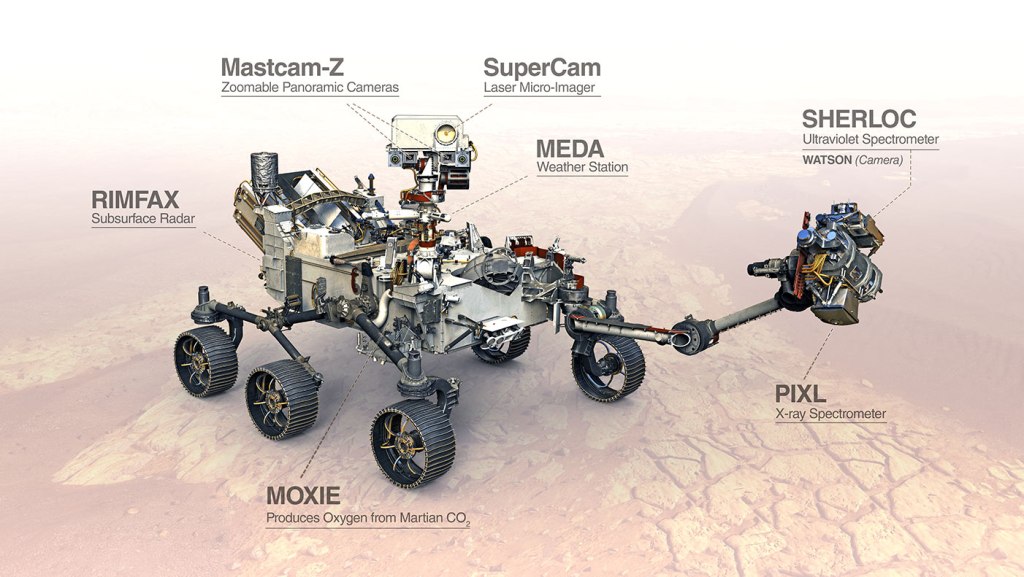
At any rate, all this is to say I am happy Perseverance landed safely on Mars this afternoon (PST) and appears to be functioning as designed. I’m looking forward to learning more about the Red Planet. I’m especially keen on learning how well the Moxie instrument (see graphic, below) accomplishes its mission of producing oxygen from Martian CO2. Congratulations to JPL and the Perseverance team. Job well done!

PS – I’ve also posted a graphic depicting one of Perseverance’s scientific missions, the Ingenuity helicopter which, if successful, should dramatically improve our ability to send rovers to the most fruitful (scientifically) locations, after they’ve been scouted out by Ingenuity and its successors.


Geese & Ducks & Coots, Oh My!

Yesterday I had to take my youngest daughter to the orthodontist to get her braces checked. She’s almost done with what is looking like a two-year ordeal to straighten her teeth. After she was done, we stopped by a local pet and feed store and picked up a bag of duck food, which they sell for $1.00/lb. We then went to Rancho Simi Community Park, which has a fairly large pond and is always filled with lots of ducks, geese, coots, and various other species of birds.

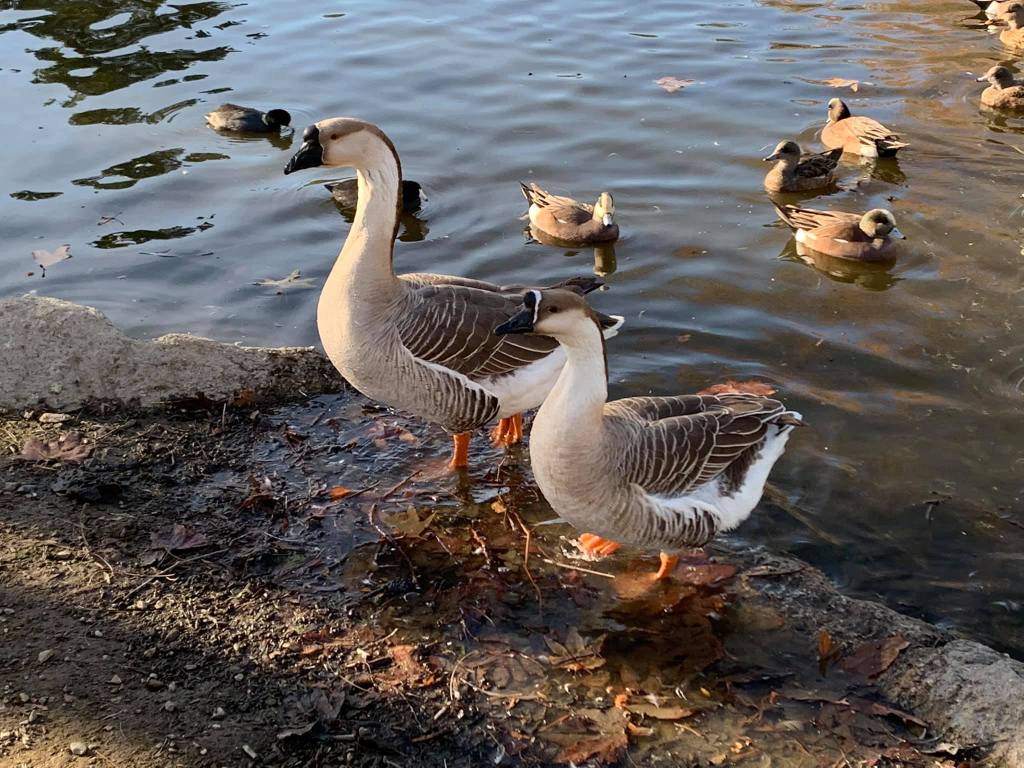
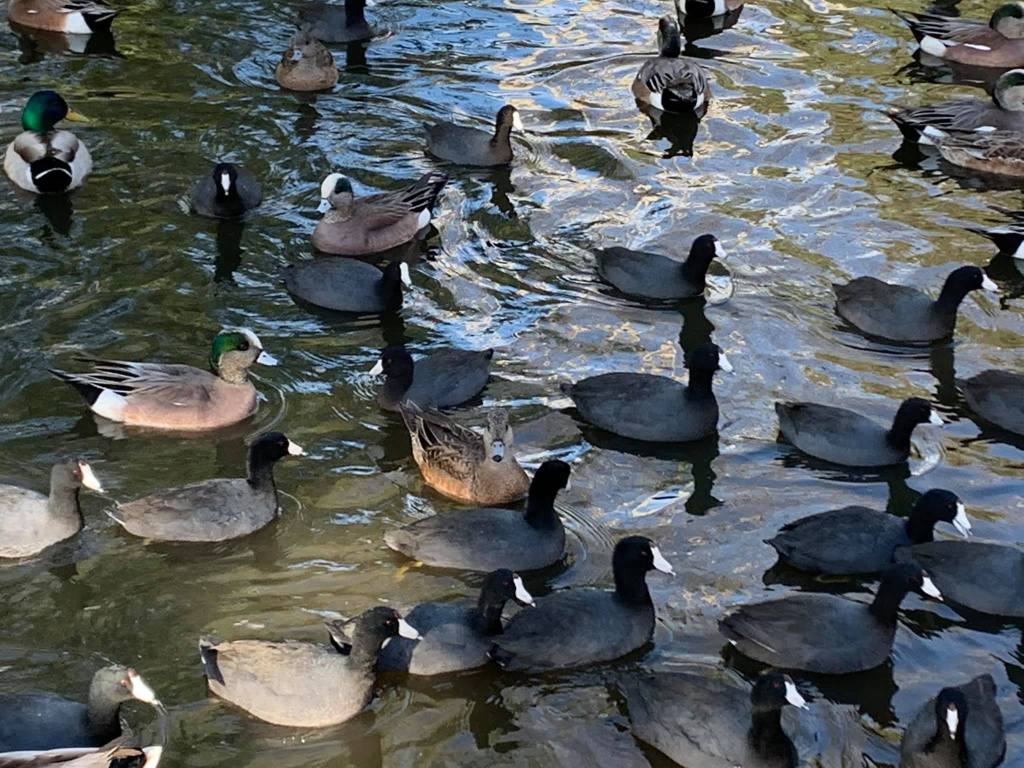
I took a bunch of photos as she was feeding them and they were milling around waiting or congregating to snatch up the tiny pellets of food she was throwing to them. I’m not conversant in all the different types of ducks there are, but I recognize Canadian honkers when I see them and I’ve researched the other species of goose that seem to live there year round. The first picture here is of Chinese geese. The only thing I can say for sure about them is . . . they’re assholes; at least the males are. They’re very aggressive. A couple of months ago I had to lightly kick one of them to keep it from attacking me.

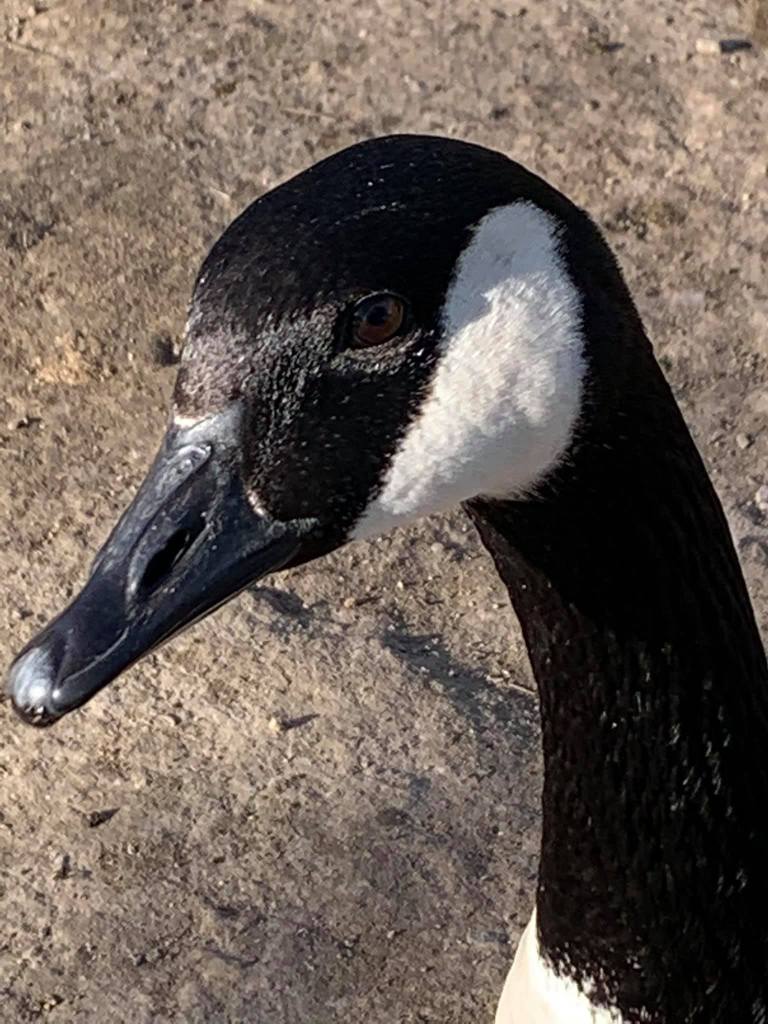
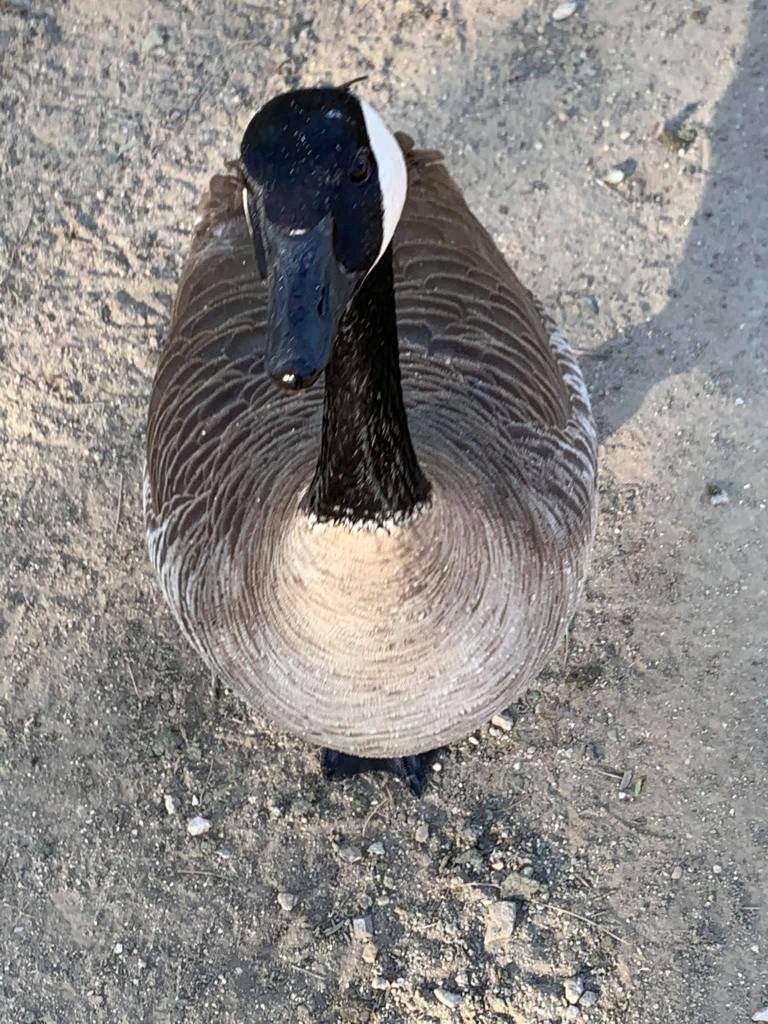
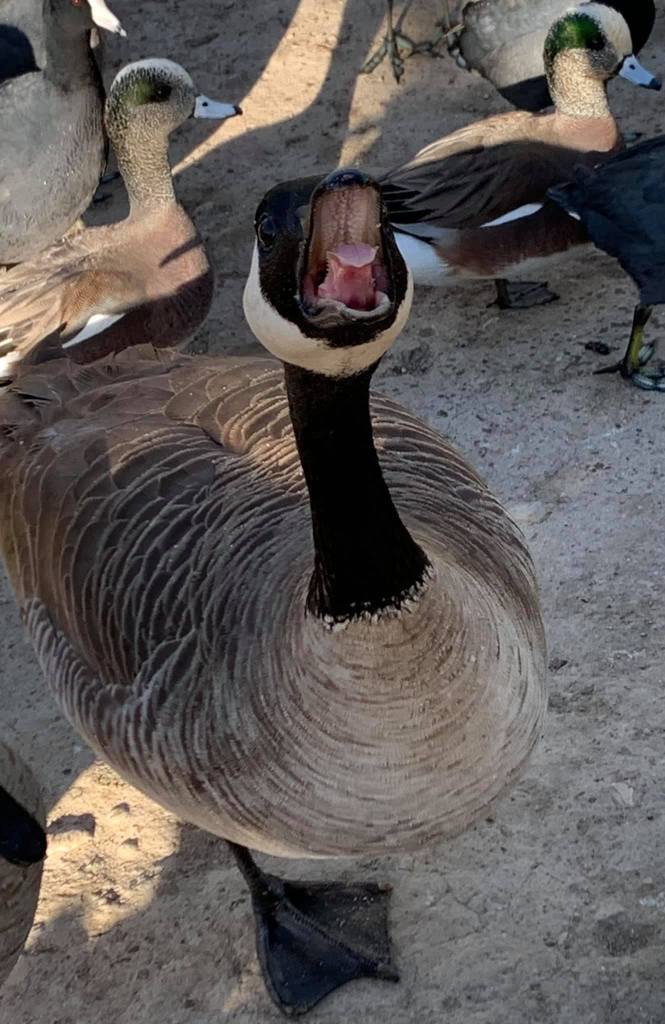
The second photo is of a duck that has a pompadour. Not sure why that happens, but I’ve seen this duck at the pond before. Another reason I’m pretty sure all these waterfowl reside here year-round. The third pic is, I believe, a Mallard Drake. The fourth is a nice closeup of a Canadian goose who was unconcerned enough to come right up to me. Fifth is another Canadian, maybe the same one in the fourth. Sixth is also a Canadian and I can’t quite figure out what it was doing; whether it was begging for food or trying to intimidate me. No other goose has exhibited this particular behavior.

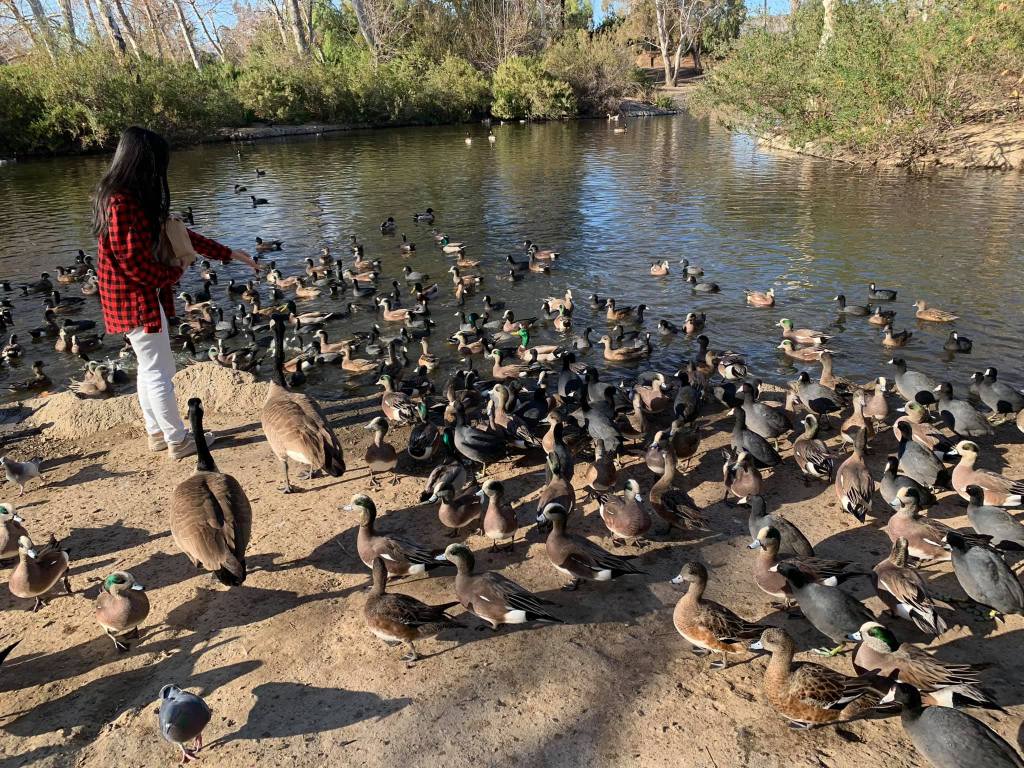
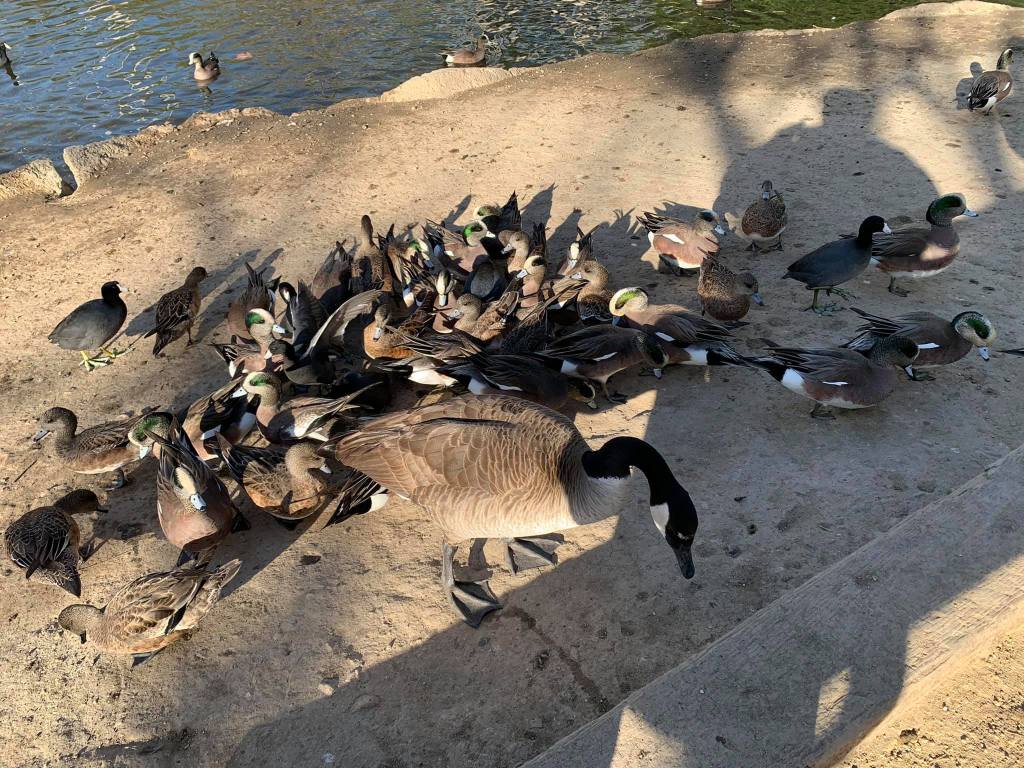
The seventh photo is of my daughter feeding them and gives you an idea of the various species that live there. Thankfully, the Chinese geese didn’t come by and ruin it all. The eighth photo is of a bunch of birds eating right in front of the bench I was sitting on, and the ninth is mostly coots and a few Mallards in the water. My daughter loves feeding the ducks at this park and we’ll be going there again soon.


Becoming a Switch Hitter

I am a southpaw, a left-hander. Big time! So much so that when my father tried to get me to golf right-handed (he said golf courses were built to favor righties) I just wasn’t able to do it. I played a little—he even bought me a beginner’s set of left-handed clubs—when I was 15, but came to the conclusion surfing was more my speed and gave up golf.

I actually have no plan to become a right-handed golfer, assuming I can ever golf again (that’s another story.)

When I took it up again at the tender age of 46, I still played left-handed, though I realized it would be helpful to my game if I spent a little time strengthening my right side, as well as improving my right-handed coordination. I set about doing some exercises and using my right hand more frequently. It was a bit haphazard, but I managed to become a bit more comfortable with it as time went by.

Last night I believe I came to the conclusion I need to change my handedness from left to right. The reason for this has nothing to do with golf, however. Sometime around a decade ago, I began to experience the effects of what is known as essential tremors. Also called familial tremors, the malady is genetic and generally affects one or more of three areas: the neck muscles, the hands and fingers, and vocal chords. My mother had them in her neck; she was, in her last years, a bobble-head.

My tremors show up in my hands and, ironically, they are worst in my left (dominant) hand. I am almost certain sometime in the next few years, I will experience them in my neck muscles as well. I can feel it coming on when I’m drinking any liquid I don’t sip. Not all the time; my hands don’t shake all the time either. When they do, though, it can be pretty had to do certain things. For instance, typing becomes next to impossible when they’re shaking, as is eating with a fork or a spoon.

Ironically, eating with hashi (chopsticks, in Japanese; my wife is Sansei) is much easier than eating with a fork. It might present a bit of a problem if grabbing whatever it is I wish to lift to my lips, but once I’ve got it grasped I can hang onto it because they shake in the same amount and same direction, and the food is securely pinched between the two pieces. This does not work with a fork or a spoon unless whatever it is I’m eating can be stabbed with the fork. Spoons are even worse because one eats things that are liquid and can spray all over the place when shaken as thoroughly as my left hand is capable of when it gets going.

For example, when I was in the midst of my battle with Covid-19, at the beginning of the year, I didn’t eat for a couple of days. Even though I could neither smell nor taste, I finally got hungry and my wife brought me a bowl of homemade chicken soup. She served it with one of the large, Chinese soup spoons we have, which are reasonably deep. As I raised a spoonful to my mouth, my hand began to shake violently and I sprayed hot soup all over myself and the bed. It was frustrating.

Last night I was eating some canned pears and cottage cheese; one of my favorite comfort foods (actually pineapple is my real fave, mixed with cottage cheese) and I was having a difficult time getting the spoon to my mouth without dropping or flinging the food hither and yon. Having done it once or twice before, I decided to try eating right-handed. It went much better than I had hoped for. So now, difficult as it may be at 73 years old, I’m going to start re-training myself to be right-handed. It won’t help with my typing, but I’m pretty sure it will improve my dining satisfaction … and that’s important. I may even begin eating with hashi right-handed as well. I’ve done it before and I know I can.

PS – Did you know that all the synonyms for “southpaw” are negative? According to thesaurus.com, these words are: ambilevous; awkward; clumsy; dubious; gauche; insincere; maladroit; sinister; and sinistral.


Why I’m Not a Journalist

In January of 1971 I was living in Berkeley (aka Berzerkeley), California. I was “working” at an underground radio station run out of the living room of one of the guys who lived in my building. The address of our building was serendipitously easy to remember; it was 1776 Leroy, just north of the UC campus. I had a one-room, no-water flat though, during that winter there were times when moisture dripped from the walls. I had to go down the hallway to get water, relieve myself, or take a shower. I had a hotplate in my room and, truth to tell, I don’t recall if I had a small refrigerator or we shared one in a common area.

Our studio put out 500 watts of power, but we only had a 1/10 watt transmitter our engineer had managed to sneak up and secure at the top of the Engineering Building on campus. We had dual turntables, a reel-to-reel tape recorder, and various other recording devices, microphones, etc. With that little of a transmitter we only reached about 5 blocks square, which was a substantial portion of the north campus community.

In addition to playing music, I thought it was important for us to report on local news, as well as national political news if it happened nearby. On January 5 of that year, the trial of Angela Davis began in the Marin County Courthouse, a little over 20 miles away. One of the devices we had was a boom box that had a cassette tape recorder and I decided to haul my ass over to the courthouse and cover the trial.

I later provided armed security for the McAfee family, whose farm was used for Angela’s bail, when they appeared at this concert.

When Angela Davis’s attorneys came out to speak to the crowd, they were inundated by reporters, journalists, and photographers. There were so many of them (in case you aren’t familiar with this case, it drew international attention) her supporters could not hear a word that was being said. I knew that my boom box could be used as a megaphone, and I knew how to make it happen. I offered her attorneys the use of what I had turned into a way to amplify their voices and reach her supporters. They gladly accepted.

So … everyone got to hear the update Angela’s attorneys provided. Unfortunately, it meant I didn’t get to record anything. I returned to Berkeley empty-handed, save for the memory I had of the event. I had nothing to report other than that. No audio at all. Though I later published the Los Angeles version of The War Bulletin, which was produced in Berkeley, and I’ve written and published several newsletter over the years, that was really the end of whatever career I might have had as a journalist. I wasn’t capable of detaching myself from the story (at least not THAT story) and recognized I didn’t have what it takes to “get” the story.

PS – Today is Angela’s birthday. Happy Birthday, Comrade. Wishing you many more.


My Battle With COVID-19

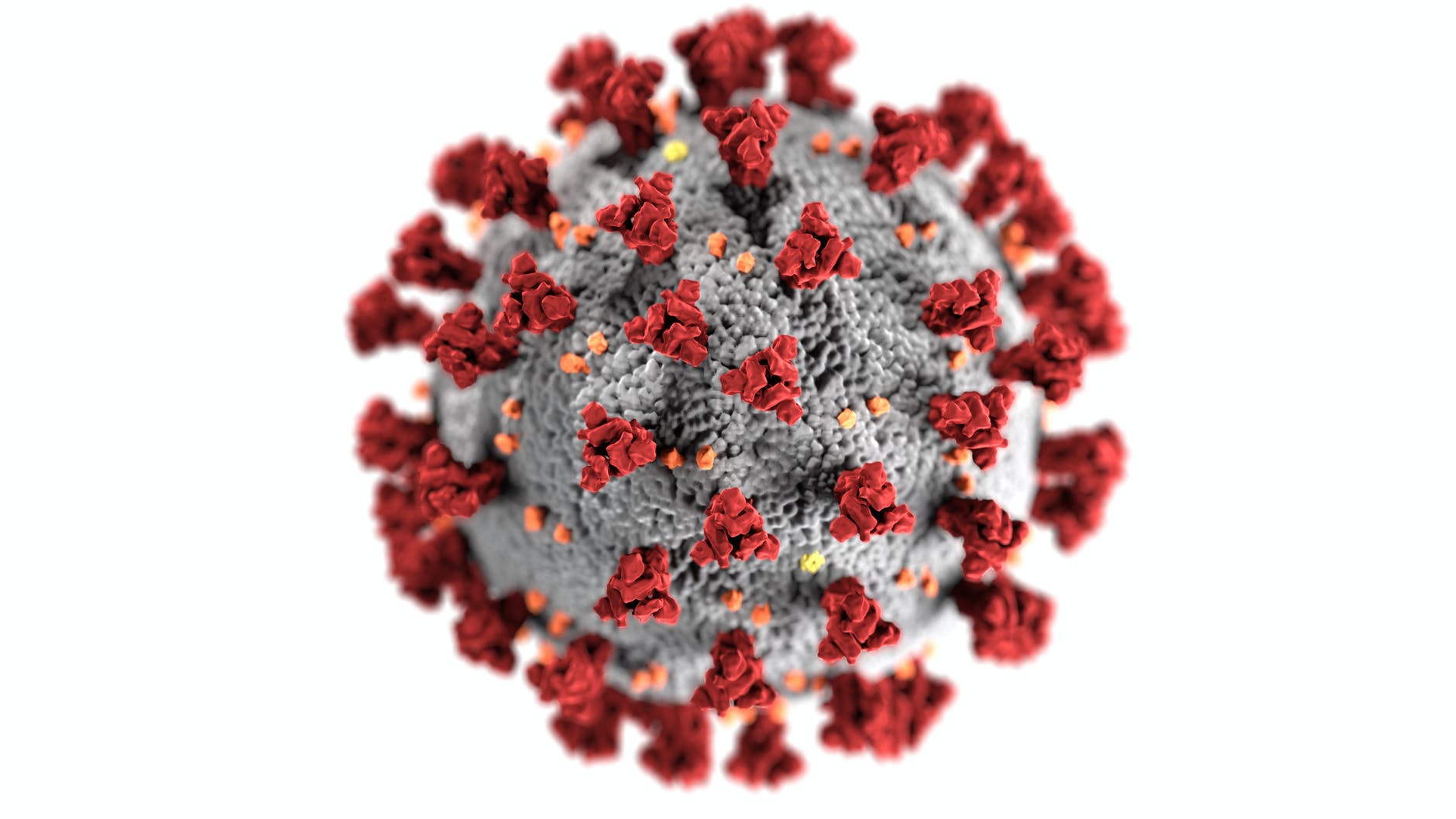
On Christmas Eve, not quite three weeks ago, I felt I was becoming ill. I initiated an e-visit with Kaiser, and was able to get tested the following Monday. The following day, results showed I was positive for SARS-CoV-2, the virus best known as COVID-19. I had to quarantine (meaning stay in my bedroom the entire time) for ten days. During that time I got pretty sick … almost going to the ER on (I believe) the 30th. I attempted to share my experience, as best I could given how sick I was, with my friends on Facebook. What follows is a concatenation of each of my posts as I struggled to ride this illness out. I’m happy to report, with the exception of some residual weakness and light-headedness, I seem to have recovered. Given my age and numerous comorbidities (especially COPD) I expected to become far sicker than I did, and am both relieved and grateful I seem to have recovered rather quickly. I have contacted my doctor and requested a follow-up visit to determine if the virus has caused any damage to my heart or lungs. I will follow up when I have something to report.

Photo by CDC on Pexels.com

12/24 at 14:37:

Out of an abundance of caution, I initiated an e-visit with Kaiser to determine if I’ve got COVID. I don’t have any of the worst symptoms, but I definitely have some of them. I’m scheduled for a test this coming Monday.

12/28 at 09:48:

Getting my COVID-19 test in the parking lot.

12/29 at 09:12:

Well … Now if someone asks if I personally know anyone who’s tested positive for COVID-19, I can answer “Yes.”

Me!

So … the illness I really didn’t want to test my immune system and my overall health on finally got me. Now I have to isolate for 10 days. I think I’ve already been through the worst over the weekend.

I’m taking MucinexDM once every 12 hours, an occasional Aleve, and vitamin C. I can’t taste a damned thing and I wasn’t terribly hungry for the past four or five days; I’ve lost eight pounds in the last six days.

I’m feeling good today. No fever this morning and SpO2 is staying around 95%. No congestion, hardly a cough.

I know this thing can offer some surprises, so I’m monitoring myself carefully, but it looks like I won’t suffer as much as I thought I might, which is a pleasant surprise. Still, being cautious seems prudent.

12/29 at 20:08:

Have I mentioned I feel like shit. I have a mid-grade fever and I’m sweating under the blanket, but I get the chills if I get out. Typing this is difficult. Stomach is sour and SpO2 has dropped as low as 91%. I’m dizzy, weak, tire easily, and can’t take a deep breath without bronchial pain.

Other than that, I’m feeling just peachy.

12/30 at 10:02:

Sitrep:

As of this morning, I am feeling better. No fever, but that’s how yesterday started. SpO2 is 96. I think the low reading I got yesterday was an anomaly. I have never felt as though I was having trouble getting enough oxygen. Still taking MucinexDM every 12 hours, which seems to be working quite well as a cough suppressant and expectorant. Also taking vitamin C. Still hurts to take too deep a breath, but doesn’t cause spasmodic coughing. Kaiser and many, many people have sent me lots of instructions, many of which I will choose to ignore, because that’s the kind of asshole I am. Haven’t left the bedroom.

Bottom line. This sucks, but I don’t think it’s going to kill me. Then again, this virus has proven to be treacherous and I have waaay too many comorbidities to let my guard down. Stay safe y’all. At least try … that’s what I did.

12/31 at 17:31:

The battle continues. My normal temperature is 97.6. This morning it was 98.7. Since then it’s been as high as 102.5 and everywhere in-between. Currently, it’s 101.1.

Linda went out and got me some vitamin D, Zinc, & NAC, all of which are said to be efficacious in combating this fucking virus.

Happy God damned New Year, reprobates.

01/01 at 12:21:

Happy New Year everybody. Well, these last few days have been trying and difficult, to say the least. I can finally taste again; not completely but it’s getting there. I no longer have to pay as close attention to my breathing as I have for the last couple days, as my bronchial tubes are opening up and taking deep breaths is far easier than it’s been up ’til now.

I still have another five full days before I can even leave the bedroom really, at least without wearing a mask and worrying about what I touch. I think I see the light at the end of the tunnel, and it’s daylight, not an oncoming train. I’m very grateful.

Temperature continues to be normal. Still dizzy and weak, but a bit more aware. Onward and upward.

01/01 at 15:47:

Man! This virus doesn’t give up. Temp is back to 102.3° F.

01/02 at 10:26:

OK – Health update. I can’t recall the last time I had the flu, or anything for that matter, that caused me to have a fever, so I’m not sure if what’s been happening to me is the normal progression of dealing with a virus. As noted over the past few days, I wake up feeling reasonably well, with no fever, and by mid-afternoon I’m burning up.

Last night it got up to 102.5, the highest it’s been since last weekend. I feel as though my fever broke last night. I finally had to take my t-shirt off. It was soaking wet. I put another one on and it was pretty soaked by 9pm, so I took it off as well and, for the first time since this started, I was comfortable sleeping without a t-shirt, which is how I normally sleep.

I had taken two Aleve, since my fever seemed to be climbing and within about an hour it was down to 98.3, which is still nearly a degree above my normal temperature of 97.6, but a good sign.

So . . . the signs are all good, but I’ve heard too many stories of people seeming to be on the mend then, boom, they’re in the hospital being intubated. No victory lap for me yet. Eight more days of quarantine. Hopefully, by next weekend I’ll be chomping at the bit to leave the bedroom. I haven’t really cared this past week.

ADDENDUM – I should add my breathing has improved considerably. I can take pretty deep breaths without pain or the need to cough and I have no congestion at all. I almost didn’t take a MucinexDM this morning, but decided not to tempt fate.

01/02 at 15:58:

Yesterday at almost exactly the same time, my temperature was 102.3. Just now it was 99.1. I would call that an improvement. So there.

01/03 at 19:12:

FYI – No news is good news.

01/04 at 13:14:

Update: While I believe I’m pretty much out-of-the-woods wrt the possibility of being hospitalized, recovery is clearly going to take some time. I just took a shower for the first time in a week and I almost couldn’t finish. I had to stop and rest halfway thru drying myself. This virus really takes a lot out of you. I can only imagine how much more difficult it might be for people who are really overweight. I feel so much better being clean (I was too sick to care for a week) but I’m beat from the effort.

Be careful out there, folks. There’s a far-too-large contingent of obstinate assholes out there whose selfishness is making it harder to avoid becoming infected.

01/09 at 12:51:

While it may be effective, I’m here to report that being infected with COVID-19 is far from an optimum weight loss strategy. I just dropped to a weight I haven’t seen since high school … and I’m 73. Think I need to eat something, stat.


I Do NOT Like These Feelz

I was born just after the end of World War II. The nation was heady with promise and I was raised immersed in what I later came to realize was propaganda; the belief that the United States of America was the greatest, most progressive country in the world. I’ve known for a long time that’s not true, but I find myself wondering how a country that speaks and thinks of itself as “exceptional,” can defend so many people coming this close to financial and, perhaps, physical ruin (see WaPo article in Tweet, below.)

Never in my wildest dreams did I think I would ever feel guilty about being on Social Security. I don’t get a lot (nobody does) but along with my wife’s social security and the income from our meager retirement savings, at least we’re not food insecure or in danger of being homeless. It doesn’t feel right, though.

Yet, I’m helpless to do much to assist other than support economic transformation that would alleviate these problems. If there are millions of families in this horrible situation, how can any of us do much about it, especially when doing so would bring us closer to the same kind of ruin. Losing one’s home, especially if you “own” it, is devastating and very difficult to come back from. Nobody deserves this kind of reckless abandonment, yet that’s exactly what Donald Trump is doing. I can’t think of much that would be a worse dereliction of duty than this.

I don’t know what’s going to happen in these next 28 days … and beyond. The fact that Trump vetoed the legislation and has left for Mar-a-Lago, the government closes down next Tuesday, and much of the help that had been made available for people who’ve lost their jobs to COVID-19 is drying up this week is not helpful. Maybe it’s time for: