Thought I would take a break from politics, economics, philosophy, and all that lighthearted kind of stuff, and share a little something serious . . . and wonderful. I came across this a bit earlier today on Twitter. I’m surprised I was able to find a standalone video (i.e. one that isn’t embedded in a news site’s pages) I could share. This pup was rescued by members of the Secretaría de Marina (Mexican Navy Corps,) according to a member of Twitter I have no reason to doubt.
I have no idea how long this dog was stranded where it was found, standing on its hind legs in order to not drown. This one looks so much like our girl, Angel, it really broke my heart to see this. I don’t know if it’s the case, but it’s a little frightening to realize how many people will just leave their pets when danger arrives. I can’t imagine leaving our Angel should we be required to flee someday.
There are so many sad, disheartening stories of abandoned animals, and not just in areas where there’s been a fire or a flood or earthquake. There are far too many people who become disenchanted or for some reason no longer wish to exercise the responsibility necessary to take care of an animal.
Inasmuch as it’s clear there are far too many people who don’t care about other people, I suppose it’s asking a bit much to get some folks to care about animals as well. Thankfully, this particular story appears to have had a happy ending. For that I suppose we should be grateful.
I just have to share this interesting, evocative piece of art. I’m really looking forward to the day I can (we all can) essentially forget this asshole ever existed.
I know we’ll still have the RepubliKKKlan Party to deal with, but I’m pretty worn out having him clutter the media landscape so thoroughly.
We Americans (in the United States, that is) are, in my opinion, a little too fond of bad-mouthing people who don’t speak English, don’t speak it well, or speak it but don’t pronounce it like we do . . . the latter of which, given the number of regional accents in the U.S., seems a bit ridiculous. Furthermore, have you ever listened to most English-speaking Americans try to pronounce any other language? It would be humorous were it not pathetic.
I’ve always felt that pronouncing another language correctly is both a sign of respect, and an exercise in emulation. I don’t understand people who can’t learn to pronounce words from a language other than their native tongue. After all, the people who speak that language have no trouble with the pronunciation, and they’re human beings too. We share the same physiology, so what’s the problem?
It seems to me it’s cultural and, with many, culturally chauvinistic. I know, when I was younger I felt a little odd pronouncing Spanish words correctly, as they didn’t quite sound like they were coming from me. I have to admit it took a while before I was able to really pay attention and learn how to properly pronounce words that weren’t native to me. Especially important, and somewhat difficult, was learning how to roll my “Rs” when speaking Spanish.
I taught myself Spanish before I traveled to Cuba with the 6th contingent of the Venceremos Brigade, in the Spring of 1973. I purchased a Spanish/English dictionary and a book called “501 Spanish Verbs Fully Conjugated” and I spent hours every day reading and practicing. I also had a book of short stories written in Spanish with side-by-side English translations.
The rules of grammar were not terribly difficult; they’re def easier than those for the proper use of English. My first discovery was that of patterns in infinitive verbs and their conjugation in the three basic tenses: Past; present; and future. It really made the use of verbs fairly easy once I knew the infinitive. There were some irregularities, but nowhere near the quantity found in my native tongue.
Pronunciation, however, was another story entirely. I came to the conclusion—and believe it to this day—that native speakers will forgive grammatical errors more easily than they forgive errors in pronunciation. Think about it the next time you’re listening to someone speaking English with a foreign accent.
With that in mind, I spent a great deal of time learning how Spanish is pronounced. I practiced continuously. In fact, I distinctly recall sitting on the bus in which we were traveling around the country during the last week of our two-month stay, heading for the western province of Pinar del Rio. The name presents a pronunciation challenge, as the “r” in “Pinar” is pronounced with what is called an “alveolar tap,” where you touch the tip of your tongue to the roof of your mouth. The letter generally ends up sounding like the letter “t” or “d” in English pronunciation.
The “R” in “Rio,” however, is rolled (also referred to as “trilled”) as are all “Rs” at the beginning of a word. Double “Rs” are always rolled, regardless of where they occur in a word. I would sit in the bus, staring out at the Cuban countryside, repeating “Pinar del Rio” over and over and over, until I could effortlessly shift from the alveolar tap to the trill without screwing it up.
One problem this created for me was that people for whom Spanish was their native language, upon hearing me speak Spanish, assumed from my meticulous pronunciation that I could speak fluently. I could not. I could carry on a decent conversation, though deep philosophy was not in my repertoire. I can probably still carry on a conversation all these years later, and am quite certain I could blend in to a Spanish speaking area within a couple of weeks.
Bottom line . . . speaking, and pronouncing, another language correctly is both an intelligent thing to do and a sign of respect for those who speak that language as their primary tongue. The human mouth, tongue, and throat are designed to make the sounds that humans make, regardless of where they’re from or how strange their pronunciations may seem to you. It just takes practice and, maybe, a little courage.
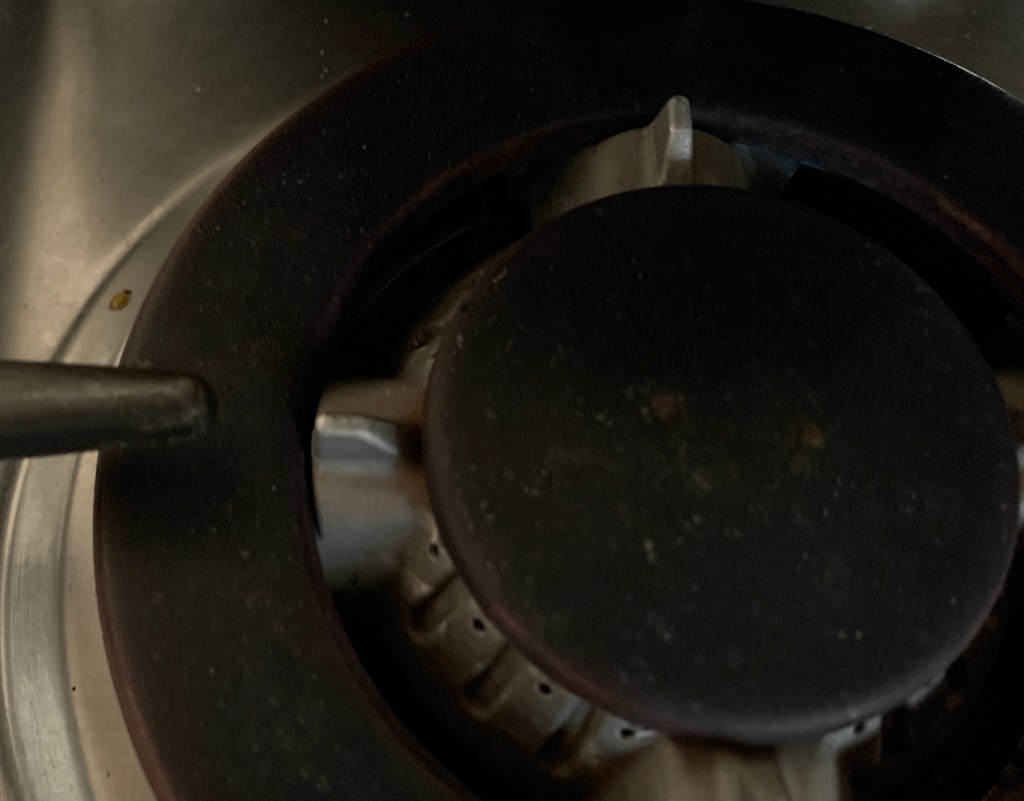
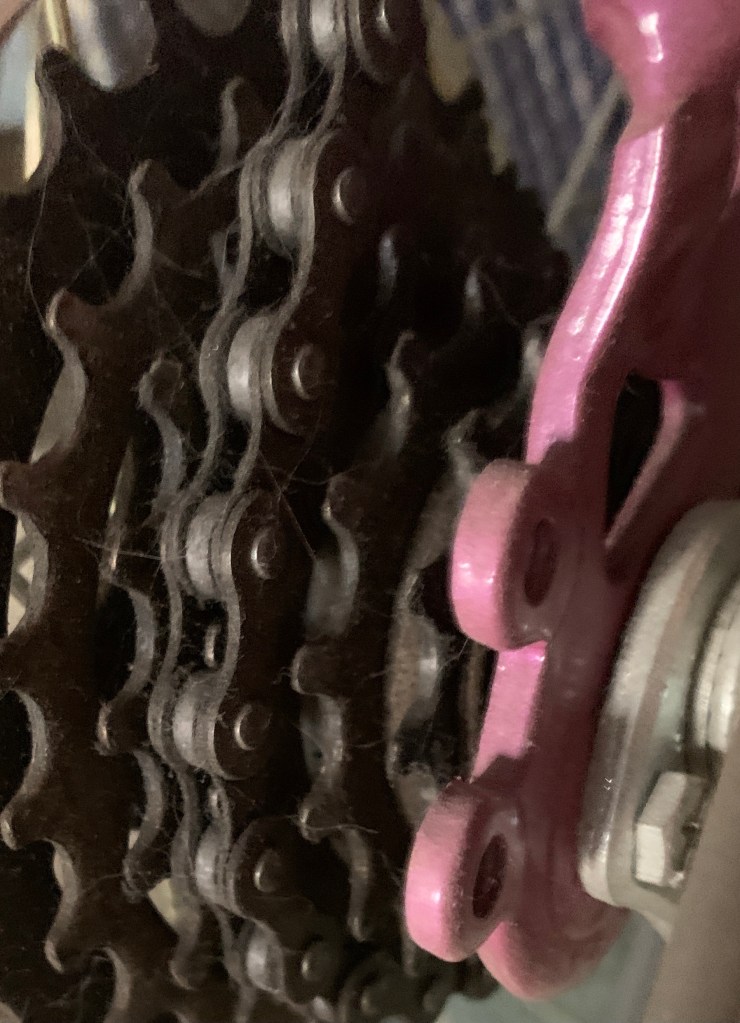
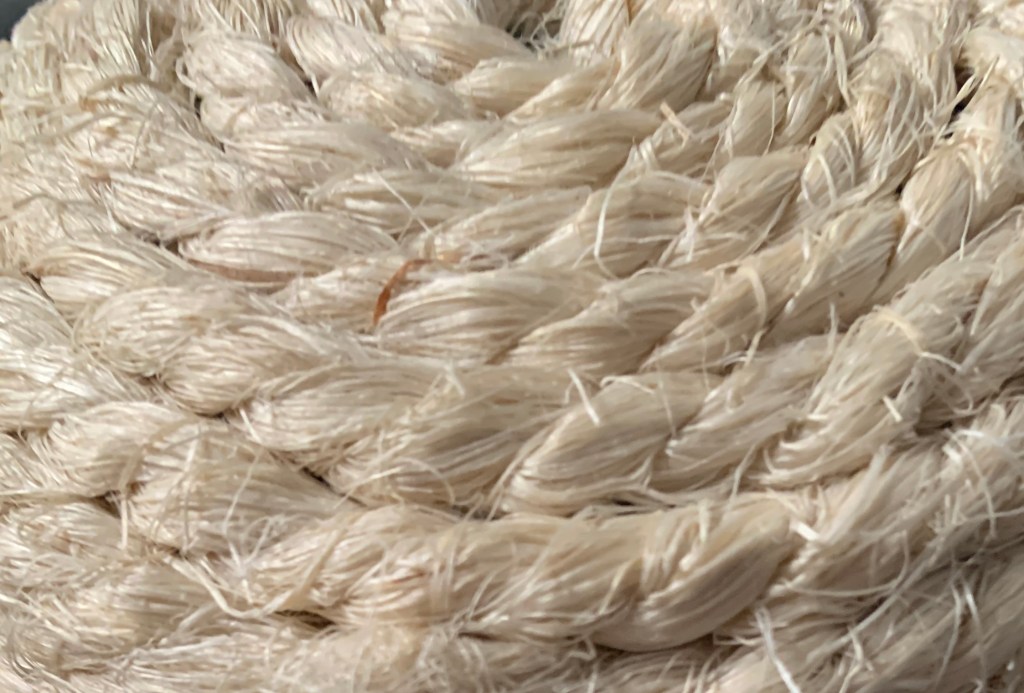
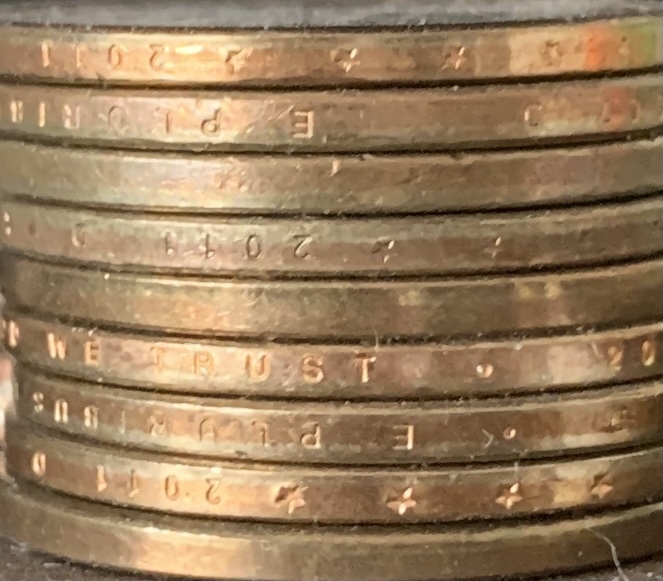
Here are a few more photos I took around the house. Just looking for interesting patterns, especially when zoomed in real close. I’m also experimenting a bit with WordPress’s various blocks for presenting photos. Here I’m using the slideshow block.
In my last couple of years in High School I took a lot of photography classes. Back then (this was in 1964 – 1966) there was no such thing as digital photos. Everything was film and darkroom work. I remember enjoying taking pictures at football games, using Kodak Tri-X 400 black & white negative film.
I had to take it into the darkroom and develop both the film and then use the negatives obtained from the film strip to project onto photographic paper, which we then developed ourselves in the darkroom. It involved a lot of banging around in the dark, getting used to working by dim red light, and lots of chemicals to develop, set, and finish the work.
I’ve long enjoyed photography and still enjoy using tools like Photoshop to tweak and improve photos; sometimes to create political memes from them as well. I recently started using the magnification app that came with my iPhone XR and I’ve realized I can produce some interesting photos by zooming way in on subjects that have intricate or visually remarkable patterns.
Several of the ones I’m publishing here should be fairly easily recognizable to most people. At least one of them requires a bit of engineering knowledge and, perhaps, familiarity with space hardware. A couple of them should be easy to discern. Two of them relate to cooking in one way or another. What do you see?
I have now received a link to this video from several different sources and I think it’s a valuable resource for any American concerned about the continued viability of our government. I don’t believe it’s crazy to be prepared for the worst, because it’s been made pretty clear over the past four years that nothing is sacred to the “most powerful man in the world.”
The video I had linked to (below) has apparently been removed and is no longer available. Fortunately, I found a website that contains the very information that was in the video, which can be accessed here.
!BE PREPARED!
The reality is, he may be powerful (he does have the weight of the federal government, including the military, on his side . . . theoretically) but the true power of any nation resides in its people. Without the consent of the governed, especially the way we’re organized politically, economically, and socially, keeping things running would be near impossible.
There is one more thing that’s necessary for the people to be able to control their own destiny, and that’s organization. Without being organized, connected, and communicating we won’t be able to assert our authority, our will over the powers-that-be.
With that in mind, I’m sharing the video above. If you haven’t the time to watch (it’s 7:02) below is a list of those ten things you need to know to stop a coup. Watch the video for a little more detail. One more thing, you can learn more at https://tallyrally.org/allourvotes/.
Don’t expect results on election night
Do call it a coup
Regular citizens stop coups
Act quickly—and not alone
Focus on widely shared democratic values, not on individuals
Convince others not to freeze or just go along
Commit to actions that represent rule of law, stability, and non-violence
Here’s another one of Glenn Kirschner’s wonderful YouTube videos on the state of our Justice system and, especially, the legal machinations of Donald Trump and his lawless administration.
This is a particularly good explanation of why Glenn believes the Supreme Court will finally bring an end to Trump’s attempts to hide his tax returns from the American people. If you aren’t familiar with how the courts work and, especially, what the real role is of the highest court in the land, Glenn does a pretty good job of explaining it.
PS – As of today, there are 13 days left until Election Day. If you haven’t yet voted, please have a plan and . . . git ‘er done!!
Amy Coney Barrett considers herself a “Constitutional Originalist.” What, exactly, does that mean? According to Merriam-Webster, it is “a legal philosophy that the words in documents and especially the U.S. Constitution should be interpreted as they were understood at the time they were written.” (https://www.merriam-webster.com/dictionary/originalism)
Think about what that means. If we are to interpret the Constitution based on the realities of the day in the late 18th century, then shouldn’t the only people allowed to vote in national elections be white, property-owning men? What do we make of the 3/5 clause of Article I, Section 2 of the Constitution and how do we reconcile the 14th Amendment (passed in 1868) with the “original” intent of said Article?
In my less than humble opinion, this concept of originalism is as flawed as belief in the Bible being the infallible word of God. Both require one NOT believe in evolution; I don’t here mean biological evolution (which many Bible believers don’t recognize as real) but the natural evolution of society and its economic, political, and general attitudes toward what’s good and just for a people. Our laws, our habits, our customs, our culture, even our morals change over time; sometimes imperceptibly and others rapidly and definitively.
When the Constitution was written, the framers included (Article V) the ability to amend it and, in fact, the first ten amendments—the Bill of Rights—were needed to ensure adoption of the nascent Constitution by some of the States who wanted more guarantees of freedom from unnecessary restrictions on the States and individuals.
Inasmuch as there is a method by which the Constitution can and, in fact, has been amended how can a logical argument be sustained that it must be interpreted in light of the reality of nearly two hundred fifty years ago? This makes absolutely no sense. Two hundred fifty years ago virtually none of the structures, organizations, and technologies we currently enjoy existed. How do we interpret their use and ownership if they weren’t around when the document was written?
Originalism is a sham argument and should be completely ignored. Any jurist taking such a position is, IMLTHO, an intellectually dishonest poseur and should be ignored . . . if not ridiculed. This includes Amy Coney Barrett who, if she had any integrity at all, would not allow this raw power grab and farce of a nomination process to continue.
As I’ve noted previously, I am working on a couple of memoirs and my autobiography. In doing so, I’ve been conducting a bit of archaeological research on my two current computers’ contents. I have a PC laptop and an iMac. The laptop is going on three years old and the Mac was purchased around June of 2010, right after I retired from Rocketdyne, though it crapped out while it was still under warranty, and the CPU and most of the other components were replaced with those of a newer model.
Something I hadn’t been thinking about much was that I had moved all of my personal files from my years at Rocketdyne, as well as a lot of writing I did while I was there that isn’t worth their energy to call protected IP. At any rate, I’m encountering things I had long forgotten existed and I’d like to share some of them.
This is a press release I’m pretty sure I wrote tongue-in-cheek, but I’m not sure what happened with it. It was, if the file metadata is correct, written in early February of 2006, a little over 14.5 years ago. I can’t recall the last time I read a physical copy of the L.A. Times.
For Immediate Release
In an amazing display of ineptness and communications failure, and for the third time in almost as many weeks, the Los Angeles Times’ home delivery department, Ventura County division, on Sunday, February 5, completely mismanaged the delivery of the Times Sunday edition to the home of a Simi Valley family.
For years, this weekend edition, complete with both the opinion section and numerous advertisements and coupons, has been delivered to the Ladd family double wrapped in plastic and sealed to protect it from being soaked by the sprinkler system which, unfortunately, drains water in the exact location where the paper seems to be most conveniently placed by the L.A. Times’ intrepid delivery person.
Approximately four to five weeks ago, and without any explanation or reason which would be immediately apparent to the Ladds, the paper started being delivered with one, unsealed plastic bag. This difference, however, was not matched by a change in location used to place the paper and, the laws of physics and water being what they are, the paper wicked up enough liquid to add several pounds to its weight. As a side effect, it made reading the articles and advertisements contained in the Times virtually impossible.
Up until the 5th of February, subsequent to calls to the Times’ Customer Service automated telephone number, a new paper has twice been delivered within the promised 90 minutes. The last time brought an apology and a promise to see the paper was sufficiently wrapped and it was, in fact, delivered dry on January 29th. However, the following week, on February 5, the paper was once again single wrapped, and soaking wet by the time it was retrieved.
Richard Ladd immediately called the Times’ Customer Service automated telephone number, once again pressing the button to inform the electronic system that there was, indeed, a delivery problem involving an automatic sprinkler system and a wet newspaper. He then entered his phone number and street address, and was informed a new paper would be delivered within 90 minutes.
As of midnight, at the beginning of a new week, the Sunday edition of the Los Angeles Times had not been delivered to the Ladd family, causing them to wonder if they shouldn’t just throw in the towel and cancel their subscription, opting instead to read the paper (assuming they even care any longer) on the Internet, and either celebrating or bemoaning (they are currently not quite sure which it should be) the continuing slide of print media into oblivion.











 Systems Savvy