As I’ve noted before, I’m continuously improving my Photoshop skills, learning how tools I’ve not used before can improve my efforts, as well as improving on techniques I’ve learned as I’ve attempted to create the visions I imagine. Here’s one I did regarding the protests in Michigan and a tweet that made light of the protestors.
Some White Boys Cosplaying as Patriots (which they’re decidedly NOT!)
I just came across one of the better summarizations of two disparate responses to infectious diseases by our two latest Presidents here in the United States. I am not the author of what follows, but I would like to post it here, as I believe it will ultimately get more exposure than it will on Facebook (where I encountered it.)
For those of you complaining about Trump being blamed for the COVID-19 pandemic, here’s a little history lesson for everyone on both sides of the political divide. It’s important that we understand the truth, especially come November when it’s time to vote. Forgive the length, but hey, we all have time on our hands to read, correct?
In December 2013, an 18-month-old boy in Guinea was bitten by a bat and died a brutal death a day later. After that, there were five more fatal cases. When Ebola spread out of the Guinea borders into neighboring Liberia and Sierra Leone in July 2014, President Obama activated the Emergency Operations Center at the Centers for Disease Control in Atlanta. The CDC immediately deployed CDC personnel to West Africa to coordinate a response that included vector tracing, testing, education, logistics, and communication.
Altogether, the CDC, under President Obama, trained 24,655 medical workers in West Africa, educating them on how to prevent and control the disease before a single case left Africa or reached the U.S. Working with the U.N. and the World Health Organization President Obama ordered the re-routing of travelers heading to the U.S. through certain specific airports equipped to handle mass testing. Back home in America, more than 6,500 people were trained through mock outbreaks and practice scenarios. That was done before a single case hit America.
Three months after President Obama activated this unprecedented response, on September 30, 2014, we detected our first case in the U.S.A. A man had traveled from West Africa to Dallas and somehow slipped through the testing protocol. He was immediately detected and isolated. He died a week later. Two nurses who tended to him contracted Ebola but later recovered. All the protocols had worked. It was contained. The Ebola epidemic could have easily become a pandemic, but thanks to the actions of our government under President Obama, it never did. Those THREE EBOLA CONFIRMED CASES were the ONLY cases of Ebola in the U.S.A. because Obama did what needed to be done THREE MONTHS PRIOR TO THE FIRST CASE.
Ebola is even more contagious than COVID-19. Had Obama not acted swiftly, millions of Americans would have died horrible, painful, deaths like something out of a horror movie (if you’ve never seen how Ebola kills, it’s horrific). It is ironic because since President Obama acted decisively we forget about his actions since the disease never reached our shores.
Now the story of COVID-19 and Trump’s response that we know about thus far: Before anyone even knew about the disease (even in China) Trump disbanded the pandemic response team that Obama had put in place. He cut funding to the CDC, and he cut our contribution to the World Health Organization (WHO). Trump fired Rear Admiral Timothy Ziemer, the person on the National Security Council in charge of stopping the spread of infectious diseases before they reach our country – a position created by the Obama administration.
When the outbreak started in China, Trump assumed it was China’s problem and sent no research, supplies or help of any kind. We were in a trade war, why should he help them? In January he received a briefing from our intelligence organizations that the outbreak was much worse than China was admitting and that it would definitely hit our country if something wasn’t done to prevent it. He ignored the report, not trusting our own intelligence.
When the disease spread to Europe, the World Health Organization offered a plethora of tests to the United States. Trump turned them down, saying private companies here would make the tests “better” if we needed them. However, he never ordered U.S. companies to make tests and they had no profit motive to do so on their own.According to scientists at Yale and several public university medical schools, when they asked for permission to start working on our own testing protocol and potential treatments or vaccines, they were denied by Trump’s FDA.
When Trump knew about the first case in the United States he did nothing. It was just one case and the patient was isolated. When doctors and scientists started screaming in the media that this was a mistake, Trump claimed it was a “liberal hoax” conjured up to try to make him “look bad after impeachment failed.”
The next time Trump spoke of COVID-19, we had SIXTY-FOUR CONFIRMED CASES but Trump went before microphones and told the American public that we only had FIFTEEN cases “and pretty soon that number will be close to zero.” All while the disease was spreading, he took no action to get more tests. What Trump did was to stop flights from China from coming here. This was too late and accomplished nothing according to scientists and doctors. By then the disease was worldwide and was already spreading exponentially in the U.S. by Americans, not Chinese people as Trump would like you to believe.
As of the moment I am posting this, the morning of April 20, 2020, we have 770,076 COVID-19 CONFIRMED CASES and 40,316 COVID-19 DEATHS in the U.S.A. The actual number is undoubtedly more than triple that amount.
As if you needed one more reason to vote, here it is.
I wonder if this pandemic, and our response to it, will change how seriously we take ourselves. If you’ve been watching television—and I’m going to go out on a limb here and assume most everyone is—you may have noticed some changes in much of live news and late night programming. Since nearly everyone who’s reporting is at home, by themselves, it’s obvious that the women anchors, reporters, and pundits are having to do their own hair and makeup. Regardless of how well they might do it, it’s not the same and it’s noticeable. I haven’t noticed how much, if any, makeup the men are wearing, but I have noticed a whole bunch of them has decided it’s not worth shaving right now (I’m one of them.)
So . . . what I’m wondering is, after we are able to return to some semblance of a normal life, where we can gather again so that newscasters and performers can return to the studio, when knowledge workers can return to their cube farms . . . will we? Better yet, should we? I spent the last few years of my career at Rocketdyne working from home. I’d like to think I was at least as productive, if not more so, than I was when I was going in to the office each day.
When I first started working there, I wore a suit and tie each and every day. By the time I left, the only time I wore a tie was if the “customer” (usually NASA) was visiting and we had to blow smoke up their asses. Knit polo shirts and chinos became acceptable and, on Fridays, everyone wore denim. I’d like to think one of the lessons we’ll glean from this (and there will be dozens, no doubt) is that we can be a lot more casual and still perform at a high level. And there are numerous ways to communicate, connect, and collaborate, especially if we’re not hamstrung by unnecessary and awkward notions of propriety.
No matter what happens as we are coming out of this crisis, we should never settle for returning to the status quo ante. We need to think of humans and our societies as living organisms; as interconnected and interdependent systems. When some of us are suffering, we must recognize it as an insult to all of us.
“We’re all in this together” doesn’t stop being true when this pandemic is “over.” It remains true except for those idiotic and stubborn people who still believe in rugged individualism as the ideal condition for humans to follow. In my opinion, that model is a recipe for disaster for all but people who live in the woods and, even then—with the exception of people like Ted Kaczynski—if they take advantage of roads, communication channels, and the efforts of entities like the US Forest Service, etc. they’re part of the gestalt that is humanity.
A friend of mine posted this quote on Facebook. It was posted by someone who I don’t know, and his name isn’t important here, but the quote is useful and is what prompted me to write what I did above:
“Indeed, you have to wonder if the virus is so very different from extractive capitalism. It commandeers the manufacturing elements of its hosts, gets them to make stuff for it; kills a fair few, but not enough to stop it spreading. There is no normal for us to go back to. People sleeping in the streets wasn’t normal; children living in poverty wasn’t normal; neither was our taxes helping to bomb the people of Yemen. Using other people’s lives to pile up objects wasn’t normal, the whole thing was absurd. Governments are currently busy pouring money into propping up existing inequalities, and bailing out businesses that have made their shareholders rich. The world’s worst people think that everybody is going to come out of this in a few months and go willingly back into a kind of numbing servitude. Surely it’s time to start imagining something better.”
~ Frankie Boyle
I was also sent a link to a wonderful essay in The Guardian’s “The Long Read” collection. I recommend it highly, though it is a long read. I’m memorializing it partly because I want to return to it and re-read it, perhaps numerous times. I see it as a booster to help me continue to advocate for fundamental structural change in our economy and our society. Our culture.
Here’s a quote, though there are so many useful ones in this particular essay, it’s hard to pick only one:
The first lesson a disaster teaches is that everything is connected. In fact, disasters, I found while living through a medium-sized one (the 1989 earthquake in the San Francisco Bay Area) and later writing about major ones (including 9/11, Hurricane Katrina and the 2011 Tōhoku earthquake and Fukushima nuclear catastrophe in Japan), are crash courses in those connections. At moments of immense change, we see with new clarity the systems – political, economic, social, ecological – in which we are immersed as they change around us. We see what’s strong, what’s weak, what’s corrupt, what matters and what doesn’t.
I often think of these times as akin to a spring thaw: it’s as if the pack ice has broken up, the water starts flowing again and boats can move through places they could not during winter. The ice was the arrangement of power relations that we call the status quo – it seems to be stable, and those who benefit from it often insist that it’s unchangeable. Then it changes fast and dramatically, and that can be exhilarating, terrifying, or both.
Finally, here’s a link to the article itself. Read it. You won’t regret it.
Looking back on the news, it appears Governor Newsom ordered a statewide shelter-in-place on the 19th of this month (03/19/20.) However, when I look at my calendar, I see we started doing it the previous day. So, despite what I said in an earlier post, today seems to be the 10th day of our hermitage.
I’ve been spending a fair amount of time tracking the course of this pandemic, especially here in the U.S. and my home state of California. In doing so, I created a meme showing how things are changing . . . actually, accelerating with time, just as we were told would happen. Here’s that meme, which I just updated as of a few minutes ago.
I’ve also been keeping track of the growing death rate and graphing it for myself. All the data I’m using is coming from a site called worldometer and there are numerous tables and charts available there for a breakdown of all the states, as well as a list of every country’s numbers for this virus. The link I’ve provided is to the page with U.S. info on the Corona virus. If you go to their home page, you’ll find links to all kinds of statistics. Check it out.
It’s worthy to note that the percentage of deaths to total cases is 0.0154, which is considerably higher than the rate for the flu. It’s really far too early to tell if that’s what the actual death rate is, as there are just too many unresolved cases. Based on the data available now, the percentage of deaths to total resolved cases is 0.385, which is astoundingly high. What we should glean from this, IMO, is that it’s just far too early in the trajectory of this disease to gather much useful information on lethality or recovery.
I don’t know if or when I’ll update this again. It’s fascinating, but also quite depressing. Perhaps I should just watch television. 😦
I don’t often use the “Press This” button that sits in my browser’s toolbar, but I’m thinking I should do it a bit more. This story and video were sent to me by a Facebook friend who creates some really excellent memes, most of which are political. It’s partly because of him I got real interested in using Photoshop.
This is a wonderful, uplifting cover of Burt Bacharach’s “What The World Needs Now,” performed remotely by dozens of students from the Boston Conservatory at Berklee and Berklee College of Music. I suggest reading the backstory before listening/watching the video. It’s all pretty heartwarming; makes me long for a little more human contact . . . but I’m staying inside for at least another week or twelve.
Student Shelbie Rassler, eager to bring her community together amid quarantine and isolation, organized a massive performance of the classic “What the World Needs Now Is Love” and put it on YouTube.
Well . . . this came at an auspicious time. This article was just shared by a friend on FB, in a local Indivisible group. It’s very short, but contains a TED Talk that’s a little over six minutes long. It’s really worth watching; game me the chills. Also, think about what we’re doing right now by staying home and practicing social distancing. I am certain it’s making a difference, thought it may be another couple of weeks before the numbers will make it clear. And, since I’m one of the people who’s theoretically inside the bullseye (age and comorbidities) I’m thankful to everyone who’s taking this seriously. I certainly am.
This moment that we are living through right now, is really rather extraordinary. Tens of millions of us are sitting at home. We don’t have our military patrolling the streets, threatening to…
With respect to the subject of the video, there was a group of us at Rocketdyne who used to constantly say, “lead from where you are,” meaning “don’t wait for others to tell you what to do or how to do it; step up and step out. You know what to do. Now do it!” So, in addition to the speaker’s assertion that we need to accept ourselves as leaders, I would add we need to recognize the opportunities presented to us to do so. Enjoy the talk.
When I was at Rocketdyne, my last job was to research, test, and (if warranted and reasonable) deploy social media and collaboration technologies. Part of the reason I took the early severance package they offered back in 2010 was because I didn’t believe the company was really commmitted to supporting what I was doing.
Now it looks like I’m going to have to resurrect my knowledge of those tools and platforms just so I can interact with my friends and family. For instance, anyone who sees a lot of my posts on Facebook knows I usually go to the gym on Fridays, then out to dinner and for a couple of craft beers with two of my former colleagues from Rocketdyne.
We can no longer do that for the next month or so, and we’ve already talked (texted) about how to get together virtually. Not sure how, but there are lots of options. I’ve been using Slack with Quantellia, but I’m really interested in something free. I’ve used Google Hangouts before and I’ve been reading some good reviews from Zoom users. I don’t think Zoom existed back then, but I’m going to find out about it.
The saying is “necessity is the mother of invention,” and I have no doubt the next few months are going to drive our innovative capabilities and our need to collaborate and work together. While I’m not looking forward to being essentially cooped up in my house with my wife and two teenagers (plus a dog and two cats) I am a little excited about discovering the positive things we can extract from the disruption. I expect there will be far more than most of us can contemplate. Hang in there everyone. Let’s expand that silver lining.
I wrote and posted the following on my Facebook Timeline and shared it with several groups to which I belong:
The feedback has been positive, with the exception of a few Trump supporters in a local community group known for the number of people on it who are averse to anything negative about their “dear leader.” I posted it there on purpose, just to stir the pot a bit.
As the corona virus pandemic continues to spread across the U.S., and people come to grips with how it’s going to affect them, I’m seeing more and more posts from folks outlining just how hard the most vulnerable among us (economically) are going to be hit, even if they don’t get sick at all.
If ever there was an argument for universal healthcare and a strong, resilient social safety net, if not UBI or a socialist economy, I think this might be it. Our fear of socialism is actually a fear of authoritarianism, but the two are not inextricably intertwined. Also, we’re already living under an authoritarian regime and it’s only going to get worse as long as Republicans have anything to say about it.
Donald John Trump, and every one of his brain dead sycophants, represent a clear and present danger to the health and well-being of the people of the United States. Everything he does, every choice he makes, is predicated on assuaging his fragile ego and is aligned with his re-election campaign and his economic interests. Even when he appears to be looking out for the nation’s economy, it is only inasmuch as it affects, and reinforces, his own financial interests. He needs to be gone immediately but, thanks to the greed and avarice of the Republican party, we will have to wait until near the end of next January to remove his worthless ass.
As John Pavlovitz posted on Twitter recently:
This President didn’t create this virus, but he ignored it, denied it, joked about it, weaponized it, politicized it, and exacerbated it. He is culpable for the chaos and the unnecessary illness, and yes, the preventable deaths because of it—and his supporters are too. This is the human cost of the MAGA cult delusion, and we’re all paying for it now equally.
I have one disagreement with John, however. We’re NOT paying for it equally. The most marginalized of us will suffer far more than those of us higher up on the economic food chain. Since I’m semi-retired and, when I do work, I can work from home, if school is cancelled my youngest, who’s still in high school, will have someone at home to care for her and my oldest, who works with 4th graders through our local Boys and Girls Club, will also have a comfortable home and whatever she needs until school resumes. They will not go hungry, unless we’re forced to stay inside for longer than a couple of weeks.
There are millions of children who depend upon school breakfasts and lunches to get a good, reasonably nutritious meal (sometimes the best meal of the day) and there are lots of parents who cannot afford to miss work should they be required to stay home for a week or two. I have no doubt many on the right see this as a matter of survival of the fittest, but I can’t go along with such a callous view of how we are to function as a society.
We are social animals and we thrive when we take care of each other, recognizing that we are all dependent on our collective strengths to overcome our individual weaknesses. It’s time we recognize this basic reality of our humanity . . . and pay homage to it by lifting all boats, not just those of the wealthy and powerful.
The word ‘equality’ shows up too much in our founding documents for anyone to pretend it’s not the American way.
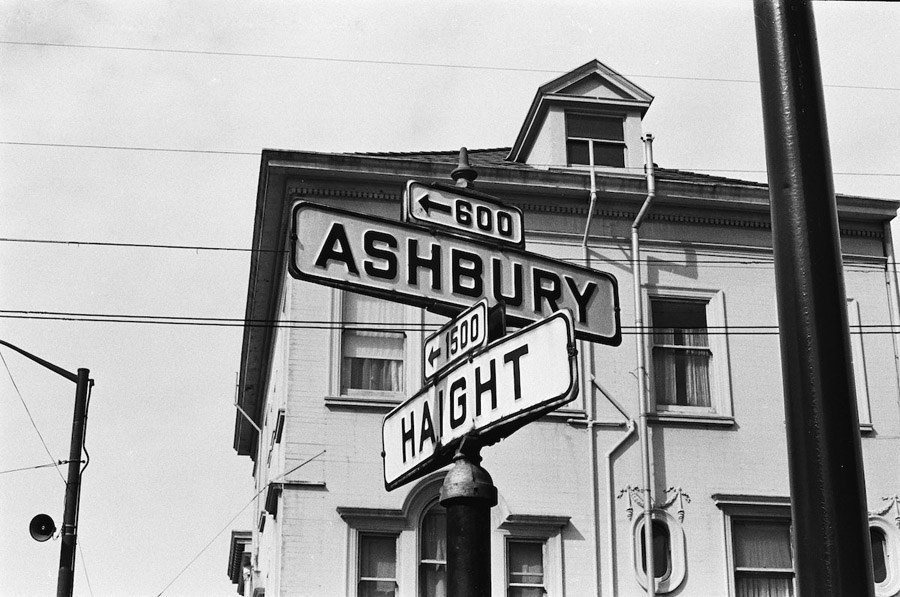
I arrived in the Haight-Ashbury district of San Francisco at the tail end of the “Summer of Love.” It was either late August or very early September. Things were already starting to fall apart before I got up there, but it took weeks before I was able to recognize what was happening.
Where It All Happened
I had traveled from Los Angeles by thumb, where I had just given up a lucrative business my father had purchased for me at the very end of 1966. Fearing my life was going nowhere (which it kinda was) he took the opportunity to buy a small snack shop from a friend who was going into another business. The place was called DEBS, which was an acronym of the previous owners family’s names. We kept it . . . the name that is.
Situated directly across the street from the May Company, between 8th and 9th Streets on S. Hill Street, I was making big bucks for a snot-nosed teenager. I didn’t realize just how lucky I was at the time which, I suppose, is the very definition of privilege. I just did a time/value calculation and discovered I was making the equivalent of close to a quarter of a million dollars a year back then. Yikes! That doesn’t seem possible or even reasonable, but I’m pretty sure it’s true.
Unfortunately, I was only 19 years old at the time, fresh out of High School the previous year and recently honorably discharged from the U.S. Navy after a total of one month and twenty-three days of service. I’m surely one of a few people in the country who has served, received the National Defense Service Medal, and also a medical discharge while I was still in boot camp. Since I was in for such a short time, I am not eligible for veteran’s benefits, nor have I ever sought to receive them . . . but that’s another story I’ll get to later.
This is a screenshot from Google Maps’ Street View. According to Yelp, they’re still in business, though I know it’s not the same people
DEBS Snack Shop was open six days a week, twelve hours a day on weekdays, and ten hours on Saturday. I had to be there for every one of those hours and, since I lived in the North end of the San Fernando Valley, the commute took at least an hour and a half, round-trip, every weekday. Saturdays were a little quicker. So I was putting in about 70 hours per week, not including time getting ready to head out the door.
Not only were the hours long, I had to deal with my father coming by every day and pointing out everything I had done “wrong,” i.e. not how he would do it. Not that I didn’t screw up; 19-year-old boys aren’t the sharpest knives in the drawer, no matter how high their IQ. But my old man was not the kind to hand out compliments or praise. Nope. He was a genius at pointing out shortcoming, though.
I remember one weekend I finally had a date with a young woman I had met somewhere. Much of the detail is lost in the mists of time, including who she was and where we met, and the relationship didn’t last long at all. We went out to dinner and were going to go to a movie afterward. Unfortunately, if memory serves, I actually fell asleep at dinner, I was so tired. I don’t think we made it to the movie, and I’m not sure I ever saw her again.
That particular debacle was one of many compelling reasons I asked my father to sell the place after only seven months. I was young and restless, and I had no social life. I had also started smoking pot the previous year and was beginning to experiment with acid (LSD.) I needed to spread my wings and I didn’t see that ever happening as long as I was tied to a demanding business and an overbearing father. But I digress.
What I was thinking of when I decided to write this post was the agricultural workers here in my native County of Ventura. Some of the laborers post videos to a local Facebook group and seeing them brings me back to my two encounters with working in the fields, one of which took place while I was living up in the Haight.
Not the video I was referring to, but quite similar
When I was working in the snack shop, I frequently had to go and purchase produce, generally a few blocks away at the Grand Central Market. One of the items I had to buy was tomatoes. I would get them by the “lug,” each of which weighed approximately 30 pounds.
On many a day in the Haight, people would just sit around in front of the stores on Haight Street, sometimes standing to perform for the tourist buses that would pass by. They expected no less from a bunch of “Hippies,” and we were often content to give it to them. One day, a man came by and asked if anyone was interested in picking tomatoes. He said it paid a certain amount (I have no idea what it was) per “lug.” I accepted.
The following day, early in the morning, I boarded a bus with a group of fellow “hippies” and we were taken to a field right next to a mental hospital. We were set loose in the fields to pick tomatoes and it was then I discovered their definition of a “lug” was considerably larger than what I had grown used to purchasing for the snack shop’s use. At least twice as big! I had just turned 20 in June, a couple months prior to selling the business. I was in good shape, yet picking tomatoes, which requires bending over continuously, was physically demanding and, based on how many tomatoes had to be gathered to complete a “lug,” I soon came to the conclusion this was NOT how I wished to make money in the future.
I don’t think I spent more than a couple of hours in the field, but I’ve never forgotten how difficult and back-breaking the work was. It has given me a sense of deep respect for the people who spend their lives working in the fields. It is extraordinarily difficult (and sometimes dangerous) work, for which I’m sure they are not paid enough.
I did mention, above, there were two times I had worked in the field. The second one was in 1973, when I spent two months in Cuba as a member of the 6th contingent of the Venceremos Brigade. During that time I worked primarily in construction, making concrete slabs and pillars used to construct small, single-family dwellings. However, on one occasion we spent a day in the fields cutting sugar cane. In addition to the work being back-breaking, the fields were torched prior to our work in order to burn off some of the vegetation on the canes. It meant we were covered in burnt sugar cane juice by the end of the day.
Cutting Sugar Cane is a messy and exacting task
I had purchased a pair of brown Red Wing boots for the trip. After one day in the fields, they were mostly black from that burnt juice. It never came off.
Those two, admittedly short stints in the field gave me an appreciation for anyone who works in agriculture – especially those who bend over and pick and pack our food for distribution. I’ve done a lot of other things in my life that were difficult, some equally so, but none more difficult than picking tomatoes or cutting sugar cane. I have nothing but respect for someone who makes their living doing such work. It’s why I have long supported the United Farm Workers and all who struggle to be treated with dignity and respect.







 Systems Savvy