
Thought I would share a couple of videos from Trevor Noah, host of The Daily Show (currently called “The Daily Social Distancing Show.”)
Category Archives: Systems Thinking
Trevor Noah on George Floyd
Wear Your Fucking Mask!

It’s still kind of mind-blowing to me how many people don’t seem to understand the argument for wearing a mask while we’re struggling to contain this virus pandemic. While it’s true the CDC and others have changed their recommendation over time, this is not something new. Because the Corona Virus is so new (hence the name “novel”) there’s very little we can say about it with any certainty.
For instance, it’s still unknown if exposure, infection, and survival confers any kind of immunity from another, subsequent infection. If it doesn’t, then antibody testing isn’t going to tell us much of anything useful. We’re just discovering that it affects children more than we had previously thought, and we’ve also discovered the virus affects far more than merely the pulmonary system.
While it seems to me it was always a good idea to wear a mask in public once this thing had spread far enough to make containment impossible, I can understand why—when there is a shortage of masks available for our front-line healthcare workers—the authorities would suggest we not wear masks, at least not the kind that are used in medical settings. That makes sense given how important those workers are, and how important it’s been to not overwhelm our healthcare system.
Now that we know more about how it spreads, I think there are a lot of people who don’t appreciate the concept of droplets and aerosols. I have an experience that I always wondered whether or not I would be able to share without sounding a bit daffy. I think it’s apropos now, however.
I believe it was in 2015, when I had returned as a contractor to the place I had retired from five years prior. I had to drive east to get there and west to return home. I distinctly remember coming home one evening, driving into the sunset. I had a Plantronics wireless earpiece, so I could talk on my phone while driving. As I was talking normally, I could see dozens and dozens of small droplets spraying out of my mouth with the enunciation of certain sounds. It was a bit disconcerting as I’d never noticed just how sloppy we are when we’re just speaking, let alone coughing or sneezing.
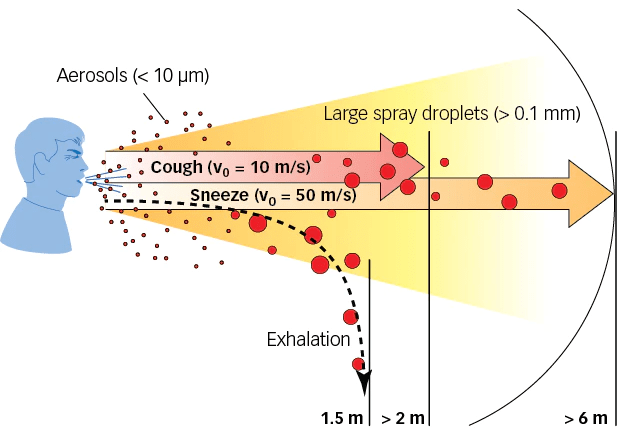
Bottom line is this; as long as we don’t have a vaccine, nor a known, useful treatment for Covid-19, the disease caused by the Corona Virus SARS-CoV-2, we need to take steps to mitigate its spread. Not necessarily to keep everyone from being exposed, but (at the very least) to spread out (flatten the curve) it’s path of infection to prevent such rampant disease that we are incapable of handling it and thousands die because we just don’t have the necessary medical infrastructure, tools, supplies, and equipment to keep our healthcare workers safe.
I know some think wearing a mask makes them look like a dork but, in my less than humble opinion, if you’re too self-centered to realize wearing one is in everyone’s best interests because it goes a long way to preventing you from spreading the virus, in case you’re infected yet asymptomatic, then you actually are a dork . . . or something much worse.
If interested, and you want to learn more about how this deadly virus spreads, here’s a great article ‘splaining it for you.
Less Than Perfect
The following is a post from an earlier blog of mine, The Cranky Curmudgeon. It was posted on February 27, 2006.

Why do people, perfectly rational in other ways, defend the indefensible? Why do they continue along a path that is demonstrably wrong and easily abandoned? I’m not talking about the barbarous torture being carried out in our name, with our money, by our government. I’m talking about the indefensible butchering of the English language by educated, enlightened people.
I’m talking about people who are scientists, who make their living off understanding and precisely defining physical properties of phenomena in order to reshape the world and our relationship to it. People who demand, and thrive off of, minutiae – accurate minutiae.
I heard three words in a meeting the other day that just drove me crazy. These three words were:
- Libary (for library)
- Ec Cetera (for et cetera), and
- Hierarchial (for Hierarchical)
Hearing these words butchered gives me the chills, but I learned a long time ago not to question an Engineer’s pronunciation of any word, lest one wishes to be the recipient of a surprised, somewhat pained expression followed by a derisive comment on one’s propensity for detail. Something like “Well. You knew what I meant. What are you? A Lawyer?”.
Well. Maybe. Maybe I knew what you meant and maybe I am a Lawyer. The latter part of the question is of no real consequence, and can be safely ignored as the silly attack it is, but the former isn’t necessarily all that clear. I knew what you meant? Could I be certain?
One of the simpler equations in physics is f = ma (force = mass x acceleration). Would an Engineer complain if I expressed it as f = na in a paper or in an analysis of a design or test results? Would it be OK if I said “Well, it’s only off by one letter and, after all, you know what I meant” (hee hee)?
I suppose, to be fair, there is the tongue twist factor to take into consideration. After all, library, et cetera, and hierarchical take a bit of concentration and practice to say properly. But here’s the real issue. Language is used to – now get this – communicate. Good, accurate, complete communication requires precision. It ain’t horse shoes or hand grenades.
So here’s what I have to say to those sloppy speakers who complain about merely being asked to correct their butchered pronunciations and complain they’re close enough to being “there”.
They’re ain’t no there their. You’re turn to figure out where your going (sic.)
Power to the People
Corporations, conglomerates, and industrial organizations aren’t the enemy, ipso facto. In fact, they make socialism not only possible, but necessary, IMO.
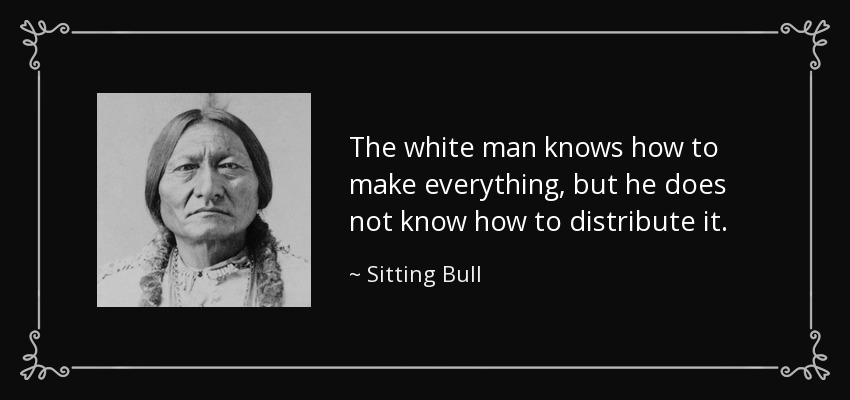
What is the enemy is unbridled greed, rampant cronyism, nepotism and, especially, the codification of deep income inequality. It is not good for a society when individuals can amass fortunes they can’t possibly spend. That they then turn some of that fortune into philanthropy and charitable organizations doesn’t change the fact that it should be criminal for one individual to take that much surplus value from the workforce that made their fortune possible. It’s estimated Jeff Bezos makes (not earns) around $2,500/second. Dafuque does he do, other than own Amazon stock?
I’m not saying inventors, creators, entrepreneurs, etc. aren’t entitled to profit from their efforts, but they shouldn’t be able to continue siphoning profit off an organization that has reached a point where it could easily survive without them. By the same token, intellectual property law has expanded patent and copyright protections way beyond their original intent, creating other avenues of indecent profit-making.
And getting back to what I said about making socialism possible and necessary, without large profitable organizations, we’d all be living off mom & pop’s and craft-making. Many of the products we enjoy, and that provide the grease that skids civilization as we know it, would not be possible without large factories, laboratories, and other institutions. By their very nature, though, they transcend the control and direction of any one individual, and I believe our pay/profit structure needs to take that much more into consideration, providing a larger share to the workers who have helped make the org successful.
Contemporary American History
I just came across one of the better summarizations of two disparate responses to infectious diseases by our two latest Presidents here in the United States. I am not the author of what follows, but I would like to post it here, as I believe it will ultimately get more exposure than it will on Facebook (where I encountered it.)
For those of you complaining about Trump being blamed for the COVID-19 pandemic, here’s a little history lesson for everyone on both sides of the political divide. It’s important that we understand the truth, especially come November when it’s time to vote. Forgive the length, but hey, we all have time on our hands to read, correct?
In December 2013, an 18-month-old boy in Guinea was bitten by a bat and died a brutal death a day later. After that, there were five more fatal cases. When Ebola spread out of the Guinea borders into neighboring Liberia and Sierra Leone in July 2014, President Obama activated the Emergency Operations Center at the Centers for Disease Control in Atlanta. The CDC immediately deployed CDC personnel to West Africa to coordinate a response that included vector tracing, testing, education, logistics, and communication.
Altogether, the CDC, under President Obama, trained 24,655 medical workers in West Africa, educating them on how to prevent and control the disease before a single case left Africa or reached the U.S. Working with the U.N. and the World Health Organization President Obama ordered the re-routing of travelers heading to the U.S. through certain specific airports equipped to handle mass testing. Back home in America, more than 6,500 people were trained through mock outbreaks and practice scenarios. That was done before a single case hit America.
Three months after President Obama activated this unprecedented response, on September 30, 2014, we detected our first case in the U.S.A. A man had traveled from West Africa to Dallas and somehow slipped through the testing protocol. He was immediately detected and isolated. He died a week later. Two nurses who tended to him contracted Ebola but later recovered. All the protocols had worked. It was contained. The Ebola epidemic could have easily become a pandemic, but thanks to the actions of our government under President Obama, it never did. Those THREE EBOLA CONFIRMED CASES were the ONLY cases of Ebola in the U.S.A. because Obama did what needed to be done THREE MONTHS PRIOR TO THE FIRST CASE.
Ebola is even more contagious than COVID-19. Had Obama not acted swiftly, millions of Americans would have died horrible, painful, deaths like something out of a horror movie (if you’ve never seen how Ebola kills, it’s horrific). It is ironic because since President Obama acted decisively we forget about his actions since the disease never reached our shores.
Now the story of COVID-19 and Trump’s response that we know about thus far:
Before anyone even knew about the disease (even in China) Trump disbanded the pandemic response team that Obama had put in place. He cut funding to the CDC, and he cut our contribution to the World Health Organization (WHO). Trump fired Rear Admiral Timothy Ziemer, the person on the National Security Council in charge of stopping the spread of infectious diseases before they reach our country – a position created by the Obama administration.
When the outbreak started in China, Trump assumed it was China’s problem and sent no research, supplies or help of any kind. We were in a trade war, why should he help them? In January he received a briefing from our intelligence organizations that the outbreak was much worse than China was admitting and that it would definitely hit our country if something wasn’t done to prevent it. He ignored the report, not trusting our own intelligence.
When the disease spread to Europe, the World Health Organization offered a plethora of tests to the United States. Trump turned them down, saying private companies here would make the tests “better” if we needed them. However, he never ordered U.S. companies to make tests and they had no profit motive to do so on their own.According to scientists at Yale and several public university medical schools, when they asked for permission to start working on our own testing protocol and potential treatments or vaccines, they were denied by Trump’s FDA.
When Trump knew about the first case in the United States he did nothing. It was just one case and the patient was isolated. When doctors and scientists started screaming in the media that this was a mistake, Trump claimed it was a “liberal hoax” conjured up to try to make him “look bad after impeachment failed.”
The next time Trump spoke of COVID-19, we had SIXTY-FOUR CONFIRMED CASES but Trump went before microphones and told the American public that we only had FIFTEEN cases “and pretty soon that number will be close to zero.” All while the disease was spreading, he took no action to get more tests. What Trump did was to stop flights from China from coming here. This was too late and accomplished nothing according to scientists and doctors. By then the disease was worldwide and was already spreading exponentially in the U.S. by Americans, not Chinese people as Trump would like you to believe.
As of the moment I am posting this, the morning of April 20, 2020, we have 770,076 COVID-19 CONFIRMED CASES and 40,316 COVID-19 DEATHS in the U.S.A. The actual number is undoubtedly more than triple that amount.
As if you needed one more reason to vote, here it is.
Casual Everyday?
I wonder if this pandemic, and our response to it, will change how seriously we take ourselves. If you’ve been watching television—and I’m going to go out on a limb here and assume most everyone is—you may have noticed some changes in much of live news and late night programming.
Since nearly everyone who’s reporting is at home, by themselves, it’s obvious that the women anchors, reporters, and pundits are having to do their own hair and makeup. Regardless of how well they might do it, it’s not the same and it’s noticeable. I haven’t noticed how much, if any, makeup the men are wearing, but I have noticed a whole bunch of them has decided it’s not worth shaving right now (I’m one of them.)

So . . . what I’m wondering is, after we are able to return to some semblance of a normal life, where we can gather again so that newscasters and performers can return to the studio, when knowledge workers can return to their cube farms . . . will we? Better yet, should we? I spent the last few years of my career at Rocketdyne working from home. I’d like to think I was at least as productive, if not more so, than I was when I was going in to the office each day.
When I first started working there, I wore a suit and tie each and every day. By the time I left, the only time I wore a tie was if the “customer” (usually NASA) was visiting and we had to blow smoke up their asses. Knit polo shirts and chinos became acceptable and, on Fridays, everyone wore denim. I’d like to think one of the lessons we’ll glean from this (and there will be dozens, no doubt) is that we can be a lot more casual and still perform at a high level. And there are numerous ways to communicate, connect, and collaborate, especially if we’re not hamstrung by unnecessary and awkward notions of propriety.
What do you think?
Moving Forward
No matter what happens as we are coming out of this crisis, we should never settle for returning to the status quo ante. We need to think of humans and our societies as living organisms; as interconnected and interdependent systems. When some of us are suffering, we must recognize it as an insult to all of us.
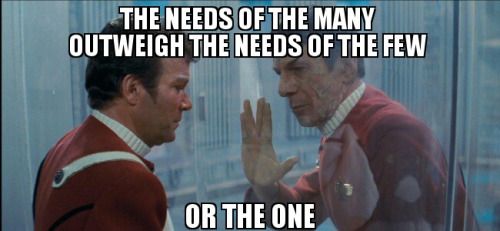
“We’re all in this together” doesn’t stop being true when this pandemic is “over.” It remains true except for those idiotic and stubborn people who still believe in rugged individualism as the ideal condition for humans to follow. In my opinion, that model is a recipe for disaster for all but people who live in the woods and, even then—with the exception of people like Ted Kaczynski—if they take advantage of roads, communication channels, and the efforts of entities like the US Forest Service, etc. they’re part of the gestalt that is humanity.
A friend of mine posted this quote on Facebook. It was posted by someone who I don’t know, and his name isn’t important here, but the quote is useful and is what prompted me to write what I did above:
“Indeed, you have to wonder if the virus is so very different from extractive capitalism. It commandeers the manufacturing elements of its hosts, gets them to make stuff for it; kills a fair few, but not enough to stop it spreading. There is no normal for us to go back to. People sleeping in the streets wasn’t normal; children living in poverty wasn’t normal; neither was our taxes helping to bomb the people of Yemen. Using other people’s lives to pile up objects wasn’t normal, the whole thing was absurd. Governments are currently busy pouring money into propping up existing inequalities, and bailing out businesses that have made their shareholders rich. The world’s worst people think that everybody is going to come out of this in a few months and go willingly back into a kind of numbing servitude. Surely it’s time to start imagining something better.”
~ Frankie Boyle
I was also sent a link to a wonderful essay in The Guardian’s “The Long Read” collection. I recommend it highly, though it is a long read. I’m memorializing it partly because I want to return to it and re-read it, perhaps numerous times. I see it as a booster to help me continue to advocate for fundamental structural change in our economy and our society. Our culture.
Here’s a quote, though there are so many useful ones in this particular essay, it’s hard to pick only one:
The first lesson a disaster teaches is that everything is connected. In fact, disasters, I found while living through a medium-sized one (the 1989 earthquake in the San Francisco Bay Area) and later writing about major ones (including 9/11, Hurricane Katrina and the 2011 Tōhoku earthquake and Fukushima nuclear catastrophe in Japan), are crash courses in those connections. At moments of immense change, we see with new clarity the systems – political, economic, social, ecological – in which we are immersed as they change around us. We see what’s strong, what’s weak, what’s corrupt, what matters and what doesn’t.
I often think of these times as akin to a spring thaw: it’s as if the pack ice has broken up, the water starts flowing again and boats can move through places they could not during winter. The ice was the arrangement of power relations that we call the status quo – it seems to be stable, and those who benefit from it often insist that it’s unchangeable. Then it changes fast and dramatically, and that can be exhilarating, terrifying, or both.
Finally, here’s a link to the article itself. Read it. You won’t regret it.
The Quiet Leadership That Matters Most
Well . . . this came at an auspicious time. This article was just shared by a friend on FB, in a local Indivisible group. It’s very short, but contains a TED Talk that’s a little over six minutes long. It’s really worth watching; game me the chills. Also, think about what we’re doing right now by staying home and practicing social distancing. I am certain it’s making a difference, thought it may be another couple of weeks before the numbers will make it clear. And, since I’m one of the people who’s theoretically inside the bullseye (age and comorbidities) I’m thankful to everyone who’s taking this seriously. I certainly am.
 This moment that we are living through right now, is really rather extraordinary. Tens of millions of us are sitting at home. We don’t have our military patrolling the streets, threatening to…
With respect to the subject of the video, there was a group of us at Rocketdyne who used to constantly say, “lead from where you are,” meaning “don’t wait for others to tell you what to do or how to do it; step up and step out. You know what to do. Now do it!” So, in addition to the speaker’s assertion that we need to accept ourselves as leaders, I would add we need to recognize the opportunities presented to us to do so. Enjoy the talk.
Source: The Quiet Leadership That Matters Most – Political⚡Charge
Time to be Thinking Hard About Our Future
I wrote and posted the following on my Facebook Timeline and shared it with several groups to which I belong:

The feedback has been positive, with the exception of a few Trump supporters in a local community group known for the number of people on it who are averse to anything negative about their “dear leader.” I posted it there on purpose, just to stir the pot a bit.
As the corona virus pandemic continues to spread across the U.S., and people come to grips with how it’s going to affect them, I’m seeing more and more posts from folks outlining just how hard the most vulnerable among us (economically) are going to be hit, even if they don’t get sick at all.
If ever there was an argument for universal healthcare and a strong, resilient social safety net, if not UBI or a socialist economy, I think this might be it. Our fear of socialism is actually a fear of authoritarianism, but the two are not inextricably intertwined. Also, we’re already living under an authoritarian regime and it’s only going to get worse as long as Republicans have anything to say about it.
Donald John Trump, and every one of his brain dead sycophants, represent a clear and present danger to the health and well-being of the people of the United States. Everything he does, every choice he makes, is predicated on assuaging his fragile ego and is aligned with his re-election campaign and his economic interests. Even when he appears to be looking out for the nation’s economy, it is only inasmuch as it affects, and reinforces, his own financial interests. He needs to be gone immediately but, thanks to the greed and avarice of the Republican party, we will have to wait until near the end of next January to remove his worthless ass.
As John Pavlovitz posted on Twitter recently:
This President didn’t create this virus, but he ignored it, denied it, joked about it, weaponized it, politicized it, and exacerbated it. He is culpable for the chaos and the unnecessary illness, and yes, the preventable deaths because of it—and his supporters are too. This is the human cost of the MAGA cult delusion, and we’re all paying for it now equally.
https://twitter.com/johnpavlovitz/status/1238127737031864321?s=20
I have one disagreement with John, however. We’re NOT paying for it equally. The most marginalized of us will suffer far more than those of us higher up on the economic food chain. Since I’m semi-retired and, when I do work, I can work from home, if school is cancelled my youngest, who’s still in high school, will have someone at home to care for her and my oldest, who works with 4th graders through our local Boys and Girls Club, will also have a comfortable home and whatever she needs until school resumes. They will not go hungry, unless we’re forced to stay inside for longer than a couple of weeks.
There are millions of children who depend upon school breakfasts and lunches to get a good, reasonably nutritious meal (sometimes the best meal of the day) and there are lots of parents who cannot afford to miss work should they be required to stay home for a week or two. I have no doubt many on the right see this as a matter of survival of the fittest, but I can’t go along with such a callous view of how we are to function as a society.
We are social animals and we thrive when we take care of each other, recognizing that we are all dependent on our collective strengths to overcome our individual weaknesses. It’s time we recognize this basic reality of our humanity . . . and pay homage to it by lifting all boats, not just those of the wealthy and powerful.
The word ‘equality’ shows up too much in our founding documents for anyone to pretend it’s not the American way.
Martha Plimpton
Charity Sucks
When I feed the poor,
~ Dom Helder Camara
they call me a saint.
When I ask why the poor have no food,
They call me a communist.
Most of us would agree charity is important. There are, after all, large numbers of people who need a helping hand at times and who, without help, would fall between the cracks of society and suffer needlessly; perhaps perish as a result.
But we don’t seem to ever ask ourselves why charity is necessary; why there are always millions who haven’t enough to get by comfortably. It’s understandable in the face of natural disasters and unfortunate accidents, but more difficult to accept when it’s merely the “way things are.” I haven’t always done so myself.
Shortly after my retirement from Pratt & Whitney Rocketdyne, I was asked to join one of my city’s local Rotary clubs. I knew many of the city’s leaders were involved in Rotary and I also knew the club I was asked to join held a yearly Cajun & Blues festival on Memorial Day each year that was wildly successful and raised a lot of money for the community.
I was happy to join and discovered one of Rotary International’s projects was to eradicate Polio—a worthy endeavor in my estimation. I became fairly active in my club, taking on the responsibility of using social media to promote our activities and volunteering for many of the club’s activities, including providing a full Thanksgiving meal at our senior center, assembling bicycles to give to children for Christmas, and spending an entire weekend (sometimes more) during the Cajun & Blues festival.
Nevertheless, I was somewhat uncomfortable with the realization that quite a few of the members of my club were uncomfortably conservative; some of them clearly harboring deeply bigoted concepts of entire groups of people I felt were undeserving of their scorn. After all, I live in Simi Valley, home of the Ronald Reagan Presidential Library and also known for the acquittal of the police officers who beat the crap out of Rodney King.

I celebrated my fourth anniversary with the club in October of 2016, though I had been attending breakfast meetings for nearly six months prior to becoming an official member (there was some kind of SNAFU that held up my membership.) I had long been uncomfortable with a large segment of the members and, after the election of Donald Trump, I decided I needed to use my limited discretionary funds for something other than rubber chicken circuit breakfasts and a glossy magazine I seldom had time to read.
I tendered my resignation in December and immediately started monthly contributions to five advocacy groups I felt were more aligned with the direction I wished to see society go in. Those organizations included Planned Parenthood, the ACLU, the NAACP Legal & Defense Fund, MALDEF, and the Standing Rock Water Defenders. The last of these stopped accepting donations when they were unceremoniously kicked off the land, and I replaced them with my local Democratic club, of which I had also become a member.
So . . . my point here is that, while charity is important because many are struggling and need a helping hand, it is also an indication (a powerful one, IMO) that something is wrong with our society. Why does such a wealthy nation have such a large population of people living on the razor’s edge of existence? Why are people like Jeff Bezos allowed to amass fortunes in the billions while others are left to starve on the streets? I know it’s the logic of capitalism, but I don’t think it makes much sense from a systems or holistic view of humanity and society . . . even of economics. At twice the national poverty line (~$50K/yr) Bezos’s worth of $110,000,000,000 would bring a reasonably comfortable level of income to 2,200,000 families of four (that’s approximately 8,800,000 people.)
Many are beginning to realize income inequality is deeply hurtful to a society. Large segments of the population can’t possibly contribute as much as they’re capable of when they’re struggling to stay alive and healthy. I’m of the opinion we have a hard time understanding this because we are not conversant in the language of systems; we don’t see the interconnections between all of us and our actions and how such large segments of our population who are under stress is stressful to our society as a whole.
Whether it’s Universal Basic Income or a shift to a more socialistic economic system, I believe something needs to be done to allow as many as possible to reach closer to their full potential as contributing members of our society. Until such time, I don’t see how we can truly call ourselves “the land of the free, and the home of the brave.” The status quo is anything but freedom enhancing, and its acceptance is hardly an act of courage.


