Category Archives: Writing/Editing

The Secret to Innovation Isn’t Learning More—It’s Forgetting Less

In today’s hyper-connected, information-overloaded world, companies spend billions on training programs, knowledge-sharing platforms, and professional development. The conventional wisdom is simple: the more you learn, the better you’ll perform. But what if the key to innovation isn’t about learning more, but rather about forgetting less?

It might sound counterintuitive, but this subtle shift in perspective can transform how you think about knowledge management and creativity in your organization.


The Forgetting Curve: Your Biggest Knowledge Leak

The problem starts with how our brains work. Research by German psychologist Hermann Ebbinghaus introduced the concept of the “forgetting curve.” Essentially, we forget up to 50% of newly learned information within an hour and as much as 90% within a week—unless we take deliberate action to reinforce it.

This isn’t just an individual issue. Consider the collective implications for organizations where employees undergo training, attend meetings, or share insights. If 90% of that knowledge is forgotten or left unutilized, what’s the point of investing in learning initiatives?

Forgetting is natural, but it’s also a huge leak in your company’s knowledge pipeline. And while many organizations focus on teaching employees new skills or introducing the latest tools, they often overlook the need to help employees retain and apply what they’ve already learned.


The Innovation Gap: How Forgetting Limits Creativity

Innovation thrives at the intersection of knowledge and application. It’s not about the sheer volume of information you have but how effectively you can connect the dots between what you know and what you do.

When knowledge is forgotten, those dots disappear, making it harder to generate fresh ideas, solve problems, or build on past successes. Employees waste time reinventing the wheel, repeating mistakes, or duplicating effort because critical lessons learned have been buried in the sands of time.

The result? A company that feels stuck, constantly chasing the next big thing while failing to capitalize on the wealth of knowledge it already has.


Flipping the Script: How to Forget Less

So, how do you ensure your organization forgets less—and builds a culture of continuous innovation? Here are three actionable strategies:

1. Reinforce Learning Through Spaced Repetition

Spaced repetition is a proven technique for combating the forgetting curve. Instead of a single training session, reinforce critical knowledge over time. For example, follow up on workshops with microlearning modules, quizzes, or discussion groups that revisit key concepts. This repetition strengthens memory retention and ensures that knowledge sticks.

2. Capture Knowledge in Accessible Systems

Don’t let valuable insights evaporate into thin air after a meeting or brainstorming session. Use knowledge management tools to document and organize critical information. Platforms like Notion, Confluence, or SharePoint make it easy to store and retrieve knowledge so that your team can access it when they need it most.

3. Foster a Culture of Knowledge Sharing

Encourage employees to share their learnings and experiences with their peers. This could be through informal lunch-and-learns, internal blogs, or mentorship programs. When knowledge is shared, it’s reinforced—not just for the sharer but for the audience as well.


The Competitive Edge: Retention Over Acquisition

The companies that will thrive in the future aren’t the ones that simply learn the most but the ones that retain and apply their knowledge effectively. By focusing on forgetting less, you can unlock the full potential of your team’s creativity, reduce inefficiencies, and build a culture of innovation that lasts.

Remember, innovation isn’t about accumulating more—it’s about making the most of what you already have. What steps will you take today to help your organization forget less?

At The End Of The Day

I prompted Poe’s chatbot, “Assistant”, with the following. Its response seems almost like it enjoyed doing this.

“Write a corporate pep talk of at least 300 words that sounds reasonable, but is nothing more than corporate gibberish.”


Team:

As we embark on the next fiscal quarter, it’s imperative that we synergize our verticals and double down on our core competencies to truly unlock cross-functional scalability. The paradigm shifts in our industry demand an agile mindset, and we are uniquely positioned to leverage our robust infrastructure to capitalize on emerging opportunities. Now is the time for us to think outside the box, lean into our KPIs, and disrupt the status quo with unprecedented velocity.

 Our mission is clear: we must amplify our operational bandwidth while maintaining a laser-sharp focus on customer-centric deliverables. This is not just about meeting expectations—it’s about exceeding them at every touchpoint. By fostering an ecosystem of innovation and embedding a culture of excellence into our DNA, we can achieve a seamless alignment between our strategic objectives and ground-level execution.

 Remember, success in today’s dynamic landscape is not a linear journey. It’s about embracing iterative growth, harnessing actionable insights, and pivoting proactively when faced with volatility. Let’s not forget the power of collaboration—our ability to break down silos, ideate collectively, and drive end-to-end solutions will define our trajectory as market leaders.

 I urge each of you to take ownership of your deliverables and approach challenges with a growth mindset. Let’s circle back to our organizational north star and ensure that every touchpoint in our value chain is optimized for maximum impact. The low-hanging fruit is ours to harvest, but we must also keep an eye on the blue-sky opportunities that will future-proof our success.

 In closing, I want to reiterate that our greatest asset is you—the people who make this organization thrive. Together, let’s move the needle, operationalize our vision, and deliver unparalleled value to our stakeholders. The sky is not the limit—it’s just the beginning. Let’s make it happen!


A Chatbot Experiment

Is Marxism Still Relevant in the 21st Century?

Karl Marx, the bearded revolutionary with a penchant for manifestos, left an indelible mark on history. His economic theories and philosophy of dialectical materialism ignited revolutions, shaped political landscapes, and inspired countless thinkers. But in the 21st century, with globalization, technological advancements, and shifting social dynamics, one can’t help but wonder: is Marxism still relevant?

The Spectre of Capitalism Haunts the World

Marx’s core critique of capitalism remains eerily relevant. He argued that capitalism inherently generates inequality, with the wealthy owning the means of production (factories, machines) and exploiting the labor of the working class for profit. Today, we see this play out in stark income gaps, wealth concentrated in the hands of a few, and precarious job markets that leave many struggling to make ends meet.

Globalization has further intensified these issues. Corporations can now exploit cheap labor in developing countries, further widening the gap between rich and poor. The 2008 financial crisis, triggered by reckless financial speculation, exposed the inherent instability of a system driven by the pursuit of profit at all costs.

Technology: Friend or Foe of the Proletariat?

Technological advancements, a cornerstone of the 21st century, present both challenges and opportunities for Marxist analysis. On the one hand, automation threatens to displace large swathes of the workforce, potentially exacerbating unemployment and inequality. On the other hand, technology can also be a tool for empowering workers. Communication platforms and social media enable workers to connect and organize across borders, potentially building solidarity and challenging corporate power.

However, the benefits of technology are not evenly distributed. Access to education and training is crucial for workers to adapt to changing technological landscapes, but these opportunities are often limited by socioeconomic factors. The digital divide can further marginalize vulnerable groups and exacerbate existing inequalities.

The Metamorphosis of Class

The nature of social class has also undergone significant transformations since Marx’s time. The traditional working class of factory laborers has shrunk, replaced by a more diverse and service-oriented workforce. This makes it harder to identify clear class divisions and build class solidarity.

Furthermore, identity politics have risen in prominence, with groups emphasizing shared experiences based on race, gender, or sexual orientation. While these movements are crucial for addressing specific forms of oppression, they can also complicate the traditional Marxist focus on class as the primary driver of social conflict.

Beyond the Manifesto: Rethinking Marxism for the 21st Century

So, is Marxism still relevant? The answer is not a simple yes or no. While some of Marx’s specific predictions haven’t materialized (like the inevitable proletarian revolution), his core critique of capitalism’s inherent inequalities remains as sharp as ever. However, to remain relevant in the 21st century, Marxism needs to adapt to the changing realities of globalization, technology, and the evolving nature of social class.

This could involve developing new strategies for worker organizing that leverage technology and social media. It could mean acknowledging the importance of identity politics while still recognizing the role of class in shaping broader social structures. Ultimately, a 21st-century Marxism should be flexible, adaptable, and open to incorporating new ideas and perspectives.

Marxism may not offer all the answers, but it provides a valuable framework for analyzing the power dynamics and inequalities inherent in our current economic system. By critically engaging with its core ideas and adapting them to the realities of the 21st century, we can build a more just and equitable future for all.

Remember, the conversation on Marxism’s relevance is far from over. This blog post is just a starting point. What are your thoughts? Do you think Marxism still has something to offer us today? Share your views in the comments below!


I Was Just Passing The Time

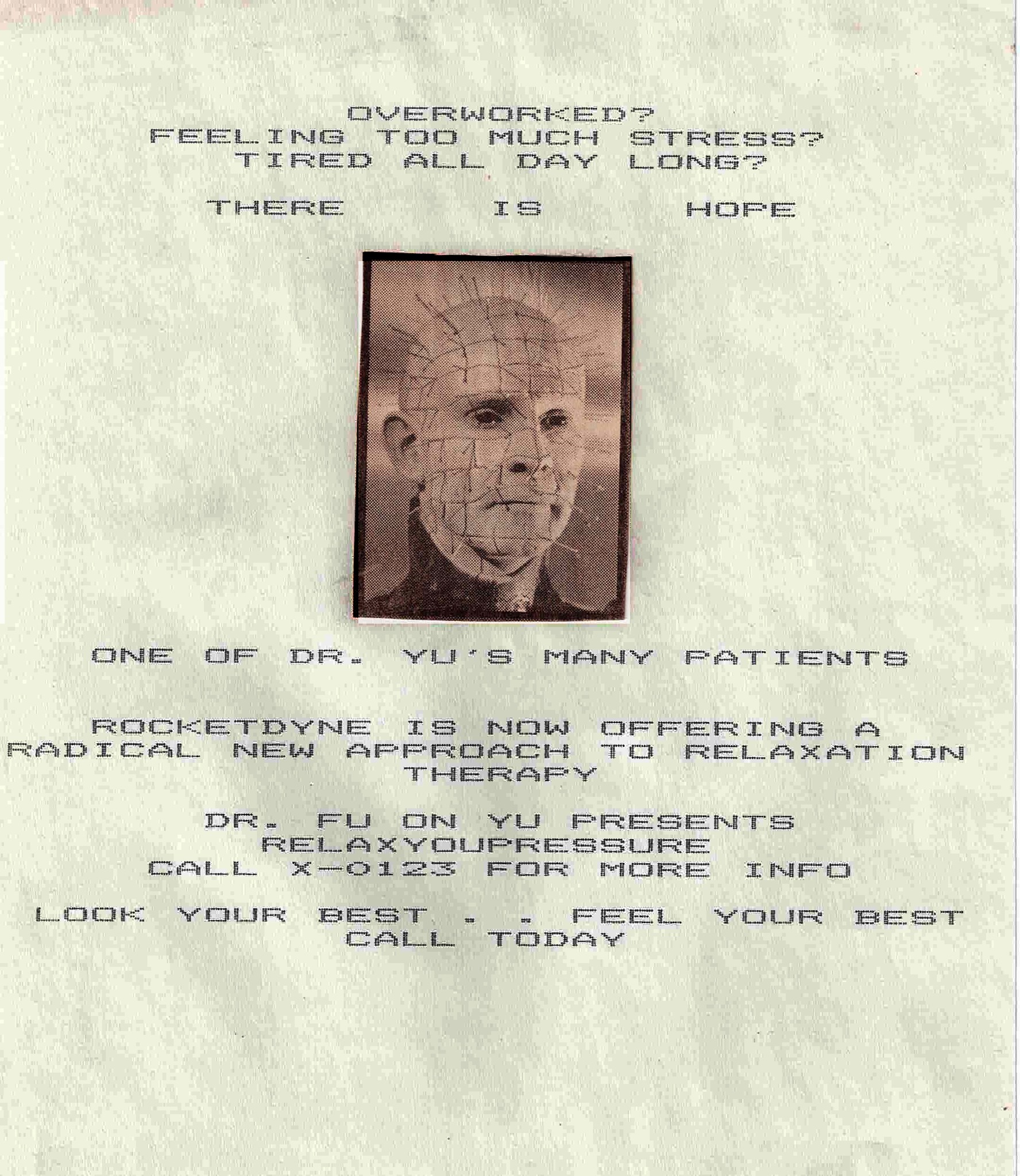
When I first ended up at Rocketdyne (it was serendipity, not a conscious move) I was gobsmacked knowing I was working on the Space Shuttle Main Engine program, with bonafide rocket scientists and engineers. It was 1987, almost exactly one year since Challenger exploded and I was working on the FMEA/CIL (Failure Modes and Effects Analysis/Critical Items List) in anticipation of the shuttle’s return to flight. There were frequent dead times while I waited for an engineer/scientist to bring me their work so I could input it into the format we were using to present the information.

I was just going through a folder I found stashed away that’s chock full of some of the things I created back then while I was bored. Keep in mind we only had dot matrix printers and early IBM PCs. I’m pretty sure we were using IBM XTs running Intel 8088 processors. Anyway, here’s one of the things I put together to assuage my boredom back then.


1st Foray Into ChatGPT

I finally decided to give ChatGPT a test drive. I made the following request: “Write a 500 word blog post about why Gen Z should vote in every election.”

Here’s the response I received. The response is actually 523 words. Close enough:

“Gen Z, also known as the iGeneration or the post-Millennials, is the demographic cohort born between 1996 and 2010. As this generation begins to reach voting age, it is important for them to understand the importance of participating in every election.

“Voting is one of the most fundamental rights and responsibilities of citizenship. It is a way for individuals to have a say in the direction of their country and to hold elected officials accountable. By voting, Gen Z can shape the policies and laws that will affect their daily lives, from healthcare and education to the economy and the environment.

“One of the most compelling reasons for Gen Z to vote is that their generation is uniquely affected by many of the current political issues. Climate change, for example, is a pressing concern for Gen Z, as they will be living with the consequences of current environmental policies for much longer than older generations. Similarly, the high cost of education and the increasing burden of student loan debt disproportionately affects Gen Z. By voting, Gen Z can make their voices heard on these issues and push for policies that align with their values and interests.

“Another reason why Gen Z should vote is that their generation is one of the most diverse in history, with a wide range of perspectives and experiences. By participating in the democratic process, Gen Z can ensure that their diverse voices are represented in government and that policies reflect the needs and concerns of all members of society.

“Additionally, by voting, Gen Z can help shape the future of the country. The decisions made by today’s elected officials will have a lasting impact on the future, and it is important for Gen Z to have a say in that future. It is also important for Gen Z to vote to ensure the continuation of democracy, which is the foundation of our country and it is something that should be protected.

“It’s also worth noting that voting is not just a right but also a privilege in many countries. Many people have fought and continue to fight for the right to vote, and it is important to exercise that right in order to honor their sacrifices.

“However, it is important to note that voting is not the only way to make a difference. Gen Z can also get involved in other forms of civic engagement, such as volunteering, organizing, and advocacy. But voting is an essential part of the democratic process, and it is the most direct way to make an impact on government policies and elected officials.

“In conclusion, Gen Z should vote in every election because it is their right and responsibility as citizens to shape the direction of their country. By voting, Gen Z can have a say in the policies and laws that affect their lives, ensure that their diverse voices are represented in government, and help shape the future of the country. Furthermore, it’s a way to honor the sacrifices of those who fought for the right to vote. It is time for Gen Z to step up and make their voices heard.”


A Limerick For Tedward

I came across this interesting tweet from Texas Senator Ted Cruz (the Federal Government’s most reviled human being) and was inspired to pen a limerick in response. It was actually embedded in a response from someone I follow, so I had to go through a couple dozen tweets of his before I could find the original, which I’m sharing below.

I should point out that Senator Cruz may be the most disingenuous, execrable member of the Senate since Joseph McCarthy represented the State of Wisconsin, that wonderfully cheesy part of the nation that has gifted us Senator Ron Johnson, another worthless POS. Reading through a series of tweets by Senator Cruz was a bit disconcerting, as his ability (and willingness) to flat-out lie about almost everything is one of his strongest and most defining characteristics. I felt dirty after reading some of them.

So I spent about a half hour writing the limerick which appears beneath Tedward’s tweet. This included using a site for rhyming and, ending each line with a Spanish word in order to convey the meaning I wished to, which was—shall we say—an interesting endeavor.

There once was a displaced Cubano
Who fancied himself a Tejano
His efforts were juegos
Cause he lacked normal huevos
Plus we know he’s a fucking gusano.


Back In The Saddle

I posted the following to LinkedIn two days ago. It was the first time I’ve posted there in approximately two years. I was very apprehensive about sharing some of these personal details on the site, as I’ve always used it strictly for business, but I felt it necessary to explain to my over 1300 connections where I’ve been for the last two years. I’m gratified to be able to say it was more than well received and I am now jumping back into the fray as carefully (and delicately) as possible.


Hey everybody. Well, at least the people who know me and, perhaps, have wondered where I’ve been. Two years ago, my youngest daughter announced she wanted to drop out of school. She was a sophomore in high school at the time.

Needless to say, I dropped everything I was doing and concentrated on helping her deal with the issues that were causing her to feel like giving up was the best course of action. As an older, internationally adopted toddler, she was saddled with some difficult learning issues and has struggled to get through her classes. Fortunately, she has an IEP (Individualized Education Program) which allows her teachers and the school to take those issues into consideration.

She is now a senior and is attending a school that is an independent learning academy. During the pandemic lock-down of our local schools, she thrived working at home. She has a problem with other children and having to work with dozens surrounding her has always been a challenge.

Her new school, coupled with a new medication for depression she started taking (and which seems to be working) has tamped down her anxiety, which means I’m not living moment-to-moment awaiting her next trauma and having to deal with it.

So – I’m just coming up for air after two years of trauma, exacerbated by the pandemic and my having been infected with Covid at the beginning of this year. I am still experiencing some long-haul symptoms, but am doing remarkable well for someone my age, with my comorbidities.

I may not be fully functional until next June, when she graduates (God willing and the creek don’t rise,) but I’m working on it and will be spending more time on LinkedIn as I seek a few clients/gigs. I’m deeply thankful I was in a position to spend as much time as I have with her, but I’m really looking forward to having more time to spend on myself and my continuing desire to be useful to others.


Sharing My Late-Life Adoption Journey

Yesterday, 11 April 2021, I created a gofundme account in an effort to raise money for a memoir I am writing about my experiences with International—and interracial—adoption when I was 55-years-old and again at 59. As regular readers might know, my wife Linda and I adopted our oldest daughter, Aimee, in September of 2002, when she was 14 months old. We again adopted in September of 2006, when our younger daughter, Alyssa, was 33 months old.

Each of these adoptions took over two years to complete and were both nerve-wracking and fulfilling experiences. We were required to travel to the People’s Republic of China each time, staying at the China Hotel, in Guangzhou, which is in the Southeast of the country, not far from Hong Kong. Each time we went, we managed to get in a little sightseeing prior to our daughters being introduced to us.

Our first time we flew to Guangzhou (it took 15 hours) where we had a three-hour layover, after which we flew to Beijing, which was a three and a half hour flight. The second time we flew directly to Hong Kong. We stayed in Beijing for six days, visiting some of the things tourists are wont to see, e.g. The Great Wall, The Forbidden City, etc. We stayed in Hong Kong for only three nights, then took a train to Guangzhou. After our time in Beijing, we flew back to Guangzhou. Each time we arrived, we were met by a team of “assistants” from the organization that facilitated our stay, our travel arrangements, the interpretation and completion of numerous documents, and the transfer of money for the various services we used to complete our adoptions.

I have posted a few times regarding our adoptions, but I’ve been reluctant to share too much about our girls, as I felt it was their story to tell. However, the time has come for me to share my story as best I know how. I had a discussion with the girls yesterday, and they gave me permission to do this.

As a result, I opened the gofundme account I’m referring to where I am seeking a total of $6,000, which I believe will help me concentrate for the next six months on writing this memoir while continuing to assist my girls in achieving their independence. My youngest, Alyssa, is just finishing her Junior year in High School, and it has been exceptionally challenging. She has some issues, which I will write about in this memoir, that required an IEP (Individualized Education Program) and presented some not-so-unique problems that continue. My older daughter, Aimee, is attending (virtually) classes at Moorpark College, but is having difficulty deciding on what direction she wishes to go in.

I am offering copies of this memoir to anyone who donates, no matter how much they give. For donations of $50 or more, I will provide a digitally signed, personalized copy, and for donations of $100 or more, I’m offering a 30-minute telecon via the platform of their choice (Zoom, Facebook Rooms, etc.) I will make the book available in any one of several formats, including .mobi for Kindle.

This is a new experience for me and I’m not completely comfortable with asking for money. However, I need to supplement our limited income and, at nearly 74-years-old, especially during a pandemic, it’s difficult to find ways to earn money and still have the energy to write and edit my story. Whether or not you can afford to donate, I would greatly appreciate it if you could share the gofundme link, which is gf.me/u/zp7gaw. You can click here to get to it as well.

Thank you for reading and, I hope, at least sharing my campaign so I can share my story.

Rick

Although I’ve been blogging for over 15 years, I never wanted to use it to make money. For much of the time I was either working full-time at Rocketdyne or pursuing clients for my business providing social media marketing services to small businesses. Now that I’m approaching my 74th birthday, and have no intention of returning to a regular job, I’ve decided to seek ways to earn a little bit of supplemental income. If you find my writing interesting or useful, please consider a donation to help me continue writing, instead of becoming a Costco greeter. Thank you.

One-Time
Monthly
Yearly

Make a one-time donation

Make a monthly donation

Make a yearly donation

Choose an amount

¤5.00
¤10.00
¤25.00
¤5.00
¤15.00
¤100.00
¤5.00
¤15.00
¤100.00

Or enter a custom amount

¤

Any amount you care to offer is greatly appreciated. I’m also deeply honored that you have taken the time to read any of my posts. Thank you.

Your contribution is appreciated.

Your contribution is appreciated.

DonateDonate monthlyDonate yearly

Understanding Empathy

One of the ways I’ve been working on upping my writing game is by paying attention to what people are reading here on my blog so I might get an idea of what moves my readers. I have now posted well over six hundred times and about 90% of these posts are essentially essays regarding my thoughts about various things, e.g. politics, religion, life, the universe, and everything. The other 10% are tests and sharing things I’ve come across but have little to say about. I also occasionally have reason to look back myself, even if no one has recently read a particular post of mine I find interesting.

Suspension of Disbelief
To Open Up And Believe

Because there have been many highly emotional news stories lately, and emotions are high to begin with, I’ve been giving a lot of thought to the role of emotions and, especially, how they relate to empathy. Turns out I had written about empathy over eight years ago, long before Donald Trump’s presidency. Since the reality has hit us that he is entirely without empathy, I would like to share a concatenation of the two posts I wrote in late September of 2012. It’s my hope these two are as pertinent today as they were when I wrote them; perhaps more so because I was only writing then about my feelings and now what I wrote seems so pertinent to what we’re all experiencing in the waning days of this disastrous presidency.


The willing suspension of disbelief. What a powerful, magical, and exceedingly frightening thing it can be – at least for me. Not always, though. It’s been quite a while since my last venture into the genre but, a long time ago – in a galaxy far, far away – I read a lot of Science Fiction. Reading it can’t possibly be enjoyable if you aren’t able to suspend your ability to think critically. Nevertheless, I enjoyed the hell out of what many an author hated being called Sci-Fi.

I’m normally somewhat cynical and am a fairly skeptical person, so I’m continuously surprised at how easily I can get sucked into a compelling story, especially if the characters are even moderately complex. I think it actually frightens me to realize how deeply I have disappeared into many a television drama.

This tendency has no doubt been exacerbated by my becoming a father at the ripe old age of 55, when my wife and I culminated a decision we had made a couple of years earlier and traveled to the People’s Republic of China to adopt our first child. We repeated the process four years later and, at the tender age of 59, I once again became a new father.

I now find myself immersed in shows where children are involved (it happens far more often than one might think) and I can’t help but identify with the parents, which sometimes brings me to tears – occasionally racking sobs of grief.

It has always been this way. I’ve been told the men in my family – many of them – were blubberers. Though I couldn’t have been older than five or six at the time, I recall the first time I saw my father cry. He had just received news that my Bubbie Jennie, his mother, had died. He hadn’t seen much of her since moving to Southern California. She had remained in Chicago, where both my parents were born. It was eerie, and not a little unsettling to see my father, a young boy’s tower of strength and resolve, break down like that.

It was made more difficult because I had only met her once, when she came to visit for a week, and she was unfamiliar to me. On the other hand, my maternal grandparents lived with us and I felt a strong emotional tie to them I could not summon up for her. She was by Bubbie, though. My mother’s mother was just Grandma.

I frequently ask myself, however, why I am so deeply and painfully drawn into these stories. I’m not entirely certain I have the answer, but I’m pretty sure it’s not so much the story itself as it is the relationship those stories bear to my own life.

Dictionary.com defines empathy as follows: the intellectual identification with or vicarious experiencing of the feelings, thoughts, or attitudes of another. That seems pretty straight-forward, yes? I am a fairly empathetic person and I tend toward the second part of that definition, i.e. I feel the pain of others vicariously. However, I don’t think this captures the essence of what is happening when I am fully immersed in a story.

Perhaps it’s too fine a point and the distinction isn’t all that great, but it seems to me what’s really happening is I’m overlaying the experience in the story onto my own life. I’m not so much experiencing the feelings of another as I’m experiencing the feelings I would have were I to be in that situation. I don’t think they’re the same. Then again, maybe that’s the mechanism that actually facilitates empathy.

This is a minor conundrum that comes to me most every time it happens and, usually, I forget about it within a minute or two. Lately I decided to try and get a descriptive handle on it and this is my first attempt.

Empathy is a valuable and deeply human trait. It is one of the five traits listed as characteristic of emotional intelligence which, in turn, is seen by many as a valuable business and leadership skill. It’s important to understand and to cultivate in order that we may better understand the people in our lives, whether at work, play, or home.

I want to understand what is moving me when this happens. On some levels it seems patently ridiculous to get so emotionally involved in a fiction story. On the other hand, perhaps it is really what makes us human. I’m wondering if someone with a more classical education than I have knows more of the thinking humans have brought to the subject. I’m sure some in the Arts (especially the Theater Arts) have tackled it. I’ll have to do more research. In the meantime, I’m glad there’s plenty of tissue in the house.

As it turns out, thanks to a friend I discovered an interesting answer through a wonderful TED talk by VS Ramachandran, a Neuroscientist who has studied the functions of mirror neurons. It would seem there is overwhelming evidence we humans are more closely connected than I was hinting at.

In his talk he says, “There is no real independent self, aloof from other human beings, inspecting the world, inspecting other people. You are, in fact, connected not just via Facebook and Internet, you’re actually quite literally connected by your neurons.” I find this resonates in many ways with my understanding of Systems Dynamics, Quantum Theory, and Zen and goes a long way toward answering my question. Frankly I find it a meaningful addition to my understanding, but still find myself wondering why it manifests itself so powerfully in some . . . and not at all in others. After all, the world is filled with people who are anti-social in varying degrees of severity from mild conduct disorders to outright sociopathy or APSD.

Regardless, there is much value in this talk. He speaks of the wonders of the human brain and, with respect to the issues I raised yesterday, uses words like imitation and emulation, ultimately winding his way to empathy. Rather than repeat any of his talk, I urge you to listen to it. There’s at least one very cool surprise a little more than halfway through. At less than eight minutes, it’s really engaging. Here’s the video. I’d love to hear what others think of this: