Category Archives: Social Media

My 78th & Fuck Zuck

Even though I was unfairly booted from all Meta products I was using (FB, Insta, and Threads), I’ve managed to create another persona and have re-connected with many of the people I was “friends” with previously. As a result, I received a lot of birthday wishes this past Wednesday (06/04). I did my best to individually recognize everyone who sent me a greeting (and yes, I’m aware that FB makes it exceedingly easy to do so, but it doesn’t force one to do it). I also wanted to post a general “thank you” and felt the need to explain why this birthday had so much meaning for me.
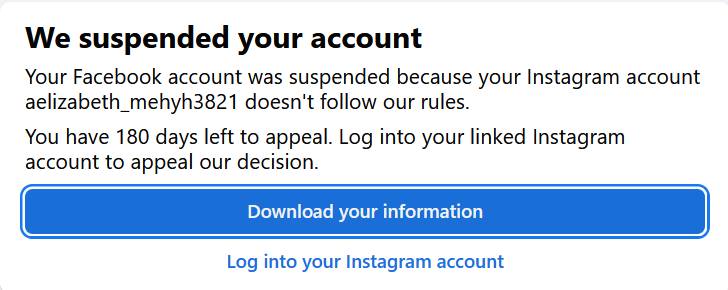
Believe it or not, aelizabeth_mehyh3821 isn’t me!

A bit less than two and a half years ago, I started having trouble walking from my bedroom to the kitchen. I was serially exhausted and couldn’t figure out what was happening. My doctor had me fitted with a Holter Monitor, which records your heart rate 24/7 for seven days.

The results were sobering. On one night my heart rate fell to 26 BPM; distressingly slow. I was referred to a cardiologist and, after some consultation and discussion about the alternatives, I decided to undergo pacemaker implant surgery. That was two years ago last March 8 (but who’s counting?).

Six months before that I was working in a warehouse, driving a forklift, lifting lots and lots of fairly heavy boxes, and climbing both ladders and storage racks (when I was in a hurry and only needed one box). While working there, I was playing twilight golf with a bunch of former colleagues from Rocketdyne. One of the guys I played with was a Manager of Manufacturing Engineering and he suggested I apply for a position, which I did.

I had an interview and was offered a position. Unfortunately, although I had passed the drug test five previous times, I had always been smoking and had only been using edibles for a while. I didn’t realize the cannabis from them stayed in your system longer than smoking does. I failed and the job was rescinded. I was heartbroken and humiliated. My younger daughter berated me mercilessly and I felt shame; not because I was using Cannabis, but because I wasn’t careful enough to pass the test.

I can’t say for sure that my bradycardia was caused by the weight of that loss (I would have been paid a lot of money for my efforts) and the humiliation I felt over having to tell the guys who I was going to be working with that I wouldn’t be there because I failed a drug test. Regardless, although the implant surgery was a success and I had more energy than I’d had for a while, over the next two years my health deteriorated to the point I honestly didn’t think I had much longer to live.

I was experiencing horrible, arthritic-like pain in nearly every joint in my body. I underwent a battery of tests for a couple of months. Eventually, my doctors (there were several by now) all suggested that the root cause of all this was the Hepatitis C virus I had been carrying asymptomatically for close to forty years. I was first offered treatment in early 2017, when I had just had to leave a two-year stint at Aerojet Rocketdyne. The co-pay was $30,000 and, since I was experiencing no symptoms, I didn’t bother.

This year I decided to take the 12-week regimen of Epclusa, and the co-pay was only $2,000. Still not cheap, but I was really suffering. There were times when I had to shuffle along rather than walk. I had fallen a couple of times and the joint pain was frequently excruciating.

I finished the regimen a couple of months ago. If I test negative for the virus six months after completion, I will be considered cured. I am, however, gaining strength, recovering my balance, and feeling much better. So much so that I’ve begun working for a lawyer and am seeking a few more clients. Turns out my law degree, knowledge of AI, and my KM experience are a unique combination, and I am presenting myself to attorneys as one who can help them keep track of their knowledge, use AI to enhance their practice, and help as a legal assistant when necessary.

I welcome the challenge and am excited for what the future holds, despite my many chronic conditions and fairly advanced age. Keeping busy doing things I love and am good at should keep me going for at least a few more years. Who knows? Maybe a decade. My pacemaker’s battery still has about twelve years of life remaining … and it can be replaced.

Back to my 78th birthday. I’m truly feeling energized by the recovery I’ve made and the road I’ve put myself on. Although it was a bit devastating to lose my Facebook, Instagram, and Threads accounts at the beginning of the year (according to Meta, it was because I broke the rules on an Instagram account that wasn’t me and trying to straighten it out was both impossible and infuriating) I’m thankful for those friends I’ve managed to re-connect with, as well as the new friends I’ve made recently. I’m thankful for all of them. Life would be less sweet without their presence.

Bye Bye Twitter?

I first joined Twitter in March of 2006. At the time part of my job at Rocketdyne Propulsion and Power, a division of The Boeing Company, was to examine platforms described as examples of what was then referred to as Web 2.0, as well as new applications being referred to as “social media.” I was doing this as a member of the Knowledge Management team for the division, and as the Knowledge Management lead for the Space Shuttle Main Engine team.

In 2002, I had been leading the team that introduced one of the earliest “social media” applications to the SSME team and the organization as a whole. We didn’t think of it as social media at the time, however. Our main goal was to provide a tool (we called it an “enabler”) that made it easier to locate subject matter experts (SMEs) and facilitate not only communication between those seeking knowledge and those possessing it, but to capture that knowledge and make it easily accessible for others who might need it at a later date.

The name of the tool we purchased 1000 seats for was AskMe Enterprise. It was, if memory serves, based on a former website of the same name, but was now a proprietary tool meant to stay within the firewall of an organization. Rocketdyne needed something that would be useful internally and had no reason to use something that was open outside the organization’s firewall. In fact, given the nature of its products being open to the outside was anathema and a matter of national security.

At the same time, we were looking for a communications tool that provided one-to-many capabilities and short-form text sharing and publishing. There were several tools that were coming online around that time, including Jive and Yammer, but Twitter seemed to be the most interesting. Nevertheless, it took me something like six months before I could identify a use case for it. At the time it seemed merely a tool for non-productive jabber and gossip.

What changed it for me was when I found out the team preparing the Space Shuttle Orbiter for the next launch was using it to communicate their activities and progress. There were something like two dozen people who were working on various tasks that were independent in numerous different ways. If you’ve ever done project management, especially if you’ve used a tool like Microsoft Project, you know there are several types of dependencies between activities, e.g. finish-to-start (the most common). The Orbiter team, much like many of the teams that organizations (not just Rocketdyne) have to accomplish their work, would meet every morning to present progress and discuss how to proceed with remaining activities.

Twitter changed the dynamic significantly. Now, instead of waiting until the team gathered each morning, team members who were out in the field accomplishing tasks could communicate in real-time with their colleagues (all of them) when they had finished a task which was a predecessor to another team member’s task. All they had to do was Tweet. They didn’t have to compose an email, direct an IM to two dozen people, or make a phone call. They just had to follow each of their teammates.

This may seem a trivial thing, but if a predecessor task was completed at, say, two in the afternoon and that fact could be communicated to the entire team, anyone who needed that information to know where they stood in the flow of activities didn’t have to wait until the following morning stand-up to find out what their status was. Work on complicated engineering projects can be expensive and even apparently small savings of time could add up to saving tens, if not hundreds, of thousands of dollars.

So, that was my introduction to Twitter. I never could get my colleagues at Rocketdyne to use it. I had a hard enough time getting them to use AskMe and soon after I accepted an early severance package in May of 2010 (as the Shuttle program was coming to an end) it became obvious without my constant agitating for its use it wasn’t going to survive. It didn’t.

However, I kept a kind of love/hate relationship with Twitter over the years. There were times I didn’t pay much attention to it, and periods where I was quite active. Unfortunately, a couple of years ago, after nearly a decade and a half, I was permanently suspended after I suggested a certain former guy might benefit from a coronary episode (I was only looking out for his best interests!). I created another account, which I am still using. Actually, I created two more accounts, one of which was also suspended, but reinstated upon appeal, though I no longer use it. Now, instead of @rickladd I’m @retreado.

I really wish I still had my real name, but it looks as though Twitter may not survive the petty indulgences of the world’s richest 10-year-old. Toward the end, I found Twitter to be an invaluable source of news, not so much as a primary but as a pointer to in-depth analyses, opinion, and good, solid journalism. It was a great way to keep track of trends and what movers and shakers were thinking, as well as hints as to which direction developing issues might go in. If Twitter does go away, I will miss it, but it won’t be the end of the world. I’ve already created an account at Mastodon and am considering other apps. Time will tell. Frankly, I wouldn’t mind taking a break from the immediacy and constant movement of Twitter. I’m getting old and I appreciate moments of silence more than ever.


Let’s Keep It Real

Apparently, WordPress’s embed tool for Twitter forces publishing of the previous tweet if your publishing a response to it, hence the reappearance of Brian’s initial tweet from the thread. Having lost the account I created in 2006 last year, I am now approaching 900 followers, which is a few thousand less than I had. Some of those followers were from way back and, frankly, there’s no way I could recall who all of them are. Also, back then I was far more active in implementing social media inside the firewall of the large aerospace company I was then working for, as well as collaborating with an international group of practitioners who were interested in facilitating the same thing where they worked. So I’m gratified that, after a mere two hours my response has been liked by 83 people, retweeted four times, and even elicited a one word response, to wit: “I agree.”

The thread goes on for seven more tweets, the last two wrapping up the point he’s making:

In response to this thread I offered the following:

I do want to reiterate the point. In my opinion, too many people hear Margaret Mead’s quote and apply it to the changes they’re hoping to bring about. They’re not wrong, but I suspect their take on it is a little incomplete. I believe this is Brian’s point. A small group of “thoughtful, committed citizens” with bad intent and nefarious motives can also bring about change, and it won’t be anything near what progressives are working toward. Therefore, let’s keep our eyes on the prize and not delude ourselves, ever!


Useful Advice

I have now received a link to this video from several different sources and I think it’s a valuable resource for any American concerned about the continued viability of our government. I don’t believe it’s crazy to be prepared for the worst, because it’s been made pretty clear over the past four years that nothing is sacred to the “most powerful man in the world.”

The video I had linked to (below) has apparently been removed and is no longer available. Fortunately, I found a website that contains the very information that was in the video, which can be accessed here.

!BE PREPARED!

The reality is, he may be powerful (he does have the weight of the federal government, including the military, on his side . . . theoretically) but the true power of any nation resides in its people. Without the consent of the governed, especially the way we’re organized politically, economically, and socially, keeping things running would be near impossible.

There is one more thing that’s necessary for the people to be able to control their own destiny, and that’s organization. Without being organized, connected, and communicating we won’t be able to assert our authority, our will over the powers-that-be.

With that in mind, I’m sharing the video above. If you haven’t the time to watch (it’s 7:02) below is a list of those ten things you need to know to stop a coup. Watch the video for a little more detail. One more thing, you can learn more at https://tallyrally.org/allourvotes/.

  1. Don’t expect results on election night
  2. Do call it a coup
  3. Regular citizens stop coups
  4. Act quickly—and not alone
  5. Focus on widely shared democratic values, not on individuals
  6. Convince others not to freeze or just go along
  7. Commit to actions that represent rule of law, stability, and non-violence
  8. YES! A coup can happen in the United States
  9. Center in calm, not fear
  10. Prepare to deter a coup before the election


Compensation? Maybe

Every since I developed my essential tremors it’s become increasingly difficult to type, especially on my iPhone. The tremors don’t affect me all the time, but often enough to be uncomfortable and, occasionally, they’re strong enough to make it virtually impossible to touch type.

GBoard Helps a Lot!

There are two things that make it easier for me. The first is using GBoard, which is an app that allows me to emulate Swype, which allows me to touch the first letter of the word I want to “type” and then move methodically to each following letter in the word, stopping momentarily on that letter so the algorithm can identify the letter I wish to use.

The second is its ability to predict the word I’m spelling out, which can be quite useful when I’m carrying on a conversation or responding at length to a tweet or FB post. These two things are truly valuable for my ability to continue using my phone to effectively communicate.

However, I’m beginning to think my phone is really getting to know me. The other day I wanted to type the word “cuck” into a tweet and it wanted me to change it to “fuck.” Then I went to type “dude”in a FB comment and, after I had only typed “du,” it suggested “dumbfuck.”

It’s nice that it’s getting to know my personality, but I’m beginning to worry I might be swearing a little too frequently. I’ll have to give it some thought.

Naaah! Fuck it.


Better Understanding The Franchise

We’ve taken voting a little too much for granted, methinks. That would include yours truly, though I have never missed a vote since June 4, 1968, my 21st birthday. I think I made the mistake of believing all that mattered was that I voted and I encouraged those close to me to vote as well. I’m pretty certain that’s no longer good enough; probably was never good enough, but it took the tender ministrations of the tangerine shitgibbon to make it clear we need to take the franchise a bit more seriously.

What, perzackly, that entails is unclear to me, but I’m sure a lot of us have ideas and many are already working on it. That’s what VR and GOTV are all about, no? But I am thinking a little beyond those two things, which we’ve been doing for a long time. We need to talk more about what it means to be an informed citizen. We need to find ways to present it that aren’t tres wonky. Therein may lie the greatest challenge.


Thread Embed (Test)

WordPress just added some new functionality to their platform, which is where you’re reading this right now. Now I can insert one tweet from a thread and there’s a command to “unroll,” which imports the remainder of the thread. With this test I uploaded the first of five and all were imported easily with the “unroll” button. I’ll have to try one where I first upload a tweet from the middle (or the end; maybe and the end) and see how well it works from there.

===================

I joined Twitter in March of 2008. Back then I was studying social media as a method for my organization (the Space Shuttle Main Engine team at Rocketdyne) to communicate more effectively. NASA was already using it for the teams that were preparing the orbiter for its . . . /1

next flight, and it was def saving them money and time. I never tried to get followers; they just followed naturally, esp since there were so few users at the time. When I retired in May of 2010, my use of Twitter changed and for a while I didn’t use it at all. Cue . . . /2

the election of the dipshit-in-chief. Everything changed for me. I wouldn’t say all my posts were political, but surely a majority. I’d like to see for myself, but a week ago—after 12 years—my account was suspended. My ~2700 followers gone. Everything . . . gone. I . . . /3

wasn’t even told what I did or said to have received such a harsh punishment, with absolutely no recourse other than a chance to send a short note defending I don’t know what. Perfectly legal, yet anathema to our way of life in the U.S. So . . . this is my feeble return . . . /4

to #Resist here on Twitter. I could use some followers (God! It pains me to even ask) and I will follow back if you’re not a Trump supporter. TIA! /fin

Originally tweeted by Izzy Wladovsky (@retreado) on 23 June 2020.


Working Remotely? Here’s Some Help

The need to address the SARS-CoV-2 pandemic may have done more to accelerate the digital transformation many have been working towards for years, than all of the bitching, moaning, hand-wringing, and pearl clutching heretofore expended on cajoling knowledge workers to adopt and adapt these technologies.

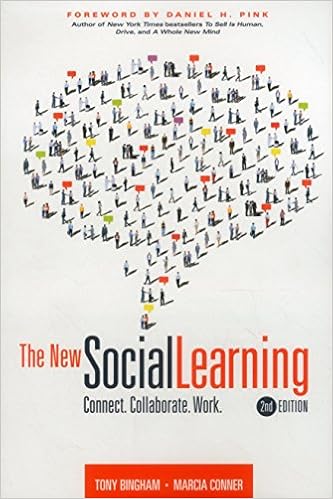
Five years ago I served as the developmental editor on the 2nd edition of “The New Social Learning.” I had the pleasure of working with the co-author of the 1st edition, who was the principal author of the 2nd, Marcia Conner. Marcia is one of a handful of people who recognized the need for, and the power of, such a transition . . . and this book was an attempt to help leaders and organizations move forward to adopt these new ways of working, and working together.

I recommend this book highly for everyone who is now finding themselves either working at home or dealing with today’s need to be more “distanced” from our colleagues. There’s a wealth of good info here. I urge you to check it out. It’s about far more than just learning.

“The Workplace Has Changed. At this moment, your people are already learning through social media. They’re reaching out and connecting in powerful ways. The question is, can you recognize, appreciate, and take advantage of the power inherent in this new level of communication? Do you want to facilitate or debilitate? Do you want to play a part in what and how people learn? Or do you want to try to stop them? Will you restrict them? Or will you free them to do the work they were hired to do—and will you do it with them?”


Casual Everyday?

I wonder if this pandemic, and our response to it, will change how seriously we take ourselves. If you’ve been watching television—and I’m going to go out on a limb here and assume most everyone is—you may have noticed some changes in much of live news and late night programming.
Since nearly everyone who’s reporting is at home, by themselves, it’s obvious that the women anchors, reporters, and pundits are having to do their own hair and makeup. Regardless of how well they might do it, it’s not the same and it’s noticeable. I haven’t noticed how much, if any, makeup the men are wearing, but I have noticed a whole bunch of them has decided it’s not worth shaving right now (I’m one of them.)


So . . . what I’m wondering is, after we are able to return to some semblance of a normal life, where we can gather again so that newscasters and performers can return to the studio, when knowledge workers can return to their cube farms . . . will we? Better yet, should we? I spent the last few years of my career at Rocketdyne working from home. I’d like to think I was at least as productive, if not more so, than I was when I was going in to the office each day.


When I first started working there, I wore a suit and tie each and every day. By the time I left, the only time I wore a tie was if the “customer” (usually NASA) was visiting and we had to blow smoke up their asses. Knit polo shirts and chinos became acceptable and, on Fridays, everyone wore denim. I’d like to think one of the lessons we’ll glean from this (and there will be dozens, no doubt) is that we can be a lot more casual and still perform at a high level. And there are numerous ways to communicate, connect, and collaborate, especially if we’re not hamstrung by unnecessary and awkward notions of propriety.


What do you think?