Tag Archives: Blogging

Testing The Waters

I have been working (read “struggling”) on my memoirs/autobiography for longer than I care to think about. I’ve managed to write close to 90,000 words and am sure I need to write another 90,000 (at least) in order to feel I’ve accomplished what I set out to do. Some of what I’m including comes from blog posts I’ve authored over the past decade and a half. Now I’ve decided to take a slightly different tack and publish some of my work here in my blog, in the hope I can get some feedback—at least from my friends who sometimes read what I write here. What follows is the first draft of my Preface to what I’m tentatively entitling “A Stunning Display of Intelligence”, the meaning of which is contained therein. If you read this, and have a mind to, I would greatly appreciate your thoughts, suggestions, etc. Thank you.


I’ve not been one to toot my own horn, preferring to let my actions speak for themselves. This is, in part, because I suffer from impostor syndrome, or something similar to it. My particular iteration of this syndrome isn’t a cause of great anxiety. It’s more like I’ve always felt everyone knew everything I did and what I knew or was capable of wasn’t all that special. It’s only in the last decade I’ve come to understand how this affected me and began to throw off whatever constraints it placed on my progress and enjoyment of life.

It was the blog of an online friend, someone I have never met in person but, because of our mutual interest in the advent of what was called Web 2.0, as well as social media and its application to the enterprise, that brought me my first glimmer of a deeper understanding. He named his blog “The Obvious” and, when I asked him why that was so he told me it was because his impostor syndrome led him to believe the things he wrote about were “obvious” to others; hence the name.

This work of mine is my way of not necessarily showing off, or displaying my accomplishments, but of sharing my experiences, many of which for numerous reasons I have been reluctant to talk about at all with nearly anyone save for those who were with me when they happened and who helped me plan or plot to accomplish. Some of the things I’ve done, especially when I was young and impetuous, not to mention bullet-proof and invincible, were illegal. My virtue is never having been caught, not necessarily being a good citizen. Although, in my defense I will argue much of those activities might have been illegal, but they were hardly wrong. Enjoying the pleasures of Cannabis is one of them. I will discuss this in greater detail a bit later.

My life, while reasonably normal, has not been all that conventional. By that I mean I’ve done most of the things normal people do, I just haven’t done them in the same order others normally have. I have long suggested I’ve lived a great deal of my life in reverse and I believe I am accurately depicting how I’ve done it. For instance, although I did not attend undergraduate school, I was admitted to law school eight years after I graduated high school, graduating with a Juris Doctorate three years later. Many years after that experience (33 to be exact) I earned a Master’s Degree in Knowledge Management. It was shorty after my 62nd birthday. I have considered getting a Bachelor’s Degree just to complete the backward educational hat trick, but at this stage of my life it’s unlikely. I did some undergrad work at the University of Phoenix and Cal Lutheran when I was working on the Space Shuttle Maine Engine (SSME) program at Rocketdyne. I think I finished a semester at the University of Phoenix and a year or more of work in an adult evening degree program at Cal Lu, but it was difficult to reconcile taking classes designed primarily for 18 – 22 year olds still wet behind the ears. The knowledge I could have taught some of those classes was a bit aggravating too. I will discuss these efforts a little later.

I didn’t become a father until I was 55 years old, when my wife and I, after trying to get pregnant, traveled to the People’s Republic of China to adopt our oldest child. It was a two-year, difficult, and amazing adventure. A few years later, in what I’ve often thought of sarcastically as a stunning display of intelligence, we adopted another child from China. Hence the title of this memoir. Later on I will introduce you to my girls, Fooshie and Typhoon Girl.

A word of caution. As I am writing down my recollections I am also researching dates and locations to ensure my memories are as accurate as one can expect from a seventy-five year old man. I have never been one to exaggerate my experiences, but I know that time can play tricks on one’s memory. I am making every attempt to be accurate, but I realize a few of these memories may be slightly distorted. For instance, I know I was five years old when I had surgery to correct my clubbed left foot, but I’m pretty certain (based on my research of when he played for the Los Angeles Angels) I was five years old when I picked up a foul ball during batting practice and, at his request, returned it to Chuck Connors. I’m not sure I can reconcile being mobile enough to get that ball with having some fairly major surgery done to my foot and ankle. Nevertheless, I have managed to slog through what remains of my mind and am presenting what I remember as best I can.

It is also nigh on to impossible to refer to many of the organizations I worked for or the places I visited and which meant something to me and my development or experience back then, because some of these memories are from a long time ago. As an example, one of the companies I worked for and which played a bit of a role in making my visit to Cuba somewhat strange was purchased long ago and, in fact, was re-branded sometime after that purchase-and that was a long time ago.

A substantial portion of this memoir was written over the past 10 – 15 years and posted on one of the two blogs I’ve maintained since early 2006, when I published my first post at The Cranky Curmudgeon (http://crankycur.blogspot.com/). I posted there for a few years until 2014. I did not publish very often the last few years because I had started another blog with WordPress, which I call Systems Savvy (https://rickladd.com/). My first publication there was at the beginning of 2008. I have since published there sporadically and continue to do so; currently a bit over 700 times, not including saved drafts. Some of those posts were simple, short, and sweet while others were somewhat lengthy and more complex and nuanced. Several of them recount experiences of mine, while other reflect on lessons I believe I’ve learned from work or life.

Long ago I came to the conclusion the only thing that mattered for me, in terms of what I accomplish in my life, was that I gained wisdom. When I first began to feel that way I was only in my thirties and I knew that you can’t just hang out a shingle and declare oneself a wise person. I also knew that wisdom comes with time and experience; some would say after a great deal of false starts and failures too. Whether or not I’ve reached that particular plateau will be for others to decide and I am hopeful you will find a nugget or two buried in my remembrances, especially those that are from the more seminal experiences of my now fairly long life.
I’ve struggled to find my voice for, well, pretty much forever and I’m not sure I’ve managed to do a good job with this memoir.

However, I don’t think it’s hyperbole to believe I can at times sense the hot breath of the grim reaper on my neck and I feel a strong need to get this done before it’s too late. As well, I want to leave some coherent (ha!) record of who—and why—I am for my daughters. They lost two fathers before they were old enough to understand what was happening to them and I want them to have something to hang on to after I’m gone. I am, for the most part, the only father they can remember.

For years I considered writing memoirs about certain parts of my life and experience; mostly my political and counter-culture activities and my becoming a first-time adoptive father so late in life. However, various circumstances militated against my doing so, not the least of which was my inability to just sit down and write, as well as organize my thoughts and memories. In this work I have decided to go through my life and get as much of it down as possible. As I began outlining and organizing my thoughts I found it increasingly easier to link various parts, the sum of which can be confusing when taken all at once.

I have therefore attempted to organize my thoughts in such a way the reader can get a sense of what I have learned from a particular part of my life without having to understand the entirety of it, the gestalt if you will. I think you will find it easy to skip over portions that aren’t terribly interesting to you and still get something of value. At least I hope that is the case. I know my life has been unconventional. Not all of it, but substantial chunks of time and experience. I’ve tried to convey what I’ve learned from those periods, as well as the more normal everyday experiences we all seem to go through. I hope you’ll find it of interest, if not enlightening.

1st Foray Into ChatGPT

I finally decided to give ChatGPT a test drive. I made the following request: “Write a 500 word blog post about why Gen Z should vote in every election.”

Here’s the response I received. The response is actually 523 words. Close enough:

“Gen Z, also known as the iGeneration or the post-Millennials, is the demographic cohort born between 1996 and 2010. As this generation begins to reach voting age, it is important for them to understand the importance of participating in every election.

“Voting is one of the most fundamental rights and responsibilities of citizenship. It is a way for individuals to have a say in the direction of their country and to hold elected officials accountable. By voting, Gen Z can shape the policies and laws that will affect their daily lives, from healthcare and education to the economy and the environment.

“One of the most compelling reasons for Gen Z to vote is that their generation is uniquely affected by many of the current political issues. Climate change, for example, is a pressing concern for Gen Z, as they will be living with the consequences of current environmental policies for much longer than older generations. Similarly, the high cost of education and the increasing burden of student loan debt disproportionately affects Gen Z. By voting, Gen Z can make their voices heard on these issues and push for policies that align with their values and interests.

“Another reason why Gen Z should vote is that their generation is one of the most diverse in history, with a wide range of perspectives and experiences. By participating in the democratic process, Gen Z can ensure that their diverse voices are represented in government and that policies reflect the needs and concerns of all members of society.

“Additionally, by voting, Gen Z can help shape the future of the country. The decisions made by today’s elected officials will have a lasting impact on the future, and it is important for Gen Z to have a say in that future. It is also important for Gen Z to vote to ensure the continuation of democracy, which is the foundation of our country and it is something that should be protected.

“It’s also worth noting that voting is not just a right but also a privilege in many countries. Many people have fought and continue to fight for the right to vote, and it is important to exercise that right in order to honor their sacrifices.

“However, it is important to note that voting is not the only way to make a difference. Gen Z can also get involved in other forms of civic engagement, such as volunteering, organizing, and advocacy. But voting is an essential part of the democratic process, and it is the most direct way to make an impact on government policies and elected officials.

“In conclusion, Gen Z should vote in every election because it is their right and responsibility as citizens to shape the direction of their country. By voting, Gen Z can have a say in the policies and laws that affect their lives, ensure that their diverse voices are represented in government, and help shape the future of the country. Furthermore, it’s a way to honor the sacrifices of those who fought for the right to vote. It is time for Gen Z to step up and make their voices heard.”


Understanding Empathy

One of the ways I’ve been working on upping my writing game is by paying attention to what people are reading here on my blog so I might get an idea of what moves my readers. I have now posted well over six hundred times and about 90% of these posts are essentially essays regarding my thoughts about various things, e.g. politics, religion, life, the universe, and everything. The other 10% are tests and sharing things I’ve come across but have little to say about. I also occasionally have reason to look back myself, even if no one has recently read a particular post of mine I find interesting.

Suspension of Disbelief
To Open Up And Believe

Because there have been many highly emotional news stories lately, and emotions are high to begin with, I’ve been giving a lot of thought to the role of emotions and, especially, how they relate to empathy. Turns out I had written about empathy over eight years ago, long before Donald Trump’s presidency. Since the reality has hit us that he is entirely without empathy, I would like to share a concatenation of the two posts I wrote in late September of 2012. It’s my hope these two are as pertinent today as they were when I wrote them; perhaps more so because I was only writing then about my feelings and now what I wrote seems so pertinent to what we’re all experiencing in the waning days of this disastrous presidency.


The willing suspension of disbelief. What a powerful, magical, and exceedingly frightening thing it can be – at least for me. Not always, though. It’s been quite a while since my last venture into the genre but, a long time ago – in a galaxy far, far away – I read a lot of Science Fiction. Reading it can’t possibly be enjoyable if you aren’t able to suspend your ability to think critically. Nevertheless, I enjoyed the hell out of what many an author hated being called Sci-Fi.

I’m normally somewhat cynical and am a fairly skeptical person, so I’m continuously surprised at how easily I can get sucked into a compelling story, especially if the characters are even moderately complex. I think it actually frightens me to realize how deeply I have disappeared into many a television drama.

This tendency has no doubt been exacerbated by my becoming a father at the ripe old age of 55, when my wife and I culminated a decision we had made a couple of years earlier and traveled to the People’s Republic of China to adopt our first child. We repeated the process four years later and, at the tender age of 59, I once again became a new father.

I now find myself immersed in shows where children are involved (it happens far more often than one might think) and I can’t help but identify with the parents, which sometimes brings me to tears – occasionally racking sobs of grief.

It has always been this way. I’ve been told the men in my family – many of them – were blubberers. Though I couldn’t have been older than five or six at the time, I recall the first time I saw my father cry. He had just received news that my Bubbie Jennie, his mother, had died. He hadn’t seen much of her since moving to Southern California. She had remained in Chicago, where both my parents were born. It was eerie, and not a little unsettling to see my father, a young boy’s tower of strength and resolve, break down like that.

It was made more difficult because I had only met her once, when she came to visit for a week, and she was unfamiliar to me. On the other hand, my maternal grandparents lived with us and I felt a strong emotional tie to them I could not summon up for her. She was by Bubbie, though. My mother’s mother was just Grandma.

I frequently ask myself, however, why I am so deeply and painfully drawn into these stories. I’m not entirely certain I have the answer, but I’m pretty sure it’s not so much the story itself as it is the relationship those stories bear to my own life.

Dictionary.com defines empathy as follows: the intellectual identification with or vicarious experiencing of the feelings, thoughts, or attitudes of another. That seems pretty straight-forward, yes? I am a fairly empathetic person and I tend toward the second part of that definition, i.e. I feel the pain of others vicariously. However, I don’t think this captures the essence of what is happening when I am fully immersed in a story.

Perhaps it’s too fine a point and the distinction isn’t all that great, but it seems to me what’s really happening is I’m overlaying the experience in the story onto my own life. I’m not so much experiencing the feelings of another as I’m experiencing the feelings I would have were I to be in that situation. I don’t think they’re the same. Then again, maybe that’s the mechanism that actually facilitates empathy.

This is a minor conundrum that comes to me most every time it happens and, usually, I forget about it within a minute or two. Lately I decided to try and get a descriptive handle on it and this is my first attempt.

Empathy is a valuable and deeply human trait. It is one of the five traits listed as characteristic of emotional intelligence which, in turn, is seen by many as a valuable business and leadership skill. It’s important to understand and to cultivate in order that we may better understand the people in our lives, whether at work, play, or home.

I want to understand what is moving me when this happens. On some levels it seems patently ridiculous to get so emotionally involved in a fiction story. On the other hand, perhaps it is really what makes us human. I’m wondering if someone with a more classical education than I have knows more of the thinking humans have brought to the subject. I’m sure some in the Arts (especially the Theater Arts) have tackled it. I’ll have to do more research. In the meantime, I’m glad there’s plenty of tissue in the house.

As it turns out, thanks to a friend I discovered an interesting answer through a wonderful TED talk by VS Ramachandran, a Neuroscientist who has studied the functions of mirror neurons. It would seem there is overwhelming evidence we humans are more closely connected than I was hinting at.

In his talk he says, “There is no real independent self, aloof from other human beings, inspecting the world, inspecting other people. You are, in fact, connected not just via Facebook and Internet, you’re actually quite literally connected by your neurons.” I find this resonates in many ways with my understanding of Systems Dynamics, Quantum Theory, and Zen and goes a long way toward answering my question. Frankly I find it a meaningful addition to my understanding, but still find myself wondering why it manifests itself so powerfully in some . . . and not at all in others. After all, the world is filled with people who are anti-social in varying degrees of severity from mild conduct disorders to outright sociopathy or APSD.

Regardless, there is much value in this talk. He speaks of the wonders of the human brain and, with respect to the issues I raised yesterday, uses words like imitation and emulation, ultimately winding his way to empathy. Rather than repeat any of his talk, I urge you to listen to it. There’s at least one very cool surprise a little more than halfway through. At less than eight minutes, it’s really engaging. Here’s the video. I’d love to hear what others think of this:


Cramps For Gramps

OK, so I’m not actually a grandfather though, at 73, I believe I’m old enough to be a great grandfather. Alas, I am but a father . . . and an adoptive one at that. My children are 19 and 16 and, although they are growing more and more independent, my youngest still has two years of high school remaining and my oldest wasn’t ready to attend college the past year and is only now taking six units at our local junior college. She kinda had to be coerced into doing that.

I bring this up in part because I’m feeling the inexorable acceleration of my physical and mental decline as I age. I’m thankful I notice it and, truth to tell, there are times I’m not sure I know what’s truly happening. I often say I’m unclear as to whether my memory is going, or I just don’t give a shit anymore, which means I find it far more difficult to pay attention to those things I don’t give a shit about.

Being stuck almost exclusively in the house during this pandemic presents its own challenges as well, and I’m pretty sure it’s adding to the pressure I feel to keep up with my kids and help them as best I can. At the same time, I have come to realize we really don’t have enough retirement savings to generate the income we require . . . at least not while the kids are here consuming large quantities of food, etc.

My oldest was working part-time for a while and she would have been able to reduce the burden somewhat, but when they decided she could no longer work remotely, she knew that wouldn’t fly at the time due to my and my wife’s ages, as well as our underlying conditions. This was especially true at the time it happened because there was a great deal of uncertainty then regarding how COVID-19 was transmitted, as well as resistance to the actions that would mitigate some of the risk, e.g. social distancing, wearing of masks, etc.

Truth to tell, there are times when I find myself understanding, somewhat viscerally, why some men “give up” and die after retirement. My situation is considerably different than most men who have reached my age, and the need to be there for my girls is a powerful motivator. Still, the angst and conflict sometimes wear me down.

Ouch!

To top it off, there are lots of physical consequences to aging I don’t believe most people even consider until they’re older. One of those is leg cramps. According to the Cleveland Clinic, the majority of adults over the age of 60 experience leg cramps at least once every two months. I’ve been experiencing them for years and have found that increasing the amount of potassium in my diet seems to keep them partially at bay. The easiest way for me to get that supplemental potassium is by eating bananas.

Unfortunately, the night before last reminded me I must not be eating enough of them. Normal leg craps—at least for me—happen mostly in the anterior muscles of my lower leg (looking at an anatomy chart, I believe the muscle involved is the Tibialis anterior, but don’t hold me to it.) This time was very different.

I awoke to the realization I was having a cramp, but it manifested itself by pulling my left big toe completely back so it was nearly vertical with relationship to the plane of my foot. It was painful and took nearly five minutes to slowly push it back to horizontal, where it belonged. I hope to never experience that particular form of cramp again as long as I live, though I have no confidence that will be the case.

One of the things I wanted to accomplish with my blogging was to share my experiences of aging. I haven’t checked the stats lately, but a decade ago there were very few bloggers as old as I am and it seemed I had the opportunity to share something that is both universal (in that we all age, unless we die young) and specific (in that it’s happening to me.) I hope I’ve done that, regardless of whether or not many people read what I write. I’ll continue doing so because it’s somewhat cathartic for me, it’s a way to leave behind some proof I actually existed, and it’s helping me in writing my memoirs, which I hope to finish sometime next year (though it may have to wait until my youngest finishes high school.)


Thread Embed (Test)

WordPress just added some new functionality to their platform, which is where you’re reading this right now. Now I can insert one tweet from a thread and there’s a command to “unroll,” which imports the remainder of the thread. With this test I uploaded the first of five and all were imported easily with the “unroll” button. I’ll have to try one where I first upload a tweet from the middle (or the end; maybe and the end) and see how well it works from there.

===================

I joined Twitter in March of 2008. Back then I was studying social media as a method for my organization (the Space Shuttle Main Engine team at Rocketdyne) to communicate more effectively. NASA was already using it for the teams that were preparing the orbiter for its . . . /1

next flight, and it was def saving them money and time. I never tried to get followers; they just followed naturally, esp since there were so few users at the time. When I retired in May of 2010, my use of Twitter changed and for a while I didn’t use it at all. Cue . . . /2

the election of the dipshit-in-chief. Everything changed for me. I wouldn’t say all my posts were political, but surely a majority. I’d like to see for myself, but a week ago—after 12 years—my account was suspended. My ~2700 followers gone. Everything . . . gone. I . . . /3

wasn’t even told what I did or said to have received such a harsh punishment, with absolutely no recourse other than a chance to send a short note defending I don’t know what. Perfectly legal, yet anathema to our way of life in the U.S. So . . . this is my feeble return . . . /4

to #Resist here on Twitter. I could use some followers (God! It pains me to even ask) and I will follow back if you’re not a Trump supporter. TIA! /fin

Originally tweeted by Izzy Wladovsky (@retreado) on 23 June 2020.


MAGA? Yeah, Right!

Over the last few years I’ve spent most of my social media time on Facebook, with Twitter fairly close behind. My goal on both is to attempt to inform, entertain, and educate others on things I think are important, like politics, the economy, society, religion, and numerous other things I think are valuable to be informed about.

I will freely admit to being highly partisan; in these perilous times I would suggest it’s impossible not to be, given the stakes . . . our freedom, the lives of immigrant children, western democracy.

This blog, however, has remained a place for me to share my thoughts about what’s particularly important to me. Yet I seem to have had trouble filling this location with much content, considering how long I’ve been blogging and how (relatively) few pieces I’ve actually published. This is especially true in light of the fact I frequently post to FB more than a dozen times on any given day; more if there’s a lot going on, less if I’m busy elsewhere.

I’m changing that. In fact, I’ve been changing it for the past couple of weeks. For most of the last year and a half I have been concentrating on my position as Business Manager for Quantellia, LLC and not paying any attention to this blog. I’m not posting as many as four times a day and, actually, believe I will be posting even more frequently. Most of these will be fairly short, but I will still write some longer posts, especially since I’m gathering my thoughts for a book.


So, here’s a meme—actually, I prefer to think of it as a work of art—I encountered on Facebook. The person who posted it where I found it pointed out how the artist used the shadow of the child’s hand to create an Adolphian mustache on the Tangerine Tyrant. It’s him, dontcha think?


Ode To A (Writer’s) Blockhead

Here I sit, broken hearted

Tried to blog, but couldn’t get started.

So I sit here in the parking lot, devoid of useful thought. Funny how that works. When my muse chooses to breath some life into my aging brain, I can go on and on. Unfortunately, most times I sit here, incapable of doing more than some light blathering. Maybe tomorrow.


Just A Little Reminder To Me

Sometimes I forget the work I’ve done. I mean . . . it’s over, lessons learned have been internalized and generalized . . . time to move on to something else, right? So I move on. My entire career has consisted of learning, sharing, and moving on. I’ve known people who held onto their knowledge like a life vest, scared silly for anyone to even know precisely what they do or how they do it. In my corporate experience there’s a phrase that perfectly embodies that kind of attitude: “Knowledge is Power.”

I’ve never agree with that concept. In fact, when I was doing Knowledge Management work for Rocketdyne, I used to say “If knowledge is power, then knowledge shared is power squared.” Unfortunately, becoming a sharing and learning organization requires a major cultural change and — especially in aerospace and other conservative industries — change is difficult to effect; certainly not within a short window of time.

At any rate, I was looking at the blog and web sites I am an admin for and realized I had written a couple of blog posts for a local business that was a client of mine for a very short while. I thought I would share it, only because I want to preserve as much of my work as possible. I want this in large part because almost everything I did at Rocketdyne is the intellectual property of the organizations that were the mother ship for Rocketdyne in the over two decades I was there.

I have a few presentations I did that are on SlideShare, but they don’t come close to the amount of content I produced over that time, and that includes a couple of years worth of monthly newsletters that were researched, written, and published almost entirely on my own. I even did the graphics for them. As I said, I don’t own them and, frankly, they were written for my colleagues and much of it wouldn’t make a great deal of sense to anyone outside the organization. Nevertheless, it’s a bit sobering to know you did a lot of work you cannot now take credit for . . . at least not easily. What follows is the blog post I wrote for Choice 1 Cleaners.


Your Tortured Garments

Red Wine Stain on White Blouse

Oops!

Many things in this world are a lot more complex than first meets the eye. Dry cleaning happens to be one of them. Actually, when it comes to today’s garments, any kind of cleaning is far more complex than one might imagine. This isn’t true of all garments, but it is true of garments in general.

Take, for instance, the variability in both materials and the things that stain them. There are basic differences, e.g. fabrics are made out of plant-based (cotton, linen), animal-based (silk, wool, leather), or synthetic (polyester, acrylic, nylon) materials. Stains come in different varieties as well; they’re either plant, animal, or synthetic. Proper cleaning requires an appreciation of the science involved when trying to remove those stains without harming the fabric.

In addition to the variations in material and the things that stain them, consideration needs to be given to the method of construction and the existence of adornments or embellishments, such as pearls, beads, chains, etc. Each of these creates different challenges that need to be addressed before the garments they’re attached to can be safely cleaned. Some require gauze to be hand-stitched over them in case they come loose. Some designer clothing can contain materials that need four to six different treatments to be thoroughly cleaned.

In order to get your garments truly clean – as clean as you expect them to be – we need to test spots as well, many of which you aren’t aware exist. For instance, sweat, alcohol, and perfume stains may not show up for a while. Your skin’s oils may leave stains you don’t notice either. However, when we clean your clothes we will discover them.

Rest assured, no matter how difficult the challenge, our mission is to clean your garments so they look and feel brand new. We can’t do much about the effects of time, but we can do an awfully good job removing the things that get on your clothing and render it stained and dirty. We pride ourselves on being the best and we think you’ll agree we are!


The Consequences of NOT Seeing Systems

Senge on Seeing Systems

Want to understand Systems better? Check out Peter Senge, Russell Ackoff, W. Edwards Deming, or just search Google for some info

When I first started this blog, one of my goals was to bring a systems perspective to my posts. Circumstance made that goal a bit difficult at times, and my interests are a bit too eclectic for me to stay in a single lane, but it is a perspective I feel most comfortable with and believe is useful in understanding the world and human society and relationships.

It’s long been clear to me that many people haven’t the faintest idea how systems work and how not understanding the interplay of their aggregate parts makes it virtually impossible to make quality, informed decisions.

In order for democracy to be spread and actually implemented in ways that are meaningful to ordinary people (who are often really afterthoughts to our institutions and those who lead them) I am convinced we need to become not merely critical thinkers, but also “systems thinkers”, i.e. we need to learn how to “see” systems. We, meaning “the people”, need to recognize how all things are parts of systems and that smaller systems are parts of other, more encompassing systems. Whether closely or remotely, we need to recognize how things are related to each other, such that we can appreciate the ways in which they affect and sometimes transform each other.

When this happens without our fully (or even partially) understanding these effects, we call them “unintended consequences.” However, these generally come about not because we failed to appreciate their possibility, but because we didn’t even see how they were related. It is our ignorance — in the non-pejorative sense — that’s causing us harm, because we just don’t see the subtle interplay of forces or the way they interact with each other. I plan on continuing to touch on this subject, as well as the other things that interest me. Stay tuned!


Gawker, the open web, Thiel and Zuck

Since I don’t have anywhere near as much time to write as I used to (now that I’m back working) I thought I would start sharing some of my favorite writers and posts. Here’s one from Dave Winer that he posted on the 25th anniversary of the Web. Dave knows of what he speaks, having been one of the earliest bloggers and developers. Here’s a piece from yesterday, August 23, 2016.  

~ Rick

nuttyBars

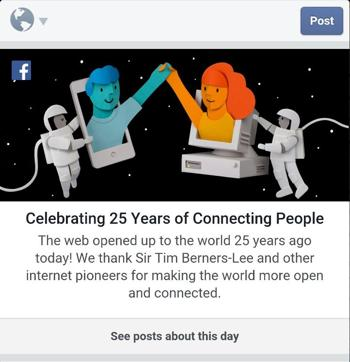
Perhaps not many people will see the connection between today being the first day Gawker is gone, it being the 25th Anniversary of the Web, and the message all Facebook users were greeted with this morning.

  1. Gawker is gone because Peter Thiel financed its murder-by-lawyer. It’s legal to do this in the US, but until now as far as I know, no one has crossed this line. Now that the line has been crossed, it’s fair to assume it will become standard practice for billionaires like Thiel to finance lawsuits until the publication loses and has to sell itself to pay the judgment.
  2. It’s the 25th Anniversary of the Web because 25 years ago a generous visionary named Tim Berners-Lee invented something that would benefit humanity more than it would benefit him. And many other visionaries saw it, and because it was open, were able to build anything they could imagine using it as a basis. And they did, making something like Facebook possible.
  3. Facebook is a silo for web writing. And while it would be easy for them to create paths for ideas to flow in and out of Facebook, at very low cost, and they have the features already developed, and use them internally, they refuse to share them with users. I suppose we could just explain this as they’re a very large tech company and that’s what tech companies do, but they also have the chutzpah to pretend to support the open web. They have been happy to accept its bounty and have done nothing to return what they’ve taken from the commons to the commons.
  4. And finally, remember Peter Thiel, the guy who thinks his wealth entitles him to shut down publications he doesn’t like, not only did he make billions from Facebook stock, he’s still on the board of Facebook. Zuckerberg has had plenty of time to ask him to leave, or to fire him, and he hasn’t done it. Again, you could just shrug it off and say Zuck is like Thiel, but he’s extra special in that he wants you to believe he appreciates the gift of the open web, as he strangles it.

Source: Gawker, the open web, Thiel and Zuck