Forty years ago I was working for a litigation support firm in a high-rise in Century City. I heard about the Challenger exploding and rushed down to the bar & grill downstairs, where I knew they had a television.
Little did I know that a year later, almost to the day, I would begin working as a temp on the Space Shuttle Main Engine program, where I mostly did data input on the FMEA/CIL document (Failure Mode and Effects Analysis/Critical Items List) prior to the shuttle being certified to return to flight.
A year after that I was hired in as a regular employee. I accepted an early severance package and retired 23 years later. I’ve never lost track of the reality that such a tragedy turned into the best job I’ve had in my life. I still mourn the loss of those seven brave souls who were lost that day.
Rest in Peace:
Francis R. “Dick” Scobee (commander) Michael J. Smith (pilot) Ronald E. McNair Ellison S. Onizuka Judith A. Resnik Gregory B. Jarvis Sharon Christa McAuliffe.
I have been using ChatGPT as a sort of medical/lifestyle partner/advisor for several months now. I created a project specifically for the purpose of sharing my vitals and other health related data, e.g. sleep patterns from my Apple watch, BP info from my weekly visits for Epoetin injections, weight and blood sugar measurements, as well as the results of blood tests, which Kaiser gives me access to.
When I arise in the morning, I get a nice graphical display of how much time I spend awake, in REM, in Core Sleep, and in Deep Sleep. All I do is take a screenshot from my phone and upload it to the project and it recognizes exactly what it is and incorporates the data into my overall health assessment.
Yesterday, I received the results from a CAT scan of my lungs. There was a plethora of medical terminology I am hardly familiar with. However, when I copied and pasted the results into my project, ChatGPT not only recognized what it was, but provided me with a layman’s analysis of each finding, the most important of which was the absence of cancer (whew!).
Anybody else using AI in a personally helpful way?
Even though I was unfairly booted from all Meta products I was using (FB, Insta, and Threads), I’ve managed to create another persona and have re-connected with many of the people I was “friends” with previously. As a result, I received a lot of birthday wishes this past Wednesday (06/04). I did my best to individually recognize everyone who sent me a greeting (and yes, I’m aware that FB makes it exceedingly easy to do so, but it doesn’t force one to do it). I also wanted to post a general “thank you” and felt the need to explain why this birthday had so much meaning for me.
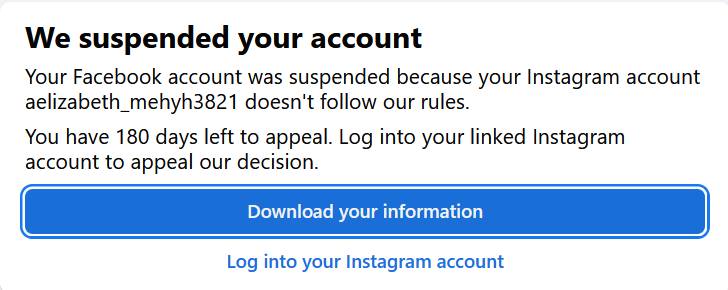
Believe it or not, aelizabeth_mehyh3821 isn’t me!
A bit less than two and a half years ago, I started having trouble walking from my bedroom to the kitchen. I was serially exhausted and couldn’t figure out what was happening. My doctor had me fitted with a Holter Monitor, which records your heart rate 24/7 for seven days.
The results were sobering. On one night my heart rate fell to 26 BPM; distressingly slow. I was referred to a cardiologist and, after some consultation and discussion about the alternatives, I decided to undergo pacemaker implant surgery. That was two years ago last March 8 (but who’s counting?).
Six months before that I was working in a warehouse, driving a forklift, lifting lots and lots of fairly heavy boxes, and climbing both ladders and storage racks (when I was in a hurry and only needed one box). While working there, I was playing twilight golf with a bunch of former colleagues from Rocketdyne. One of the guys I played with was a Manager of Manufacturing Engineering and he suggested I apply for a position, which I did.
I had an interview and was offered a position. Unfortunately, although I had passed the drug test five previous times, I had always been smoking and had only been using edibles for a while. I didn’t realize the cannabis from them stayed in your system longer than smoking does. I failed and the job was rescinded. I was heartbroken and humiliated. My younger daughter berated me mercilessly and I felt shame; not because I was using Cannabis, but because I wasn’t careful enough to pass the test.
I can’t say for sure that my bradycardia was caused by the weight of that loss (I would have been paid a lot of money for my efforts) and the humiliation I felt over having to tell the guys who I was going to be working with that I wouldn’t be there because I failed a drug test. Regardless, although the implant surgery was a success and I had more energy than I’d had for a while, over the next two years my health deteriorated to the point I honestly didn’t think I had much longer to live.
I was experiencing horrible, arthritic-like pain in nearly every joint in my body. I underwent a battery of tests for a couple of months. Eventually, my doctors (there were several by now) all suggested that the root cause of all this was the Hepatitis C virus I had been carrying asymptomatically for close to forty years. I was first offered treatment in early 2017, when I had just had to leave a two-year stint at Aerojet Rocketdyne. The co-pay was $30,000 and, since I was experiencing no symptoms, I didn’t bother.
This year I decided to take the 12-week regimen of Epclusa, and the co-pay was only $2,000. Still not cheap, but I was really suffering. There were times when I had to shuffle along rather than walk. I had fallen a couple of times and the joint pain was frequently excruciating.
I finished the regimen a couple of months ago. If I test negative for the virus six months after completion, I will be considered cured. I am, however, gaining strength, recovering my balance, and feeling much better. So much so that I’ve begun working for a lawyer and am seeking a few more clients. Turns out my law degree, knowledge of AI, and my KM experience are a unique combination, and I am presenting myself to attorneys as one who can help them keep track of their knowledge, use AI to enhance their practice, and help as a legal assistant when necessary.
I welcome the challenge and am excited for what the future holds, despite my many chronic conditions and fairly advanced age. Keeping busy doing things I love and am good at should keep me going for at least a few more years. Who knows? Maybe a decade. My pacemaker’s battery still has about twelve years of life remaining … and it can be replaced.
Back to my 78th birthday. I’m truly feeling energized by the recovery I’ve made and the road I’ve put myself on. Although it was a bit devastating to lose my Facebook, Instagram, and Threads accounts at the beginning of the year (according to Meta, it was because I broke the rules on an Instagram account that wasn’t me and trying to straighten it out was both impossible and infuriating) I’m thankful for those friends I’ve managed to re-connect with, as well as the new friends I’ve made recently. I’m thankful for all of them. Life would be less sweet without their presence.
In today’s hyper-connected, information-overloaded world, companies spend billions on training programs, knowledge-sharing platforms, and professional development. The conventional wisdom is simple: the more you learn, the better you’ll perform. But what if the key to innovation isn’t about learning more, but rather about forgetting less?
It might sound counterintuitive, but this subtle shift in perspective can transform how you think about knowledge management and creativity in your organization.
The Forgetting Curve: Your Biggest Knowledge Leak
The problem starts with how our brains work. Research by German psychologist Hermann Ebbinghaus introduced the concept of the “forgetting curve.” Essentially, we forget up to 50% of newly learned information within an hour and as much as 90% within a week—unless we take deliberate action to reinforce it.
This isn’t just an individual issue. Consider the collective implications for organizations where employees undergo training, attend meetings, or share insights. If 90% of that knowledge is forgotten or left unutilized, what’s the point of investing in learning initiatives?
Forgetting is natural, but it’s also a huge leak in your company’s knowledge pipeline. And while many organizations focus on teaching employees new skills or introducing the latest tools, they often overlook the need to help employees retain and apply what they’ve already learned.
The Innovation Gap: How Forgetting Limits Creativity
Innovation thrives at the intersection of knowledge and application. It’s not about the sheer volume of information you have but how effectively you can connect the dots between what you know and what you do.
When knowledge is forgotten, those dots disappear, making it harder to generate fresh ideas, solve problems, or build on past successes. Employees waste time reinventing the wheel, repeating mistakes, or duplicating effort because critical lessons learned have been buried in the sands of time.
The result? A company that feels stuck, constantly chasing the next big thing while failing to capitalize on the wealth of knowledge it already has.
Flipping the Script: How to Forget Less
So, how do you ensure your organization forgets less—and builds a culture of continuous innovation? Here are three actionable strategies:
1. Reinforce Learning Through Spaced Repetition
Spaced repetition is a proven technique for combating the forgetting curve. Instead of a single training session, reinforce critical knowledge over time. For example, follow up on workshops with microlearning modules, quizzes, or discussion groups that revisit key concepts. This repetition strengthens memory retention and ensures that knowledge sticks.
2. Capture Knowledge in Accessible Systems
Don’t let valuable insights evaporate into thin air after a meeting or brainstorming session. Use knowledge management tools to document and organize critical information. Platforms like Notion, Confluence, or SharePoint make it easy to store and retrieve knowledge so that your team can access it when they need it most.
3. Foster a Culture of Knowledge Sharing
Encourage employees to share their learnings and experiences with their peers. This could be through informal lunch-and-learns, internal blogs, or mentorship programs. When knowledge is shared, it’s reinforced—not just for the sharer but for the audience as well.
The Competitive Edge: Retention Over Acquisition
The companies that will thrive in the future aren’t the ones that simply learn the most but the ones that retain and apply their knowledge effectively. By focusing on forgetting less, you can unlock the full potential of your team’s creativity, reduce inefficiencies, and build a culture of innovation that lasts.
Remember, innovation isn’t about accumulating more—it’s about making the most of what you already have. What steps will you take today to help your organization forget less?
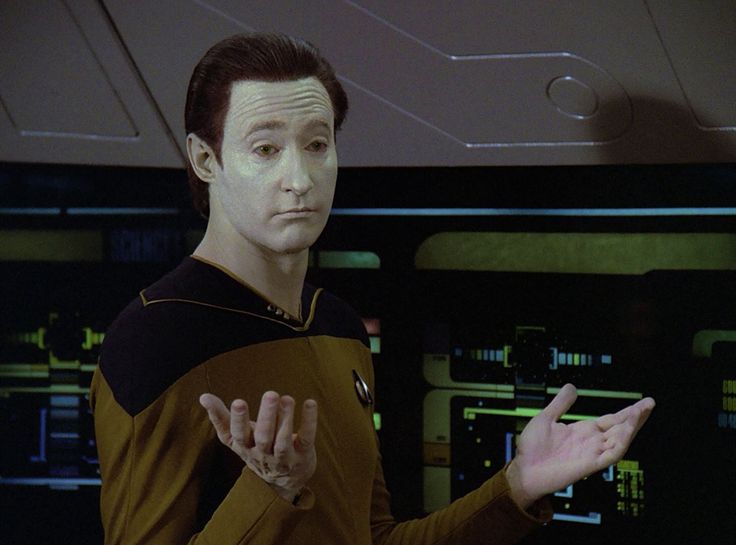
If Artificial Intelligence takes over in the future, and that seems to be what causes the most hand-wringing nowadays, wouldn’t it most likely follow that we will have evolved into cyborgs? Is there anything actually WRONG with that? Unlike Data, from Star Trek: The Next Generation, we’d almost certainly bring our emotions with us (unless evolution proves them to be detrimental to our long-term survival.) It can easily be argued that emotions, at least destructive ones, are not in our overall best interest, while positive ones are evolutionary assets.
When you think about it, doesn’t it seem strange, if not useless, to worry about our evolutionary path going forward? Artificial selection makes it clear we can at least guide that path, so it’s surely important to understand how we have evolved and then project those changes that may or may not require our attention. So thinking about where we’re headed is useful. My contention is that worrying about it is, well, a waste of time.
I have no doubt we will one day be a true spacefaring species; that is, if we don’t kill ourselves off first. That should require some hefty biological, psychological, and perhaps a dozen or so other aspects of the human being, changes in order to adapt.
Last year, around about this time, I began having difficulty with my stamina. After numerous tests, it became obvious I was struggling with Bradycardia (slow heart rhythm). I wore a Holter monitor for a week and on one night my heart rate dropped to 26 bpm. I could barely walk from the bedroom to the kitchen without getting winded, tired, and feeling a strong urge to just sit or lay down.
After several conversations with a cardiologist (who is now MY cardiologist) I decided the best path forward was to have a pacemaker implanted in my chest. On March 8 of last year, the surgery was performed and the difference was striking. However, along with the auto-immune skin condition I’ve been dealing with for over two years, I found it difficult to come anywhere close to returning to a relatively normal life. I still tired fairly easily and, to make things worse, in the past four or five months I’ve been experiencing arthritic like conditions in my ankles, knees, elbows, wrists, and (worst of all) fingers. Try opening a bottle or tying your shoes when both your index and middle fingers are excruciatingly painful when any pressure is applied.
Finally, things are beginning to look up, though I still have to deal with a 90-day regimen of a drug I will be starting soon, which I hope will help relieve the joint stiffness and pain. Tonight I went to the gym for the first time in I can’t actually remember. I worked my biceps, triceps, and a teeny bit of pecs. I then did a 15 minute hydro-massage. It felt really good. Looking forward to building my strength and stamina before my 77th birthday this June.
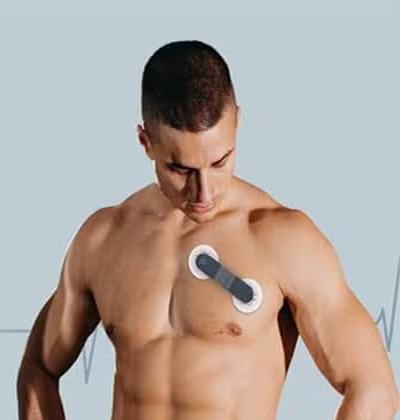
This is what the Holter monitor I wore looks like. This is NOT what I look like and, given my age and disposition, likely never will look like, but I wore one like this for a full week. Showering was fun!
This photo is often shared and referred to as a “frightening picture”. From the first time I saw this (which happened 40 years ago this Feb. 7) I found it both thrilling and a testament to what human ingenuity can accomplish. To me it also represents how, despite his apparent loneliness in the vastness of space, it took his crew, the NASA team below, and thousands upon thousands of people to make that one act happen.
It should be noted that another astronaut, Bob Stewart, completed a similar mission while both of them were aboard Challenger, flying mission STS-41B. There does not seem to be a photo of Stewart’s space walk.
He may look lonely out there, but the reality is he’s a member of a huge team of fellow humans who make such a feat possible. I suspect that’s true for just about all of us if we’re to be successful.
Has anyone else noticed how the majority of illustrations depicting Earned Value Management methodology show projects over budget and behind schedule? Why the pessimism? I know it’s frequently how things work out, but why do we put up with what amounts to continuous failure improvement? Why don’t we – since we’re only depicting how measurements and calculations are made – show the positive side, e.g. under-spent and ahead of schedule?
It seems like it would make a difference if, rather than presenting failure in the abstract, we presented success in the abstract. Isn’t it better to be going in with a success-oriented mindset, tempered with a good dose of reality? Of course, this presupposes situations where we’re not driven by the dynamics to be overly optimistic and unrealistic at the front end of a project in order to win a bid or compete with others, especially in large programs/projects. A tall order methinks.
I finally decided to give ChatGPT a test drive. I made the following request: “Write a 500 word blog post about why Gen Z should vote in every election.”
Here’s the response I received. The response is actually 523 words. Close enough:
“Gen Z, also known as the iGeneration or the post-Millennials, is the demographic cohort born between 1996 and 2010. As this generation begins to reach voting age, it is important for them to understand the importance of participating in every election.
“Voting is one of the most fundamental rights and responsibilities of citizenship. It is a way for individuals to have a say in the direction of their country and to hold elected officials accountable. By voting, Gen Z can shape the policies and laws that will affect their daily lives, from healthcare and education to the economy and the environment.
“One of the most compelling reasons for Gen Z to vote is that their generation is uniquely affected by many of the current political issues. Climate change, for example, is a pressing concern for Gen Z, as they will be living with the consequences of current environmental policies for much longer than older generations. Similarly, the high cost of education and the increasing burden of student loan debt disproportionately affects Gen Z. By voting, Gen Z can make their voices heard on these issues and push for policies that align with their values and interests.
“Another reason why Gen Z should vote is that their generation is one of the most diverse in history, with a wide range of perspectives and experiences. By participating in the democratic process, Gen Z can ensure that their diverse voices are represented in government and that policies reflect the needs and concerns of all members of society.
“Additionally, by voting, Gen Z can help shape the future of the country. The decisions made by today’s elected officials will have a lasting impact on the future, and it is important for Gen Z to have a say in that future. It is also important for Gen Z to vote to ensure the continuation of democracy, which is the foundation of our country and it is something that should be protected.
“It’s also worth noting that voting is not just a right but also a privilege in many countries. Many people have fought and continue to fight for the right to vote, and it is important to exercise that right in order to honor their sacrifices.
“However, it is important to note that voting is not the only way to make a difference. Gen Z can also get involved in other forms of civic engagement, such as volunteering, organizing, and advocacy. But voting is an essential part of the democratic process, and it is the most direct way to make an impact on government policies and elected officials.
“In conclusion, Gen Z should vote in every election because it is their right and responsibility as citizens to shape the direction of their country. By voting, Gen Z can have a say in the policies and laws that affect their lives, ensure that their diverse voices are represented in government, and help shape the future of the country. Furthermore, it’s a way to honor the sacrifices of those who fought for the right to vote. It is time for Gen Z to step up and make their voices heard.”
I didn’t write the following. However, I think it adds to my last post about Sun Tsu’s admonition to know one’s enemy and know oneself. It’s well written and says much more than I did in that post of mine.
A big part of the freakout you’re seeing from Elon and the rest of the rightwing crowd is that they just ran a whole campaign against the “woke mind virus” and LGBTQ people in an electoral environment that should have favored them heavily–and they lost.
They thought they had a big popular majority for “anti-woke.” They did not. They lost. Elon is going anti-woke, and going broke. All their rightwing startups are going belly-up. They lost a Senate seat, and without new illegal gerrymandering they would’ve lost the House.
Normies voted against them. Women were more furious about Roe than they expected. Young people voted big against them. They’ve lost the culture, and they’ve lost faith in electoral solutions to it. Who is gonna save them? Trump 2024? DeSantis 2024? Lol.
Tech is stacked in favor of the GOP: the Facebook groups/algorithms & YouTube algorithms favor them. They dominate AM radio & cable news. Twitter was the most balanced & responsible, so Elon bought it because the far right couldn’t stomach even a hint of social responsibility.
But they still lost. They lost the popular vote in 2016. They lost in 2018. They lost in 2020. They lost embarrassingly in 2022. They lost in Brazil. Putin lost in Ukraine. White Christian Nationalism is failing. So they’re taking desperate measures for control.
As generational replacement continues and the failures of authoritarianism become more obvious, they will lose even harder. The desperation for control will increase. Times will get more dangerous. But as long as the rest of society resists, we will win.
This “rest of society” is what the far-right calls “The Cathedral” as if it’s some conspiracy. They see themselves as a brave rebellious resistance to it. But of course none of that is true. They are defending the hegemony of good ol’ boy power.
Meanwhile, “the cathedral” is no such thing. Creatives, the well-educated, scientists, real altruists and curious all lean left. Young people are economically disadvantaged, and lean left. The big problems like climate change do not have rightwing answers.
Now even big corporations seem to lean left in their public comms only because 18-45 year olds are the target advertising demo. And guess where we live, what our values are and how we vote? The Fox News audience isn’t the target demo anymore. Too bad.
So now you’ve got a coalition of theocrats with aging, declining followings, and megalomaniac billionaires who think only an dictatorship under their control will lead humanity into a sci-fi future of their grandiose and self-serving delusions.
But normal people aren’t buying in–especially the vast majority of people under 45. They’re going to lose. As for twitter? Either Elon gets bored and makes it normal again, or he turns it into Gab and destroys it as the people who actually provide value on twitter move elsewhere–to places like here.
And regarding Elon’s “longtermism”? No worries–progressives and ethical science will get us to a sustainable sci-fi San Junipero future just fine. And we’ll get there faster and more safely the more that Dunning-Kruger tyrants like Elon are sidelined from control over it.




 Systems Savvy